
Can A Founder With Equity Income Get A First Vacation Rental DSCR Loan — The Quick Read: Yes. A DSCR loan is reviewed for the property, not the founder, so K-1 distributions, RSUs, stock options, and other equity-heavy compensation never enter the file. The lender looks at the rent the vacation home can produce against its own monthly obligation. No prior landlord experience is required, and no traditional personal-income documentation get pulled apart to explain a messy income year.
That’s the short version. The longer version explains why this works, where it can trip up a first-time buyer, and what a founder should actually gather before applying.
Short-Term Rental Calculator
Run the STR numbers in your market
Rate source: Freddie Mac 30-yr average via FRED® — Federal Reserve Bank of St. Louis · effective Sep 17, 2026
Prefilled with local estimates — enter your nightly rate, occupancy, taxes, and insurance for a more accurate picture.
Short-term rental income is documented with a 12-month history or a market data report. Program parameters update from Lendmire’s centralized guideline source.
As of Sep 17, 2026 · General Freddie Mac market benchmark, not a Lendmire loan offer. Nightly rate, occupancy, taxes, and insurance are editable estimates. Qualifying income for short-term rentals varies by program — some use appraisal market rent, others use documented STR history or projections — and is confirmed in underwriting. Not a Loan Estimate, approval, or commitment to lend. Program availability and eligibility are subject to lender guidelines, credit approval, property review, and underwriting.
Why Personal Income Doesn’t Matter Here
A founder’s compensation structure — base salary plus equity, or a post-exit lump sum sitting in a brokerage account — has nothing to do with whether the property qualifies. DSCR loans work differently. They compare the home’s projected rent to its monthly payment obligation. This is expressed as a coverage ratio: gross monthly rent divided by principal, interest, taxes, insurance, and any HOA dues (PITIA).
DSCR loans are designed for non-owner-occupied investment properties. Because they are business-purpose investor loans, they are reviewed differently from a standard owner-occupied mortgage. That single distinction is what removes the founder’s income statement from the conversation entirely.
This matters because founders are exactly the profile conventional underwriting tends to reject. Conventional lenders generally can’t count pre-IPO equity as qualifying income. Why? The stock has no daily market price and no guaranteed way to convert it to cash. A founder can be sitting on paper wealth in the millions and still get turned down for a conforming mortgage under standard guidelines. This is according to Own Luxury Homes’ guide for tech founders. Even vested RSUs from a public company come with strings attached in conventional lending. Lenders want a two-year vesting history, a documented forward-vesting schedule, and a cap on how much of the total income picture RSUs are allowed to cover.
None of that applies to a DSCR file. The underwriter checks whether the vacation rental’s income covers its own payment. If it does, at a coverage level the program accepts, the deal works forward regardless of how complicated the founder’s W-2, K-1, or equity grants look on paper.
What “First Vacation Rental” Changes About the File
First-time buyers don’t need rental history to qualify — the property’s projected income does the work instead. Where the file gets more careful is in how that projected income gets documented, since there’s no operating history yet to point to.
For a purchase with no track record, programs across the wholesale network typically rely on the appraiser’s short-term-rent analysis. They don’t rely on the founder’s word or a screenshot from a booking platform. That analysis usually gets discounted before it’s used to calculate coverage. Most programs in the network apply roughly 80% of the appraiser’s gross rent figure when sizing the loan. This builds in a cushion for seasonality and off-peak months. This is a meaningfully different process than a refinance file, where twelve months of actual booking-platform income can stand in for the appraisal projection.
Lendmire’s vacation rental DSCR loan paperwork guide walks through what a lender wants to see on the documentation side for a short-term-rental purchase specifically — worth a look before ordering an appraisal.
What Actually Gets Checked
The founder’s equity isn’t ignored entirely — it just shows up in a different place than income. Credit score, cash reserves, and the down payment are the borrower-side pieces of the file; equity compensation can fund the reserves and down payment even though it never gets counted as qualifying income.
Across the network, short-term-rental purchases generally want a coverage ratio at or above 1.00, plus documented reserves and experience owning income property within roughly the last three years. That experience requirement is one place first-time vacation-rental buyers should pay close attention — some programs treat “first income property, period” differently than “first vacation rental, but I’ve owned a long-term rental before.” A founder buying their very first investment property of any kind should expect a program to be more selective on this file than one who already owns a rental.
Credit floors on most files in the network sit around 660, with reserve requirements typically running six months of PITIA on the subject property — sometimes twelve months for a borrower with no prior investment-property ownership. None of that changes because the borrower happens to run a company or hold pre-IPO shares. It changes based on the deal in front of the underwriter: this property, this credit file, this reserve picture.
The Regulatory Reason This Works
The mechanism behind all of this is a federal classification, not a lender preference. Under Regulation Z’s business-purpose exemption, a loan to acquire, improve, or maintain a property the owner won’t occupy — generally more than 14 days a year — is treated as business-purpose credit. This is according to Hunton Andrews Kurth’s client alert on the rule. Business-purpose loans fall outside the disclosure and income-verification rules that govern a standard homebuyer’s mortgage. That’s why a founder’s income complexity never has to get reconciled the way it would for a primary residence purchase.
One tax note worth flagging and then moving past: tax treatment can depend on how the funds are used and how the property is held, so founders should keep clean records and talk with a qualified tax professional before assuming any deduction applies.
Where This Can Go Sideways
The property qualifying on paper doesn’t mean the deal is done — local rules and lender variability can still derail a first vacation rental purchase, even with strong equity behind the buyer. Two things break more first-time vacation-rental files than weak credit ever does.
First: whether short-term rental is even allowed at the property. Short-term rental rules can vary by city, county, HOA, and property type, so investors should confirm local rules before relying on projected rental income. A condo or townhome with an HOA that restricts short-term stays makes the whole DSCR conversation irrelevant — the lender will fall back to long-term rent comparables, and the coverage math changes completely.
Second, appraisal methods aren’t the same everywhere. The standard appraisal form used for single-family rent conclusions was built for long-term leases, not nightly bookings. So two appraisers looking at the same property can land on very different short-term-rent figures. This depends on the comparable data source they use and how they present it.
A Founder Scenario, Worked Through
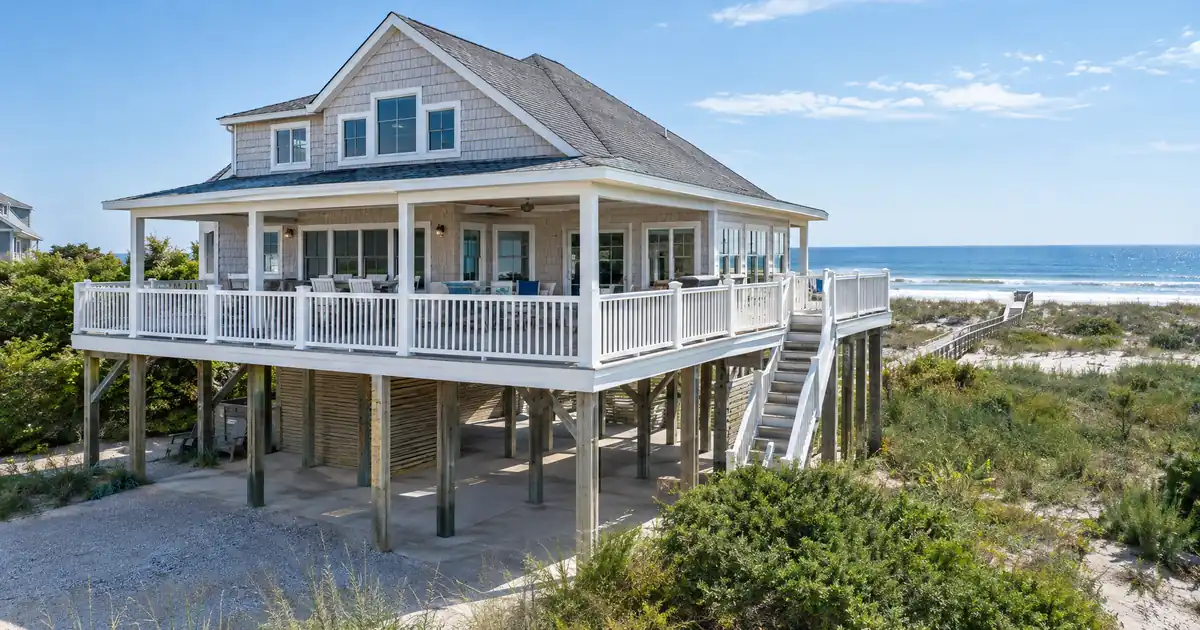
Picture a founder two years post-Series B, still drawing modest W-2 salary but holding a large block of vested-but-illiquid stock. They want a first vacation rental in a coastal market with strong seasonal demand and no operating history to point to.
On a conventional mortgage, that founder’s file is a mess — the equity can’t be counted as income, and the low W-2 salary alone won’t support the purchase price. On a DSCR file, none of that matters. The lender orders an appraisal with a short-term-rent analysis, applies the network’s standard haircut to that projected gross rent, and compares it to the property’s own PITIA. If the resulting ratio clears roughly 1.0x to 1.1x — a level plenty of well-located vacation properties reach — the deal works forward on leverage available at that loan size, typically up to 80% on a purchase under $1,000,000 for a borrower who clears credit and reserve minimums. The founder’s equity grants, meanwhile, sit quietly in a brokerage statement, useful only as proof of reserves and down-payment funds.
This is a modeled example built from the network’s typical structure, not a projection of any specific property’s income — actual coverage depends on the appraisal, the market, and the lender’s guidelines.
Founder Equity as Reserves, Not Income
Vested equity and post-liquidity cash have real value in a DSCR file — just not as income. Reserves are typically calculated in months of PITIA, and liquid assets sitting in a brokerage or bank account after a founder’s equity event generally count toward that reserve requirement, subject to how the lender documents them.
That’s a meaningful distinction for founders to internalize: the $500,000 vacation home is reviewed on the rent it can generate, not on the founder’s net worth. But the founder’s liquidity absolutely helps the file clear reserve and down-payment thresholds faster than a buyer without that cushion. In practice, across the wholesale network, files from founders with strong liquid reserves and clean credit tend to move through underwriting with fewer conditions than files from buyers stretching to hit the minimum down payment.
DSCR vs. the Alternatives a Founder Might Consider
A founder weighing options might also look at bank-statement loans or asset-depletion programs, both of which try to translate non-traditional income into a coverage figure. For a rental purchase specifically, most of those alternatives still require some form of personal income analysis — DSCR skips that step by qualifying on the property alone. Lendmire’s complete DSCR loans guide covers how that property-first structure compares across loan sizes and property types in more depth.
Are you a founder looking to build a portfolio, not just buy one vacation home? If so, the coverage ratio and the leverage you can get change a lot at larger loan sizes. Read Lendmire’s breakdown of standard DSCR versus super jumbo DSCR programs first. Don’t assume the same terms apply above the standard $3,000,000 ceiling.
DSCR vs. conventional financing
Two common ways to finance an investment property in this market. They qualify you differently — here’s how investors weigh them.
Why investors choose it
- Qualifies on the property’s rental income — no personal tax returns, W-2s, or pay stubs needed to document income.
- No personal debt-to-income ceiling to clear, so existing mortgages and obligations don’t cap your borrowing the same way.
- Can be closed in an LLC, keeping the property inside a business entity.
- Built for scaling — not held to the limit on number of financed properties that conventional financing applies.
- Underwriting centers on the deal: generally qualifies when the rent covers the payment, a 1.00x coverage ratio being a common baseline (confirmed in underwriting).
- Designed specifically for investment property, including long-term and, where the program allows, short-term rentals.
Where it’s strong
- Often the lowest ongoing financing cost for a buyer who fully qualifies on personal income — a fit for a first property or a cost-first purchase.
Trade-offs for investors
- Requires full personal income documentation and must fit within a debt-to-income limit — salary, existing debts, and other mortgages all count.
- Typically held in your personal name rather than a business entity.
- Caps how many financed properties you can carry, which can become a ceiling as a portfolio grows.
- Evaluates you as a borrower as much as the property, which usually means more paperwork.
How investors usually choose: a first or single property often optimizes for the lowest financing cost; portfolio builders often optimize for leverage, vesting in an LLC, and scaling past conventional caps. The right answer depends on your goals, the property, and current guidelines — both paths run through select lenders in Lendmire’s wholesale network, with eligibility and terms confirmed in underwriting.
Key Terms Defined
DSCR (debt-service coverage ratio): A number that compares a property’s gross monthly rent to its full monthly payment obligation — above 1.00 means the rent covers the payment with room to spare.
PITIA: The full monthly housing obligation — principal, interest, taxes, insurance, and any HOA dues — used as the denominator in the DSCR calculation.
Business-purpose loan: A loan for a property the owner won’t live in, which is why it’s reviewed under different federal rules than a personal home loan.
No-ratio loan: A select-program option where the lender doesn’t require the property to hit a minimum coverage number at all — available only through certain lenders in the network, at reduced leverage, subject to underwriting.
Reserves: Cash or liquid assets a borrower must have on hand after closing, generally measured in months of PITIA.
Frequently Asked Questions
Does my company’s revenue or my K-1 distribution get reviewed at all?
Generally not for qualification purposes. The lender is checking the property’s rent against its own payment, not the founder’s business financials. K-1 income, retained earnings, and similar figures typically stay out of the underwriting conversation entirely, though bank statements showing reserves and down payment funds are still required.
What if the vacation rental has never been rented before?
That’s the normal situation for a first purchase, and programs across the network are built around it. The appraiser produces a short-term-rent projection instead of relying on booking history, and most programs apply a discount to that projected figure before calculating coverage.
Can I close in an LLC instead of my personal name?
Entity vesting is generally welcome on these files, subject to program guidelines, though layered entity structures typically aren’t. Founders who prefer to hold rental property inside an LLC for liability reasons should raise that early, since entity documentation gets added to the file.
Does a low coverage ratio automatically disqualify the property?
Not necessarily. Coverage below 1.00 is available through select lenders in the network, but leverage and terms adjust to compensate — expect a lower loan-to-value rather than a declined file. No-ratio options also exist through select programs up to a certain loan size, again at reduced leverage and subject to underwriting.
Will my RSUs or stock options help me qualify for a bigger loan?
Not the way they might on a conventional mortgage. DSCR underwriting doesn’t add personal compensation to the equation in either direction — the property’s coverage ratio is what determines the loan amount, and strong personal income (or equity) doesn’t override weak property-level rent math.
Are you a founder weighing a first vacation rental purchase? Do you want to see how the numbers actually work? Lendmire can help you compare DSCR loan options. They’ll look at the property’s projected income, your credit profile, available leverage, and your broader investment goals.
For current guidelines and terms, see Lendmire’s super jumbo DSCR loan programs page.
Self-employed borrowers can compare both super jumbo programs on Lendmire’s self-employed mortgages page.
About Lendmire
Lendmire is a non-QM mortgage brokerage (NMLS# 2371349) arranging DSCR investor loans in 40 markets, including Washington, D.C., through wholesale and investor-lending channels. DSCR loans are evaluated by the lender on rental income rather than personal income, subject to lender guidelines — a fit for LLC-owned portfolios, self-employed investors, and operators scaling beyond conventional loan caps. Recognized as a Scotsman Guide Top Mortgage Workplace in 2025 and 2026.
Investors focused on short-term rentals can review DSCR loans for Airbnb and short-term rentals.
Lendmire’s Top Mortgage Workplace recognition is documented by Scotsman Guide 2025 Top Mortgage Workplace and Scotsman Guide 2026 Top Mortgage Workplace.
Get Started
Ready to find the right loan for you?
In about 30 seconds you can review financing options available for your home or investment property. No commitment required.
Informational only. Not a Loan Estimate, approval, or commitment to lend. Program availability and eligibility are subject to lender guidelines, credit approval, property review, and underwriting.
References
1. Own Luxury Homes — Tech Founder Home Buying Guide
2. CFPB Regulation Z §1026.3 Exempt Transactions
3. Hunton Andrews Kurth — “Beware of Business Purpose”
Brandon Miller
Founder & CEO, Mortgage Loan Originator, Lendmire LLC
- Mortgage Loan Originator · NMLS# 1129696 · Verify on NMLS Consumer Access
- North Carolina Real Estate Broker · License# 343312 · Verify on NCREC
- North Carolina Insurance Producer · License# 19053198 · Property, Casualty, Life, Health · Verify on NAIC SBS
- Lendmire LLC · Firm NMLS# 2371349 · Verify firm licensure
Legal disclosures. Lendmire (NMLS# 2371349) is a state-licensed mortgage brokerage that arranges financing through wholesale lender relationships. Lendmire is not a direct lender, depository institution, or registered financial advisor. The discussion above is general informational content about real estate financing — it is not financial, legal, or tax advice, and readers should consult licensed professionals for guidance on their individual circumstances. Loan inquiries are subject to lender underwriting; this article does not represent a commitment to lend. Loan terms, rates, and qualification standards vary by borrower, property, and state, and are subject to change at any time. Equal Housing Opportunity. NMLS Consumer Access: nmlsconsumeraccess.org.


