
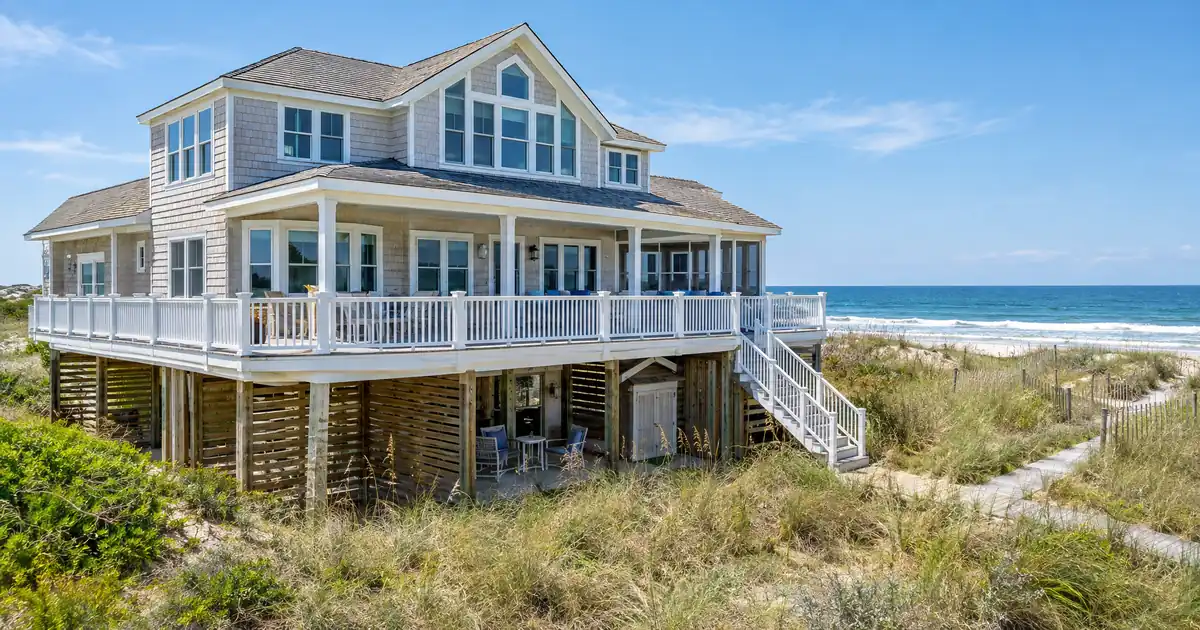
How A Short-term Rental Dscr Loan Reads Prior Ownership Experience — The Quick Read: Most long-term-rental DSCR loans don’t care if you’ve owned a rental before. Short-term rentals are the exception. Across the wholesale network Lendmire works with, most short-term rental programs want to see twelve months of income-property ownership somewhere in your last thirty-six months before they’ll count nightly income at full value. No history, no problem on a long-term rental file. That same gap on an Airbnb purchase usually pushes you toward a different documentation path.
That’s the direct answer. Here’s why the industry drew that line, how a file actually gets read, and what a first-time short-term rental buyer can do about it.
Short-Term Rental Calculator
Run the STR numbers in your market
Rate source: Freddie Mac 30-yr average via FRED® — Federal Reserve Bank of St. Louis · effective Sep 17, 2026
Prefilled with local estimates — enter your nightly rate, occupancy, taxes, and insurance for a more accurate picture.
Short-term rental income is documented with a 12-month history or a market data report. Program parameters update from Lendmire’s centralized guideline source.
As of Sep 17, 2026 · General Freddie Mac market benchmark, not a Lendmire loan offer. Nightly rate, occupancy, taxes, and insurance are editable estimates. Qualifying income for short-term rentals varies by program — some use appraisal market rent, others use documented STR history or projections — and is confirmed in underwriting. Not a Loan Estimate, approval, or commitment to lend. Program availability and eligibility are subject to lender guidelines, credit approval, property review, and underwriting.
Why Does Prior Ownership Matter More For Short-Term Rentals Than Long-Term Rentals?
A long-term rental produces one number: monthly lease rent. A short-term rental produces income that moves with seasons, marketing, cleaning turnover, and platform algorithms — and someone has to manage all of it. Lenders treat that operational complexity as real risk, separate from whether the property cash flows on paper.
This is a coverage-ratio conversation, not a credit-score conversation. DSCR — debt-service coverage ratio — is simply the property’s monthly rental income divided by its full monthly housing payment, including principal, interest, taxes, insurance, and any HOA dues. A ratio at or above 1.00 means the rent covers the payment. On long-term rentals, most standard DSCR programs will run that math with zero regard for whether you’ve ever owned a rental before. The complete DSCR loans guide walks through that baseline mechanic in more depth.
Short-term rentals get an extra layer of scrutiny. Across the programs Lendmire places files with, lenders ask for investor experience specifically when qualifying STR income. This isn’t just a soft preference — it’s a stated program condition. The reasoning is simple: a nightly-rental business can swing hard for a first-year operator who hasn’t yet managed turnover, pricing, or seasonality. The lender is underwriting that operational risk along with the property itself.
What Counts As “Experience” On A Short-Term Rental File?
Owning an income property at some point in the last thirty-six months, with at least twelve months of that ownership on record, is the benchmark most short-term rental programs in Lendmire’s network apply. It doesn’t have to be another short-term rental — a long-term rental you’ve held for a year satisfies it on most files.
That window matters both ways. Own a rental eight years ago and sold it? On many programs that history has aged out and doesn’t count. Bought your first rental property fourteen months ago and still hold it? That typically clears the bar. The rule is about recent, demonstrated exposure to owning income property — not a lifetime resume.
Notice what this isn’t: it isn’t a portfolio-size test. A borrower with one rental held for thirteen months generally clears the same experience bar as a borrower with ten properties. Depth of portfolio isn’t what’s being measured — recency and duration of exposure to owning income-producing real estate is.
Does This Apply To Purchases, Refinances, Or Both?
The experience requirement applies to both purchases and refinances, but the income documentation differs. On a refinance, the subject property itself often supplies the track record: twelve months of actual operating history from that specific address. On a purchase, there’s no operating history yet on the new property. So the appraisal’s short-term-rent analysis does the job instead, typically counted at a discount to gross projected income.
Either way, the borrower’s own experience question stays separate from the property’s income question. A first-time investor buying a proven, long-running Airbnb still needs to clear the borrower-experience bar even though the property itself has years of booking history. The property’s numbers and the borrower’s résumé are two different underwriting questions, and short-term rental programs check both.
What Happens If You Have No Prior Ownership History?
Pure short-term rental programs generally aren’t the path for a true first-time real estate investor buying their first-ever property as an Airbnb. That’s a hard structural gap, not a paperwork fix — most STR-specific underwriting in Lendmire’s network is built around borrowers who already own or have owned income property.
There are a few practical alternatives. One option: qualify the deal as a standard long-term-rental DSCR purchase first, using market-rate lease comparables instead of nightly projections. Then revisit a refinance into short-term rental treatment once you’re past the ownership threshold. Another option: bring in a co-borrower who already meets the experience bar. A spouse, partner, or family member with qualifying rental history can often satisfy the requirement for the household. A third option: buy your first rental as a long-term hold, build the twelve-month track record, then come back to short-term rental financing once that history exists.
None of these are workarounds in the sneaky sense — they’re the normal on-ramps the industry built because short-term rentals are, functionally, a small hospitality business layered on top of a mortgage. What Is a Short-Term Rental Loan covers how STR-specific underwriting differs from a standard rental purchase in more detail.
How Does Income Get Verified Once Experience Clears?
Once a borrower clears the experience threshold, attention shifts to how the income itself gets counted. Here, documentation source matters more than borrower biography. On a refinance with an operating property, twelve months of actual booking-platform income is the standard input, typically applied at roughly 80% of gross to build in a cushion for vacancy, cleaning costs, and platform fees. On a purchase, there’s no operating history to pull from yet. So the appraisal produces a short-term-rent analysis instead, and that projected figure gets discounted the same way.
What Counts as Short-Term Rental Income for a Lender breaks down exactly which documentation sources get accepted and how the haircut gets applied.
Fannie Mae’s appraisal guidance is useful here, even though DSCR loans aren’t agency loans. The standard rent-schedule form was never built to turn a nightly rate into a monthly figure through simple multiplication. Fannie Mae’s own appraiser guidance says clearly that doing this ignores furniture, services, vacancy, and operating expenses. So an appraiser doing a short-term-rent analysis must build the number from actual comparable short-term rental performance, not nightly-rate math. That’s exactly why a properly done analysis carries real weight in underwriting.
What Does A Coverage Scenario Actually Look Like?
Picture an investor who bought a long-term rental fourteen months ago and now wants to purchase a second property, structured this time as a short-term rental. That fourteen-month hold clears the recent-ownership window on most programs in Lendmire’s network.
For a new purchase, the appraisal’s short-term-rent analysis becomes the income input. Lenders discount it to roughly 80% of gross projected revenue. If that discounted figure covers the full monthly obligation — principal, interest, taxes, insurance, and HOA where it applies — at 1.00x or better, the file can move forward under standard STR terms. That typically means up to 75% loan-to-value for a purchase, subject to a 660 credit floor on most programs. If the discounted number falls below 1.00x, the file isn’t automatically dead. Select programs in the network will still consider sub-1.00 coverage, though loan-to-value and terms adjust to offset the thinner margin, subject to underwriting.
Across the files Lendmire’s team sees, one mistake trips up new short-term rental buyers more than any other. It isn’t the coverage math — it’s assuming a market-data tool like AirDNA supplies the number the lender will actually use. Most programs lean first on the appraisal’s own comparable analysis or actual platform history. They treat outside projection tools as supplemental color, not the figure underwriting relies on.
Does Experience Change The Leverage Or Terms You Get?
Experience mainly functions as a gate on short-term rental programs, not a pricing lever once you clear it — the leverage ladder from there runs off loan size, credit, and coverage, not portfolio depth. A borrower who just cleared the twelve-month bar and a borrower with a decade of ownership history generally see the same leverage table if their credit, reserves, and coverage ratio otherwise match.
Where experience shows up structurally: it decides whether the STR path is open at all, and it can influence reserve requirements. Most programs in Lendmire’s network want six months of PITIA held in reserve on the subject property, stepping up to twelve months for first-time investors on the applicable programs — first-time meaning new to owning income property generally, a different and stricter bar than the STR-specific experience test. Credit floors run from 660 on most tiers up to 700 above the $3,000,000 mark, with two appraisals required above $2,000,000 loan size regardless of borrower history.
Key Terms Defined
DSCR (debt-service coverage ratio): monthly rental income divided by the full monthly housing payment; 1.00 means rent exactly covers the payment.
DSCR vs. conventional financing
Two common ways to finance an investment property in this market. They qualify you differently — here’s how investors weigh them.
Why investors choose it
- Qualifies on the property’s rental income — no personal tax returns, W-2s, or pay stubs needed to document income.
- No personal debt-to-income ceiling to clear, so existing mortgages and obligations don’t cap your borrowing the same way.
- Can be closed in an LLC, keeping the property inside a business entity.
- Built for scaling — not held to the limit on number of financed properties that conventional financing applies.
- Underwriting centers on the deal: generally qualifies when the rent covers the payment, a 1.00x coverage ratio being a common baseline (confirmed in underwriting).
- Designed specifically for investment property, including long-term and, where the program allows, short-term rentals.
Where it’s strong
- Often the lowest ongoing financing cost for a buyer who fully qualifies on personal income — a fit for a first property or a cost-first purchase.
Trade-offs for investors
- Requires full personal income documentation and must fit within a debt-to-income limit — salary, existing debts, and other mortgages all count.
- Typically held in your personal name rather than a business entity.
- Caps how many financed properties you can carry, which can become a ceiling as a portfolio grows.
- Evaluates you as a borrower as much as the property, which usually means more paperwork.
How investors usually choose: a first or single property often optimizes for the lowest financing cost; portfolio builders often optimize for leverage, vesting in an LLC, and scaling past conventional caps. The right answer depends on your goals, the property, and current guidelines — both paths run through select lenders in Lendmire’s wholesale network, with eligibility and terms confirmed in underwriting.
Business-purpose loan: a loan made to a property held for investment, not owner-occupied, which is why it’s underwritten on the property’s income rather than the borrower’s personal ability to repay.
Seasoning: the length of time a borrower has owned a property before a lender will count certain history or allow a certain type of refinance.
PITIA: principal, interest, taxes, insurance, and association dues combined — the full monthly obligation a DSCR ratio is measured against.
No-ratio loan: a program that doesn’t require a published minimum DSCR figure, available through select lenders in the network to $2,000,000, subject to underwriting. These specifics are subject to lender guidelines and a full review of property, leverage, and credit.
DSCR loans are built for non-owner-occupied investment properties. Because they are business-purpose investor loans, lenders review them differently from a standard owner-occupied mortgage. That’s part of why property income, not personal employment history, drives most of the file. This business-purpose approach traces back to the CFPB’s Regulation Z exemption for loans made to acquire or maintain rental property that isn’t owner-occupied.
Frequently Asked Questions
Does a long-term-rental DSCR loan require any prior ownership experience?
Generally, no. Most standard long-term-rental DSCR programs in Lendmire’s network qualify purely on whether the property’s rent covers the payment, with no landlord-history requirement built into the guideline. Short-term rentals are the exception where experience becomes a stated condition.
What if my only rental experience is a long-term rental, not a short-term one?
That typically still counts on most short-term rental programs. The requirement is generally about having owned income property for at least twelve months in the last thirty-six, not specifically about prior Airbnb management.
Can a co-borrower’s experience help me qualify for a short-term rental purchase?
Often, yes — bringing on a co-borrower who independently meets the ownership-history bar can satisfy the requirement for the file, subject to underwriting and program guidelines. This is one of the more common workarounds for a first-time investor targeting a short-term rental as their first purchase.
How does a lender verify twelve months of prior ownership?
Typically through a combination of the prior deed or closing documents, mortgage statements or payoff history, and sometimes tax filings showing the property as a rental.
If I don’t have experience, is a long-term-rental DSCR loan a reasonable first step?
It’s a common one. Buying an income property as a standard rental first, using market-rate lease comparables rather than nightly projections, builds the ownership history that later opens short-term rental financing on a future purchase or refinance.
If you’re weighing a short-term rental purchase or refinance and want to see how your ownership history, credit profile, and the property’s projected income fit together, Lendmire can help you compare DSCR loan options built around those specifics.
For current guidelines and terms, see Lendmire’s super jumbo DSCR loan programs page.
Self-employed borrowers can compare both super jumbo programs on Lendmire’s self-employed mortgages page.
About Lendmire
Lendmire (NMLS# 2371349), a non-QM mortgage broker serving investors in 40 markets including Washington, D.C., helps structure DSCR scenarios commonly evaluated around a property’s rental income rather than personal income paperwork, subject to lender guidelines. A Scotsman Guide Top Mortgage Workplace in 2025 and 2026, Lendmire places loans through wholesale investor lenders and is not a direct lender.
Investors focused on short-term rentals can review DSCR loans for Airbnb and short-term rentals.
Lendmire’s Top Mortgage Workplace recognition is documented by Scotsman Guide 2025 Top Mortgage Workplace and Scotsman Guide 2026 Top Mortgage Workplace.
Get Started
Ready to find the right loan for you?
In about 30 seconds you can review financing options available for your home or investment property. No commitment required.
Informational only. Not a Loan Estimate, approval, or commitment to lend. Program availability and eligibility are subject to lender guidelines, credit approval, property review, and underwriting.
References
1. Fannie Mae — Appraiser Update June 2024
2. CFPB Regulation Z §1026.3 Exempt Transactions
Brandon Miller
Founder & CEO, Mortgage Loan Originator, Lendmire LLC
- Mortgage Loan Originator · NMLS# 1129696 · Verify on NMLS Consumer Access
- North Carolina Real Estate Broker · License# 343312 · Verify on NCREC
- North Carolina Insurance Producer · License# 19053198 · Property, Casualty, Life, Health · Verify on NAIC SBS
- Lendmire LLC · Firm NMLS# 2371349 · Verify firm licensure
Disclosure information. Lendmire is a state-licensed mortgage brokerage under NMLS# 2371349. Lendmire is not a depository institution, direct lender, or financial advisor — all loans referenced are placed through wholesale lender partners and are subject to each lender's underwriting standards. This article is provided for general informational purposes and is not a commitment to lend, nor does it constitute financial, legal, or tax advice. Loan programs, terms, rates, and qualification standards change without notice and depend on borrower profile, property type, and the state in which the subject property is located. Equal Housing Opportunity provider. NMLS Consumer Access: nmlsconsumeraccess.org.


