
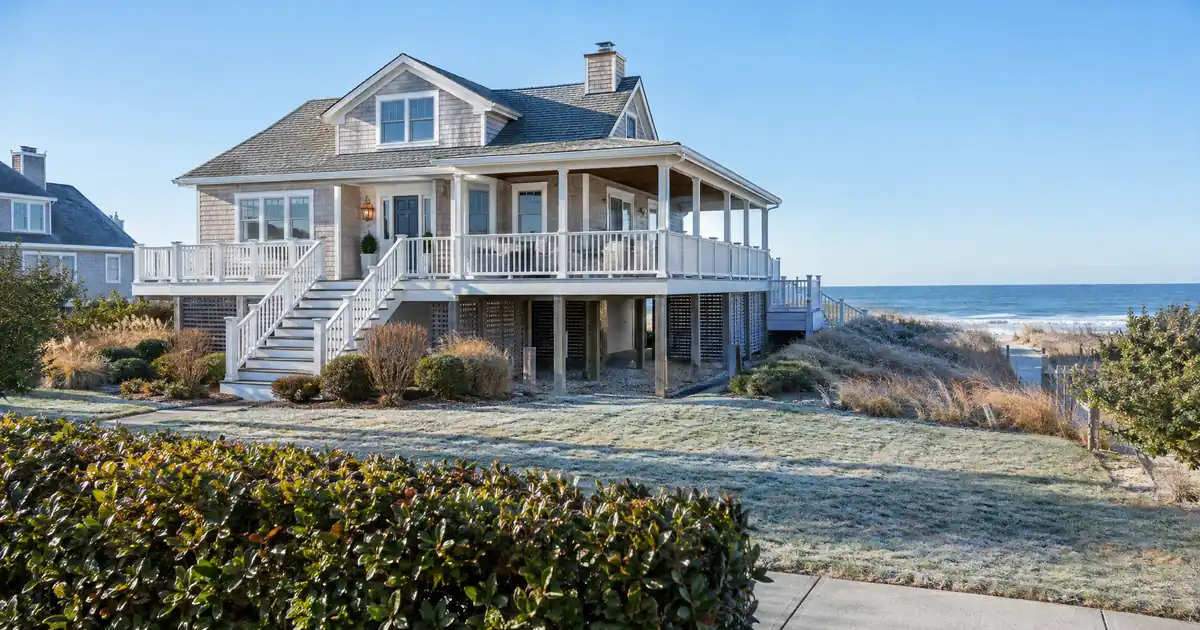
The Quick Read: It depends on how you really use the house, but a property run as a full-time Airbnb belongs on a DSCR loan, not a second-home mortgage, because a second home assumes real personal use and cannot count the rent toward qualifying, while a DSCR loan is built for business-use rentals. DSCR stands for debt service coverage ratio. The lender checks whether the property’s rent covers its monthly payment. A second-home loan tests you instead.
- A second home is for a house you use yourself, with rental activity on the side.
- A DSCR loan is reviewed primarily on property-level rental income covering the payment, subject to lender guidelines.
- If a manager or booking calendar controls the house most of the year, it reads as a business.
- Existing owners can usually move from one loan to the other by documenting a hosting history.
- The second-home loan can still be the right call if your family uses the house most of the year.
Key Terms Defined
Second-home mortgage: A loan for a one-unit home you occupy for part of the year and control yourself. It is underwritten on your personal income and debts.
DSCR loan: A business-purpose investor loan. The lender compares the property’s rent to its full monthly obligation and qualifies the file primarily on that coverage.
PITIA: Principal, interest, taxes, insurance, and association dues. It is the full monthly housing payment that a DSCR ratio divides into the rent.
Hosting history: A record of the property’s actual bookings and income, such as platform payout reports. Lenders use it to size short-term-rental income on a refinance.
Seasoning: The waiting period between buying a property and refinancing it. Cash-out refinances commonly expect about six months.
Debt-to-income ratio (DTI): Your monthly debts divided by your monthly income. Second-home underwriting leans on it heavily.
Short-Term Rental Calculator
Run the STR numbers in your market
Rate source: Freddie Mac 30-yr average via FRED® — Federal Reserve Bank of St. Louis · effective Oct 15, 2026
Prefilled with starting assumptions — enter your nightly rate, occupancy, taxes, and insurance for a more accurate picture.
Short-term rental income is documented with a 12-month history or a market data report. Program parameters update from Lendmire’s centralized guideline source.
As of Oct 15, 2026 · General Freddie Mac market benchmark, not a Lendmire loan offer. Nightly rate, occupancy, taxes, and insurance are editable estimates. Qualifying income for short-term rentals varies by program — some use appraisal market rent, others use documented STR history or projections — and is confirmed in underwriting. Not a Loan Estimate, approval, or commitment to lend. Program availability and eligibility are subject to lender guidelines, credit approval, property review, and underwriting.
Why a Second-Home Loan Fails a Full-Time Host
A second-home loan is a personal-use product. The lender prices and approves it on the idea that you will stay in the house yourself. Your income, credit, and other debts do the qualifying work.
A full-time Airbnb breaks that idea in three places.
The rent cannot help you qualify. On a second home, income from renting the financed house does not count toward your approval. You qualify on your own earnings. The new payment also lands in your DTI. For a host with several properties, or a self-employed owner with write-offs, that test is often the one that fails.
You need real control of the house. A second home must be yours to use. A manager who controls the calendar, or a rental pool that requires the unit to be offered for rent, undercuts that. Nolo’s explanation of the second-home rider says the borrower keeps the property available primarily for personal use and enjoyment for at least one year, unless the lender agrees otherwise in writing.
The label has to match reality. Calling a house a second home does not make it one. Booked most nights, with cleaners and a pricing tool running it, it is an investment property. Funding it as anything else is a misstatement on the file. The cheaper entry cost is the temptation. It is also the trap.
(The occupancy promise is the one signature on the file that a lender can check with a drive-by.)
Where Is the Line Between Occasional and Full-Time?
There is no clean day count that sorts every file. Agency guidance for second homes is written in soft terms. The Fannie Mae Selling Guide says the borrower occupies the home for some portion of the year, with exclusive control, and that it is not a rental property. If rental income is identified, the loan can still be delivered as a second home, but only if that income is not used to qualify. That is a brief contrast. It does not govern DSCR files, which follow each program’s own rules.
DSCR loans are designed for non-owner-occupied investment properties. Because they are business-purpose investor loans, they are reviewed differently from a standard owner-occupied mortgage. One federal reference point is useful here. The CFPB’s rule on business-purpose credit says a property cannot be treated as non-owner-occupied if you expect to occupy it more than 14 days in the coming year. Many DSCR programs build their occupancy language around a similar idea, and individual programs can be stricter. Read your own paperwork.
Use this self-test as a starting point.
| Your use pattern | Likely fit | What to do |
|---|---|---|
| Family uses it most of the year, rents a few weeks | Second home | Keep rent out of qualifying |
| You stay a month or so, rent the rest | Gray zone | Choose deliberately; ask the lender |
| Booked most nights, you stay a short time | Investment property | Use a DSCR loan |
| Manager or pool controls the calendar | Not a second home | Use a DSCR loan |
The gray zone is the awkward one. A month of personal use is too much for most investor occupancy language and too little for a true second home. Neither product fits cleanly. Pick the side that matches where you honestly spend your time, then structure the loan around that.
What Happens When Your Use Drifts From the Promise
Plans change. You buy a second home, host a few weekends, and two years later the house is a full-time business. That is not a crime by itself. The risk is carrying a loan whose paperwork no longer describes the property.
Lenders and servicers do check. Trade press has reported on rising occupancy enforcement on investor loans, including a case where a servicer sent an inspector to verify occupancy, something the borrower had acknowledged at closing as possible. A mismatch can lead to loan problems that are far more expensive than a different loan structure.
The practical cure is simple. Do not wait for a letter. Once the property is a business, refinance into a loan that says so. That is a lot easier to explain than a discovered mismatch.
Second-Home Loan vs DSCR, Side by Side
| Factor | Second-home loan | DSCR loan |
|---|---|---|
| What is tested | You: income, DTI, credit | The property’s rent vs payment |
| Rent counts to qualify? | No | Yes, via hosting history or market data |
| Documents | W-2s, pay records, traditional personal-income documentation | Entity papers, booking records, appraisal, affidavit |
| Units and control | One unit; you control use | Often 1-4 units; a manager is fine |
| Leverage | Varies by lender | STR purchase up to 75% LTV |
| Cost | Usually friendlier | Typically more price and more down |
DSCR costs more. Say it plainly. It is the compliant structure for a property that earns its living as a rental, and you are not buying a discount by picking the other product. The trade is also not one-sided. DSCR removes personal-income tests, which is often what unlocks the next purchase.
Run the Same Property Through Both
Consider a modeled single-family cabin, purchased at 75% LTV (25% down), with booking income documented from a hosting history. These inputs are assumptions for illustration, not market data. Final terms depend on lender guidelines, property type, leverage, and the borrower’s complete credit picture.
Under a second-home loan, the booking income is ignored. The whole payment goes into your DTI, and you stand or fall on your own paychecks and other debts.
Under a DSCR loan, assume the booking income covers the full PITIA about 1.25x. That clears the 1.00 mark where select programs start. Put more down, say 30% (70% LTV), and the smaller loan balance pushes coverage up to roughly 1.3x. A smaller payment helps, but it never erases credit floors, reserve rules, or property eligibility. The strongest files clear both tests: enough equity and enough rental coverage. These specifics are subject to lender guidelines and a full review of property, leverage, and credit.
Now flip the case. Suppose rent covers only about 0.95x. On many programs, 1.00 is where select programs start. A separate select-lender path takes coverage below 1.00, with leverage and terms adjusted. That path exists, but expect a bigger down payment and different terms.
One caution about reading the number. Clearing 1.00 is not positive cash flow. DSCR compares rent to PITIA only. Repairs, vacancy, management fees, utilities, and capex sit outside the calculation. A host should budget for those separately.
Lenders also look harder at short-term-rental income than at a lease, because bookings swing by season. AirDNA’s explainer on coverage ratios makes the same point about lender scrutiny.
DSCR vs. conventional financing
There are two common ways to finance an investment property, and they qualify you differently — here’s how investors weigh them.
Why investors choose it
- Qualifies on the property’s rental income — no personal tax returns, W-2s, or pay stubs needed to document income.
- No personal debt-to-income ceiling to clear, so existing mortgages and obligations don’t cap your borrowing the same way.
- Can be closed in an LLC, keeping the property inside a business entity.
- Built for scaling — not held to the limit on number of financed properties that conventional financing applies.
- Underwriting centers on the deal: generally qualifies when the rent covers the payment, a 1.00x coverage ratio being a common baseline (confirmed in underwriting).
- Designed specifically for investment property, including long-term and, where the program allows, short-term rentals.
Where it’s strong
- Often the lowest ongoing financing cost for a buyer who fully qualifies on personal income — a fit for a first property or a cost-first purchase.
Trade-offs for investors
- Requires full personal income documentation and must fit within a debt-to-income limit — salary, existing debts, and other mortgages all count.
- Typically held in your personal name rather than a business entity.
- Caps how many financed properties you can carry, which can become a ceiling as a portfolio grows.
- Evaluates you as a borrower as much as the property, which usually means more paperwork.
How investors usually choose: a first or single property often optimizes for the lowest financing cost; portfolio builders often optimize for leverage, vesting in an LLC, and scaling past conventional caps. The right answer depends on your goals, the property, and current guidelines — both paths run through select lenders in Lendmire’s wholesale network, with eligibility and terms confirmed in underwriting.
How the Switch Works for an Existing Owner
Most hosts reading this already own the house. The move from a second-home loan to DSCR is a refinance, and it is usually straightforward when the paper trail is clean.
Short-term-rental files on the wholesale network Lendmire works with typically look like this:
- Hosting history: about 12 months of host experience is the common expectation.
- Credit: a 640 minimum score is typical for short-term-rental files, subject to lender guidelines.
- Refinance leverage: up to around 70% LTV on a short-term-rental refinance, and cash-out up to 70% on short-term-rental collateral.
- Coverage: on purchases, 1.00 is where select programs start. On refinances, 1.00 is also where select programs start.
- Seasoning: about six months is the common expectation on cash-out.
- Reserves: commonly around six months of PITIA, though they vary by lender, leverage, loan size, and transaction type.
- Loan size: standard programs run up to $3,000,000.
- Property types: manufactured homes, log homes, and barndominiums are not offered.
You also sign a business-purpose and occupancy affidavit. It is a real statement. Sign it only when it is true.
If you want the full program picture, the complete DSCR loans guide covers the basics. For the conversion itself, Lendmire’s piece Should a Full-Time Airbnb Move From a Second-Home Loan to DSCR? goes deeper.
Across the files a DSCR broker sees, the common stall point is thin or messy booking records. Hosts who run income through several platforms, or who let a manager collect payouts without clean reports, spend more time proving income than qualifying for it. Gather twelve months of statements before you apply.
Keep It, Refinance It, or Go DSCR?
| Situation | Likely move |
|---|---|
| Family uses it most of the year | Stay on the second home |
| Booked most nights, 12+ months of history | Refinance into DSCR |
| Under 12 months of hosting | Build history first, then refinance |
| Self-employed or high DTI | DSCR; it tests the property |
| Rent covers under 1.00x | Select-lender path; leverage and terms adjusted |
Staying put is a legitimate answer. If your own use dominates, the second-home loan fits and the friendlier cost is earned. Switching only makes sense when the house is a business.
One more point sits outside the loan. Short-term rental rules can vary by city, county, HOA, and property type, so investors should confirm local rules before relying on projected rental income. Tax treatment can depend on how the funds are used and how the property is held; investors should keep clear records and speak with a qualified tax professional before relying on any deduction.
This one is a toss-up for some hosts. A low-use owner who hosts heavily only in summer might be comfortable either way. The stronger play is usually whichever structure matches the paperwork you would be proud to show a lender.
Frequently Asked Questions
Can rental income help me qualify for a second-home mortgage?
No. Rent from the financed house does not count toward qualifying on a second-home loan, whichever booking platform produces it. You qualify on your own income, credit, and debts. A DSCR loan reverses that, qualifying primarily on property-level rental income covering the payment, subject to lender guidelines.
Can I rent my second home a little and keep the loan?
Occasional rental use can fit a second home, as long as you keep real personal use and control of the calendar. Rental pools and manager-controlled calendars break that fit. Read the occupancy language in your own loan documents, and ask the servicer in writing if you are unsure.
Do I have to tell my lender when the house becomes a full-time rental?
Your documents describe how the property will be used. When use changes in a way those documents do not allow, the cleanest fix is refinancing into a loan that matches the new use. Waiting for a servicer to find out first is the weaker path.
Can I refinance a second home into a DSCR loan?
Yes, subject to lender guidelines. You certify that the property is now a business-purpose rental. For short-term rentals, expect about 12 months of hosting history, a 640+ score, and leverage up to around 70% LTV on a refinance or cash-out against short-term-rental collateral.
Do all DSCR lenders finance short-term rentals?
No. Lenders differ on short-term-rental income, history requirements, and leverage. Across a wholesale network, a broker can compare how several lenders treat the same property.
Next Step
If you are buying or refinancing a rental property and want to see how the numbers work, Lendmire can help you compare DSCR loan options based on the property income, credit profile, leverage, and investor goals. Lendmire is a mortgage broker arranging DSCR financing through select lenders in its wholesale network, across 41 markets including Washington, D.C. Every file is underwritten individually, and nothing here is a commitment to lend.
About Lendmire
Lendmire (NMLS# 2371349) is a mortgage brokerage focused on DSCR investor financing, helping arrange programs through wholesale and investor-lending channels in 41 markets, including Washington, D.C. DSCR loans are evaluated by the lender on property cash flow rather than personal income, subject to lender guidelines, supporting LLC closings and accommodating investors with four or more financed properties. Scotsman Guide Top Mortgage Workplace in both 2025 and 2026.
Get Started
Ready to find the right loan for you?
In about 30 seconds you can review financing options available for your investment property. No commitment required.
Informational only. Not a Loan Estimate, approval, or commitment to lend. Program availability and eligibility are subject to lender guidelines, credit approval, property review, and underwriting.
References
1. Nolo, Investment Property vs. Second Home
2. Fannie Mae Selling Guide, Occupancy Types
3. CFPB, Regulation Z Section 1026.3
4. MPA, DSCR Loan Growth and Mortgage Fraud
5. AirDNA, Debt Service Coverage Ratio
This article is part of Lendmire’s short-term rental loan program — full qualification details, guidelines, and scenarios live on the program page.
Related reading: How Much Can You Borrow With a Jumbo DSCR Loan? · How to Check a DSCR Lender Upfront as a First-Time Landlord · Super Jumbo DSCR vs IO ARM Mortgage When a PAL Gets a Maintenance Call
Brandon Miller
Founder & CEO, Mortgage Loan Originator, Lendmire LLC
- Mortgage Loan Originator · NMLS# 1129696 · Verify on NMLS Consumer Access
- North Carolina Real Estate Broker · License# 343312 · Verify on NCREC
- North Carolina Insurance Producer · License# 19053198 · Property, Casualty, Life, Health · Verify on NAIC SBS
- Lendmire LLC · Firm NMLS# 2371349 · Verify firm licensure
Disclosure information. Lendmire is a state-licensed mortgage brokerage under NMLS# 2371349. Lendmire is not a depository institution, direct lender, or financial advisor — all loans referenced are placed through wholesale lender partners and are subject to each lender's underwriting standards. This article is provided for general informational purposes and is not a commitment to lend, nor does it constitute financial, legal, or tax advice. Loan programs, terms, rates, and qualification standards change without notice and depend on borrower profile, property type, and the state in which the subject property is located. Equal Housing Opportunity provider. NMLS Consumer Access: nmlsconsumeraccess.org.