
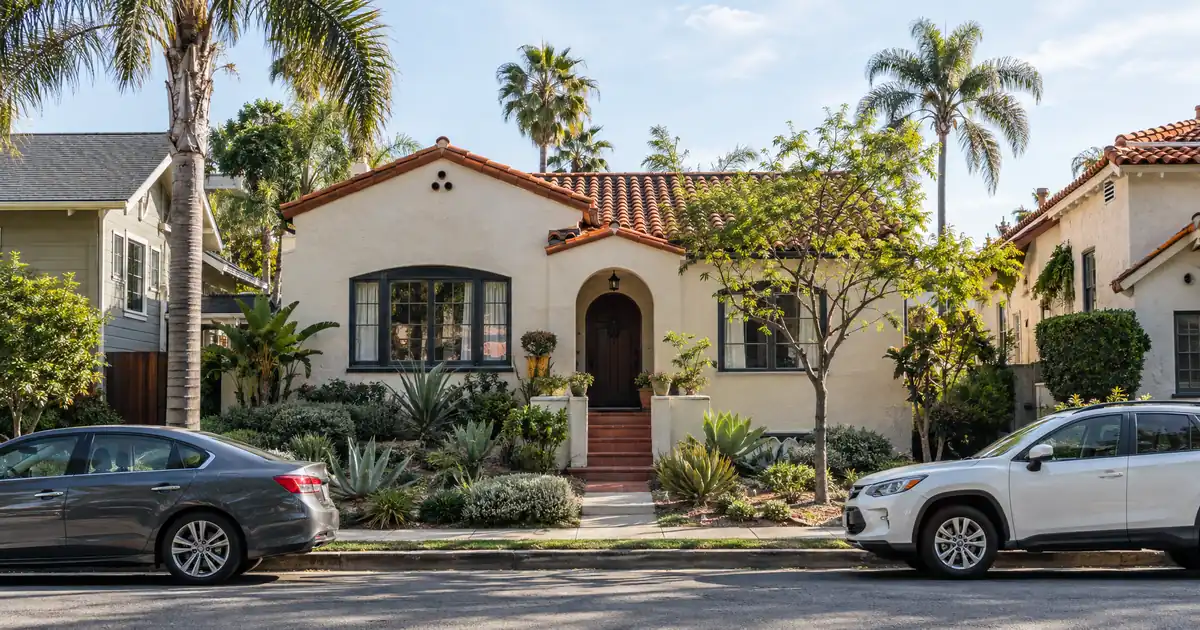
The Quick Read: Yes, a non-owner-occupied Los Angeles rental can generally be cash-out refinanced on a DSCR loan, which qualifies primarily on property-level rental income covering the payment, subject to lender guidelines. Rent control changes how much cash you can safely pull, not whether the loan exists. Coverage, not equity, usually sets the ceiling.
- Cash-out tops out around 75% LTV on a standard rental, across most of the network.
- Expect about 6 months of ownership, measured from the recorded deed.
- 1.00 coverage is where select programs start; stronger ratios open better terms.
- Credit tiers run from a 620 floor up through 700+.
- Rent-stabilized units are tested on in-place rent, not pro forma rent. These specifics are subject to lender guidelines and a full review of property, leverage, and credit.
What Is a DSCR Cash-Out Refinance on a Rental?
A cash-out refinance replaces your current mortgage with a larger one and hands you the difference. A DSCR loan is an investor loan that checks whether the property’s rent covers its monthly payment (principal, interest, taxes, insurance, and HOA dues, together called PITIA). DSCR means debt service coverage ratio.
DSCR Cash-Out Calculator
Run the cash-out numbers in your market
Rate is an editable market assumption — the live benchmark loads when available.
Prefilled with starting assumptions — enter your property’s value, balance, taxes, and insurance for a more accurate picture.
Program parameters update from Lendmire’s centralized guideline source. Taxes and insurance are editable estimates.
Fallback assumption · General Freddie Mac market benchmark, not a Lendmire loan offer. Property value, balance, taxes, and insurance are editable estimates. Maximum loan-to-value varies by lender, program, property type, and seasoning. Not a Loan Estimate, approval, or commitment to lend. Program availability and eligibility are subject to lender guidelines, credit approval, property review, and underwriting.
Here is the tension. Taking cash out raises the loan balance, and a bigger balance means a bigger payment. That lowers your coverage. So every cash-out file has two tests, and you must pass both: enough equity and enough rent.
Lendmire’s complete DSCR loans guide covers the basics if the terms are new.
Why Is a Los Angeles Rental Eligible?
DSCR loans are designed for non-owner-occupied investment properties. Because they are business-purpose investor loans, they are reviewed differently from a standard owner-occupied mortgage. The Federal Reserve’s own compliance manual treats credit to acquire or improve non-owner-occupied rental property as business-purpose credit. Nothing about a Los Angeles address changes that.
The property must be an investment, not your home. A rental you live in does not fit. You can typically hold title individually or in an LLC, subject to program terms.
Not every property type is eligible. Manufactured homes, log homes, and barndominiums fall outside these programs. Standard Los Angeles rentals, such as single-family homes, condos, and 2-4 unit buildings, are the usual fit.
How Does the Process Work?
1. Eligibility check. The property is non-owner-occupied and held for rental.
2. Appraisal plus rent schedule. The appraisal sets value, which drives LTV. The rent opinion drives coverage. Appraisers use Fannie Mae’s Form 1007 for single-family rent schedules and Form 1025 for 2-4 unit properties.
3. Coverage test. Monthly rent divided by PITIA.
4. Sizing. Your cash is capped by the smaller of two limits: appraised value times the 75% cash-out LTV, or the loan size your rent can support at the required coverage. From that smaller number, subtract your payoff and closing costs.
5. Documents. Expect leases, entity documents if held in an LLC, a payoff statement, insurance, title work, and proof of reserves. Personal income documents are not the focus. Terms depend on the lender’s guidelines, the property type, the leverage, and a full review of the credit profile.
Reserves vary by lender, leverage, and loan size. Many files want about 6 months of PITIA in reserve. Loans above $1,500,000 typically step up to about 9 months.
What Makes Los Angeles Different?
Rent regulation is the local wrinkle. Rent control is about whether the lender can count rent at its market level. It is not about whether you can borrow.
The City of Los Angeles Rent Stabilization Ordinance covers units built on or before October 1, 1978. Most other residential units may fall under the Just Cause Ordinance instead, which took effect January 27, 2023. That second ordinance limits evictions but does not cap rent.
So “all Los Angeles rentals are rent controlled” is a myth. Build date matters.
For a stabilized building, run the coverage test on actual in-place rents. A rent schedule may show market comps well above what your tenants pay. A lender generally credits what the lease supports, so use the lower number when you plan.
Also confirm which jurisdiction you are in. Unincorporated Los Angeles County has its own Rent Stabilization and Tenant Protections Ordinance, separate from the city’s rules. Do not assume city rules apply to every Los Angeles address.
Honestly, this is a market where equity runs ahead of rent. Many Los Angeles rentals carry high values against modest rents. That makes coverage the binding limit on most files, and it often pushes investors to take less than the maximum.
Does the Math Still Work? A Scenario
Say you own a Los Angeles duplex bought years ago. Your value has climbed, and you owe well under half of it. On value alone, the 75% LTV ceiling would let you pull a large sum. The exact numbers vary by lender and program and follow a full review of property, leverage, and credit.
Now test the rent. Suppose your in-place rents cover the current payment at about 1.5x. A max cash-out might drop that to roughly 1.0x, right at the edge of a select program’s floor. A smaller cash-out might keep you near 1.2x, with better terms and more cushion. Final terms depend on the lender’s guidelines, the property type, and the borrower’s complete credit picture.
Those ratios are illustrative, not a quote. The point is the order of operations. Equity gets you to the door, and rent decides how far in you go.
Clearing 1.00 also does not mean the property cash flows. DSCR compares rent to PITIA only. Repairs, vacancy, management, utilities, and capital expenses sit outside the calculation. Leave yourself room.
If your coverage lands below 1.00, a separate path exists. Programs below 1.00 are available through select lenders in the network, with leverage and terms adjusted. No-ratio structures are available only through select lenders, generally for borrowers who already own a primary residence.
How Long Do You Have to Own the Property?
Seasoning is the waiting period between buying and refinancing. Most programs want about 6 months of ownership, counted from the recorded deed. Seasoning is lender policy, not law, which is why it varies from lender to lender.
Inside that window, the loan is typically sized on cost: the price you paid plus documented improvements. After it, the loan is sized on appraised value. That is why BRRRR investors (buy, rehab, rent, refinance, repeat) watch the calendar.
Three special cases come up often:
- Bought with cash. Delayed financing can waive the seasoning wait for a true cash buyer, with proceeds sized near cost.
- Bought with hard money. You can usually refinance the bridge loan on a payoff-only basis. Cash back waits for seasoning.
- Free and clear for years. Seasoning is no issue. Value and rent drive the file.
Delayed financing waives only the wait. Rent coverage, appraisal, reserves, credit, and LTV caps all still apply.
What Credit and Loan Size Do You Need?
Credit tiers typically run at 620, 660, 680, and 700. A 620 floor exists in parts of the network. Most programs want around 660, and 700+ unlocks the strongest leverage tiers. Loan amounts go up to $3,000,000 on standard programs. Balances below the standard-program minimum route through select lenders in the network.
A bigger down payment or lower balance can lift coverage. It never erases leverage caps, credit floors, reserve rules, or property eligibility.
What About Short-Term Rentals and Other Cases?
Short-term rentals are underwritten differently. Cash-out on short-term rental collateral is limited to 70% LTV, versus 75% on a standard rental. Expect a 640+ score and about 12 months of hosting history. Short-term rental rules can vary by city, county, HOA, and property type, so investors should confirm local rules before relying on projected rental income. Each figure is subject to lender guidelines and a complete review of property type, leverage, and credit.
Tenant-occupied properties are normal for DSCR files. Leases support the rent side of the test.
Cash-Out Versus Other Moves
| Option | What it does | Main trade-off |
|---|---|---|
| DSCR cash-out | Replaces loan, returns cash | Coverage drops; prepayment terms |
| Smaller cash-out | Pulls only what you need | Less cash, stronger coverage |
| Selling | Converts equity to cash | Gives up the asset |
| Holding as is | Keeps current terms | No new capital |
Prepayment penalties are common on DSCR loans and can lock you in for a few years. Plan your exit before you sign.
Why Files Get Reduced
A broker sees the same patterns repeatedly. Stabilized rents run well below market. Reserves fall short. Open code violations or unpermitted units complicate the appraisal. And borrowers chase the maximum when a smaller draw would pass cleanly. Fix these before you apply. Pull your leases, confirm your build date, and pick a cash-out amount your rent can carry.
Frequently Asked Questions
Can I do this if my rental is held in an LLC?
Usually yes, subject to program terms. Many DSCR lenders in the network allow individual or entity vesting. Have your entity documents ready.
Do I need to show personal income?
Not as the main test. The loan is reviewed primarily on property-level rental income covering the payment, subject to lender guidelines. Credit, reserves, appraisal, and property type still matter.
How much cash can I take out?
It depends on value, payoff, rent, and reserves. The ceiling is about 75% LTV on a standard rental, and rent coverage may cap it lower. It is never a guaranteed figure. Leverage, reserves, and pricing vary by lender and program; the final terms follow the full file review.
How long after purchase can I cash out?
About 6 months of ownership is the common expectation, measured from the recorded deed. A cash buyer may use delayed financing to skip the wait.
Can I use FHA or VA for a rental cash-out?
No. Those programs tie to owner-occupancy. A pure rental generally moves to a DSCR loan.
If you are buying or refinancing a rental property and want to see how the numbers work, Lendmire can help you compare DSCR loan options based on the property income, credit profile, leverage, and investor goals. Not a commitment to lend; terms are subject to lender guidelines.
For how equity extraction works on an investment property, see Lendmire’s guide to cash-out refinance on an investment property.
About Lendmire
A non-QM mortgage broker (NMLS# 2371349), Lendmire arranges DSCR financing for real estate investors in 41 markets — 40 states plus Washington, D.C. Because deals are underwritten primarily on property cash flow rather than personal income documentation, the structure suits self-employed buyers and entity-owned portfolios. Lendmire places loans through wholesale investor lenders; it is not a direct lender. Scotsman Guide named Lendmire a Top Mortgage Workplace in both 2025 and 2026.
Get Started
Ready to find the right loan for you?
See your offer in seconds. No credit pull, no obligation.
Informational only. Not a Loan Estimate, approval, or commitment to lend. Program availability and eligibility are subject to lender guidelines, credit approval, property review, and underwriting.
References
1. Federal Reserve, Reg Z manual
2. Form 1007 for single-family rent schedules and Form 1025 for 2-4 unit properties
This article is part of Lendmire’s investment property cash-out refinance program — full qualification details, guidelines, and scenarios live on the program page.
Related reading: Best DSCR Cash-Out Refinance Program on Your Only Rental for a Roof · Best DSCR Cash-Out Refinance Program on a Newly Built Rental · Short-Term Rental Cash-Out Refinance Requirements to Pay for Renovations
Guides: Investment Property Cash-Out Refinance in Los Angeles, CA · Investment Property Cash-Out Refinance in California
Brandon Miller
Founder & CEO, Mortgage Loan Originator, Lendmire LLC
- Mortgage Loan Originator · NMLS# 1129696 · Verify on NMLS Consumer Access
- North Carolina Real Estate Broker · License# 343312 · Verify on NCREC
- North Carolina Insurance Producer · License# 19053198 · Property, Casualty, Life, Health · Verify on NAIC SBS
- Lendmire LLC · Firm NMLS# 2371349 · Verify firm licensure
Required disclosures. Lendmire (NMLS# 2371349) operates as a licensed mortgage broker, not a direct lender or depository. The discussion in this article is general in nature and should not be relied upon as financial, legal, or tax advice — every investment scenario is unique and should be reviewed by a qualified professional. Any loan inquiry is subject to lender underwriting, and this article is not a commitment to lend or a guarantee of approval. Mortgage rates, loan terms, and program guidelines vary by borrower, property, and state, and may change without notice. Equal Housing Opportunity. Verify licensure at NMLS Consumer Access.