
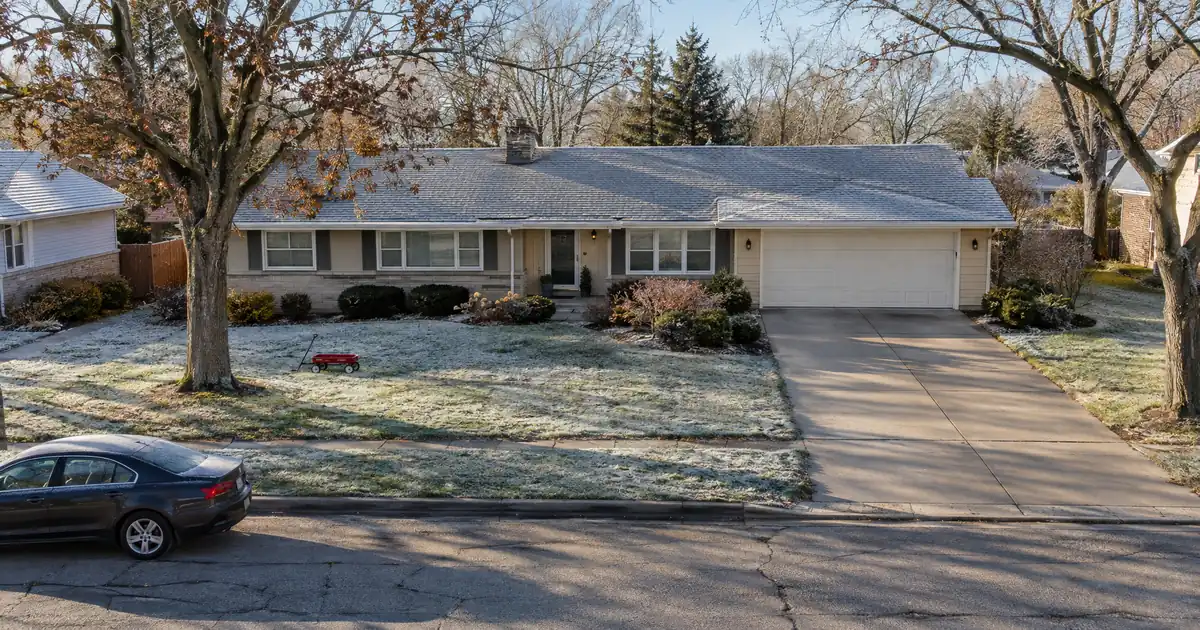
The Quick Read: A lender sizes this loan by running two tests on the same property, a value test and a rent test, then taking the smaller result and subtracting costs and reserves, which is why the cash you receive is almost always less than the equity you own. Owning the property free and clear earns no bonus leverage. A rental with no mortgage is still a cash-out refinance.
- The value test caps the loan at a percentage of appraised value, which tops out around 75% LTV on most standard rentals across the wholesale network Lendmire works with.
- The rent test caps the loan at what the property’s rent can carry at the required coverage ratio.
- Whichever test gives the smaller loan wins. On many paid-off rentals, rent binds first.
- Net cash is the loan minus closing costs and prepaid items, and you must still hold reserves afterward.
- The maximum is a ceiling, not a recommendation.
Key Terms Defined
Cash-out refinance: A new first mortgage that puts cash in your hands at closing. On a paid-off rental, the new loan replaces nothing, so all of it is proceeds before costs.
LTV (loan-to-value): The loan amount divided by the property’s appraised value. A 75% LTV means the loan is three-quarters of value. Terms vary by lender guidelines, property type, leverage, credit profile, and full file review.
DSCR (debt service coverage ratio): Monthly rent divided by the monthly payment on the loan. A ratio above 1.00 means rent exceeds the payment.
PITIA: Principal, interest, taxes, insurance, and association dues (HOA, if any). It is the full monthly payment the rent has to cover.
Seasoning: The waiting period between buying a property and borrowing against it. Most programs measure it from the date your title was recorded.
Reserves: Liquid cash you still hold after closing, usually counted in months of PITIA.
DSCR Cash-Out Calculator
Run the cash-out numbers in your market
Rate is an editable market assumption — the live benchmark loads when available.
Prefilled with starting assumptions — enter your property’s value, balance, taxes, and insurance for a more accurate picture.
Program parameters update from Lendmire’s centralized guideline source. Taxes and insurance are editable estimates.
Fallback assumption · General Freddie Mac market benchmark, not a Lendmire loan offer. Property value, balance, taxes, and insurance are editable estimates. Maximum loan-to-value varies by lender, program, property type, and seasoning. Not a Loan Estimate, approval, or commitment to lend. Program availability and eligibility are subject to lender guidelines, credit approval, property review, and underwriting.
Does a Paid-Off Rental Still Count as Cash-Out?
Yes. A new first lien goes on the property, and cash comes back to you. That is a cash-out refinance, even though there is no old balance to pay off.
This surprises many owners. They assume that no mortgage means more room. It does not. Cash-out leverage caps and cash-out pricing apply from the first dollar.
The upside is simple. With no payoff, the entire new loan is proceeds, before costs. The cap on a refinance that returns no cash is higher, but that is a different transaction. A refinance that hands you cash belongs to the cash-out line.
DSCR loans qualify primarily on property-level rental income covering the payment, subject to lender guidelines. As Stessa explains, lenders use that coverage figure to set the maximum loan on a new loan or refinance. That is the engine behind the rent test below.
Step 1: What Is the Value Test?
The value test multiplies appraised value by the cash-out LTV cap. Across most of the network, that cap is about 75% for standard rentals. Short-term rental collateral usually gets a lower cash-out cap, around 70%.
The appraisal is the number that matters here. Lenders in the network use the appraisal they order. Projected after-repair value does not count unless the appraiser actually supports it in the report.
Seasoning applies before the test even runs. About 6 months of ownership is the common expectation, measured from title recording. Property type matters too. Manufactured homes, log homes, and barndominiums are not offered in these DSCR programs.
Step 2: What Is the Rent Test?
The rent test finds the largest loan whose payment your rent can cover at the program’s required coverage ratio. Many select programs start at 1.00, meaning rent roughly equals PITIA. Stronger ratios open better pricing and leverage. A separate select-lender path takes coverage below 1.00, with leverage and terms adjusted.
Think of it as working backward. The lender takes the rent figure, divides by the required ratio, and finds the payment ceiling. That ceiling, plus taxes, insurance, and dues, caps the loan.
Taxes, insurance, and dues sit in the denominator. A property in a high-tax county or one with large association fees has less room for principal and interest. It can be limited by rent even when equity is abundant.
Which rent figure counts?
The appraiser supplies a market rent opinion. Fannie Mae’s forms list names the two reports commonly used for it. Form 1007 is the Single-Family Comparable Rent Schedule. Form 1025 is the Small Residential Income Property Appraisal Report, used for 2-4 unit buildings. DSCR loans are not agency products, so these are only the report names.
Where a lease exists, lenders commonly credit the lower of the in-place lease and the appraiser’s market rent. A lease signed well below market holds your number down. A vacant unit relies on the appraiser’s opinion alone.
Commercial coverage is a different formula
Commercial lending divides net operating income by debt service. Residential DSCR lending on 1-4 unit rentals divides rent by the full payment. If a friend quotes you a commercial ratio, the two numbers are not comparable.
Coverage after the draw
Here is the part owners miss. A free-and-clear property has no payment, so it has no meaningful coverage today. The draw creates the payment. Taking more cash raises the payment and lowers the ratio, so the rent test can bind before the value test does. Pulling less cash raises your coverage cushion.
Step 3: What Other Limits Apply?
Several other checks sit alongside the main tests.
- Credit: A 620 floor exists in parts of the network. Most programs want around 660. A score of 700 or higher unlocks the strongest leverage tiers.
- Loan size: Standard programs run up to about $3,000,000. Above $2,500,000, the network generally holds to 30-year fixed structures. Balances below the standard-program minimum route through select lenders.
- Reserves: Reserves vary by lender, leverage, and loan size. They commonly run around 6 months of PITIA, and loans above $1,500,000 typically step up to about 9 months.
- Collateral type: Short-term rentals usually expect a 640+ score and about 12 months of hosting history. Coverage floors differ by transaction, and the refinance floor is 1.00 on those files.
Each lender sets these a little differently. A broker that places files across many lenders can match your score, size, and property type to the program whose overlays fit best.
Step 4: From Gross Loan to Net Cash
Net cash is the loan minus closing costs and prepaid items. Your payoff is zero on a paid-off property, which keeps the arithmetic simple. Some programs also carry a prepayment charge that you would weigh at the table. Reserves are a separate requirement. They are cash you must hold after closing, not a deduction from the loan.
Think of it as a waterfall:
1. Start with the smaller of the two test results.
2. Subtract lender, title, and appraisal costs.
3. Subtract prepaid taxes and insurance set up at closing.
4. Confirm you still hold the required reserves from your own funds.
The first number you hear is rarely the number that lands in your account. Plan around the net figure.
Worked Examples: Which Test Binds?
These are illustrative models, not market data. Each uses percentages and coverage ratios only. Actual results depend on the appraisal, the file, and lender guidelines.
| Case | Value test | Rent test | What governs |
|---|---|---|---|
| A: Strong rent | 75% of value | Supports about 80% of value | Value |
| B: Soft rent | 75% of value | Supports about 60% of value | Rent |
| C: Recent cash buy | Cost basis | Same rent test | Cost basis, then rent |
Case A. A duplex rents well against its carrying costs. At 75% of value, coverage lands comfortably above the program floor, near 1.2x. The value test is the limit, and you take the full cap.
Case B. A single-family rental appraises well but rents modestly, with heavy taxes and insurance. At 75% of value, coverage falls below 1.00. The lender sizes the loan down until the ratio clears the floor, and the loan comes out near 60% of value. Equity was never the constraint. Rent was. This is the file where a sub-1.00 path through select lenders in the network, with leverage and terms adjusted, might also be reviewed.
Case C. An owner bought the property with cash a few months ago. Inside the seasoning window, sizing generally leans on cost basis, meaning price paid plus documented improvements. After seasoning passes, the appraisal governs. The rent test applies either way.
What Changes in Special Situations?
Recent cash purchase. Some programs let you borrow against your purchase cost before the full seasoning period ends. The industry calls this delayed financing, and Bankrate’s overview describes how it differs from the standard six-month wait. It waives seasoning only. The rent test, appraisal, reserves, and leverage caps still apply.
Short-term financing taken after purchase. If you used hard-money or bridge financing to buy, the delayed-financing exception generally no longer fits. Your options are to refinance that loan under the normal rules or wait out seasoning.
LLC title. Many programs let you borrow individually or through an entity, subject to lender program eligibility. If you bought in an LLC, borrowing in that same entity is usually the cleaner path.
Inherited or transferred property. How a lender dates ownership can differ by program. Confirm how your title history will be counted before you assume the seasoning clock has run.
Short-term rentals. The cash-out cap is lower, hosting history is expected, and the income is scrutinized more closely because it moves with the seasons. Short-term rental rules can vary by city, county, HOA, and property type, so investors should confirm local rules before relying on projected rental income.
Low appraisal. If value comes in below your estimate, the value test shrinks. On a paid-off property, there is no payoff to protect, so a very low appraisal can leave too little proceeds after costs to make the loan worthwhile.
Can You Borrow It Versus Should You?
The maximum loan is a ceiling.
A paid-off rental carries no debt. Pulling cash converts it into a leveraged asset with a new payment. A vacancy or a soft appraisal year hits harder when the property has a mortgage than when it does not.
Clearing 1.00 coverage is also not the same as positive cash flow. DSCR compares rent to PITIA only. Repairs, vacancy, management, utilities, and capital expenses sit outside the calculation. A property can clear coverage and still leave you thin after real-world costs.
A decision rule helps. Start with the use of funds, then work back:
- If the cash funds the next down payment, check whether the new purchase carries its own coverage.
- If it funds repairs that raise rent, weigh the added rent against the new payment.
- If it sits as a cushion, count the carrying cost of idle borrowed money.
A smaller draw keeps coverage higher and the payment lighter. The strongest files clear both tests: enough equity and enough rental coverage.
The complete DSCR loans guide covers the wider program landscape.
Frequently Asked Questions
Does owning the property outright let me borrow more?
No. The cash-out cap, around 75% LTV on most standard rentals in the network, applies whether or not a mortgage exists. Owning free and clear only means the whole new loan is proceeds before costs. Rent coverage still limits the loan, and it often limits it first.
Which test usually limits the loan, value or rent?
It depends on the property. Where rent comfortably covers the payment, the value cap governs. Where taxes, insurance, or dues are heavy against modest rent, the rent test often binds first. Run both before you plan around a number.
Can I borrow against my cash purchase before 6 months pass?
Sometimes. Select programs offer a delayed-financing path that sizes the loan off what you paid. It waives seasoning only, so coverage, reserves, and leverage rules still apply. Not every lender in the network offers it.
What if my rent coverage falls below 1.00?
A sub-1.00 path is available through select lenders in the network, with leverage and terms adjusted. The loan is typically smaller or priced differently than a file that clears 1.00. A broker can show you which programs fit your coverage and credit.
Is the cash I receive the same as the loan amount?
No. Closing costs and prepaid items come out of the loan. You also need to hold reserves from your own funds afterward. Plan around net cash, not the gross loan figure.
Next Step
If you are buying or refinancing a rental property and want to see how the numbers work, Lendmire can help you compare DSCR loan options based on the property income, credit profile, leverage, and investor goals. Qualification is subject to lender guidelines, and nothing here is a commitment to lend.
Most owners with a paid-off rental are surprised by one thing: the property that looks like it has endless room is often capped by its rent, not its equity.
For the mechanics of pulling equity out of a rental property, see Lendmire’s guide to cash-out refinance on an investment property.
About Lendmire
Lendmire (NMLS# 2371349), a non-QM mortgage broker serving investors in 41 markets including Washington, D.C., helps structure DSCR scenarios commonly evaluated around a property’s rental income rather than personal income paperwork, subject to lender guidelines. A Scotsman Guide Top Mortgage Workplace in 2025 and 2026, Lendmire places loans through wholesale investor lenders and is not a direct lender.
Get Started
Ready to find the right loan for you?
See your offer in seconds. No credit pull, no obligation.
Informational only. Not a Loan Estimate, approval, or commitment to lend. Program availability and eligibility are subject to lender guidelines, credit approval, property review, and underwriting.
References
1. Stessa: Debt Service Coverage Ratio in Real Estate
2. Fannie Mae – Selling & Servicing Guide Forms
3. Bankrate: Delayed Financing
This article is part of Lendmire’s investment property cash-out refinance program — full qualification details, guidelines, and scenarios live on the program page.
Related reading: Short-Term Rental Cash-Out Refinance Requirements to Pay for Renovations · Best DSCR Cash-Out Refinance Program on Your Only Rental for a Roof · Best DSCR Cash-Out Refinance Program on a Newly Built Rental
Brandon Miller
Founder & CEO, Mortgage Loan Originator, Lendmire LLC
- Mortgage Loan Originator · NMLS# 1129696 · Verify on NMLS Consumer Access
- North Carolina Real Estate Broker · License# 343312 · Verify on NCREC
- North Carolina Insurance Producer · License# 19053198 · Property, Casualty, Life, Health · Verify on NAIC SBS
- Lendmire LLC · Firm NMLS# 2371349 · Verify firm licensure
Legal disclosures. Lendmire (NMLS# 2371349) is a state-licensed mortgage brokerage that arranges financing through wholesale lender relationships. Lendmire is not a direct lender, depository institution, or registered financial advisor. The discussion above is general informational content about real estate financing — it is not financial, legal, or tax advice, and readers should consult licensed professionals for guidance on their individual circumstances. Loan inquiries are subject to lender underwriting; this article does not represent a commitment to lend. Loan terms, rates, and qualification standards vary by borrower, property, and state, and are subject to change at any time. Equal Housing Opportunity. NMLS Consumer Access: nmlsconsumeraccess.org.