
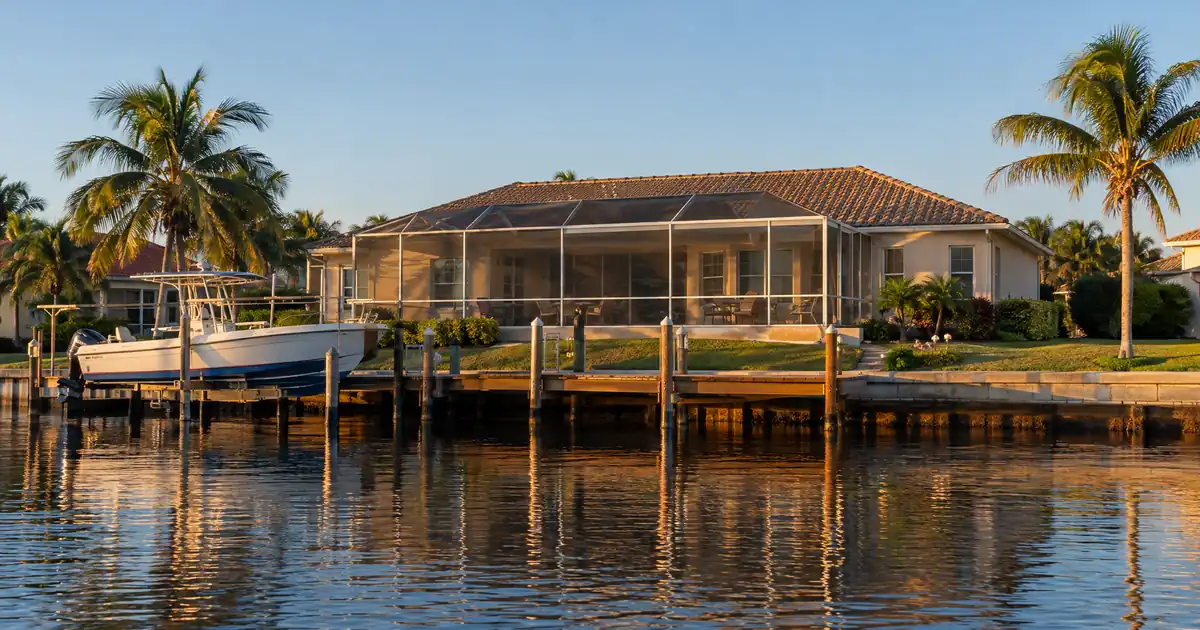
The Quick Read: Yes, usually, if the home is a rental, the insurance can be placed, and the rent covers the full monthly payment, subject to lender guidelines. Canal frontage does not disqualify a property. It changes three things: the insurance line in the payment, the condition of the seawall, and how the rent is documented.
- A canal-front single-family home is a normal investment property. The loan is reviewed primarily on property-level rental income covering the payment.
- Flood and wind insurance both sit in the payment, so they can pull the coverage number down.
- Seawall condition does not appear in a listing. Budget for it before you offer.
- Many select programs start at 1.00 coverage. Typical purchase leverage runs 75%-80% LTV on an investment property.
- Short-term rental income needs its own documentation, and local rules vary. Leverage, reserves, and pricing vary by lender and program; the final terms follow the full file review.
What Changes When the Home Sits on a Canal?
Three things change. The insurance bill grows, the collateral has a part that can fail, and the rent may be harder to prove. The loan structure itself looks like any other DSCR file.
DSCR Calculator
Run the numbers in your market
Rate source: Freddie Mac 30-yr average via FRED® — Federal Reserve Bank of St. Louis · effective Oct 29, 2026
Prefilled with starting assumptions — enter your own rent or nightly figures, taxes, insurance, and HOA for a more accurate picture.
Program parameters update from Lendmire’s centralized guideline source. Taxes and insurance are editable estimates.
As of Oct 29, 2026 · General Freddie Mac market benchmark, not a Lendmire loan offer. Rent, nightly rate, occupancy, taxes, and insurance are editable estimates. Short-term rental figures are estimates only and vary significantly by season, property type, management approach, and local short-term-rental rules — confirm local regulations before relying on them. Qualifying income for short-term rentals varies by program — some use appraisal market rent, others use documented STR history or projections — and is confirmed in underwriting. Not a Loan Estimate, approval, or commitment to lend. Program availability and eligibility are subject to lender guidelines, credit approval, property review, and underwriting.
DSCR stands for debt service coverage ratio. It compares the monthly rent to the full monthly housing payment: principal, interest, taxes, insurance, and association dues. That payment is called PITIA. LTV, or loan-to-value, is the loan balance divided by the property’s appraised value.
DSCR loans are designed for non-owner-occupied investment properties. Because they are business-purpose investor loans, they are reviewed differently from a standard owner-occupied mortgage. For the basics, Lendmire’s complete DSCR loans guide walks through the whole product.
Cape Coral is a useful example because water is everywhere. One local market source puts the canal network at more than 400 miles, and many homes sit in mapped flood hazard zones. Treat that as color. The same logic applies to any canal, lake, or bayou property in the country.
Does Canal Frontage Hurt Eligibility?
No. Frontage alone does not make a single-family home ineligible. Across our wholesale network, what decides the file is the same short list: leverage, credit, reserves, property type, and coverage.
Here is how those ranges generally look on an investment property, subject to lender guidelines:
| Factor | Typical range |
|---|---|
| Purchase LTV | 75%-80% |
| Cash-out refinance LTV | Up to 75% |
| Coverage (DSCR) | Many select programs start at 1.00 |
| Credit score | 620 floor in parts of the network; most want about 660 |
| Strongest leverage tier | 700+ score |
| Reserves | About 6 months of PITIA; about 9 above $1,500,000 |
| Loan size | Up to $3,000,000 on standard programs |
Coverage below 1.00 is available through select lenders in the network, with leverage and terms adjusted. That is a separate path from the 1.00 programs, not a lower floor on the same one.
One property-type line matters here. Manufactured homes, log homes, and barndominiums are not offered in these programs. A canal-front site-built single-family home, townhome, or small multifamily is a different story.
How Do Flood and Wind Insurance Hit the Ratio?
They sit in the denominator. Rent stays the same while the payment rises, so the coverage number falls. Flood is usually the swing item on a canal home.
Wind coverage and flood coverage are separate policies. Both count. A standard landlord policy does not cover rising water, so a home in a mapped flood zone needs its own flood policy.
The federal rules give a useful anchor. Under the Interagency Q&A on flood insurance, the required amount is the lowest of the loan balance, the insurable value, or the program maximum. Private flood policies can satisfy the requirement under certain conditions. Individual lenders and investors can add their own flood requirements on top, so the program guidelines on your file control.
The federal program caps residential building coverage at $250,000. A higher-value canal home may need excess or private coverage on top. That extra layer lands in the payment too.
Local discounts can help, with a caveat. Where a community earns a local discount, federal flood policies in A, AE, and V zones get 25% off, and policies in X zones get 10% off. The discount applies to federal policies only, and ratings get reviewed. Re-check your quote close to your offer.
Two more habits save deals:
- Get an elevation certificate. Elevation and build year drive the premium, and a certificate can lower it.
- Ask whether a letter of map amendment applies. Homes built on fill sometimes qualify to drop the flood requirement.
Insurability matters too. Roof age, wind mitigation, and the home’s elevation can make coverage expensive or hard to place. If you cannot bind a policy, the file stalls no matter how strong the rent is.
Does Rent Decide Everything? A Worked Example
Rent decides the ratio, but the ratio is only one gate. The strongest files clear both tests: enough equity and enough rental coverage.
Run the numbers on two versions of the same canal home. Both are bought at 75% LTV with a 700+ score. First, price it with only a modest insurance line. Rent clears roughly 1.15x. That is a pass on a program that starts at 1.00. Terms vary by lender guidelines, property type, leverage, credit profile, and full file review.
Now add a flood policy that the first quote left out, because the lot sits in a mapped zone. The payment rises and coverage slides to roughly 0.95x. The property did not change. The same rent now sits below the 1.00 line that many select programs start from.
That is the Cape Coral lesson in one picture. A home can pass before the flood policy and fall short after it.
Clearing 1.00 also does not mean positive cash flow. DSCR compares rent to PITIA only. Repairs, vacancy, management, utilities, and capital costs all sit outside the calculation. A canal home adds seawall upkeep to that list.
What Happens With the Seawall?
The seawall is part of the collateral, a repair risk, and a reserve line, all at once. It rarely shows up in the listing.
Local sources say the owner generally owns the wall out to the canal centerline and carries its upkeep, per a Cape Coral realty blog. Replacement costs run from a minor repair to a five- or six-figure project, depending on frontage and materials. Published per-foot figures disagree widely, so get a contractor bid for the actual wall.
A standard home inspection may not examine the wall closely. One local buyer guide says it is usually a visual check from the top. For a canal purchase, order a separate seawall inspection before your inspection period ends.
If the wall looks bad, you have a few paths:
1. Negotiate a repair or a price cut.
2. Ask the seller to complete the repair before closing.
3. Walk away.
Whether a lender requires repairs, escrow, or a holdback depends on the program and the appraisal. Raise it early with your broker.
Docks and boat lifts work differently. Their value in the appraisal depends on permits, condition, and local comps. Do not count on them to carry a loan amount.
Gulf-Access vs. Freshwater Canals
Flood zone and elevation drive insurance, not the type of water. Local brokers report that freshwater canals can land in higher-cost flood zones than saltwater ones, and that price and days on market differ. Treat that as a local pattern, not a rule.
| Factor | Gulf-access canal | Freshwater canal |
|---|---|---|
| Insurance driver | Zone and elevation | Zone and elevation |
| Boating appeal | Higher | Lower |
| Rent profile | Often leans seasonal or short-term | Often leans long-term |
| Check first | Flood zone, seawall, dock | Flood zone, seawall |
Do not assume either type is cheaper to insure. Get the quote on the specific address.
What About Short-Term Rent on a Canal Home?
Short-term rent can lift coverage on a canal home, but it needs more documentation. Select programs treat short-term rentals as their own category: purchase leverage tops out at 75% LTV, cash-out at 70%, and a refinance sits around 70%. Expect a 640+ score and about 12 months of hosting history. Coverage must clear 1.00 on a purchase and on a refinance. Standard long-term rentals on the same home can reach higher leverage. Exact terms depend on the lender’s guidelines, property type, leverage, and a full review of the borrower’s file.
The appraisal form matters. The standard rent schedule, Form 1007 on a one-unit home, was not built for nightly stays. It calls for market rent from comparables leased monthly, and multiplying a nightly rate by 30 is not a correct way to complete it. DSCR loans are not agency products, but appraisers use that form as a format.
McKissock, an appraiser-education provider, adds that the form cannot document nightly rates and that the lender decides how business income counts. So the appraisal may show a lower monthly rent than the home earns on a booking site. Which documents a program accepts for short-term income depends on the lender.
Short-term rental rules can vary by city, county, HOA, and property type, so investors should confirm local rules before relying on projected rental income.
The Order to Do Things In
Sequence saves deals. Do it in this order:
1. Pull the flood zone for the address.
2. Request wind and flood quotes, and an elevation certificate if one exists.
3. Run the coverage number with the full insurance line.
4. Order a seawall inspection with your home inspection.
5. Submit the file for the appraisal and rent schedule.
6. Confirm reserves and credit against the program tier.
Do not wait for the appraisal to learn what flood coverage costs. That is how a deal dies late.
DSCR vs. conventional financing
There are two common ways to finance an investment property, and they qualify you differently — here’s how investors weigh them.
Why investors choose it
- Qualifies on the property’s rental income — no personal tax returns, W-2s, or pay stubs needed to document income.
- No personal debt-to-income ceiling to clear, so existing mortgages and obligations don’t cap your borrowing the same way.
- Can be closed in an LLC, keeping the property inside a business entity.
- Built for scaling — not held to the limit on number of financed properties that conventional financing applies.
- Underwriting centers on the deal: generally qualifies when the rent covers the payment, a 1.00x coverage ratio being a common baseline (confirmed in underwriting).
- Designed specifically for investment property, including long-term and, where the program allows, short-term rentals.
Where it’s strong
- Often the lowest ongoing financing cost for a buyer who fully qualifies on personal income — a fit for a first property or a cost-first purchase.
Trade-offs for investors
- Requires full personal income documentation and must fit within a debt-to-income limit — salary, existing debts, and other mortgages all count.
- Typically held in your personal name rather than a business entity.
- Caps how many financed properties you can carry, which can become a ceiling as a portfolio grows.
- Evaluates you as a borrower as much as the property, which usually means more paperwork.
How investors usually choose: a first or single property often optimizes for the lowest financing cost; portfolio builders often optimize for leverage, vesting in an LLC, and scaling past conventional caps. The right answer depends on your goals, the property, and current guidelines — both paths run through select lenders in Lendmire’s wholesale network, with eligibility and terms confirmed in underwriting.
Documents to Gather
Expect to provide:
- The purchase contract or current mortgage statement
- A lease or short-term rental history, if the home is rented
- Wind and flood insurance quotes or binders
- The entity documents, if buying through an LLC, subject to lender program eligibility
- Proof of reserves and funds to close
- Photo ID and credit authorization
A Hidden Risk: Storm Damage Rules
Older homes below the required flood elevation carry one more risk. Under the federal flood program, a structure in a flood zone that is damaged beyond 50% of its market value must be rebuilt to current elevation standards. Cape Coral dropped its five-year cumulative look-back in 2022, per Woodward, Pires & Lombardo. The city says the rule affects only structures in the special flood hazard area that sit below the required height.
For you, this means an older, low-lying canal home may be costly to repair after a storm. That affects collateral quality and insurability, so weigh it against the price.
If the Ratio Comes Up Short
You have levers. Pick the one that fits the deal:
- Shop insurance. Quotes vary. Elevation certificates and wind mitigation can move them.
- Put more down. A larger down payment lowers the payment and can lift coverage. It does not erase leverage caps, credit floors, or reserve rules.
- Negotiate price. A lower price lowers the loan and the payment.
- Rethink the rent plan. Short-term income may raise coverage if the program accepts it and the local rules allow it.
- Ask about select-lender paths. Coverage below 1.00 is available through select lenders in the network, with leverage and terms adjusted.
Honestly, this is a toss-up on many canal homes. The water adds value and rent, and it adds cost too. The deals that work tend to be the ones priced with the insurance bill in hand.
Rentals follow the investor path described here.
Tax treatment varies; consult a qualified professional.
Key Terms Defined
DSCR: The monthly rent divided by the full monthly housing payment.
PITIA: Principal, interest, taxes, insurance, and association dues. It is the payment the rent has to cover.
LTV: Loan balance divided by appraised value.
Elevation certificate: A document showing a building’s height against the flood elevation. It can lower the flood premium.
Seawall: The retaining wall along the canal. The owner usually maintains it.
Reserves: Cash left after closing, usually counted in months of PITIA.
Frequently Asked Questions
Is a DSCR loan only for rentals?
Yes. DSCR loans are for investment properties, not homes you live in. The loan is reviewed primarily on rental income covering the payment, subject to lender guidelines.
Is flood insurance required on a canal-front home?
If the home sits in a mapped flood hazard zone, expect to carry flood coverage. The requirement comes from federal rules for regulated lenders and from the investor’s own guidelines. Private policies can sometimes satisfy it. Either way, the premium counts in the payment.
Can a failing seawall stop the loan?
It can. The wall is part of the collateral, and condition issues can lead to required repairs, a price change, or a lost deal. Inspect it separately before your contingency period ends.
Can short-term rental income qualify a canal home?
Select programs accept it, usually with about 12 months of hosting history and a 640+ score. Purchase leverage tops out at 75% LTV. Confirm local rules first.
Can I buy a canal home in an LLC?
Often yes, subject to program terms. Entity documents add to the file, so ask early.
If You’re Ready to Run the Numbers
If you are buying or refinancing a rental property and want to see how the numbers work, Lendmire can help you compare DSCR loan options based on the property income, credit profile, leverage, and investor goals. Lendmire is a broker arranging financing through select lenders in its wholesale network, across 41 markets including Washington, D.C. This is not a commitment to lend. An illustrative calculator can give a rough estimate before you start.
On a canal, the insurance quote is the first number worth knowing, and the seawall is the last one you want to learn after closing.
About Lendmire
Lendmire (NMLS# 2371349) is a DSCR-focused mortgage broker that helps arrange investor financing across 41 markets, including Washington, D.C., through wholesale and investor-lending channels. DSCR eligibility is generally reviewed by the lender around the property’s rental income rather than personal income documentation, subject to lender guidelines — which works for self-employed investors, LLC operators, and portfolios above four financed properties. Scotsman Guide named Lendmire a Top Mortgage Workplace in both 2025 and 2026.
Get Started
Ready to find the right loan for you?
See your offer in seconds. No credit pull, no obligation.
Informational only. Not a Loan Estimate, approval, or commitment to lend. Program availability and eligibility are subject to lender guidelines, credit approval, property review, and underwriting.
References
1. CashflowFL
2. Federal Reserve Interagency Flood Q&A
3. Federal Reserve Regulation H flood manual
5. Kolev Group
This article is part of Lendmire’s DSCR loan program — full qualification details, guidelines, and scenarios live on the program page.
Related reading: Buying a First Rental on a DSCR Loan vs Buying a Home First · Can a DSCR Loan Refinance a Rental Loan About to Mature? · How to Finance a Luxury Fourplex With a DSCR Loan
Guides: DSCR Loans in Cape Coral, FL · DSCR Loans in Florida
Brandon Miller
Founder & CEO, Mortgage Loan Originator, Lendmire LLC
- Mortgage Loan Originator · NMLS# 1129696 · Verify on NMLS Consumer Access
- North Carolina Real Estate Broker · License# 343312 · Verify on NCREC
- North Carolina Insurance Producer · License# 19053198 · Property, Casualty, Life, Health · Verify on NAIC SBS
- Lendmire LLC · Firm NMLS# 2371349 · Verify firm licensure
Important disclosures. Lendmire (NMLS# 2371349) is a licensed mortgage brokerage. Lendmire is not a direct lender, depository institution, or financial advisor. All loan inquiries are subject to lender underwriting; this article does not constitute a commitment to lend. Rates, terms, and program guidelines are subject to change without notice and vary by borrower profile, property type, and state. Information in this article is general in nature and is not financial, legal, or tax advice. Equal Housing Opportunity. NMLS Consumer Access: nmlsconsumeraccess.org.