
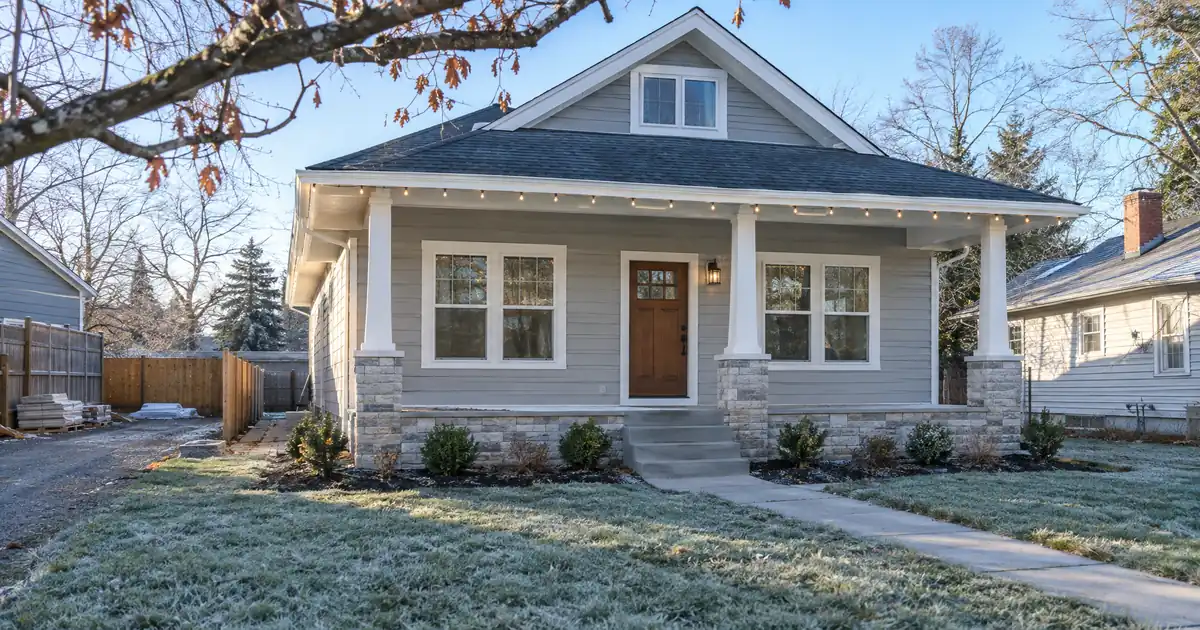
The Quick Read: A hard money bridge hands a transitional rental to a long-term DSCR loan when the rehab is done, the property is leased or has supportable market rent, the lender’s own appraisal covers the payoff, and any seasoning wait has passed. The DSCR loan then pays off the short-term note before it matures. Each of those conditions is a separate test, and the tightest one sets your loan.
- The bridge note has a deadline, so plan backward from its maturity date.
- The lender’s appraisal sets the new loan, not your after-repair estimate.
- Rent is tested against the full housing payment, and clearing that test is not the same as positive cash flow.
- A payoff-only refinance can work when a cash-out refinance does not.
- Approval on the bridge says nothing about approval on the DSCR loan.
Key Terms Defined
Hard money bridge: a short-term, interest-only loan secured by the property, used to buy and renovate before long-term financing. On the programs Lendmire brokers, terms run 6-18 months and carry no prepayment penalty, though this varies by lender, property, and experience.
Transitional rental: a rental property that is not yet stabilized. It may be under rehab, vacant, or newly leased.
DSCR: debt service coverage ratio. In these programs it is the monthly rent divided by the full monthly housing payment.
PITIA: principal, interest, taxes, insurance, and any association dues. This is the payment the rent has to cover.
Seasoning: the time you have held title before a lender will size a cash-out loan on appraised value. It runs from deed recording.
ARV: after-repair value, your estimate of what the finished property is worth.
Payoff-only refinance: a rate-and-term loan that retires the bridge and returns no cash.
Cash-out refinance: a loan larger than the payoff, with the extra released to you.
Why a Transitional Rental Can’t Go Straight to DSCR
A DSCR lender needs a finished, rentable property with income it can measure. A property mid-rehab has neither. Most DSCR loans do not fund renovation, and hard money does. That is why the two loans sit back to back.
Hard money looks at the asset, the plan, and the exit. On the programs in our network, rehab leverage is set against project cost and capped at 75% of after-repair value. Up to 100% of the rehab budget funds in draws against completed work. Those are loan-to-cost figures, not purchase LTVs, and they vary by lender, property, and experience.
The DSCR lender cares about different things. It wants the property finished, a measurable rent, and a value its own appraiser can support. It also wants a borrower who clears the credit and reserve rules.
None of this is federal law. Seasoning, appraisal haircuts, and coverage floors are each lender’s credit policy. That is why two lenders can answer the same question differently, and why you confirm the program before you buy. For the rehab side of the plan, Lendmire’s piece How to Stabilize a Transitional Rental on a Hard Money Bridge Loan covers the work before the handoff.
The Handoff, Step by Step
1. Plan backward from bridge maturity. The bridge has to outlast the rehab, the lease-up, any seasoning wait, the appraisal, and underwriting. If the note is shorter than that chain, you are exposed. Many investors pick the longest term the bridge offers for that reason.
2. Rehab and document. Keep the scope of work, invoices, draw history, and dated photos. They support the appraisal and any later value challenge.
3. Lease it. Underwriting on a leased unit typically wants the signed lease, deposit verification, and proof of first month’s rent.
4. Clear the seasoning window. On a cash-out loan, most programs in the network look for about six months on title, counted from recording. Inside that window, the DSCR loan is typically sized on cost, meaning purchase price plus documented rehab. Your ARV does not set the loan until the window closes.
5. The lender orders its own appraisal. Your ARV is a planning number only. On a one-unit property the appraiser’s market-rent opinion typically appears on the Single-Family Comparable Rent Schedule, Form 1007. Two- to four-unit properties use Form 1025.
6. Coverage test. The lender divides rent by PITIA. The new loan’s payment is typically higher than the bridge’s interest-only payment, so coverage tightens at the handoff.
7. Payoff. Title pays the bridge off from the new loan. Cash released is the new loan minus the bridge payoff and closing costs. If that comes out negative, you bring cash to close.
For the full picture of how these loans work, see Lendmire’s complete DSCR loans guide.
The Four Gates the Exit Must Clear
The new loan is the lowest number the gates allow. One tight gate caps the whole refinance, no matter how strong the others look.
| Gate | What the lender checks | How to pre-test it |
|---|---|---|
| Time | Months on title for a cash-out loan | Count from deed recording |
| Value | Appraisal against the leverage cap | Use a conservative ARV |
| Rent | Rent over PITIA | Run coverage on the larger payment |
| Leverage | Payoff plus costs against the cap | Divide required loan by cap |
On a DSCR cash-out refinance, the ceiling across most of the network is 75% of value. A DSCR rate-and-term refinance, which returns no cash, can reach up to 85% of value on the strongest files. Credit, reserves, and property type all pull those ceilings down in practice.
Credit matters at both ends. Hard money starts at a 620 score, with added conditions below 660. A DSCR loan has a 620 floor in parts of the network, while most programs want around 660. A score of 700 or better unlocks the strongest leverage tiers.
Reserves run about six months of PITIA on most DSCR files. Above $1,500,000 they typically step up to about nine months, subject to lender guidelines. Standard DSCR programs run up to $3,000,000.
A Worked Example (Modeled Ratios, Not Market Data)
These are modeled assumptions, not sourced figures. Say your bridge payoff plus closing costs for the new loan equals 68% of the value you planned on.
Clean handoff. The appraisal matches your plan. Required loan runs 68% of value, under the 75% DSCR cash-out ceiling. Rent covers PITIA at about 1.15x. Every gate clears, and you may release a small amount of cash.
Shortfall. The appraisal lands 10% below your plan. The same payoff and costs now equal about 76% of the lower value. That is over the 75% cash-out ceiling, so a cash-out refinance does not retire the bridge without cash from you. The exact numbers vary by lender and program and follow a full review of property, leverage, and credit.
A payoff-only refinance may still work in that case, because the DSCR rate-and-term ceiling is higher and no cash comes back. Whether it fits depends on your credit tier and the cost-basis sizing inside the seasoning window.
Now add thin rent. Coverage comes in near 0.95x. A select lender in the network may review a coverage ratio below 1.00. Leverage and terms adjust, and approval is not assumed. Many programs start at 1.00, so the rent gate may decide which path you take.
The practical lesson is the break-even appraisal. Divide the required loan by the leverage cap. If the lender’s appraisal could plausibly come in below that figure, you are depending on luck.
Where Does My Deal Stand?
| Situation | Likely next move |
|---|---|
| Rehab done, leased, past seasoning | Apply for DSCR cash-out or payoff-only |
| Done and leased, inside seasoning | Payoff-only, or wait out the window |
| Done but vacant | Check whether the program accepts market rent |
| Appraisal came in low | Bring cash, shrink the loan, or challenge value |
| Coverage thin | Ask about a select-lender path below 1.00 |
| Rehab unfinished near maturity | Request a bridge extension early |
What Happens When the Exit Slips?
The bridge matures on its own schedule. If seasoning outlasts the note, you have three options: a payoff-only DSCR loan now with a cash-out later, a bridge extension, or a sale. The two-step route means two closings, and the first DSCR note may carry a prepayment penalty. Read that note’s terms before you sign. Ask for an extension well before maturity, not in the last week.
Delayed financing will not rescue a hard-money purchase. Delayed financing is a conventional-loan exception for cash buyers with no financing on the original purchase. The agency selling guide also requires six months on title and an existing first mortgage that is 12 months old for a standard conventional cash-out. That is one reason DSCR is the usual exit. DSCR programs follow lender credit policy, not that guide.
Overspent rehab does not get reimbursed. The appraiser recognizes value, not receipts. A rehab that ran over may support a higher appraised value, depending on comps and underwriter review, but the refinance will not repay the overrun.
Vacant at refinance. Programs differ. Some accept the appraiser’s market-rent opinion, while others want a signed lease. Confirm which applies before the rehab ends.
Rising costs at the exit. If financing costs climb between your bridge and your refinance, thin-coverage deals suffer first. Test coverage on a larger payment than you expect before you buy.
Property type. Manufactured homes, log homes, and barndominiums are not offered on the network’s DSCR programs, so a bridge on one of them has no DSCR exit.
Payoff-Only or Cash-Out?
A payoff-only refinance is simpler and tolerates a weaker appraisal. A cash-out refinance returns your equity but needs the value and the seasoning to line up. Two refinances cost two sets of closing fees, and that can erase the gain from waiting.
The cash from a cash-out loan depends on rent used for lender review, PITIA, reserves, and the 75% ceiling, so it is never a guaranteed figure. Clearing 1.00 coverage also is not positive cash flow. Repairs, vacancy, management, utilities, and capital expenses all sit outside the ratio. Tax treatment varies; consult a qualified professional.
Buying at around 70% of ARV minus repairs is a purchase screen, not an exit guarantee. The remaining cushion has to absorb carry, closing costs, and profit. Paying closer to 80% of ARV means the refinance will not return everything you put in.
Handoff-Day Mechanics and Documents
Before the exit loan closes, line up these items:
- Payoff statement from the bridge lender with a per-day figure for the closing date.
- Entity papers if the property is held in an LLC, subject to lender program eligibility. Keep the same entity across both loans where you can.
- Business-purpose confirmation. DSCR loans are designed for non-owner-occupied investment properties, and they are reviewed differently from a standard owner-occupied mortgage.
- Lease package with deposit and first-month proof, or a plan for market rent.
- Insurance matching the finished, rented property.
- Rehab file with draws, invoices, and dated photos.
Title wires the payoff, the bridge lien is released, and the new loan records. Many investors who start with a bridge refinance out through a hard money exit refinance once the property is stabilized, which Lendmire brokers.
Frequently Asked Questions
Does bridge approval mean the DSCR loan will be approved?
No. The bridge reviews the asset, the plan, and the exit. The DSCR loan underwrites a finished property on its rent, value, your credit, and reserves. Each lender reviews separately, subject to lender guidelines.
Does a DSCR loan skip the appraisal?
No. DSCR means the loan is reviewed primarily on property-level rental income covering the payment, subject to lender guidelines. The lender still orders an appraisal for value and market rent.
Does finishing the rehab or signing a lease end seasoning?
No. For a cash-out loan, most programs count about six months from deed recording. A finished rehab or a new lease does not restart or end that clock.
Can the same lender do both loans?
Sometimes, but not by default. Bridge and DSCR lenders are usually different, and Lendmire arranges the DSCR side through its wholesale network of lenders.
What if the appraisal comes in low?
You can bring cash, take a smaller loan, do a payoff-only refinance, wait and reappraise, or challenge the value with comps and rehab documentation. Which one fits depends on how far the number missed and how much runway the bridge has left.
Next Step
If you are buying, rehabbing, or refinancing an investment property on a short timeline and want to see how the numbers work, Lendmire can help you compare hard money options based on the project, the exit plan, leverage, and your goals. Reach the team at 828-256-2183.
About Lendmire
Lendmire — NMLS# 2371349 — is a mortgage brokerage specializing in DSCR investor loans, helping arrange financing across 41 markets, including Washington, D.C., through wholesale and investor-lending channels. The model centers on property-level rental income reviewed by the lender rather than W-2 documentation, subject to lender guidelines, suiting entity-owned and multi-property investors. Lendmire holds Scotsman Guide Top Mortgage Workplace recognition for 2025 and 2026.
Get Started
Ready to find the right loan for you?
In about 30 seconds you can review financing options available for your investment property. No commitment required.
Informational only. Not a Loan Estimate, approval, or commitment to lend. Program availability and eligibility are subject to lender guidelines, credit approval, property review, and underwriting.
References
1. Freddie Mac Form 1000 / Fannie Mae Form 1007, Single-Family Comparable Rent Schedule
2. Fannie Mae Selling Guide B2-1.3-03, Cash-Out Refinance Transactions
This article is part of Lendmire’s hard money loan program — full qualification details, guidelines, and scenarios live on the program page.
Related reading: Portfolio DSCR Loan vs Leaving Private Money in Your Rental Pool · How a DSCR Lender Splits a Rental Business Across Two LLCs · Can a DSCR Loan Close in Time for a Rental Package Under Contract?
Brandon Miller
Founder & CEO, Mortgage Loan Originator, Lendmire LLC
- Mortgage Loan Originator · NMLS# 1129696 · Verify on NMLS Consumer Access
- North Carolina Real Estate Broker · License# 343312 · Verify on NCREC
- North Carolina Insurance Producer · License# 19053198 · Property, Casualty, Life, Health · Verify on NAIC SBS
- Lendmire LLC · Firm NMLS# 2371349 · Verify firm licensure
Important disclosures. Lendmire (NMLS# 2371349) is a licensed mortgage brokerage. Lendmire is not a direct lender, depository institution, or financial advisor. All loan inquiries are subject to lender underwriting; this article does not constitute a commitment to lend. Rates, terms, and program guidelines are subject to change without notice and vary by borrower profile, property type, and state. Information in this article is general in nature and is not financial, legal, or tax advice. Equal Housing Opportunity. NMLS Consumer Access: nmlsconsumeraccess.org.