
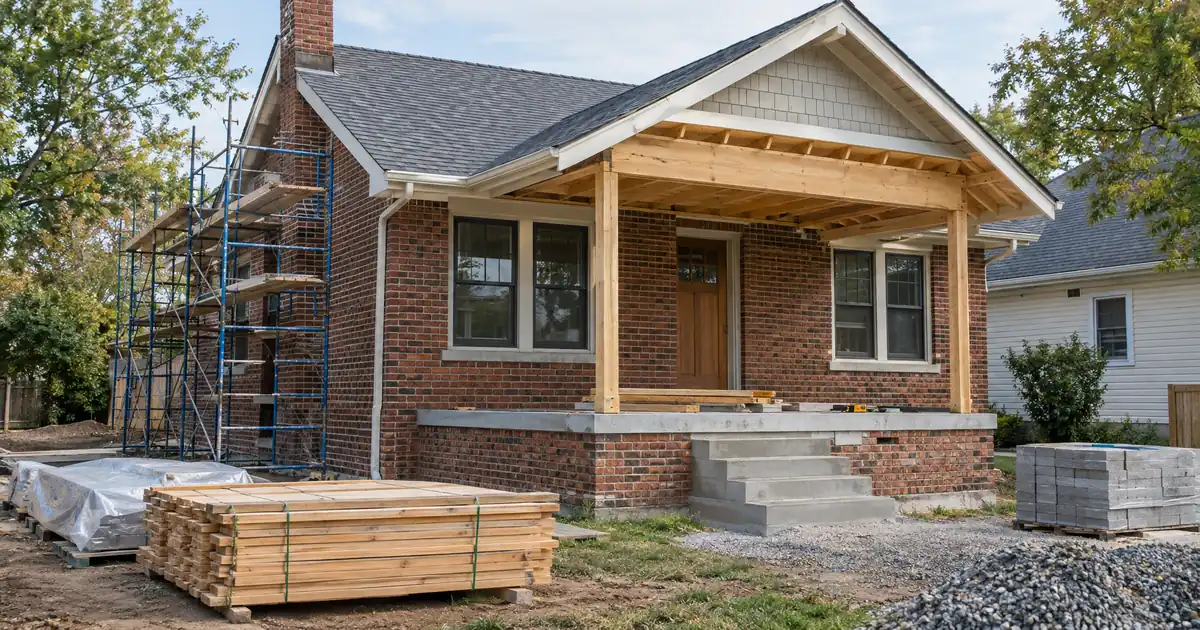
Hard Money Exit Seasoning — The Quick Read: It depends on the program, but on most DSCR refinance files the full appraised value does not count until about six months of ownership have passed. Before that point, many lenders size the loan off the lower of the appraisal and your documented cost basis. Cost basis means purchase price plus verified rehab spend. A big post-rehab appraisal does not always turn into cash right away, so the exit date has to be planned against the seasoning clock.
Key Takeaways
- Seasoning means two things: how long you must own the property, and which value the lender uses to size the loan.
- On DSCR refinances, the clock typically runs from acquisition, not from the end of the rehab.
- Inside the window, the loan may be sized off cost basis. Outside it, off the full appraisal.
- Hard money terms and seasoning windows can collide. Plan the exit before you buy, not after the rehab.
- Clean rehab paperwork, a lease or rent appraisal, and an entity ownership plan prevent most of the friction.
What Does “Seasoning” Actually Mean on a Hard Money Exit?
Seasoning is not one rule. It is two tests that investors often blur together, and they hit your proceeds differently.
What this loan actually costs to carry in your market.
Hard money is sized against the project and priced by time. Enter the deal and see how much the program will lend, the cash required at closing, the carry while you hold it, and what is left at the exit.
Leverage tiers on the current program: 85% with fewer than 2, 90% with 2 or more, 93% with 5 or more completed projects — every tier capped at 75% of after-repair value. Loan amounts up to $5,000,000, larger by exception; terms of 6 to 18 months, interest-only, no prepayment penalty. The rehab portion funds in draws against completed work, not at closing.
Program parameters shown update from Lendmire’s centralized guideline source. Rate, points, and months are editable assumptions, not quoted terms.
Cost cap sets the loan · positive spread
Illustrative estimate only — not a quote, Loan Estimate, approval, or commitment to lend. Rate, points, and months are editable assumptions. Hard money is business-purpose financing for real estate investors, not a consumer mortgage. Leverage on the current program tops out at 93% of project cost for investors with a documented track record, capped at 75% of after-repair value, with rehab funding up to 100% of the documented budget released in draws; actual terms vary by lender, borrower experience, property, and exit. Lendmire is a mortgage broker, not a lender.
Time-in-title seasoning asks how long you have owned the property. Value seasoning asks which number the lender uses to size the loan. That is either the current appraisal, or the lower of the appraisal and your cost basis.
On files across the wholesale network, the value test usually matters more to proceeds than the waiting period. An investor can clear the ownership clock and still be sized off cost basis. That is where the disappointment happens: a high appraisal on paper, a smaller check at the table.
No regulator sets one DSCR seasoning rule. DSCR loans are designed for non-owner-occupied investment properties, and because they are business-purpose investor loans, they are reviewed differently from a standard owner-occupied mortgage. Each lender sets its own window. Most programs Lendmire places files with look for about six months of seasoning on a cash-out refinance, though the exact period, and what counts inside it, varies by lender and loan scenario. The complete DSCR loans guide covers how these programs work in general. This article stays on the exit.
Key Terms Defined
- Seasoning: the period a lender requires you to hold a property, or the loan, before it will use the full appraised value.
- Cost basis: the purchase price plus documented, receipted rehab spend. What counts as documented is lender-specific.
- After-repair value (ARV): the estimated value of the property once the renovation is finished.
- Cash-out refinance: a new loan that pays off the old one and returns the leftover equity as cash to the borrower.
- Rate-and-term refinance: a new loan that pays off the old balance and closing costs with no cash back to the borrower.
- Delayed financing: an agency exception that lets a cash buyer refinance soon after purchase, capped at what was paid.
- PITIA: principal, interest, taxes, insurance, and association dues. DSCR divides rent by this monthly total.
How Underwriting Treats the Clock, Step by Step
This is the sequence a typical hard money exit follows.
1. Acquisition starts the clock. You buy with a hard money loan, a bridge loan, or cash. Seasoning typically runs from the purchase or recording date. It does not run from the day the rehab ends. One BRRRR training page says the same, that the clock starts on the day of closing, though treat that as general guidance only.
2. Rehab and lease-up build the file. Keep receipts, draw records, and contractor invoices. A DSCR refinance qualifies primarily on property-level rental income covering the payment, subject to lender guidelines. So the property needs either a signed lease or an appraiser’s market-rent schedule (Form 1007 on a single-family property, Form 1025 on two to four units). The Motley Fool’s BRRRR explainer makes the same practical point: the bank will want an updated appraisal and a copy of the lease, and seasoning varies by the product used to acquire the property and the loan being refinanced.
3. An independent appraisal sets value and rent. The appraiser reports a current value and a rent estimate. Appraisers lean on the recent purchase price as an anchor, which is part of why lenders distrust a value jump right after a sale.
4. The value test picks the sizing number. Inside the window, the underwriter typically uses the lower of the appraisal and cost basis. Outside it, the full appraisal.
5. Payoff and proceeds. The new loan pays off the hard money balance and closing costs. Whatever is left is cash to you. The hard money payoff is typically paid straight to that lender.
6. The coverage test runs separately. Rent against PITIA is its own pass-or-fail check on top of the value test. Select programs start at 1.00 coverage, and stronger ratios open better terms and leverage. Coverage below 1.00 is available through select lenders in the network, with leverage and terms adjusted. And clearing 1.00 is not the same as positive cash flow. Repairs, vacancy, management, utilities, and capex all sit outside the calculation.
Which Value Counts, and When
This table shows the general pattern. Exact windows vary by lender, so treat it as a map and not a promise.
| Hold period | Value typically used | What it means |
|---|---|---|
| Early, inside the window | Lower of appraisal or cost basis | Rehab equity may not convert to cash |
| Around six months, program-dependent | Often the full appraisal | Equity from the rehab becomes available |
| Well past the window | Full appraisal | Standard cash-out sizing applies |
Cash-out refinances across most of the network top out around 75% loan-to-value on standard rentals. Short-term rental collateral generally sits lower, with cash-out at 70%. That cap applies to whichever value the lender is using. If the lender is using cost basis, 75% of a smaller number is a smaller loan.
A Worked Example (Index Numbers, Not Dollars)
Run the numbers on an index of 100 for cost basis, meaning purchase price plus receipted rehab. Say the appraisal comes back at 130, because the rehab worked.
- Sized off the full appraisal at 75% LTV, the loan lands near 97.
- Sized off cost basis at 75% LTV, the loan lands at 75.
- Final terms depend on lender guidelines, property type, leverage, and the borrower’s complete credit picture.
That is a 22-point gap, and it is the money the early-window rule holds back.
Now add the hard money side. On a rehab project, hard money leverage typically runs 85%, 90%, or 93% of project cost depending on completed projects, always capped at 75% of ARV. These tiers vary by lender, property, and experience. If your hard money loan funded at one of those higher shares of cost, a refinance sized at 75% of cost basis may not even cover the payoff. You would be bringing cash to the table instead of taking it out. This is the single most common surprise on early exits.
The Three Clocks Nobody Separates
Most explainers talk about “the seasoning period” as if it were one number. On a real file, three clocks run at once, and any one can be the gate.
The title clock. How long you have held recorded title. If you bought in an LLC, the entity’s recording date matters, and so does whether title later moves. DSCR loans to LLCs are common, subject to lender program eligibility, but each lender decides whether entity hold time counts. Sorting out which name holds title before the exit saves a scramble. For contrast, Fannie Mae’s archived selling guide once counted LLC holding time toward ownership only if title moved to the individual. That is an agency rule, not a DSCR rule, but it shows why entity mechanics get checked.
The rent clock. A lease in place, or a market-rent appraisal if the unit is vacant. You can clear the title clock and still stall because the unit has no lease and no rent schedule.
The appraisal clock. Lenders also care how recent the appraisal is. An appraisal ordered too early, before rehab wrapped, can age out before the file closes. Order it when the work is done and the lease is signed, not months ahead.
Where the General Rule Breaks
Delayed financing is for cash, not hard money
Agency guidance has a delayed financing exception for borrowers who bought within the past six months. Fannie Mae’s Selling Guide measures it from purchase date to disbursement of the new loan. The same section says an existing first mortgage being paid off must be at least 12 months old. These are agency rules. DSCR lenders are not bound by them, and Lendmire’s programs do not run on them.
The investor-forum reading is that the exception is built for cash buyers. One BiggerPockets thread says it does not work when purchase funds were a hard money loan secured by the subject property. Another says it does not let you use ARV. These are forum posts, so treat them as anecdotal. They still match what the exception is for: getting back what you paid, not what you created.
Rate-and-term exits
A straight payoff with no cash back is generally treated more leniently than cash-out, since the lender is not releasing equity. But leverage on a rate-and-term still depends on the lender. If your only goal is retiring the hard money note, this can be the cleaner path. You give up the cash.
Entity and title surprises
Deeds moved between your name and an LLC, or recorded late, can reset the clock a lender sees. Settle the ownership structure before the refinance, and expect the lender to want the entity documents.
Inherited, auctioned, and unusual acquisitions
Measurement dates for inherited properties, foreclosure purchases, or auction awards vary by program. Ask which date the lender uses before you rely on one.
Thin paperwork
Cost basis is only as good as its documentation. Receipts, draw records, and contractor invoices that tie to the scope of work keep the number intact. If the file is thin, the underwriter may haircut basis, and the loan shrinks with it.
A low appraisal
An appraisal that lands well below your ARV estimate cuts proceeds, and no waiting period fixes it. An appraisal reconsideration request with recent comparable sales and documented improvements is a normal step here, not an emergency move.
Planning the Exit Against Your Hard Money Term
Hard money terms typically run 6 to 18 months, interest-only, with no prepayment penalty, all varying by lender, property, and experience. There are no multi-year options. Investors who need longer runway refinance into long-term rental financing, which is where the exit program fits. Many investors refinance out of hard money into long-term DSCR financing once the property is stabilized, and Lendmire brokers that path through its hard money exit refinance program.
Here is how the timing goes wrong. A six-month hard money term plus a six-month seasoning window leaves zero margin. Any delay in rehab, lease-up, or appraisal pushes you past maturity with the value test still unmet. That means extension costs, a smaller cash-out, or a rate-and-term exit that returns no cash.
A backward plan helps:
1. Start at maturity. Work back from the hard money maturity date.
2. Place the seasoning window. Mark when the lender’s window clears, counting from acquisition.
3. Fit in the appraisal and lease. Leave room to complete the rehab, sign the lease, and order the appraisal after the work is done.
4. Ask before you buy. Ask what seasoning period the lender wants, what cost basis includes, and which value it uses. Programs differ, and a few lenders in the network shorten the window in exchange for lower leverage or cost-basis sizing.
The lender-level questions matter more than any average. A related read on how long seasoning takes before cash-out on a DSCR rental goes deeper on the cash-out window itself.
What the rest of the file needs
Seasoning is only one gate. Typical network guidance runs around 660 for credit, with a 620 floor in parts of the network and 700-plus unlocking the strongest leverage tiers. Reserves vary by lender, leverage, loan size, and transaction type. Around six months of PITIA is common, and conservative rate-and-term files at modest leverage under $1,500,000 can see reserves waived. Loan sizes run roughly up to $3,000,000 on standard programs (smaller balances available through select lenders). All of that is subject to lender guidelines, and none of it is a commitment to lend. Tax treatment can depend on how the funds are used and how the property is held; investors should keep clear records and speak with a qualified tax professional before relying on any deduction.
Which Exit Path Fits
| Exit path | Clock | Value used | Watch for |
|---|---|---|---|
| DSCR cash-out | Often about six months | Appraisal, or cost basis early | Short payoff vs. basis |
| DSCR rate-and-term | Generally more lenient | Varies by lender | No cash back |
| Agency delayed financing | Cash purchase only | Price paid | Not for hard money |
Common Misconceptions
“A high appraisal means more cash right away.” Not necessarily. Early-window loans may be capped at cost basis.
“Seasoning is a single industry rule.” In the DSCR space it is lender-specific. The agency rules, with their 12-month note age and six-month ownership test, do not govern these files.
“Delayed financing works with hard money.” The forum reports point the other way. It works with cash, not a loan secured by the subject.
“The clock starts when rehab ends.” It typically runs from acquisition.
“Delayed financing returns all my rehab money.” It caps the loan at what you paid, not ARV.
“Seasoning only decides whether I can refinance.” It also decides which value the lender uses.
Frequently Asked Questions
How long before the appraised value counts on a DSCR exit?
On most files across the network, about six months of ownership is the common expectation for a cash-out refinance. Before that, many lenders size the loan off the lower of the appraisal and cost basis. The exact window and the definition of cost basis vary by lender, so ask both questions before you buy.
Does the clock start at purchase or after the rehab is finished?
It typically starts at acquisition, measured from the purchase or recording date. Finishing the rehab does not restart it. What the rehab does change is your cost basis, if you can document the spend with receipts and draw records.
Can I refinance sooner if I accept less cash?
Often yes. A rate-and-term exit retires the hard money loan without returning equity, and it is generally treated more leniently. Some lenders in the network will also shorten the window with lower leverage or cost-basis sizing. Run both against your maturity date.
Does delayed financing work if I bought with hard money?
Generally not. The agency exception is built for cash purchases, and investor reports say it does not work when the subject property secured the purchase funds. It also caps the loan at what you paid, so it will not return rehab equity.
What if my rent does not cover the payment yet?
Qualification runs on rent against PITIA, so a lease or market-rent schedule has to be in file. Select programs start at 1.00 coverage. Below 1.00 is available through select lenders in the network, with leverage and terms adjusted. Clearing 1.00 does not mean the property cash-flows after repairs, vacancy, and management.
Next Step
If you are buying or refinancing a rental property and want to see how the numbers work, Lendmire can help you compare DSCR loan options based on the property income, credit profile, leverage, and investor goals. Lendmire is a broker that arranges financing through select lenders in its wholesale network, and every file is underwritten individually.
The investors who exit cleanly are the ones who read the seasoning window before the hard money note is signed, not after the rehab is done.
About Lendmire
As a DSCR and non-QM mortgage broker, Lendmire — NMLS# 2371349 — connects investors with wholesale lending channels across 41 markets, including Washington, D.C. The property’s rental income, not the borrower’s tax returns, is central to lender review, which works for self-employed operators and portfolios beyond four financed properties. Scotsman Guide named Lendmire a Top Mortgage Workplace in both 2025 and 2026.
Get Started
Ready to find the right loan for you?
In about 30 seconds you can review financing options available for your home or investment property. No commitment required.
Informational only. Not a Loan Estimate, approval, or commitment to lend. Program availability and eligibility are subject to lender guidelines, credit approval, property review, and underwriting.
References
1. The Motley Fool: BRRRR method
2. Fannie Mae Selling Guide B2-1.3-03
3. BiggerPockets: delayed financing and hard money
4. BiggerPockets: seasoning period for a BRRRR property
This article is part of Lendmire’s hard money loan program — full qualification details, guidelines, and scenarios live on the program page.
Related reading: Luxury Rental DSCR Loans In New Jersey · Jersey Shore Vacation Rental Loans: DSCR Financing In Ocean City, Cape May And Long Beach Island · DSCR Cash-out Refinance In New Jersey: Pulling Equity From A Rental
Brandon Miller
Founder & CEO, Mortgage Loan Originator, Lendmire LLC
- Mortgage Loan Originator · NMLS# 1129696 · Verify on NMLS Consumer Access
- North Carolina Real Estate Broker · License# 343312 · Verify on NCREC
- North Carolina Insurance Producer · License# 19053198 · Property, Casualty, Life, Health · Verify on NAIC SBS
- Lendmire LLC · Firm NMLS# 2371349 · Verify firm licensure
Important disclosures. Lendmire (NMLS# 2371349) is a licensed mortgage brokerage. Lendmire is not a direct lender, depository institution, or financial advisor. All loan inquiries are subject to lender underwriting; this article does not constitute a commitment to lend. Rates, terms, and program guidelines are subject to change without notice and vary by borrower profile, property type, and state. Information in this article is general in nature and is not financial, legal, or tax advice. Equal Housing Opportunity. NMLS Consumer Access: nmlsconsumeraccess.org.