
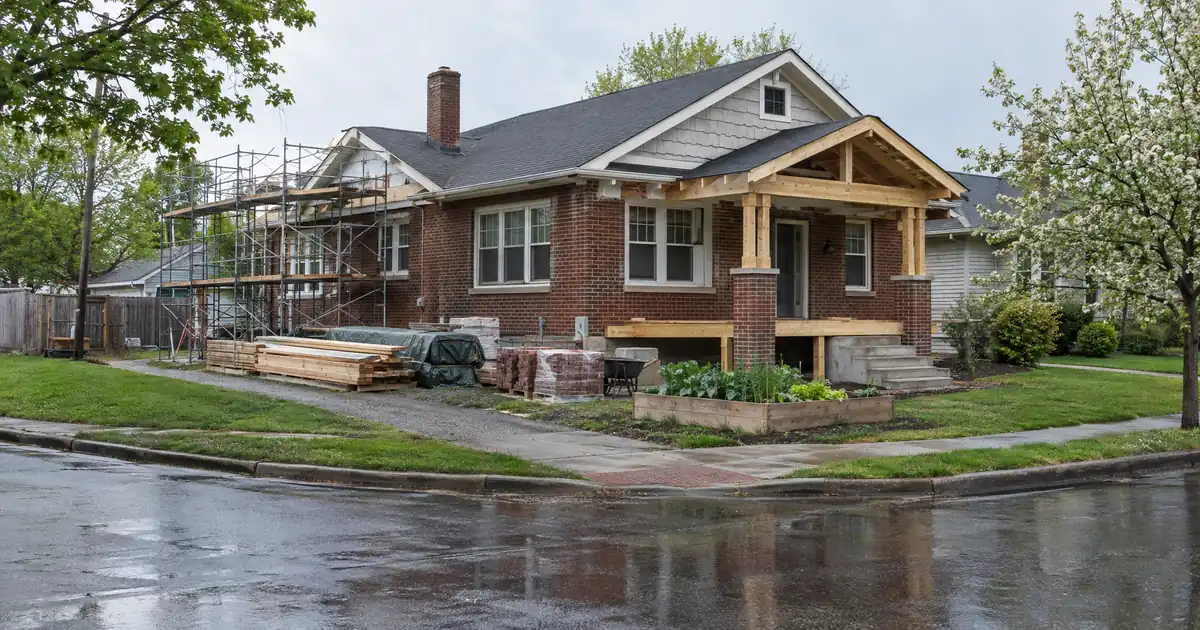
The Quick Read: An extension costs you a fee, more interest-only carry, and updated paperwork, and it only postpones the exit. Finishing the DSCR refinance replaces the short-term note with long-term financing, but it needs seasoning, an appraisal that supports the payoff, and rent that covers the new payment. The cheaper path is the one that reaches a closed refinance without failing a test. Compare total cost, not just the headline fee.
- An extension is the lender’s decision or a priced option in your note, not a right you hold.
- The real cost is the fee, the extra months of interest, and any title or insurance updates, and rolled-in costs make the payoff bigger.
- A DSCR cash-out refinance on a non-owner-occupied rental tops out at 75% LTV across the network, with about 6 months of ownership expected, subject to lender guidelines.
- A payoff that grows because of extension costs can push a DSCR refinance past its leverage cap.
- Pay for an extension only when it lets the refinance pass a test it fails today.
The honest answer is that these two options do different jobs. An extension is for the investor whose exit is close but not ready. Maybe seasoning has not cleared, the rehab is still finishing, or the first lease has just started. Finishing the DSCR refinance is for the investor whose property already passes the tests and who wants to retire a note with a looming balloon. Plenty of files need both, in that order. Extend to reach the date, then close the refinance. Lendmire’s wholesale network places hard money and DSCR loans, so this is a referee’s view of both.
DSCR Cash-Out Calculator
Run the cash-out numbers in your market
Rate source: Freddie Mac 30-yr average via FRED® — Federal Reserve Bank of St. Louis · effective Oct 22, 2026
Prefilled with starting assumptions — enter your property’s value, balance, taxes, and insurance for a more accurate picture.
Program parameters update from Lendmire’s centralized guideline source. Taxes and insurance are editable estimates.
As of Oct 22, 2026 · General Freddie Mac market benchmark, not a Lendmire loan offer. Property value, balance, taxes, and insurance are editable estimates. Maximum loan-to-value varies by lender, program, property type, and seasoning. Not a Loan Estimate, approval, or commitment to lend. Program availability and eligibility are subject to lender guidelines, credit approval, property review, and underwriting.
Side-by-Side
The table compares the structure of each path, not the pricing. The extension column reflects published industry norms. The DSCR column reflects the programs in Lendmire’s wholesale network, and every item varies by lender, property, and borrower.
| Factor | Extending the Hard Money | Finishing the DSCR Refinance |
|---|---|---|
| Review basis | Payment history, rehab progress, exit plan | Rent vs. full payment, value, credit |
| Documentation | Extension agreement, updated title and insurance | Lease or market rent, appraisal, payoff letter, assets |
| Property types | Same collateral as the existing note | 1-4 unit rentals; manufactured, log, barndominium not offered |
| Entity vesting | Stays as the current note is vested | Individual or LLC; settle before the refinance |
| Timeline pressure | Ask before maturity, not after | Seasoning, appraisal, and title must fit before maturity |
| Reserves | Usually not re-tested; varies by lender | Often about 6 months PITIA; varies |
After an extension, you hold the same collateral, the same balance, and a later maturity. The exit problem is deferred, not solved. After the refinance, you hold a long-term loan on a schedule built for a rental. The spine of the network’s DSCR programs is the 30-year fixed, and extended terms and interest-only periods are available through select lenders.
What Does an Extension Actually Cost?
An extension has four cost layers, and the fee is only the first. No standard published price exists for private-lender extensions. The fee is usually a percentage of the balance, but it is set by each lender and note, so price your own scenario from the document you signed.
The fee. It may be a priced option already written in the note, or something you negotiate. Many lenders let you pay it up front. Others add it to the payoff.
The extra carry. Hard money is typically interest-only, so every added month is a month of interest with no principal paid down. On the hard money programs Lendmire places, terms run 6 to 18 months, interest-only, with no prepayment penalty. That framing varies by lender, property, and experience. Extension terms differ by lender, and some lenders adjust the note’s terms when they extend.
The paperwork. Lenders may ask for an extension agreement, refreshed title, proof of insurance, and sometimes an updated appraisal. Practitioners also describe conditions such as no defaults and visible progress on the project. Those come from commercial bridge practice, so treat them as directional for 1-4 unit rentals.
The payoff effect. This is the layer investors miss. A fee added to the payoff and months of accrued interest both enlarge the balance the new lender must pay off. A file that looked like a clean payoff-only refinance can tip into a cash-out file, and the larger balance can also push it past the leverage cap. Lendmire’s piece How Much a Hard Money Extension Costs Near Maturity covers how those costs stack as the date closes in.
What Does Finishing the DSCR Refinance Cost?
Finishing the refinance costs closing expenses, a new appraisal, and a larger and slower-moving payment structure. It also costs you the tests you must pass. Those tests are seasoning, value, and rent coverage, and a failed test can cost more than any fee.
A DSCR loan is a long-term rental loan that qualifies primarily on property-level rental income covering the payment, subject to lender guidelines. Here is what the new lender looks at.
- Seasoning. A DSCR cash-out refinance typically expects about 6 months of ownership, measured from title recording. That is lender policy, not law. Finishing the rehab or signing a lease does not start the clock.
- Value. The new lender orders its own appraisal. Your after-repair estimate is a planning number only. A DSCR cash-out refinance on a non-owner-occupied rental is capped at 75% LTV, and a DSCR rate-and-term refinance on an investment property can go up to 85% LTV. Both are program figures, not promises.
- Rent coverage. The old bridge was interest-only. The DSCR payment adds principal, taxes, insurance, and any HOA dues on a larger balance. The lender divides rent by that full payment. 1.00 is where many select programs start. A separate select-lender path takes coverage below 1.00 with leverage and terms adjusted. Stronger ratios open better terms and leverage.
- Credit and reserves. A 620 score is the floor in parts of the network. Most programs want around 660, and 700 or higher opens the strongest leverage tiers. Reserves commonly run around 6 months of PITIA on a DSCR loan, and about 9 months above $1,500,000. Conservative rate-and-term files at modest leverage may see reserves waived.
- Loan size. Standard DSCR programs run up to $3,000,000, and balances at the small end route through select lenders.
Vesting the new loan in an LLC is possible, subject to lender program eligibility. Settle entity questions before the refinance starts, because moving a property into an LLC can trigger a title review or reset seasoning with some lenders.
Clearing 1.00 does not mean the property cash flows. DSCR compares rent to PITIA only. Repairs, vacancy, management, utilities, and capex sit outside the calculation. Equity and coverage both have to work: strong rent does not erase leverage caps, credit floors, reserve rules, or property eligibility.
The strongest exits start with the lender chosen before the bridge closes. Lendmire’s hard money exit refinance program page covers that path for 1-4 unit non-owner-occupied rentals. Lendmire brokers the move from hard money into long-term DSCR financing once the property is stable.
When Extending the Hard Money Loan Is the Better Fit
Extending wins when one specific obstacle sits between you and a clean refinance, and time alone will remove it. The extension is cheaper than the problem it solves.
- Maturity lands before seasoning clears. The maturity date does not move for you. If the DSCR cash-out refinance needs about 6 months from title recording and you are short, a short extension bridges the gap. This is the clearest case for paying the fee.
- The rehab or the first lease is unfinished. An unfinished property cannot be tested for rent coverage. A lender cannot size a DSCR loan on rent that does not exist yet. Documented rental history or a signed lease supports the rent figure far better than a promise.
- The appraisal is the open question. If the bridge was sized near its ceiling, a low appraisal leaves no cushion. An extension can buy time to fix a defect, add a missing item, or gather stronger comps before the new appraisal is ordered.
- You have a clean payment record. Lenders tend to extend loans that are current and moving. A borrower who asks early, with a plan, is negotiating. After maturity, the same request becomes a default conversation.
- The loan is on short-term-rental collateral. The DSCR network applies lower ceilings there, 70% on a cash-out refinance of a short-term rental against 75% on a standard rental. It also expects about 12 months of hosting history. If the history is short, the extension buys that runway.
Be honest about the limit. An extension is a bridge to the DSCR close, not the exit itself. Each added month of interest-only carry costs money and delivers no equity.
When Finishing the DSCR Refinance Is the Better Fit
Finishing wins when the property already passes the tests and the extension would only pile cost onto a balance that is ready to retire. In that case, paying to wait is paying for nothing.
- Seasoning has cleared and the rent is documented. If you are past about 6 months from title recording and the lease or market rent supports the payment, nothing is left to wait for.
- The balance fits the cap. A DSCR cash-out refinance of a rental is capped at 75% LTV, so the payoff plus costs must sit under that line. If extension costs would push you over it, extending can work against you.
- The payoff is clean. If cash back is not the goal, a payoff-only refinance may work. The DSCR loan allows up to 85% LTV on a rate-and-term refinance of an investment property, with no cash back at closing. Seasoning for that file depends on lender guidelines.
- You want a longer runway. Hard money, by its own structure, is short-term and interest-only. Investors who need years rather than months move to long-term rental financing, which is why many choose the 30-year fixed spine.
- Another extension would be a second chapter. If this is the second or third request, lenders may also tighten terms. A refinance ends the cycle.
The two-step path also deserves a look. Some investors do a payoff-only refinance first, then a cash-out refinance after seasoning clears. It trades a second closing for time. Lendmire’s piece How Much a BRRRR Cash-Out Refinance Returns After Hard Money Payoff shows how a cash-out refinance can return capital to the next deal.
A Simple Decision Rule
Start with one question. What does the extension let the refinance do that it cannot do today?
- If the answer is to clear seasoning or to finish the rehab and lease, the extension has a job. Price the fee, the extra carry, and the paperwork, and compare them to what a rushed refinance could cost you.
- If the answer is nothing, and you just want more time, the extension is a delay. Weigh it against starting the refinance now.
- If the appraisal is the worry, fix the cause before you pay for time.
- If maturity is past or close, run the extension request and the DSCR application in parallel, because one may fail.
Last, run coverage on the new payment before you buy, not at maturity. The most expensive extensions are the ones forced by a refinance that never pencilled.
Common Misreads
“I’m entitled to an extension.” Nothing gives you that right. It depends on your note and the lender’s discretion. A bridge that cannot be repaid at maturity is generally in default, so a missed date is not just a late fee.
“The balloon is only my lender’s problem.” The CFPB describes a balloon payment as a large final payment, and notes that a drop in property value or a weaker financial position can block the refinance meant to pay it. Federal rules also define a balloon as a payment of more than twice the regular periodic payment, per Regulation Z. DSCR loans are designed for non-owner-occupied investment properties. Because they are business-purpose investor loans, they are reviewed differently from a standard owner-occupied mortgage. Use those sources for the balloon-risk idea only.
“My after-repair value sizes the DSCR loan.” The new lender sizes on its own appraisal and its own rent figure. Your estimate is a planning number.
“Delayed financing fixes a hard-money purchase.” It rarely does. That exception is built for cash purchases, and a hard-money purchase carried a lien from day one.
“The DSCR formula is the same everywhere.” Commercial lenders often use net operating income over debt service. Residential non-QM DSCR files typically use gross rent over PITIA. Ask which one a lender means.
Key Terms Defined
Maturity: the date the hard money loan must be repaid in full.
Balloon payment: the large final payment due at maturity on an interest-only loan.
Extension: a lender’s agreement, often for a fee, to move the maturity date later.
Seasoning: the waiting period a lender wants between buying a property and refinancing it, measured from title recording.
Payoff-only refinance: a new loan that covers the old balance, accrued interest, and closing costs, with no cash back.
Cash-out refinance: a new loan that pays off the old balance and also hands you cash at closing, which lenders price and size under tighter leverage limits.
PITIA: principal, interest, taxes, insurance, and association dues, the full monthly payment a DSCR lender tests rent against.
DSCR: the debt service coverage ratio, the property’s rent divided by its PITIA.
A Balanced Verdict
Neither path is cheaper in every file. The extension is cheaper when it buys a specific, near-term fix. The refinance is cheaper when the property already passes and the extension would only add carry and enlarge the payoff. Investors tend to overpay when they treat the extension as the plan, and again when they rush a refinance the property cannot yet pass.
Do the math on both before maturity gets close. Price the extension from your own note, including the rolled-in costs. Then check that the larger payoff still fits under the DSCR loan’s leverage cap. For the full program picture, see Lendmire’s complete DSCR loans guide. Program details change, every file is underwritten individually, and nothing here is a commitment to lend.
If you are buying, rehabbing or refinancing an investment property on a short timeline and want to see how the numbers work, Lendmire can help you compare hard money options based on the project, the exit plan, leverage, and your goals.
Frequently Asked Questions
Can I ask for an extension and start the DSCR refinance at the same time?
Yes, and it is often the safest approach. The extension protects you if the refinance runs into an appraisal or seasoning problem, and the application keeps the exit moving. Start the DSCR file well before the seasoning date, so the appraisal and title work do not hold you up.
Does a payoff-only refinance count as cash-out?
Not if no cash returns to you. A payoff-only refinance covers the old balance, accrued interest, and closing costs. If the new loan returns cash, the lender treats it as cash-out, with a 75% LTV ceiling on a standard rental. Extension fees and rolled-in costs can tip a file across that line. Leverage, reserves, and pricing vary by lender and program; the final terms follow the full file review.
Does finishing the rehab or signing a lease start the seasoning clock?
No. Seasoning is lender policy and runs from title recording, with about 6 months common for DSCR cash-out refinances. A finished rehab or a new lease helps with rent documentation, but it does not shorten the clock. Lenders also tend to want documented rental history over a brand-new lease.
What if the appraisal comes in short?
The new loan may not repay the old balance. A bridge sized near its maximum leaves little room for error. You would then need to bring cash, add a partner, restructure the refinance, or sell. A short extension can buy time to address the cause, but it adds cost.
What happens if I miss maturity?
A bridge that cannot be repaid at maturity is generally treated as in default, and lenders are not required to extend. The consequences depend on the note. Ask for an extension before the date, not after it.
About Lendmire
Lendmire — NMLS# 2371349 — is a mortgage brokerage specializing in DSCR investor loans, helping arrange financing across 41 markets, including Washington, D.C., through wholesale and investor-lending channels. The model centers on property-level rental income reviewed by the lender rather than W-2 documentation, subject to lender guidelines, suiting entity-owned and multi-property investors. Lendmire holds Scotsman Guide Top Mortgage Workplace recognition for 2025 and 2026.
Get Started
Ready to find the right loan for you?
In about 30 seconds you can review financing options available for your investment property. No commitment required.
Informational only. Not a Loan Estimate, approval, or commitment to lend. Program availability and eligibility are subject to lender guidelines, credit approval, property review, and underwriting.
References
1. CFPB: What is a balloon payment? When is one allowed?
2. CFPB: Regulation Z, 12 CFR 1026.37
This article is part of Lendmire’s hard money loan program — full qualification details, guidelines, and scenarios live on the program page.
Related reading: How to Line Up DSCR and Raise Your Score Before Hard Money Comes Due · How a DSCR Lender Sizes a Longer-Term Hard Money Refinance · How Much a Credit Score Must Move From Hard Money to DSCR Approval?
Brandon Miller
Founder & CEO, Mortgage Loan Originator, Lendmire LLC
- Mortgage Loan Originator · NMLS# 1129696 · Verify on NMLS Consumer Access
- North Carolina Real Estate Broker · License# 343312 · Verify on NCREC
- North Carolina Insurance Producer · License# 19053198 · Property, Casualty, Life, Health · Verify on NAIC SBS
- Lendmire LLC · Firm NMLS# 2371349 · Verify firm licensure
Legal disclosures. Lendmire (NMLS# 2371349) is a state-licensed mortgage brokerage that arranges financing through wholesale lender relationships. Lendmire is not a direct lender, depository institution, or registered financial advisor. The discussion above is general informational content about real estate financing — it is not financial, legal, or tax advice, and readers should consult licensed professionals for guidance on their individual circumstances. Loan inquiries are subject to lender underwriting; this article does not represent a commitment to lend. Loan terms, rates, and qualification standards vary by borrower, property, and state, and are subject to change at any time. Equal Housing Opportunity. NMLS Consumer Access: nmlsconsumeraccess.org.