
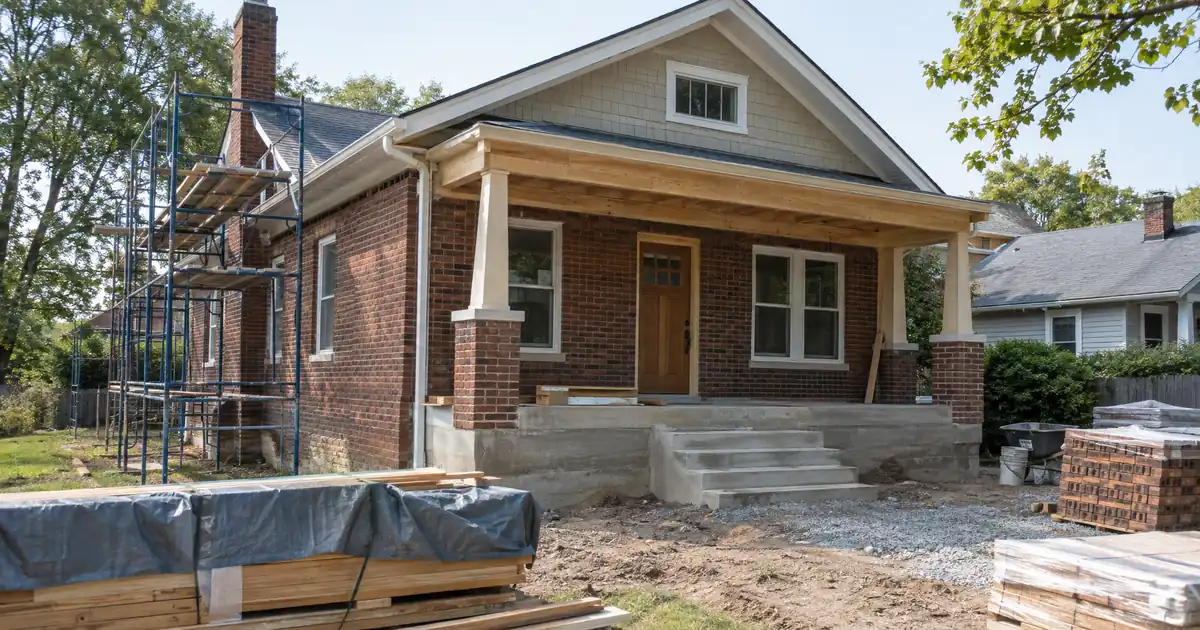
The Quick Read: A hard money loan is short-term, interest-only financing secured by an investment property. The lender sizes it on the property’s value and your plan for it, not on your income. Beginners can qualify, usually at the lower leverage tiers. You pay for that flexibility with a short runway and a refinance or sale you must plan from day one.
What Should You Know Before Reading Further?
- Hard money reviews the plan and the exit. Credit still gets reviewed.
- Lenders size the loan against two tests: total project cost and after-repair value. The lower result wins.
- Experience sets your leverage tier. A first-time investor typically puts in more of their own cash.
- Rehab money usually arrives in draws after work is done. You need working capital.
- Hard money is not a rental loan. If you plan to hold, test the long-term refinance before you buy.
Key Terms Defined
Hard money loan: a short-term loan from a private or specialty lender, secured by the real estate itself.
What this loan actually costs to carry in your market.
Hard money is sized against the project and priced by time. Enter the deal and see how much the program will lend, the cash required at closing, the carry while you hold it, and what is left at the exit.
Leverage tiers on the current program: 85% with fewer than 2, 90% with 2 or more, 93% with 5 or more completed projects — every tier capped at 75% of after-repair value. Loan amounts up to $5,000,000, larger by exception; terms of 6 to 18 months, interest-only, no prepayment penalty. The rehab portion funds in draws against completed work, not at closing.
Program parameters shown update from Lendmire’s centralized guideline source. Rate, points, and months are editable assumptions, not quoted terms.
Cost cap sets the loan · positive spread
Illustrative estimate only — not a quote, Loan Estimate, approval, or commitment to lend. Rate, points, and months are editable assumptions. Hard money is business-purpose financing for real estate investors, not a consumer mortgage. Leverage on the current program tops out at 93% of project cost for investors with a documented track record, capped at 75% of after-repair value, with rehab funding up to 100% of the documented budget released in draws; actual terms vary by lender, borrower experience, property, and exit. Lendmire is a mortgage broker, not a lender.
After-repair value (ARV): what the property should be worth once the renovation is finished.
Loan-to-cost (LTC): the loan as a percentage of purchase price plus rehab budget.
Draw: a release of rehab funds after a portion of the work is done and inspected.
Interest-only: you pay interest each month and owe the full balance at the end of the term.
Balloon payment: that full balance coming due, repaid by a sale or a refinance.
Bridge loan: short-term financing that carries you between a purchase and a longer-term plan.
Seasoning: the waiting period a lender wants before a refinance, often showing the property has been leased and stable.
PITIA: principal, interest, taxes, insurance, and association dues. This is the full monthly housing obligation.
DSCR (debt service coverage ratio): monthly rent divided by PITIA. It shows whether the rent covers the payment.
What Is a Hard Money Loan, and Who Is It For?
A hard money loan is a business loan for investment real estate that is priced and sized on the asset. It suits properties and plans that a long-term lender won’t touch yet. Think a worn-out duplex, an auction purchase, or a flip that needs work before anyone could lease it.
The “hard” refers to the hard asset backing the loan. The lender cares what the property is worth, what it will be worth after repairs, and how you will repay. Your traditional personal-income documentation matters far less.
Most beginners mix this up with DSCR financing, so here is the contrast.
| Factor | Hard money | DSCR loan |
|---|---|---|
| Purpose | Buy or rehab, then exit | Hold a stabilized rental |
| Sized on | Cost and after-repair value | Rent against PITIA |
| Term | Short (6-18 months here) | Long (30-year fixed is the spine) |
| Payments | Interest-only | Typically amortizing |
| Property condition | Can be distressed | Generally rent-ready |
A DSCR loan is reviewed primarily on property-level rental income covering the payment, subject to lender guidelines. Hard money does not care about rent in the same way. It cares whether the finished property will sell or refinance for enough to pay it off.
Clearing a 1.00 DSCR is also not the same as positive cash flow. The ratio compares rent to PITIA only. Repairs, vacancy, management, utilities, and capital expenses sit outside it.
How Does a Hard Money Lender Underwrite Your Deal?
The lender checks the property, the budget, the exit, and you, in that order. The steps below follow how a typical file moves. Exact requirements vary by lender, property, and experience, and nothing here is a commitment to lend.
1. You submit the deal package. That means the purchase contract, a scope of work with a budget, and often a plan for how you will exit. Lenders may also ask for comparable sales or rent analysis.
2. The lender values the property. An appraisal commonly gives an as-is value and an after-repair value. Some lenders order two opinions.
3. The lender sizes the loan. Two tests apply. One looks at total cost. The other looks at after-repair value. The smaller answer controls.
4. You close and pay the upfront costs. Expect lender fees plus title, insurance, and appraisal charges. These can add up, so ask for a full fee list early.
5. Rehab money flows in draws. You request a draw, send contractor invoices, and the lender inspects. Funds release after the inspection.
6. You carry the loan and exit. Payments are interest-only. The balance is repaid by a sale or a refinance.
How does the sizing math work?
Run the numbers on a modeled project where total cost is 100 and after-repair value is 120. These are index figures, not dollars, so you can see how the two tests interact.
On this program’s tiers, fix-and-flip leverage runs 93% of project cost at five or more completed projects. It runs 90% at two or more, and 85% with fewer than two. Every tier is also capped at 75% of after-repair value. Leverage varies by lender, property, and experience.
- A first-timer at 85% of cost gets a test result of 85. The ARV cap is 90 (75% of 120). The lower number wins, so the loan is 85, and you cover the other 15.
- An investor at 93% of cost gets 93 on the cost test. The ARV cap still holds at 90, so the loan is 90, and you cover 10.
Notice the second case. Experience got that investor a higher cost tier, but the ARV cap trimmed it. Overstated ARV is the classic beginner error. If you inflate the finished value, a good lender’s appraisal will correct it, and the gap lands on your cash.
Why do draws matter so much?
The program funds up to 100% of the rehab budget in draws against completed work. That is a rehab-budget figure, not a purchase loan-to-value.
On many programs, contractors want money before the work is done. So you front the cost, then get reimbursed after inspection. If you start a project with only your down payment, you can stall mid-rehab. Plan for working capital on top of your cash to close. Experienced borrowers can sometimes negotiate advanced draws. Beginners usually can’t.
What Structures Exist Beyond a Standard Flip?
Hard money comes in a few shapes, and each sizes differently. These figures reflect this program, and each varies by lender, property, and experience.
| Structure | Typical leverage | Notes |
|---|---|---|
| Fix-and-flip | 85-93% of project cost, max 75% of ARV | Tier set by completed projects |
| Bridge purchase, no rehab | Up to 80% of purchase price | For buying and holding briefly |
| Cash-out or rate/term refinance | Up to 65% of value | Lower leverage on existing assets |
| Ground-up construction | Up to 90% of cost, 75% of completed value | At 3+ completed projects |
Other common terms on the program: loan amounts up to $5,000,000, with larger by exception. Terms run 6 to 18 months, interest-only, with no prepayment penalty. There are no multi-year options. If you need longer runway, you refinance into long-term rental financing. Terms vary by lender guidelines, property type, leverage, credit profile, and full file review.
Collateral is non-owner-occupied residential property, 1 to 4 units. Ground-up construction goes to 10 units. Commercial, industrial, land or lots, hospitality, and owner-occupied properties are not on the sheet. A few states and cities are also excluded, so confirm your property’s location before you fall in love with a deal.
There is no true 100% purchase program. When someone advertises “100% financing,” look for the actual structure. It is usually a lender funding most of the cost and the rehab in draws, with you covering the gap.
What Does the Lender Look at Besides the Property?
The property drives the loan, but the borrower still gets reviewed. Lenders want to see credit history, your cash in the deal, and your liquidity. A first-time investor qualifies at the lower leverage tiers.
Credit. The program’s minimum score is 620, with additional conditions below 660. Hard money is asset-based, but it is not blind to credit. Past foreclosures, bankruptcies, and collections raise questions more than a single score does.
Experience. This mostly changes your leverage and pricing, not whether you are eligible. Documented completed projects move you up the tiers.
Skin in the game. Lenders treat your own cash as risk control. A borrower who has more at stake is less likely to walk away from a messy project.
Liquidity. You need cash for the gap between draws, for carry, and for surprises. Many first deals fail here, not on the math.
Hard money loans are designed for non-owner-occupied investment properties. Because they are business-purpose investor loans, they are reviewed differently from a standard owner-occupied mortgage. That treatment is not automatic. As Compliance Alliance explains, calling a property an “investment” does not settle the question. The analysis turns on the loan’s purpose, whether the owner will occupy the property, and the number of units. Lenders also document purpose rather than rely on a checked box. Hunton Andrews Kurth notes that loans to entities are treated differently, and that a non-owner-occupied rental is generally treated as business purpose. Subject to program terms, buying through an LLC can fit this structure.
Where Does the General Rule Break?
Four edge cases trip up beginners most often.
Terminology is loose. “Hard money,” “fix-and-flip loan,” and “bridge loan” get used interchangeably. One lender-affiliated practitioner argues that true hard money differs from institutional fix-and-flip loans sold on the secondary market. That is a single opinion, not settled fact. What matters is the actual term sheet. Compare terms, not labels.
Bridge to DSCR depends on seasoning. Many investors plan to refinance a hard money loan into a long-term rental loan once the property is stabilized. That is a smart plan, but the refinance generally wants the property leased and stable. A lease signed last week may not satisfy a lender’s seasoning rule. Seasoning varies by lender and program, so ask before you buy, not after your term is half gone. If the refinance can’t happen in time, your fallbacks are an extension or a sale.
Property condition decides the product. A property that isn’t rent-ready generally can’t take a DSCR loan yet. That is the classic use of hard money first. Coverage below 1.00 is available through select lenders in the network, with leverage and terms adjusted. But that does not fix a unit with no kitchen.
State rules vary. Licensing for private lenders differs by state, and I found no authoritative national summary. Verify that your lender is properly licensed where the property sits, and ask them to show you.
What Mistakes Do Beginners Make Most?
Most beginner losses come from a handful of repeat errors. Here they are, with the fix for each.
| Mistake | What happens | Fix |
|---|---|---|
| Overstating ARV | Loan comes in smaller than planned | Use conservative comps; expect the appraisal to correct you |
| Lowballing rehab | Budget runs dry mid-project | Build in contingency; get multiple bids |
| Skipping reserves | Draw gaps stall the job | Hold cash for carry and front-loaded costs |
| No exit test | Refinance or sale fails at maturity | Underwrite the exit before you buy |
| Assuming rent repays it | Balloon arrives, rent can’t cover it | Treat the loan as a sale or refinance, not a hold |
One more point deserves its own line. Do not assume the rent will pay off a hard money loan. It won’t. A balloon is repaid by a sale or a refinance, and the appraised value has to support the payoff.
How Do You Vet a Hard Money Lender?
Ask the same questions of every lender, and compare the written answers side by side. Beginners who skip this end up comparing marketing instead of terms.
- Does interest accrue on the full commitment or only on funds you’ve drawn? On large rehab budgets, this matters.
- How are draws requested, inspected, and paid? Who pays for inspections?
- What are the extension fees, and under what conditions can you extend?
- Is there a prepayment fee? This program carries none, but lenders may.
- Is the rehab lender-funded, or do you front costs and get reimbursed?
- What does the full fee list look like, in writing, before you sign?
- Is the lender licensed in the property’s state?
Walk away from anyone who promises approval before looking at the property. The same goes for lenders who won’t put fees in writing, who tell you credit “doesn’t matter at all,” or who ask you to wire money before documents are signed. Real lenders talk about the asset, the plan, and the exit.
Also note that terms often differ between newer and experienced borrowers. A quote you see online may describe someone with a long track record, not you. If you need to show sellers you can close, a proof-of-funds letter from a lender or a bank is a common tool. The lender can state what it is willing to consider, but nothing in a letter is a commitment to lend.
Finally, build the relationship. A smooth first project, with accurate paperwork and draws handled cleanly, tends to open better tiers on the next one. That is how a beginner graduates to the 90% and 93% tiers.
Should You Use Hard Money? A Practical Decision
Use hard money when the property needs work or the purchase can’t wait for long-term financing, and you have a clear exit. Skip it when the property is already rent-ready and the numbers work on a long-term loan. A 30-year fixed will almost always carry less pressure than a 6-to-18-month balloon.
Here is the decision in practice.
1. Is the property rent-ready? If yes, price a DSCR loan first. If no, hard money may be the bridge.
2. What is your exit? Sale or refinance, and write down the date by which each has to work.
3. What if the exit slips? Know your extension options and your reserve cushion before you sign.
4. If you’re holding, does stabilized rent support the permanent loan? Test coverage using realistic rent and the full PITIA, and keep in mind the ratio ignores repairs and vacancy.
Many investors refinance out of hard money into long-term DSCR financing once the property is stabilized, and Lendmire brokers that path. For the long-term side, read the complete DSCR loans guide. If you’re planning a buy, rehab, rent, refinance strategy, Lendmire’s guide to refinancing a hard money loan after BRRRR covers this in more depth.
Tax treatment can depend on how the funds are used and how the property is held; investors should keep clear records and speak with a qualified tax professional before relying on any deduction.
Frequently Asked Questions
Can a beginner get a hard money loan with no experience?
Yes, typically at the lower leverage tiers. On this program, first-time investors fall in the 85%-of-project-cost tier, capped at 75% of after-repair value. Experience unlocks higher tiers. Eligibility and terms vary by lender, property, and experience.
Does hard money check credit?
Yes. Underwriting stays asset-based, so property, plan, and exit carry the most weight. But credit history, including past foreclosures and collections, still gets reviewed.
How much cash do I need besides the down payment?
More than most beginners expect. Rehab funds usually arrive in draws after inspection, so you front work and get reimbursed. Plan for carry costs and contingencies on top of your cash to close. The exact number depends on the lender and the project.
What if I can’t refinance or sell before the term ends?
Talk to the lender before maturity, not after. Extensions may be available, but they carry fees and conditions. A sale is the other fallback. The safest approach is to underwrite the exit before you buy, including the seasoning a long-term lender will want.
Next Step
If you are buying or refinancing a rental property and want to see how the numbers work, Lendmire can help you compare DSCR loan options based on the property income, credit profile, leverage, and investor goals. As a mortgage broker, Lendmire arranges DSCR financing through select lenders in its wholesale network, across 41 markets, including Washington, D.C. Call 828-256-2183 or request a quote through the Lendmire quote page. Programs change, and every file is underwritten individually.
Many investors treat hard money as the acquisition tool and plan the exit up front — see refinancing out of a hard money loan with a DSCR loan.
About Lendmire
Lendmire (NMLS# 2371349) is a mortgage brokerage built around DSCR investor lending, with programs available in 41 markets, including Washington, D.C. DSCR lenders commonly evaluate rental-income coverage instead of personal income paperwork — a practical fit for LLC-owned and multi-property investors. Terms vary by lender, property, leverage, and program. Scotsman Guide named Lendmire a Top Mortgage Workplace in both 2025 and 2026.
The exit plan matters as much as the purchase price on short-term financing.
Get Started
Ready to find the right loan for you?
In about 30 seconds you can review financing options available for your investment property. No commitment required.
Informational only. Not a Loan Estimate, approval, or commitment to lend. Program availability and eligibility are subject to lender guidelines, credit approval, property review, and underwriting.
References
1. Compliance Alliance – Regulation Z and Investment Properties
2. Hunton Andrews Kurth – Beware of Business Purpose
This article is part of Lendmire’s hard money loan program — full qualification details, guidelines, and scenarios live on the program page.
Related reading: Luxury Rental DSCR Loans In New Jersey · Jersey Shore Vacation Rental Loans: DSCR Financing In Ocean City, Cape May And Long Beach Island · DSCR Cash-out Refinance In New Jersey: Pulling Equity From A Rental
Brandon Miller
Founder & CEO, Mortgage Loan Originator, Lendmire LLC
- Mortgage Loan Originator · NMLS# 1129696 · Verify on NMLS Consumer Access
- North Carolina Real Estate Broker · License# 343312 · Verify on NCREC
- North Carolina Insurance Producer · License# 19053198 · Property, Casualty, Life, Health · Verify on NAIC SBS
- Lendmire LLC · Firm NMLS# 2371349 · Verify firm licensure
Required disclosures. Lendmire (NMLS# 2371349) operates as a licensed mortgage broker, not a direct lender or depository. The discussion in this article is general in nature and should not be relied upon as financial, legal, or tax advice — every investment scenario is unique and should be reviewed by a qualified professional. Any loan inquiry is subject to lender underwriting, and this article is not a commitment to lend or a guarantee of approval. Mortgage rates, loan terms, and program guidelines vary by borrower, property, and state, and may change without notice. Equal Housing Opportunity. Verify licensure at NMLS Consumer Access.