
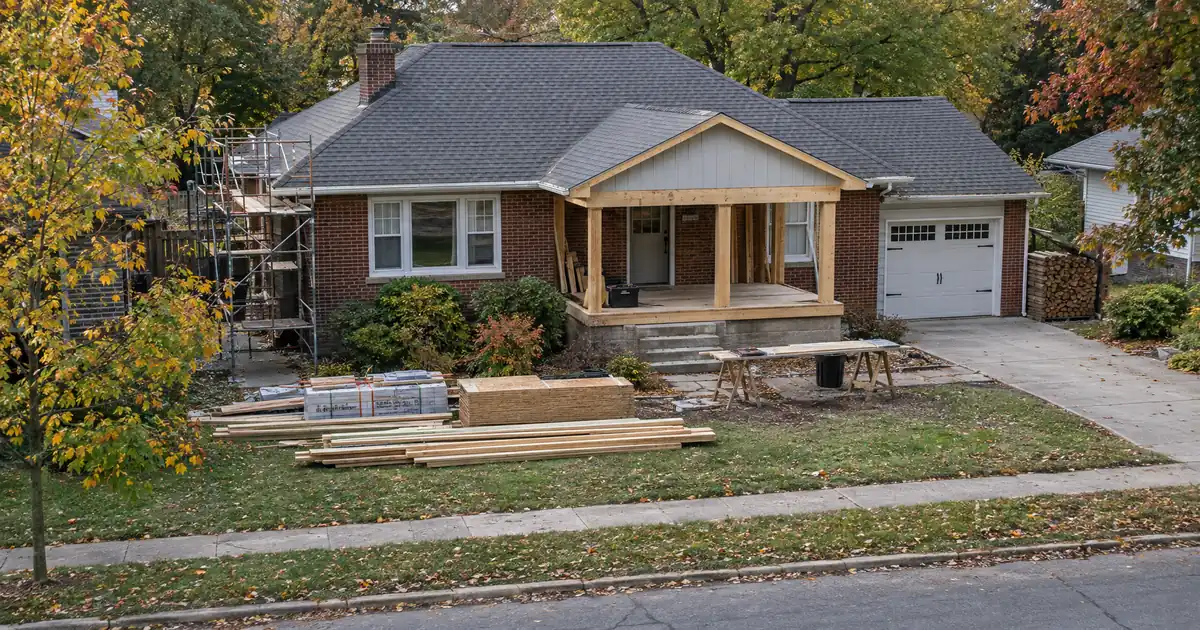
The Quick Read: Usually yes, but only if you size the term backward from the refinance lender’s waiting period and add slack on top. The note has to outlast the rehab, the lease-up, the seasoning wait, and the appraisal and underwriting that follow. A 6-18 month term covers that on a plan with room to slip, and it fails on a plan with none.
- Hard money terms in this network run 6-18 months, interest-only, with no prepayment penalty. The range varies by lender, property, and experience.
- Seasoning is the waiting period before a refinance lender will count your repaired value. It is lender policy, not law.
- The clock usually starts at the recorded purchase date, not when the rehab ends.
- Pick the longer term when the rehab is heavy or the exit lender’s seasoning is unclear.
- Plan a backup exit before you close: extension, payoff-only refinance, fresh cash, or a sale.
What Does the Term Actually Have to Cover?
The term has to cover the entire exit sequence, not just construction. That means rehab, lease-up, the seasoning wait, then appraisal and underwriting on the new loan.
What this loan actually costs to carry.
Hard money is sized against the project and priced by time. Enter the deal and see how much the program will lend, the cash required at closing, the carry while you hold it, and what is left at the exit.
Leverage tiers on the current program: 85% with fewer than 2, 90% with 2 or more, 93% with 5 or more completed projects — every tier capped at 75% of after-repair value. Loan amounts up to $5,000,000, larger by exception; terms of 6 to 18 months, interest-only, no prepayment penalty. The rehab portion funds in draws against completed work, not at closing.
Program parameters shown update from Lendmire’s centralized guideline source. Rate, points, and months are editable assumptions, not quoted terms.
Cost cap sets the loan · positive spread
Illustrative estimate only — not a quote, Loan Estimate, approval, or commitment to lend. Rate, points, and months are editable assumptions. Hard money is business-purpose financing for real estate investors, not a consumer mortgage. Leverage on the current program tops out at 93% of project cost for investors with a documented track record, capped at 75% of after-repair value, with rehab funding up to 100% of the documented budget released in draws; actual terms vary by lender, borrower experience, property, and exit. Lendmire is a mortgage broker, not a lender.
Hard money is interest-only. You pay interest on what has been drawn, and the full balance comes due at maturity. That is a balloon. Nothing amortizes, so the only way out is a sale or a refinance.
Most investors budget for the rehab and forget the rest. The rehab is the part you control. The lease-up depends on the market, the seasoning clock depends on the exit lender, and the appraisal depends on a stranger with a clipboard.
A fair warning from PropertyDNA’s BRRRR explainer: contractor delays are a common risk, and hard money carries a monthly cost while you wait. A generous-looking term is only generous if the schedule holds.
The Runway Test: Stack the Stages Against the Term
Add up every stage, pad each one, and compare the total to the term. If the total is longer than the note, the note is too short.
| Stage | What happens | What can slip |
|---|---|---|
| Acquisition | Deed records, clock starts | Title or insurance holdups |
| Rehab | Draws against completed work | Permits, contractors, material delays |
| Lease-up | Tenant signs, first payment clears | Slow showings, repairs found late |
| Seasoning | Lender’s waiting period runs | Longer policy than you assumed |
| Takeout | Appraisal, rent schedule, underwriting | Low appraisal, missing documents |
| Payoff | Hard money note retired | Maturity arrives first |
The seasoning clock and the rehab run at the same time. They do not stack. That surprises people. The trap is assuming the clock begins when the rehab ends.
A modeled example (hypothetical inputs, not market data)
Say you take a 12-month note. Assume the rehab runs five months, the lease-up takes one more, and the refinance lender wants six months from the recorded purchase date. The seasoning wait ends right around the time the unit is rented. So far, fine.
Now add the takeout. The appraisal has to be ordered, the file underwritten, and the payoff arranged. Run that stage with a cushion of several months and you are near the end of the term with no slack. One slow permit and you are asking for an extension.
Change one input. Assume the exit lender wants 12 months of seasoning. A 12-month note now matures the moment the waiting period ends, with nothing left for underwriting. That is a mismatch.
BiggerPockets describes exactly this: if the refinance lender wants 12 months and the short-term loan runs nine, “you’ve got a problem.” The author’s own habit is a short-term loan of at least 18 months, which leaves cushion past month 12 to sell or find another loan. In this network, 18 months is the top of the hard money range.
Rehab Scope Changes the Answer
Light rehabs fit shorter terms. Heavy rehabs need the longest runway you can get. The terms below are modeled planning guides, not program rules.
| Rehab scope | Typical work | Term fit |
|---|---|---|
| Light | Paint, floors, fixtures | Short term can work |
| Medium | Kitchens, baths, some systems | Mid-to-long term safer |
| Heavy | Layout changes, structural, permits | Longest term available |
A cosmetic refresh on a clean property leaves little to go wrong. A gut job with permit review is the opposite. Contractors disappear, inspections get rescheduled, and hidden problems show up behind walls.
Here is the thing: the heavier the project, the more the term should be sized for the bad version of the schedule, not the average one.
Seasoning: The Clock You Don’t Control
Seasoning is the waiting period before a refinance lender sizes your loan on appraised value instead of what you paid. Before it ends, many lenders size the loan on purchase price plus documented rehab. Afterward, they use the appraisal.
Market figures vary widely. AirDNA notes that some lenders require ownership time before refinancing while investor-friendly lenders may waive it. In this network, the common expectation on a DSCR cash-out refinance is about 6 months of seasoning, and individual lenders differ.
A few mechanics matter more than the headline number.
- Where it starts. Usually at the recorded title date. Finishing the rehab earlier does not shorten it.
- A possible second clock. Some lenders want ownership time plus rental history. Others accept ownership time alone once a lease is signed and the first payment has cleared.
- The new lender’s own numbers. The takeout lender orders its own appraisal and rent schedule. Your after-repair estimate does not set the loan.
Delayed financing is the exception people mention. It is mostly a conventional-loan tool for cash buyers. It skips seasoning but bases the loan on what you paid, not the repaired value. Hard money secured by the property usually breaks that setup. So it rarely rescues a BRRRR plan.
What Does the Refinance Lender Look At?
The takeout is a brand-new underwriting, and it tests two things: equity and rental coverage. DSCR stands for debt service coverage ratio. It compares the monthly rent to the full monthly housing payment, meaning principal, interest, taxes, insurance, and any HOA dues. That payment is called PITIA.
Across the wholesale network Lendmire places files through, a few program realities apply to the typical rental exit. All of them are subject to lender guidelines and every file is underwritten individually.
- Cash-out refinance on a standard rental: tops out around 75% LTV. LTV is loan-to-value, the loan as a share of appraised value.
- Coverage: 1.00 is where many select programs start. A separate select-lender path takes coverage below 1.00, with leverage and terms adjusted.
- Credit: a 620 floor exists in parts of the network, most programs want around 660, and 700+ opens the strongest leverage tiers.
- Reserves: commonly around 6 months of PITIA, though they vary by lender, leverage, and loan size.
Clearing 1.00 does not mean the property cash flows. Repairs, vacancy, management, utilities, and capital expenses sit outside the calculation. Rent that covers the payment is the lender’s test, not your profit.
A bigger equity cushion helps the ratio, since a smaller loan means a smaller payment. It never erases leverage caps, credit floors, or reserve rules. The strongest files clear both tests.
Many investors refinance out of hard money into long-term DSCR financing once the property is stabilized, and Lendmire brokers that path. For the full picture, read the complete DSCR loans guide.
What Happens to the Leverage Math After the Rehab?
Hard money leverage is tied to cost, and the refinance is tied to value. They are different yardsticks. That gap is where cash gets trapped.
On the hard money side, fix-and-flip leverage depends on documented completed projects. It runs up to 93% of project cost at 5+ completed projects, 90% of project cost at 2+, and 85% with fewer than 2. Every tier is capped at 75% of after-repair value. Rehab funds are released in draws against completed work. These figures vary by lender, property, and experience.
The takeout loan then sizes against the appraisal. If the appraisal lands below your after-repair estimate, the new loan may not cover the payoff. You bring cash or you hunt for another exit. BiggerPockets flags appraisal risk as a core weakness of the strategy.
Practitioner view, stated plainly: the files that run into trouble are rarely the ones with a bad rehab. They are the ones where the investor never asked the exit lender about seasoning and value basis before the bridge closed. Ask first. Then pick the term.
If the Term Runs Short, What Are Your Options?
You have four moves when maturity arrives before the refinance is ready. None is free, and the right one depends on how close you are.
| Option | What it means | Trade-off |
|---|---|---|
| Extend the note | Lender grants more time | Usually a fee, needs lender approval |
| Payoff-only refinance | New loan retires the bridge, no cash back | You give up the cash-out |
| Bring cash | Pay down or pay off | Ties up reserves |
| Sell | Exit the project | Ends the hold strategy |
Lenders weigh extension requests against a clear plan. Bring a milestone-dated schedule, proof of progress, and evidence that the exit lender is lined up. A vague plan is the usual reason requests stall.
Extensions cost money, and every added month adds interest and carry. Lofty points out that seasoning rules at many lenders delay the cash-out and extend holding costs. A more affordable extension is the one you never need because you chose a longer term up front.
How Do You Pick the Term Up Front?
Choose the term that outlasts your worst-case schedule, not your hoped-for one. This is a simple rule, and it works.
1. List every stage: rehab, lease-up, seasoning, takeout.
2. Pad each one for the realistic downside.
3. Take the longer of the seasoning clock or the rehab-plus-lease-up chain.
4. Add the takeout stage and a cushion on top.
5. If the total is near the top of the term, pick the longer note or reconsider the deal.
Since the network’s hard money tops out at 18 months with no multi-year options, a plan that needs longer than that is a refinance-early plan or a different deal. Properties that need more than 18 months to stabilize do not fit the bridge product. That is a clean no-go.
Before you commit, run a go/no-go with four numbers: after-repair value, expected refinance LTV, cash left in the deal, and post-refinance coverage. Lofty lists the same four as the core modeling inputs. For the strategy-level tradeoffs, Lendmire’s piece Hard Money vs DSCR for a BRRRR Investor: Rehab Phase vs Long-Term Hold walks through the rehab phase versus the long-term hold.
Key Terms Defined
Seasoning: the waiting period a lender requires after you buy before it sizes a refinance on appraised value.
Balloon: the full loan balance that comes due at maturity because the payments never paid it down.
Interest-only: a payment structure where you pay interest on the drawn balance and none of the principal.
After-repair value (ARV): what the property is expected to be worth once the rehab is finished.
Loan-to-cost: the loan as a share of what the project costs, used on hard money instead of loan-to-value.
DSCR: monthly rent divided by the full monthly housing payment, used to test whether a rental covers its own debt.
Frequently Asked Questions
Can I extend a hard money loan if the rehab runs long?
Often, with lender approval and a fee. Extensions are not automatic, and terms vary by lender, property, and experience. Lenders want a dated plan and proof the exit is real. Ask about extension mechanics before you close, not at maturity.
Does the seasoning clock restart after the rehab?
Generally no. It usually runs from the recorded purchase date, so finishing the rehab early does not shorten it and finishing late does not restart it. Some lenders add a rental-history requirement on top, so confirm both with the exit lender.
What if the appraisal comes in low?
The new loan sizes on the lower number, which can leave a gap against your hard money payoff. You can bring cash to close the gap, negotiate with a different exit lender, or sell. A low appraisal is the main reason to avoid running the term to its last month.
Can I refinance before the hard money term ends?
Yes. This network’s hard money carries no prepayment penalty, so paying off early costs nothing in penalties. The limit is the exit lender’s seasoning and value basis, not the bridge note. Some lenders refinance sooner on purchase price plus documented rehab.
What if I can’t refinance at all?
Your fallback is an extension, bringing cash, or selling. This is why a backup exit belongs in the plan before closing. Keep reserves for the carry. A hard money lender can pursue the collateral if the loan is not repaid at maturity.
Where Does This Leave You?
If you are buying, rehabbing, or refinancing an investment property on a short timeline and want to see how the numbers work, Lendmire can help you compare hard money options based on the project, the exit plan, leverage, and your goals. Lendmire is a broker arranging financing through select lenders in its wholesale network across 41 markets, including Washington, D.C. Nothing here is a commitment to lend. Eligibility review depends on lender guidelines, credit, and property review. The illustrative calculator on this page gives an editable estimate, not a quote.
The deal that survives a late contractor and a slow appraisal is the one whose term was sized for the bad month, not the average one.
For current guidelines and terms, see Lendmire’s DSCR loan programs page.
About Lendmire
As a non-QM mortgage broker (NMLS# 2371349), Lendmire facilitates DSCR investor loans across 41 markets, including Washington, D.C. DSCR eligibility is generally reviewed around property-level rental income instead of personal income documentation, subject to lender guidelines, serving LLC-structured portfolios and self-employed borrowers who don’t fit conventional boxes. A two-time Scotsman Guide Top Mortgage Workplace (2025, 2026).
Get Started
Ready to find the right loan for you?
In about 30 seconds you can review financing options available for your investment property. No commitment required.
Informational only. Not a Loan Estimate, approval, or commitment to lend. Program availability and eligibility are subject to lender guidelines, credit approval, property review, and underwriting.
References
1. PropertyDNA’s BRRRR explainer
2. BiggerPockets: Pros and Cons of BRRRR
This article is part of Lendmire’s hard money loan program — full qualification details, guidelines, and scenarios live on the program page.
Related reading: Ski Cabin Insurance Requirements for a Short-Term Rental Loan · Can You Use a Hard Money Loan to Buy Out Siblings or a Partner? · How a Lender Reads a Seller-Carried Note on a Hard Money Loan
Brandon Miller
Founder & CEO, Mortgage Loan Originator, Lendmire LLC
- Mortgage Loan Originator · NMLS# 1129696 · Verify on NMLS Consumer Access
- North Carolina Real Estate Broker · License# 343312 · Verify on NCREC
- North Carolina Insurance Producer · License# 19053198 · Property, Casualty, Life, Health · Verify on NAIC SBS
- Lendmire LLC · Firm NMLS# 2371349 · Verify firm licensure
Legal disclosures. Lendmire (NMLS# 2371349) is a state-licensed mortgage brokerage that arranges financing through wholesale lender relationships. Lendmire is not a direct lender, depository institution, or registered financial advisor. The discussion above is general informational content about real estate financing — it is not financial, legal, or tax advice, and readers should consult licensed professionals for guidance on their individual circumstances. Loan inquiries are subject to lender underwriting; this article does not represent a commitment to lend. Loan terms, rates, and qualification standards vary by borrower, property, and state, and are subject to change at any time. Equal Housing Opportunity. NMLS Consumer Access: nmlsconsumeraccess.org.