
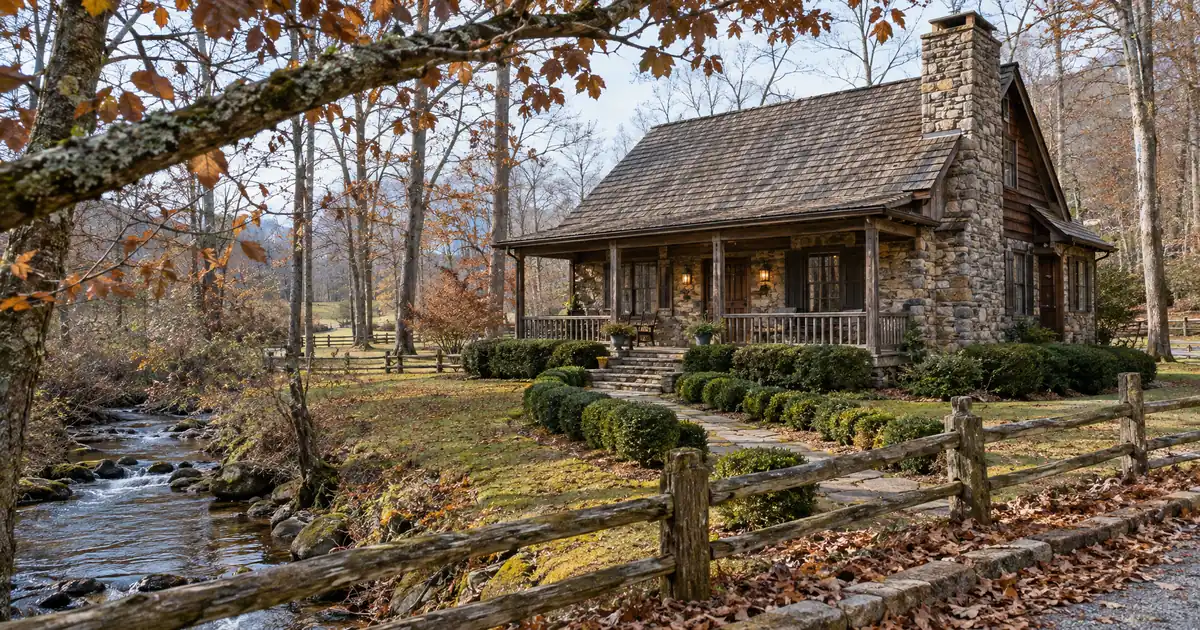
The Quick Read: A financed ski cabin that takes nightly guests needs a policy written for short-term rental use, plus flood coverage where the property’s location calls for it. A standard homeowners or long-term landlord policy usually does not fit, because paid guest stays typically count as business use. The premium also feeds the coverage ratio, so insurance affects qualification, not just closing paperwork.
- Get a short-term rental policy quoted before you make an offer, with the rental use shown on the declarations page.
- Expect dwelling, guest liability, and loss-of-rental-income coverage to be reviewed.
- Order a flood determination, since lenders can ask for flood cover beyond the legal minimum.
- A higher premium lowers the DSCR, because insurance sits inside the monthly obligation the rent must cover.
- Cabins that are hard to insure (wildfire exposure, wood shake roofs, remote access) can stall a file even when the income is strong.
Why Standard Homeowners Policies Fall Short
A homeowners policy is written for a home you live in. Most exclude business use, and taking guest payments usually counts as business use. Guesty’s host guide notes that some insurers cancel coverage when they discover undisclosed rental activity. That source is a software vendor, so treat it as a general warning rather than a rulebook.
A landlord policy is the next guess, and it is also usually wrong. It is built for tenants on long-term leases. Some carriers offer a short-term rental add-on, but it comes with limits. Proper Insurance, an insurer with its own interest in the topic, describes three buckets: a homeowners policy with a rental endorsement, a landlord policy, and a true commercial short-term rental policy.
Endorsements deserve a closer look. Ramsey Solutions describes them as giving less coverage and as aimed at owners who rent a room now and then while living in the home. A whole-cabin investor rental does not fit that profile. A dedicated short-term rental policy is the safer path for a financed cabin.
Booking-platform protection is a separate question. It is not a substitute for your own policy. Awning, an insurance vendor, says host protection does not cover host negligence, high-value items, or intentional damage. A lender reviewing the file generally wants the property policy itself, not a platform program.
How Underwriting Treats Insurance, Step by Step
Across the wholesale network Lendmire works with, insurance gets reviewed as part of the property file. The order below reflects how these files typically move.
1. Confirm the rental use is allowed. Short-term rental rules can vary by city, county, HOA, and property type, so investors should confirm local rules before relying on projected rental income.
2. Get the right policy quoted before the offer. The declarations page lists the policy type, limits, and named insured. It should show short-term rental use. If the borrower is an LLC, the entity belongs on that page as named insured, subject to lender program eligibility.
3. Check three coverages. Dwelling coverage, guest liability, and loss of rental income if the cabin is out of service after a claim.
4. Order a flood determination. More on this below.
5. Layer extra policies where the location calls for them. Umbrella liability, wildfire review, and equipment breakdown are the usual candidates.
6. Run the premium through the coverage math. DSCR is monthly rent divided by the full monthly obligation: principal, interest, taxes, insurance, and any association dues. A bigger insurance line means a lower ratio.
7. Fix the paperwork errors that stall files. A wrong mortgagee clause, coverage based on market value instead of replacement cost, and gaps for vacancy or rental activity are common culprits.
On short-term rental files, most programs in the network look for a 640+ credit score and about 12 months of hosting history. Purchase leverage tops out at 75% LTV on the strongest files, and refinance and cash-out run up to 70%, with coverage of 1.00 where those programs start. These are typical ranges, not promises, and every file is underwritten individually. Lendmire’s complete DSCR loans guide covers the full mechanics.
Where Flood Coverage Comes In
Flood is the one area with a clear federal rule, and it has limits. FEMA says Congress requires federally regulated or insured lenders to require flood insurance on buildings in a Special Flood Hazard Area when the loan is federally backed. The National Association of Realtors adds that a lender may not require coverage in moderate-to-low-risk zones, but FEMA still recommends it. A Special Flood Hazard Area carries a 1% annual chance of flooding and at least a 1-in-4 chance over a 30-year mortgage.
DSCR loans are business-purpose investor products, so that federal mandate is not the rulebook for them. In practice, lenders in the network commonly hold the file to the same standard, and a lender can require coverage beyond the legal minimum as a contract term. Treat that as typical practice, not a rule of law. For contrast only, the FHA flood rule sits at 24 CFR 203.16a, and it does not govern these loans.
Lenders decide whether a property sits in a flood hazard area using a standard determination form, so the order is simple: get the determination early, then price the coverage into your numbers.
Mountain Risks That Drive Eligibility
Ski country adds risks that flat-land rentals never face. Regional brokers describe the same cluster again and again: heavy snow load, freeze-thaw damage, steep or closed winter access, distance from fire stations and hydrants, and long seasonal vacancy. A broker guide from Skinner Team in Colorado adds that many carriers want documented wildfire mitigation before they write or renew. That can mean defensible space, fire-resistant roofing, and enclosed soffits and vents.
Roof material matters too. A Summit County broker guide says wood shake roofs can make a property hard or costly to insure. Some insurers have pulled out of high-risk zones entirely.
Vacancy cuts both ways. A cabin that sits empty for weeks is exposed to frozen pipes and break-ins. Policies often add vacancy conditions, and a ski cabin with a slow shoulder season can trigger them.
Cabin amenities add their own exposure. Hot tubs, generators, and heating systems are common, and equipment breakdown coverage addresses mechanical or electrical failure, not only named perils like fire. One Smoky Mountains agency, All Seasons Insurance Group, reports separate wildfire deductibles of 2%-5% of dwelling value in its region. That is one regional example, not a national norm.
When the General Rule Breaks
The standard path (dedicated policy, flood check, premium in the math) holds for most cabins. These cases bend it.
Endorsement versus dedicated policy. An endorsement may satisfy some lenders and not others. Dedicated short-term rental policies are the safer route, but lender acceptance varies.
Hard-to-insure areas. Some mountain regions rely on state insurer-of-last-resort programs. California Mountain Insurance describes FAIR Plan placement in mountain areas, while WP Insure notes Arizona has no FAIR Plan and that owners of larger California homes may layer a difference-in-conditions policy on top because of the plan’s cap. Whether a given lender accepts that combination varies, so ask before you commit to a contract.
Carrier won’t write the cabin. National Forest Homeowners suggests keeping existing coverage, trying your primary-home insurer, approaching other admitted carriers, or using an independent broker.
Post-wildfire flooding. Monsoon rains on burned slopes can bring flooding and debris flows. That is a reason to consider flood cover even outside a mapped hazard area.
Condos and resort units. Master-policy and HOA rules differ from a detached cabin, and the requirements depend on the building’s own insurance. Check both layers.
Ineligible structures. Log homes are not offered through the network’s DSCR programs, and neither are manufactured homes or barndominiums. A cabin built from logs is a property-type problem before it is an insurance problem. Check construction type before you spend time on quotes.
What the Decision Looks Like in Practice
Picture an investor eyeing a frame-built cabin near a ski area, planning to buy at 75% LTV with a 700 credit score. The insurance quote comes back with short-term rental use shown, a flood determination outside the hazard area, and an added wildfire deductible. The rent still covers the full obligation at roughly 1.2x before the premium increase. After the umbrella policy and higher dwelling cost are added, coverage drifts toward the low 1.1s. Still above 1.00, but with less cushion. Final terms depend on lender guidelines, property type, leverage, and the borrower’s complete credit picture.
Now flip it. The same cabin has a wood shake roof, and the only carrier willing to quote it charges a steep premium with exclusions. The coverage ratio falls near 1.00, and the lender may balk at the exclusions themselves. Here the better move may be to walk, or to price a roof replacement into the offer, rather than force the file through.
Two points are worth keeping straight. Clearing 1.00 is not the same as positive cash flow, because repairs, vacancy, management, utilities, and capex all sit outside the calculation. And a higher down payment can lift the ratio, but it does not erase leverage caps, credit floors, reserve rules, or property eligibility. Reserves vary by lender, leverage, and loan size, commonly around six months of PITIA on many files. Coverage below 1.00 is available through select lenders in the network, with leverage and terms adjusted, but an insurance problem is usually a signal to re-examine the property, not the loan type.
Premium figures in the public sources vary widely by region. A Summit County guide gives a homeowner range that runs well below what a fully protected cabin costs, with remote properties paying a notable premium. A Smoky Mountains agency puts a fully protected cabin well above that range once flood, umbrella, and endorsements are included, and a software vendor, Hostfully, says a dedicated short-term rental policy falls somewhere between the two. All three come from interested parties, so read them as illustrations, not benchmarks.
For related coverage, see Lendmire’s piece How to Insure a Ski Cabin Short-Term Rental for a DSCR Loan.
Key Terms Defined
Declarations page: The first page of a policy, listing the insured, policy type, coverage limits, and the property.
Special Flood Hazard Area: A mapped zone with a 1% annual chance of flooding, where flood coverage is required on federally backed loans.
Loss of rental income: Coverage that replaces booking revenue while the cabin is out of service after a covered claim.
Mortgagee clause: The policy wording that names the lender so claim payments protect the loan.
Difference-in-conditions policy: A layer that fills gaps left by a basic or last-resort policy.
Common Mistakes
- Keeping a homeowners policy after the cabin starts taking paid guests.
- Buying a landlord policy built for long-term tenants.
- Relying on booking-platform protection as the property policy.
- Skipping a flood determination because the cabin is on a hill.
- Quoting insurance after the offer is accepted, when premium and availability can no longer change the deal.
- Insuring at market value instead of replacement cost.
Frequently Asked Questions
Is ski travel insurance the same as cabin insurance?
No. Ski travel insurance covers trip costs and injuries for a skier, and slope-liability products cover on-mountain incidents. Neither protects the building. A financed cabin needs property coverage with guest liability.
Do I need flood coverage on a mountain cabin?
Often, yes, if the cabin sits in a mapped hazard area, and sometimes even when it does not. Lenders can require more than the legal minimum, and runoff or post-wildfire flooding can hit properties outside the map. Order the flood determination before you offer.
Can I keep my existing homeowners policy?
Usually not once guests pay to stay. Most homeowners policies exclude business use, and an undisclosed rental can lead to a denied claim or cancellation. Ask a licensed agent about a dedicated short-term rental policy.
Does the booking platform’s protection replace my policy?
No. Platform protection is limited and does not stand in for your own property coverage. A lender generally wants the property policy on the declarations page.
What if no carrier will insure the cabin?
Try other admitted carriers and an independent broker, then look at insurer-of-last-resort programs where they exist. If coverage stays unavailable or heavily excluded, treat that as a property-eligibility problem and reconsider the purchase.
If you are buying or refinancing a rental property and want to see how the numbers work, Lendmire can help you compare DSCR loan options based on the property income, credit profile, leverage, and investor goals. Reach the team at 828-256-2183. Program details are subject to lender guidelines. This is not a commitment to lend. Tax treatment varies; consult a qualified professional.
About Lendmire
Lendmire — NMLS# 2371349 — is a mortgage brokerage specializing in DSCR investor loans, helping arrange financing across 41 markets, including Washington, D.C., through wholesale and investor-lending channels. The model centers on property-level rental income reviewed by the lender rather than W-2 documentation, subject to lender guidelines, suiting entity-owned and multi-property investors. Lendmire holds Scotsman Guide Top Mortgage Workplace recognition for 2025 and 2026.
Get Started
Ready to find the right loan for you?
In about 30 seconds you can review financing options available for your investment property. No commitment required.
Informational only. Not a Loan Estimate, approval, or commitment to lend. Program availability and eligibility are subject to lender guidelines, credit approval, property review, and underwriting.
References
3. Ramsey Solutions – Short-Term Rental Insurance
4. Awning
5. FEMA – Understanding Flood Risk for Real Estate, Lending, Insurance Professionals
6. National Association of Realtors – Flood Zone Tips
7. Cornell LII – 24 CFR 203.16a
8. Skinner Team – Mountain Home Insurance Guide
10. All Seasons Insurance Group
11. California Mountain Insurance
12. WP Insure
13. National Forest Homeowners
14. Hostfully
This article is part of Lendmire’s short-term rental loan program — full qualification details, guidelines, and scenarios live on the program page.
Related reading: Short-Term Rental DSCR Loan Requirements for an ADU or Guest House · Short-Term Rental DSCR Loan Timeline and What Slows Closing · Beach Rental Insurance Requirements for a Short-Term Rental Loan
Brandon Miller
Founder & CEO, Mortgage Loan Originator, Lendmire LLC
- Mortgage Loan Originator · NMLS# 1129696 · Verify on NMLS Consumer Access
- North Carolina Real Estate Broker · License# 343312 · Verify on NCREC
- North Carolina Insurance Producer · License# 19053198 · Property, Casualty, Life, Health · Verify on NAIC SBS
- Lendmire LLC · Firm NMLS# 2371349 · Verify firm licensure
Compliance and disclosures. Lendmire (NMLS# 2371349) is a licensed mortgage broker and is not a direct lender, depository institution, financial advisor, or tax professional. Content in this article is general market analysis and educational information — not financial, legal, or tax advice for any specific situation. Lendmire does not guarantee loan approval; every transaction is subject to underwriting by the funding lender. Mortgage pricing and loan program guidelines are subject to change at any time without notice and vary by borrower characteristics, property type, and state regulations. Lendmire complies with Equal Housing Opportunity. Licensure verification: NMLS Consumer Access.