
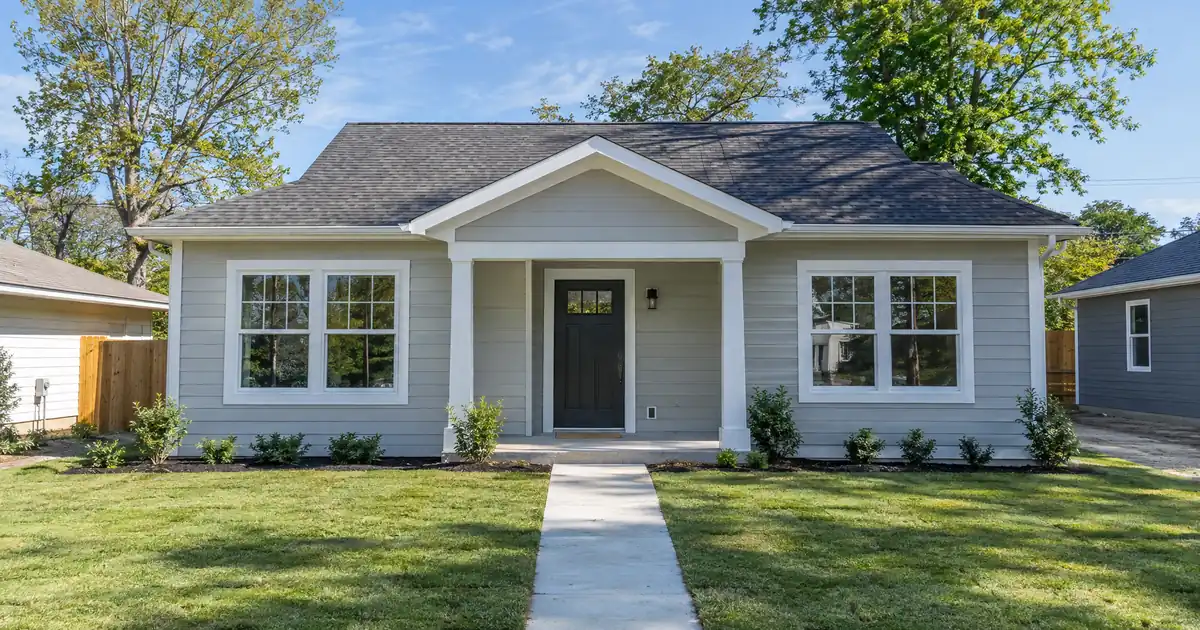
The Quick Read: A HELOC borrows against equity you already hold and puts that property at risk, while hard money lends against the flip itself and asks you to prove the deal, the budget, and the exit, so a first-time flipper is really choosing between personal balance-sheet risk and deal-level risk, and many files use both.
- A HELOC is a personal credit line. It is reviewed on your credit, your equity, and your debt load.
- Hard money is asset-based. The property, the rehab plan, and the exit carry the file.
- Hard money terms are short and interest-only, so the exit plan matters from day one.
- A HELOC must be opened before the deal appears, and a lender can change a line later.
- Pricing is not compared here. The calculator on this site handles numbers, and this piece covers structure.
The honest answer is that these two products serve different people. A HELOC fits a first-timer who owns a home with real equity, has steady personal income, and can accept that the home secures the debt. Hard money fits a first-timer who has a signed contract, a clear rehab scope, and cash for the gap, but who lacks home equity or does not want to pledge it. Neither one is cheaper or safer in every case. Each moves the risk to a different place.
What this loan actually costs to carry.
Hard money is sized against the project and priced by time. Enter the deal and see how much the program will lend, the cash required at closing, the carry while you hold it, and what is left at the exit.
Leverage tiers on the current program: 85% with fewer than 2, 90% with 2 or more, 93% with 5 or more completed projects — every tier capped at 75% of after-repair value. Loan amounts up to $5,000,000, larger by exception; terms of 6 to 18 months, interest-only, no prepayment penalty. The rehab portion funds in draws against completed work, not at closing.
Program parameters shown update from Lendmire’s centralized guideline source. Rate, points, and months are editable assumptions, not quoted terms.
Cost cap sets the loan · positive spread
Illustrative estimate only — not a quote, Loan Estimate, approval, or commitment to lend. Rate, points, and months are editable assumptions. Hard money is business-purpose financing for real estate investors, not a consumer mortgage. Leverage on the current program tops out at 93% of project cost for investors with a documented track record, capped at 75% of after-repair value, with rehab funding up to 100% of the documented budget released in draws; actual terms vary by lender, borrower experience, property, and exit. Lendmire is a mortgage broker, not a lender.
Side-by-Side
The HELOC column reflects published industry norms. The hard money column reflects typical programs across Lendmire’s wholesale network. Details vary by lender, property, and experience.
| Factor | HELOC (industry norms) | Hard money (typical network programs) |
|---|---|---|
| Review basis | Borrower credit, equity, debt-to-income | Property, ARV, plan, exit; 620 minimum score |
| Documentation | Income, assets, home valuation | Contract, rehab scope, ARV, entity papers |
| Property types | A property you already own | Non-owner-occupied 1-4 units |
| Entity vesting | Usually your personal name | LLC common; guarantee often asked |
| Term and exit | Draw phase, then repayment phase | 6-18 months, interest-only |
| Reserves and liquidity | Equity is the cushion | Cash for the gap and rehab draws |
A few notes on that table. The credit floor on hard money comes with added conditions below 660, and first-time investors typically land at the lower leverage tier. Entity vesting on a HELOC is lender policy, not a hard rule, but most lines are built for individuals. Subject to program terms, hard money borrowers often close in an LLC.
How Each Structure Works on a Flip
A HELOC works like a revolving account tied to a property. You draw what you need, pay interest on the drawn balance, and repay in a later phase. The draw period and the repayment period come from your contract. They are not set by law.
On a flip, the usual pattern is simple. You draw on the line, buy the house, pay contractors, sell, and pay the line down. The trouble starts when the flip outlasts the draw period. The line can move into repayment while you still own an unsold house.
Hard money works differently. The lender reviews the deal package: the purchase contract, the rehab budget, the after-repair value, and the exit plan. Hard money is underwritten on the property and its value once the renovation is done, a point Nav’s business-credit explainer makes about after-repair value.
The loan then comes in two pieces. The purchase piece funds at closing. The rehab piece funds in draws as work is completed. That is the detail that surprises first-timers. You front contractor costs and then get reimbursed against finished work.
Where Costs Show Up on a Flip
Costs differ in shape more than in size. This section describes shape only.
A HELOC cost shows up as carry on the drawn balance, plus any setup, valuation, or annual fees the lender charges. The cost of a line can also shift over its life. A first-timer who plans a short hold should read the fee schedule before opening one.
A hard money cost shows up as interest-only carry for the term, plus lender fees at closing and fees tied to draws and inspections. The program has no prepayment penalty, so selling early does not trigger a penalty. A delay still matters, because every extra month adds carry.
The costs that hurt a flip are the ones you did not plan for. These include a longer hold, a second round of rehab, and cash tied up in draws. Run both options through the calculator with a delay scenario before you commit. Then compare totals, not headline features.
When a HELOC Is the Better Fit
A HELOC is the better fit when you already hold meaningful equity and a stable personal income, and when you want a flexible source of cash. It also fits when your deal is small, your rehab is light, and you want to avoid draw inspections.
The CFPB HELOC booklet describes the product plainly. You borrow, spend, and repay as you go, using your home as collateral. The booklet also warns that you could lose your home if you cannot repay on schedule. That sentence is the whole risk case for a first-time flipper.
Three more points favor a HELOC:
1. No deal underwriting. The lender reviews you, not the flip. A thin first-time track record matters less.
2. Flexible draws. You pull funds as needs arise, which helps when contractor timing shifts.
3. No fixed maturity during the draw phase. A slow sale does not trigger a balloon right away.
Three cautions apply. First, the booklet notes that renting your home out may be prohibited under the line’s terms, so read the agreement for use limits. Second, lenders can freeze or reduce a line if value or credit changes, which is a poor surprise in the middle of a rehab. Third, federal rules require a lender to hand a borrower that booklet when taking a HELOC application, as the CFPB’s Learn More page explains, so you should expect to receive and read it.
Investment-property HELOC lines in the network cap at $500,000 total. A home-equity line on your own residence follows the lender’s own policy. Either way, a HELOC fits best when the flip is small enough that one line covers it.
When Hard Money Is the Better Fit
Hard money is the better fit when the deal is bigger than your equity, when you do not want your home securing the debt, or when you want rehab money built into the loan. It also fits when you have a contract in hand and need a lender that reads the deal, not your personal debt ratios.
Here is how a first-timer’s file typically looks across the network. Leverage is tiered by documented completed projects. With fewer than 2 completed projects, financing runs up to 85% of project cost. At 2 or more projects it reaches 90% of project cost, and at 5 or more it reaches 93% of project cost. Every tier is capped at 75% of after-repair value on a non-owner-occupied fix-and-flip. The lower of the two limits governs. For many first-timers the ARV cap is the one that binds.
Up to 100% of the rehab budget funds in draws against completed work. That figure applies to the rehab budget only. It is not a purchase LTV. Despite what some headlines suggest, there is no true 100% purchase program, and even marketed hundred-percent offers remain tied to a share of ARV. Loan sizes run up to $5,000,000, with larger loans by exception, and smaller balances vary by lender.
Collateral is non-owner-occupied residential property of 1-4 units. Hard money on investment property is a business-purpose loan. These loans are reviewed differently from a standard owner-occupied mortgage.
The trade-offs are real. Many lenders ask for a personal guarantee, which can reduce the protection an LLC gives you. The term is 6-18 months and interest-only, so the loan needs a planned exit. Finally, because draws reimburse completed work, you need working capital up front.
Using Both Together
Many first-timers do not choose one. They use a HELOC to cover the cash a hard money loan requires, such as the down portion and the first contractor bills, and use hard money for the rest. The structure solves the draw-timing problem, because the line supplies the working capital that draws do not.
The hybrid has risks. You now owe two lenders, one secured by your home and one by the flip. If the sale slips, both clocks run. A hard money lender may also ask where your down payment funds came from, and policy on borrowed funds varies by lender. Ask that question before you rely on a line for the down portion.
A HELOC balance is also real debt. A DSCR ratio on a later rental measures that rental’s income against its own payment. It does not measure the personal obligations you carry on other properties. A lender looking at your file will still see them.
What a Stalled Flip Does to Each Structure
Run a delay scenario in your head before you pick. Say the sale takes several months longer than planned.
On a HELOC, the interest-only draw phase may still be open, so carry continues without a maturity crisis. The risk is that the line moves into repayment, or that the lender reduces the available balance, while the flip sits unsold. The collateral at risk is your home.
On hard money, the term may be near its end. The 6-18 month range gives room, but the loan still matures. The collateral at risk is the flip property, plus any personal guarantee. A stalled flip can push you to refinance a loan that may be hard to replace on short notice.
Neither outcome is mild. The HELOC puts a home on the line. The hard money loan puts a deadline on the line. A first-timer should choose the exposure they can live with.
Key Terms Defined
HELOC: A revolving credit line secured by a property, with a draw phase and a repayment phase set by the loan agreement.
After-repair value (ARV): The estimated value of the property once renovations are finished.
Loan-to-cost: The share of total project cost, purchase plus rehab, that a lender will fund.
Draw: A release of rehab funds after a lender confirms that a stage of work is complete.
Personal guarantee: A promise by the borrower to repay personally if the entity cannot.
Exit strategy: The plan to repay the loan, usually by sale or by refinance.
The Verdict
Choose a HELOC if you hold ample equity, want flexibility, and can accept your home as collateral. Choose hard money if the deal is larger than your equity, if you want the home out of the transaction, and if you have a firm scope, an ARV you can defend, and cash for the gap.
For many first-timers the answer is a measured hybrid, but only with a stress test. Ask what happens if the flip runs long, and make sure both exits still work. If a rental hold is plausible, many investors refinance out of hard money into long-term DSCR financing once the property is stabilized, and Lendmire brokers that path. Lendmire’s piece Can a First-Time Flipper Repay Hard Money With a DSCR Cash-Out? covers that exit in detail.
Tax treatment can depend on how the funds are used and how the property is held. Investors should keep clear records and speak with a qualified tax professional before relying on any deduction. For the wider financing picture, the complete DSCR loans guide explains how long-term investor loans are reviewed.
Frequently Asked Questions
Can a HELOC fund an entire flip?
It can on small deals, if the line is large enough and the agreement allows investment use. The limit comes from your equity and the lender’s policy, not from a federal ban. Larger flips usually need more than one source, which is why the hybrid structure is common.
Does a first-timer need an LLC to get hard money?
Not always. Practice varies by lender, and some prefer or require an entity. A personal guarantee often applies anyway, so an LLC may not fully separate you from the loan. Vesting is a program-by-program question, subject to lender guidelines.
What leverage can a first-time flipper expect on hard money?
Across the network, borrowers with fewer than 2 completed projects typically see up to 85% of project cost, capped at 75% of after-repair value. Higher tiers go to experienced investors. The minimum credit score is typically 620, with added conditions below 660. All of this varies by lender, property, and experience, and nothing here is a commitment to lend.
Can I use a HELOC for the hard money down payment?
Many investors do. The point to confirm is whether your hard money lender accepts borrowed funds for the down portion, and how it treats the extra debt. Ask before you sign the contract, not after.
What if the flip does not sell before the loan term ends?
On hard money, you would need to extend, refinance, or sell, and each path depends on the lender and the property. On a HELOC, the line may enter repayment or be reduced. Plan the exit before you borrow, and test a delay scenario first.
Next Step
If you are buying, rehabbing or refinancing an investment property on a short timeline and want to see how the numbers work, Lendmire can help you compare hard money options based on the project, the exit plan, leverage, and your goals. Lendmire arranges these loans as a broker through select lenders in its wholesale network across 41 markets, including Washington, D.C.
About Lendmire
As a DSCR and non-QM mortgage broker, Lendmire — NMLS# 2371349 — connects investors with wholesale lending channels across 41 markets, including Washington, D.C. The property’s rental income, not the borrower’s tax returns, is central to lender review, which works for self-employed operators and portfolios beyond four financed properties. Scotsman Guide named Lendmire a Top Mortgage Workplace in both 2025 and 2026.
Get Started
Ready to find the right loan for you?
In about 30 seconds you can review financing options available for your investment property. No commitment required.
Informational only. Not a Loan Estimate, approval, or commitment to lend. Program availability and eligibility are subject to lender guidelines, credit approval, property review, and underwriting.
References
1. Nav: hard money and 100% financing
This article is part of Lendmire’s hard money loan program — full qualification details, guidelines, and scenarios live on the program page.
Related reading: Can a First-Time Flipper Use a HELOC and Hard Money Together? · Should You Use Both a HELOC and Hard Money on the Same Flip? · Rental HELOC vs Hard Money for a Rehab Budget
Brandon Miller
Founder & CEO, Mortgage Loan Originator, Lendmire LLC
- Mortgage Loan Originator · NMLS# 1129696 · Verify on NMLS Consumer Access
- North Carolina Real Estate Broker · License# 343312 · Verify on NCREC
- North Carolina Insurance Producer · License# 19053198 · Property, Casualty, Life, Health · Verify on NAIC SBS
- Lendmire LLC · Firm NMLS# 2371349 · Verify firm licensure
Compliance and disclosures. Lendmire (NMLS# 2371349) is a licensed mortgage broker and is not a direct lender, depository institution, financial advisor, or tax professional. Content in this article is general market analysis and educational information — not financial, legal, or tax advice for any specific situation. Lendmire does not guarantee loan approval; every transaction is subject to underwriting by the funding lender. Mortgage pricing and loan program guidelines are subject to change at any time without notice and vary by borrower characteristics, property type, and state regulations. Lendmire complies with Equal Housing Opportunity. Licensure verification: NMLS Consumer Access.