
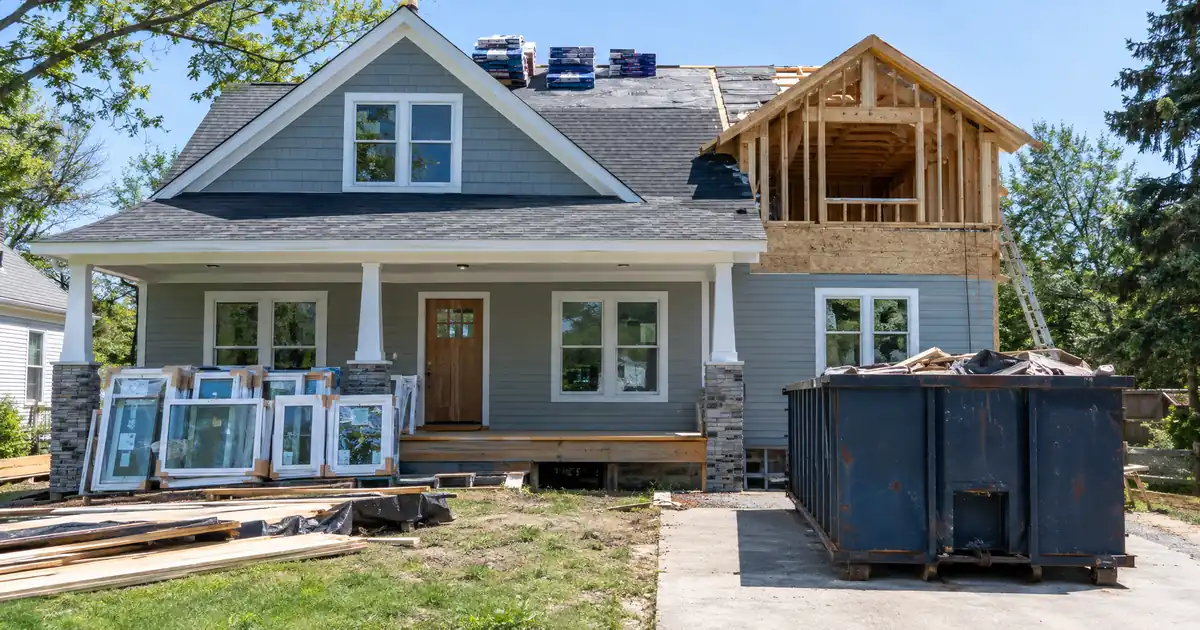
The Quick Read: A rental HELOC is sized off the value the lender uses, so a rehab that never reaches that value never reaches your credit line. The fix is to find out which valuation method was used, put the work in front of it with documentation and comps, and switch products if the number still won’t move.
- On an investment property, the ceiling across our wholesale network is 70% combined loan-to-value (CLTV), with a $500,000 maximum line.
- Lines at that size are ordinarily valued by an automated model, which cannot see your interior.
- You can request a full appraisal, but the lender decides whether to use it.
- Rent does not size this loan. Credit and debt-to-income do.
- A DSCR cash-out refinance tests the rehab and the rent together, and it is the usual pivot.
You finished the rehab. The kitchen is new, the units are rented, and the credit line came back as if none of it happened. Here is why that happens and what to do about it.
How large a line the equity supports.
An equity line is sized by combined loan-to-value, occupancy, and credit — not by rental coverage. Switch the occupancy or the credit band and the ceiling moves with it.
Investment-property lines require a 700 minimum credit score; second-home lines start at a 640 minimum and primary-residence lines at 600, and the combined-LTV ceiling steps down as the credit band drops on primary-residence and second-home lines and holds on investment-property lines; the line cap steps down on primary-residence lines and holds at every tier on investment-property and second-home lines.
A debt-to-income ratio above 45% requires 680+ credit. Profiles under 640 are limited to single-family homes. At least 75% of the approved line is drawn at closing. Ceilings, floors, and caps update from Lendmire’s centralized guideline source.
Line estimate
Illustrative estimate only — not a quote, Loan Estimate, approval, or commitment to lend. The rate is an editable assumption; equity-line pricing is variable through both the draw and repayment periods and never converts to fixed. Occupancy and credit drive the ceiling together: an investment property tops out at 70% combined LTV (minimum credit 700, line cap $500,000); a second home tops out at 90% combined LTV (minimum credit 640, line cap $500,000), with the ceiling stepping down as the credit band drops (the cap holds at every tier); a primary residence tops out at 90% combined LTV (minimum credit 600), and its $750,000 maximum line is available only at 75% combined LTV or below with a 700-or-better credit profile (720 on the longer-runway program) and a full appraisal. Lines above $500,000 require a full appraisal. Credit, debt-to-income, property type, and full underwriting review all affect the final line.
What Is a Rental HELOC, and Why Does the Rehab Go Missing?
A rental HELOC is a home equity line of credit secured by a rental property. Its limit is a percentage of the property’s value, minus what you already owe. If the rehab is not in the value, it is not in the line.
The CFPB’s HELOC booklet shows the arithmetic. A $100,000 home at 75% supports $75,000 of total debt. Subtract a $40,000 mortgage and the line is $35,000. The booklet adds that the lender also weighs income, debts and credit history.
Notice what that means. Your existing mortgage balance does not shrink when the value comes in low. So a small valuation miss produces a larger drop in the line, because the miss comes out of the only part that is left to borrow.
Rehabs get missed for a few reasons:
- An automated model. Experian notes that desktop and drive-by valuations miss the interior, so a renovated kitchen goes unseen.
- Public records that never updated. A model works from recorded data. Work that was never permitted, recorded or listed does not exist to it.
- Wrong comps. Even a full appraisal can rate a renovated rental as average if nearby sales do not show the same finish level.
- Cost mistaken for value. Appraisers rely on comparable sales, not on your receipts.
Key Terms Defined
CLTV (combined loan-to-value): Your first mortgage plus the new line, divided by the property’s value.
AVM (automated valuation model): Software that estimates a home’s value from public data, with no one visiting the property.
Reconsideration of value: A written request asking the lender to review a valuation using specific comps or factual corrections.
As-is value: What the property is worth in its current condition.
Subject-to value: What it is worth assuming specified work is completed.
DSCR cash-out refinance: A new investor loan that pays out equity and qualifies primarily on property-level rental income covering the payment, subject to lender guidelines.
Which Valuation Did Your Lender Actually Use?
Start here, because the fix depends on the answer. Ask the lender plainly: was this an automated model, a desktop review, a drive-by, or a full interior appraisal?
On our network, an investment HELOC tops out at $500,000, and full appraisals begin only above that size. So an investment line is structurally in the automated lane and commonly closes with no traditional appraisal. A higher CLTV may trigger a secondary valuation. You may also request a full appraisal in any case.
That last point is the lever most investors never pull.
| What you were told | Likely cause | First move |
|---|---|---|
| Value came from a model | Rehab invisible to public data | Request a full interior appraisal |
| Human appraiser, low value | Wrong comps or condition rating | Documented review request |
| Value fine, line still small | CLTV cap or debt-to-income | Check credit and DTI, not the appraisal |
| Value fine, owner is an LLC | Title cannot sit in an entity | Retitle, or use a DSCR cash-out |
Why Does the Line Shrink More Than the Miss?
Because the existing balance is fixed. Say a property’s true value is meaningfully higher after the rehab, but the model uses the old number. The CLTV ceiling applies to the lower figure, and the same mortgage balance is subtracted from it.
An investment line on our network caps at 70% CLTV. Run the math on a modeled example: a property valued at $300,000 supports total debt of $210,000 at that ceiling. If a rehab would justify $350,000, the ceiling would be $245,000. The $35,000 gap in total debt is the whole difference in your line, and it all comes out of available credit. The balance you owe does not move. These are illustrative inputs, not market data, and the program ceiling is subject to lender guidelines and full file review.
Credit above the 700 floor does not fix this. At 720 and at 700, the investment ceiling is the same 70%, so a higher score buys eligibility rather than leverage.
How Do You Audit the Valuation?
Check the basics before you argue the opinion. Errors are the easiest wins.
1. Property facts. Square footage, bedroom and bath counts, and unit count.
2. Property type. A duplex valued as a single-family home will come back wrong.
3. Condition rating. Does the report call a renovated unit average?
4. Comps. Are they recent, nearby and in similar condition, or are they unrenovated sales?
5. Missing work. List each improvement the report never mentions.
If it was a model, ask for its confidence level. Bills.com explains that a low confidence score can escalate a file to a desktop valuation or a full appraisal. A no-appraisal HELOC still values the home. It just uses an algorithm.
What Goes in the Evidence Packet?
Build it before the appraiser arrives, not after the number lands. BiggerPockets’ appraisal guide separates as-is from subject-to values and recommends three to five recent comps for each, from the last six months.
| What moves a valuation | What rarely does |
|---|---|
| Comps showing the same renovation level | A total of what you spent |
| Permits and finished, visible work | Unpermitted or half-done work |
| Before-and-after photos | Verbal promises about the upgrade |
| One-page list: what, cost, date | A stack of unorganized receipts |
A rehab may support a higher appraised value, depending on comps and underwriter review. Overbuilding for the neighborhood does not help, since buyers in that area will not pay for it. Frame each upgrade as a condition adjustment against a comp: this sale had old finishes, this one had mine.
How Do You Request the Review?
Work the steps in order.
1. Ask before you pay for anything. Which valuation method is in use, and will the lender accept an outside appraisal?
2. Request a full interior appraisal if the line was valued by a model or drive-by.
3. Hand the appraiser the packet. BiggerPockets’ guide to challenging a low appraisal suggests listing each improvement with what was done, the cost and the date, and explaining recent comps from before and after.
4. File a reconsideration of value if the number still misses. Cite specific comps and factual errors. Keep it fact-driven and polite.
5. Know the limit. You can pay for an extra appraisal for your own use, but that does not bind the lender to accept it. The CFPB advises agreeing in advance on which appraisal firms the lender will use.
Should You Order Your Own Appraisal?
Sometimes. Not always.
| Situation | Best next move | Main risk |
|---|---|---|
| Model missed an obvious, permitted rehab | Request a full appraisal | Cost, and lender may not accept it |
| Comps in your area are thin | Skip it, pivot products | Comes back at or below the model |
| Rehab just finished, records not updated | Wait for records, then reapply | Delay |
| Report has factual errors | Reconsideration of value | Lender may decline to revise |
The skip case is real. A paid report can come back lower than the model, and then you own a worse number. Order one only when you can name the comps that support it.
What If the Answer Is Still No?
You have four realistic paths.
| Option | What it preserves | Cost |
|---|---|---|
| Smaller line | Speed of a simple product | Less capital |
| Bring cash | Your plan | Liquidity |
| Borrow against another property | The rehabbed asset stays clean | Puts the other property at risk |
| DSCR cash-out refinance | Rehab value and rent tested together | A new loan, and seasoning rules |
The DSCR route deserves a closer look. A cash-out refinance across our network tops out around 75% LTV on standard rentals, with about six months of seasoning the common expectation. It uses a full appraisal, which can reflect improvements depending on comps and underwriter review. It qualifies primarily on property-level rental income covering the payment, subject to lender guidelines, and can allow an LLC subject to program eligibility.
Coverage of 1.00 is where select programs start. A separate select-lender path goes below 1.00, with leverage and terms adjusted. Clearing 1.00 is not the same as positive cash flow, since repairs, vacancy and management sit outside the ratio. Our complete DSCR loans guide walks through the mechanics.
Which Property Should Back the Line?
A just-finished rehab often cannot back its own line, because the records have not caught up. Equity in a different property may be the cleaner source. A line on your primary home may allow higher leverage, but it puts your home at risk. Rental collateral puts the rental at risk instead, as Benzinga’s investor coverage points out. Either way, the CFPB brochure warns you can lose the property if you cannot repay.
Where the General Rule Breaks
- LLC title. A rental HELOC on our network must be held by you personally or by a revocable living trust. LLCs, corporations and partnerships cannot hold title. A property already in an LLC needs a vesting change, or a DSCR cash-out instead.
- Unpermitted work. It may be excluded or raise concerns, so get permits on record first.
- Recent purchase. Seasoning and cost-basis rules can limit how much early value counts.
- Ineligible property types. Manufactured homes, co-ops, condotels, log homes and mixed-use are not offered.
- Availability. These lines are offered in Lendmire’s 16 full-service states only, narrower than its 41-market DSCR footprint.
Pricing on these lines floats and never converts to fixed. Tax treatment can depend on how the funds are used and how the property is held; investors should keep clear records and speak with a qualified tax professional before relying on any deduction.
For related reading, Lendmire’s piece on Rental HELOC CLTV Ceilings When You Want to Keep Your Low First Lien covers keeping a low first lien.
What Should You Do This Week?
- Ask the lender which valuation method was used.
- Audit the report for factual errors.
- Build a one-page improvement list with permits, photos and three to five comps.
- Decide whether a full appraisal is worth ordering, or whether a DSCR cash-out fits better.
If you are considering a home equity line and want to see how the numbers work, Lendmire can help you compare HELOC options based on the property, the equity available, credit profile, combined leverage, and your goals. Lendmire is a broker, and every figure is subject to lender guidelines and full file review.
Frequently Asked Questions
Can I appeal if no appraiser ever visited the property?
Yes, but the path is different. Ask the lender for the model’s confidence level and for a full interior appraisal. You may request one in any case. Then supply your documented improvement list and comps so the reviewer has something concrete to weigh.
Do permits matter?
They matter a lot. Permitted, finished and visible work is far easier to credit. Unpermitted work may be excluded from the value or raise lender concerns, so get permits recorded before you apply.
Does a higher credit score raise my line on a rental?
Not above the floor. On an investment line, 700 and 720 both reach the same 70% CLTV ceiling. A higher score buys eligibility, not extra leverage.
Will my rent increase the line?
No. A rental HELOC is underwritten on your credit and debt-to-income, so rent matters only through DTI. A DSCR cash-out is the product where rent and rehab both count.
Can I use my own appraisal?
You can order one, but the lender is not bound to accept it. Confirm acceptance and approved appraisal firms before paying.
About Lendmire
Lendmire (NMLS# 2371349) is a mortgage brokerage serving homeowners and real estate investors in its 16 full-service states. Home equity lines of credit are arranged through wholesale lending channels; Lendmire brokers the line and the lender underwrites each application under its occupancy-based guidelines. Scotsman Guide named Lendmire a Top Mortgage Workplace in both 2025 and 2026.
Get Started
Ready to find the right loan for you?
In about 30 seconds you can review financing options available for your investment property. No commitment required.
Informational only. Not a Loan Estimate, approval, or commitment to lend. Program availability and eligibility are subject to lender guidelines, credit approval, property review, and underwriting.
References
2. Experian, Do HELOCs Require an Appraisal?
3. Bills.com, Does a HELOC Require an Appraisal
4. BiggerPockets, home appraisal process
5. BiggerPockets, challenging a low appraisal
6. Benzinga, HELOCs on investment properties
This article is part of Lendmire’s investment property HELOC program — full qualification details, guidelines, and scenarios live on the program page.
Related reading: How to Get an Investment Property HELOC Vested in an LLC · How to Get a HELOC Behind a DSCR Loan When Banks Decline · Can an LLC-Owned Rental DSCR Cash-Out With No Seasoning?
Brandon Miller
Founder & CEO, Mortgage Loan Originator, Lendmire LLC
- Mortgage Loan Originator · NMLS# 1129696 · Verify on NMLS Consumer Access
- North Carolina Real Estate Broker · License# 343312 · Verify on NCREC
- North Carolina Insurance Producer · License# 19053198 · Property, Casualty, Life, Health · Verify on NAIC SBS
- Lendmire LLC · Firm NMLS# 2371349 · Verify firm licensure
Disclosure information. Lendmire is a state-licensed mortgage brokerage under NMLS# 2371349. Lendmire is not a depository institution, direct lender, or financial advisor — all loans referenced are placed through wholesale lender partners and are subject to each lender's underwriting standards. This article is provided for general informational purposes and is not a commitment to lend, nor does it constitute financial, legal, or tax advice. Loan programs, terms, rates, and qualification standards change without notice and depend on borrower profile, property type, and the state in which the subject property is located. Equal Housing Opportunity provider. NMLS Consumer Access: nmlsconsumeraccess.org.