
The Quick Read: Lenders test three things on this file: how long you have owned the property, what income they can count when the house has little or no booking history, and what value they will lend against. Most programs in a wholesale network cap short-term rental cash-out at about 70% LTV, and the loan has to clear a coverage floor on the new, larger payment, subject to lender guidelines.
- Cash-out on a short-term rental typically tops out at 70% LTV, with a 640+ credit score and about 12 months of hosting experience expected.
- Seasoning, meaning how long you have owned the property, often decides whether the loan is sized on cost or on appraised value.
- A new build has no booking record, so the income method (projection, appraiser analysis, or long-term rent) decides the coverage ratio.
- Coverage is tested on the new payment after cash-out, so pulling more equity lowers the ratio.
- Clearing 1.00 coverage is not the same as positive cash flow.
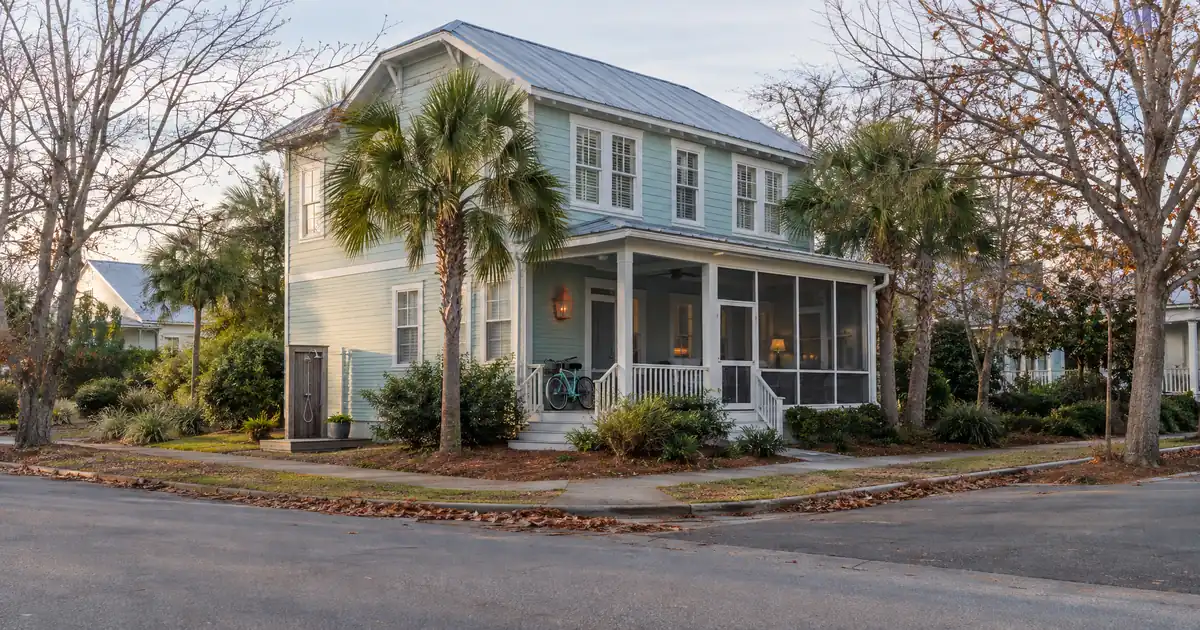
A brand-new house sits in an awkward spot. It may be worth far more than it cost you to build, but it has no sales history and no guest reviews. Underwriters handle that gap in a fixed order, and this article walks through it. For the full program picture, see Lendmire’s complete DSCR loans guide.
DSCR Cash-Out Calculator
Run the cash-out numbers in your market
Rate source: Freddie Mac 30-yr average via FRED® — Federal Reserve Bank of St. Louis · effective Oct 29, 2026
Prefilled with starting assumptions — enter your property’s value, balance, taxes, and insurance for a more accurate picture.
Program parameters update from Lendmire’s centralized guideline source. Taxes and insurance are editable estimates.
As of Oct 29, 2026 · General Freddie Mac market benchmark, not a Lendmire loan offer. Property value, balance, taxes, and insurance are editable estimates. Maximum loan-to-value varies by lender, program, property type, and seasoning. Not a Loan Estimate, approval, or commitment to lend. Program availability and eligibility are subject to lender guidelines, credit approval, property review, and underwriting.
Key Terms Defined
Cash-out refinance: a new loan that pays off the old one and hands you the extra equity as cash.
Seasoning: the waiting period a lender wants between owning a property and borrowing against its appraised value.
Certificate of occupancy (CO): the local sign-off that a new building is complete and legal to live in.
Hosting history: a record of past guest bookings, shown through platform statements and bank deposits.
DSCR (debt service coverage ratio): monthly rent used for lender review divided by the full monthly payment, meaning principal, interest, taxes, insurance, and any HOA dues (PITIA).
Cost basis: what you actually put into the property, as opposed to what an appraiser says it is worth.
Takeout loan: the permanent loan that pays off a construction loan.
What Is Being Underwritten Here?
You are asking a lender to size a loan on a property with no operating track record, and to trust its value and its income at the same time. DSCR loans are designed for investment properties and qualify primarily on property-level rental income covering the payment, subject to lender guidelines. Your personal income is not the centerpiece.
That makes the property carry the whole file. On a seasoned rental, the lender has years of leases or bookings and a sales history nearby. On a new build, it has neither. So the lender leans on documents: the certificate of occupancy, the cost records, an appraisal, and some defensible estimate of nightly income.
Lendmire is a mortgage broker, not a lender. It places these files with wholesale lenders, and each one sets its own rules on the points below. That is why the same house can get different answers from different programs.
The Underwriting Sequence, Step by Step
Every file meets the same gates in roughly this order. Fail one early and the rest never matters.
1. Classify the transaction. Is this a cash-out, or only a payoff of a construction loan? Paying off a construction loan with no cash out is generally treated more gently on seasoning than taking cash out.
2. Confirm ownership and completion. Expect to document the recorded deed or land purchase, the CO, and a payoff statement if a construction loan is being retired.
3. Pick the value basis. Inside a lender’s seasoning window, the loan is often sized on cost plus documented construction costs. Past the window, appraised value usually takes over.
4. Order the appraisal. It gives a value opinion and a long-term rent opinion. It does not prove nightly income.
5. Choose the income basis. This step decides the outcome. See the next section.
6. Test coverage on the new payment. Qualifying income is divided by full PITIA on the larger loan.
7. Check the two limits together. The loan is the lesser of the leverage cap times the value basis and the loan the income supports at the coverage floor.
8. Check reserves and legality. Reserves are commonly around 6 months of PITIA, though they vary by lender, leverage, and loan size. Short-term rental rules can vary by city, county, HOA, and property type, so investors should confirm local rules before relying on projected rental income.
Think of steps 3 and 7 as two locks on the same door. Equity opens the first. Rent opens the second. You need both keys.
Where Does the Seasoning Clock Start?
Programs differ on this, and it matters more on a new build than almost anywhere else. Some count from land purchase, some from completion, some from the CO, and some from the recording date of the deed or final title. Ask before you order an appraisal.
The reason lenders impose seasoning is valuation risk. A house appraised the week after completion rests on thin comps, and a waiting period lets the value settle. Across the wholesale network, about 6 months of seasoning is the common expectation on cash-out, though it varies by program.
Here is the catch for builders. If you built for well below appraised value, the gap is the equity you want. Inside the seasoning window, a program that enforces it may lend against cost instead, and the gap stays locked up. Waiting can change how much equity you can reach.
| Clock starts at | What it usually means for a builder |
|---|---|
| Land purchase | Longest history; helps owner-builders |
| Completion or CO | Clock runs only after the house exists |
| Deed recording | Tied to title; matters when land was held in another entity |
Lenders differ on all of these, so treat the table as a list of questions, not answers.
What Income Counts When the House Has No Bookings?
A new build usually cannot show 12 months of platform and deposit history. Short-term rental programs expect about 12 months of hosting experience from the borrower, and the property’s own record is often thin. So the lender picks from a short menu of income evidence.
| Evidence path | When it applies | How it is counted |
|---|---|---|
| Actual platform and deposit history | Property has months of bookings | Matched to bank deposits |
| Third-party market projection | Some programs, thin history | Often reduced by a factor |
| Appraiser short-term income analysis | Appraiser supplies a labeled addendum | Reviewed by lender |
| Long-term market rent | Fallback | Usually the lowest figure |
Appraisal-industry writers note that competent appraisers report short-term income as a narrative addendum, such as a “Short-Term Rental Projected Income Analysis,” as Class Valuation explains. That is an appraisal-industry view, and each lender decides whether to accept it.
The standard rent form is the trap. Fannie Mae’s appraiser guidance says Form 1007, the one-unit rent schedule, was not designed for short-term rentals and cannot estimate a nightly fee. Appraisers must support rent with monthly lease comparables. That guidance is agency material and does not set DSCR program rules. It does explain why the long-term rent figure usually comes in low.
Who decides which figure counts? The lender does. McKissock notes that the 1007 documents monthly rent, but the lender makes the final call on income. So a property that clears coverage on Airbnb-style income can fail on paper if the program defaults to the long-term rent figure. HousingWire argues that leaning on the 1007 for short-term income often produces artificially low ratios.
If you have a few months of real bookings plus a projection, many programs use the lower supported figure. Plan on that.
How a Brand-New House Gets Valued
The appraiser has two problems: few comparable sales in a new subdivision and no income record. Unique or above-average properties can be especially hard to support. A low appraisal does two things at once. It shrinks the value base, and it can lower the rent opinion that feeds the fallback income method.
Your cost records matter here. Builder contracts, draw statements, and land closing documents show what you spent. Inside a seasoning window they may set the loan size. Outside it, they help explain the appraiser’s number. A larger down payment or lower leverage can improve coverage, but it never erases leverage caps, credit floors, or reserve rules.
A Worked Example: Where Coverage Breaks
Run the numbers on this modeled scenario. These inputs are assumptions, not market data.
- A newly built short-term rental, owned past the program’s seasoning window.
- Income basis: a third-party projection, reduced by a haircut.
- Before cash-out: coverage of roughly 1.35x on the construction takeout.
- After cash-out at the 70% LTV ceiling for short-term-rental collateral: the payment rises with the loan, and the ratio drops to roughly 1.05x.
- With a conservative income figure after a low appraisal: the ratio falls near 0.95x. The exact numbers vary by lender and program and follow a full review of property, leverage, and credit.
At 0.95x, the file misses the 1.00 floor that select programs start at. Two fixes help. Pull less cash, which shrinks the payment. Or document more real bookings, which can replace a projection with actual income. A separate select-lender path takes coverage below 1.00, with leverage and terms adjusted, but expect lower leverage and different terms.
The lesson: stress-test coverage on the post-cash-out payment and on the weakest season, not the peak. Also remember that DSCR compares rent to PITIA only. Repairs, vacancy, management, utilities, and capex sit outside it. Clearing 1.00 is not positive cash flow.
Three Paths for a Newly Built Rental
| Path | Best when | Tradeoff |
|---|---|---|
| Season and wait | You can hold the construction loan or fund the build | Time; equity stays locked |
| Takeout now, cash-out later | You need to retire a construction loan | Two loans; two sets of costs |
| Delayed-financing style exception | Cash-funded build with clean records | Lender-dependent; proceeds tied to cost |
Rate-and-term takeouts of a construction loan often face lighter seasoning than a cash-out. Delayed financing is a lender-dependent exception for documented cash buyers, with proceeds generally limited to cost. Neither is universal. Programs for short-term rentals around 70% LTV on refinance and cash-out are the norm.
On 2-4 unit new builds, the appraisal uses Form 1025 and the file may need unit-level documentation. Manufactured homes, log homes, and barndominiums are not offered in these DSCR programs, so a new build in one of those categories is not an option here.
Why These Files Get Declined (and the Fix)
| Reason | Fix |
|---|---|
| Overstated projection | Use a conservative or lower supported figure |
| Low appraisal | Reduce cash-out; compare with cost records |
| Seasoning not met | Wait or choose a program with a shorter window |
| Coverage under floor | Pull less cash or add booking history |
| Local rules block rentals | Confirm legality before you rely on income |
A practitioner note: files on new builds fail more often on the income basis than on leverage. Ask each program up front what happens if the 1007 comes in low and how it treats a projection. That one question, asked before you pay for an appraisal, saves the most grief. A broker who shops several wholesale lenders can match your scenario to the program whose rules fit, since the right program depends on your property, credit profile, leverage need, and documentation.
What to Prepare
- Certificate of occupancy and recorded deed
- Builder or land purchase records and cost documentation
- Payoff statement for any construction loan
- Entity documents, if the property sits in an LLC, subject to lender program eligibility
- Platform statements and matching bank deposits, if any bookings exist
- Insurance suited to short-term rental use
- Evidence of local short-term rental permission where required
Lendmire’s piece Short-Term Rental Cash-Out Refinance Requirements on a Newly Built Rental covers the requirements list in more detail.
Frequently Asked Questions
Can I cash out right after the certificate of occupancy?
It depends on the program. Some size the loan on cost inside a seasoning window, and about 6 months is a common expectation for cash-out. A takeout that pays off a construction loan with no cash out is usually treated more leniently.
Can projected income support a cash-out?
Often yes, on select programs. A third-party projection or an appraiser’s short-term income analysis may be accepted, usually with a haircut. If you have partial booking history, many programs use the lower supported figure.
What if the appraisal comes in low?
The value base shrinks and the long-term rent opinion may drop too. You can pull less cash, supply cost records, or wait for stronger comps. Coverage and leverage are both retested on the lower numbers.
Do I need short-term rental permits first?
Confirm them before you rely on projected income. Income you cannot legally earn cannot support the loan.
Does a cash-built property get an exception?
Some lenders offer a delayed-financing style exception for documented cash buyers, with proceeds generally limited to cost. It is lender-dependent, so ask before you plan around it.
If you are buying or refinancing a rental property and want to see how the numbers work, Lendmire can help you compare DSCR loan options based on the property income, credit profile, leverage, and investor goals. Programs change and every file is underwritten individually; this is not a commitment to lend.
For the mechanics of pulling equity out of a rental property, see Lendmire’s guide to cash-out refinance on an investment property.
About Lendmire
Lendmire is a DSCR-focused mortgage brokerage, NMLS# 2371349, placing investor loans across 41 markets, including Washington, D.C. DSCR eligibility is generally reviewed by the lender around a property’s rental income rather than personal income documentation, which fits LLC-held rentals, self-employed investors, and portfolios scaling past conventional financed-property limits. Scotsman Guide named Lendmire a Top Mortgage Workplace in both 2025 and 2026.
Get Started
Ready to find the right loan for you?
See your offer in seconds. No credit pull, no obligation.
Informational only. Not a Loan Estimate, approval, or commitment to lend. Program availability and eligibility are subject to lender guidelines, credit approval, property review, and underwriting.
References
1. Class Valuation: Form 1007 and short-term rentals
2. Fannie Mae Appraiser Update
3. McKissock Learning: Form 1007 and short-term rental appraisals
4. HousingWire: Short-term rentals are breaking the appraisal playbook
This article is part of Lendmire’s investment property cash-out refinance program — full qualification details, guidelines, and scenarios live on the program page.
Related reading: How Lenders Underwrite a DSCR Cash-Out Refinance on a Newly Built Rental · How Lenders Underwrite a Short-Term Rental Cash-Out Refinance Before Six Months on Title · How to Qualify and Apply for a Short-Term Rental Cash-Out Refinance With 740 Credit
Brandon Miller
Founder & CEO, Mortgage Loan Originator, Lendmire LLC
- Mortgage Loan Originator · NMLS# 1129696 · Verify on NMLS Consumer Access
- North Carolina Real Estate Broker · License# 343312 · Verify on NCREC
- North Carolina Insurance Producer · License# 19053198 · Property, Casualty, Life, Health · Verify on NAIC SBS
- Lendmire LLC · Firm NMLS# 2371349 · Verify firm licensure
Important disclosures. Lendmire (NMLS# 2371349) is a licensed mortgage brokerage. Lendmire is not a direct lender, depository institution, or financial advisor. All loan inquiries are subject to lender underwriting; this article does not constitute a commitment to lend. Rates, terms, and program guidelines are subject to change without notice and vary by borrower profile, property type, and state. Information in this article is general in nature and is not financial, legal, or tax advice. Equal Housing Opportunity. NMLS Consumer Access: nmlsconsumeraccess.org.