
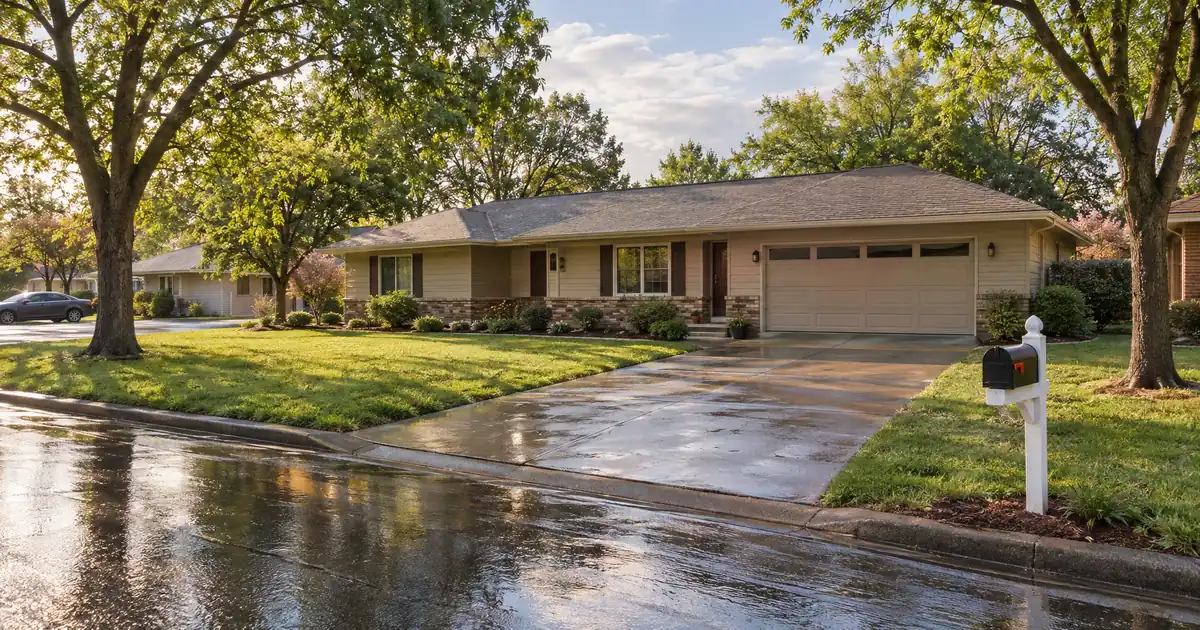
The Quick Read: No. A blanket DSCR loan covers rental properties only, and an owner-occupied home is ineligible in the pool because the loan is built for investment property you will not live in. Across the wholesale network Lendmire works with, the pool is tested on pooled rent against pooled debt service, and a home you live in has no rent to contribute.
- A portfolio DSCR loan typically holds 2 to 20 rentals under one note, with leverage up to 80% on a purchase or rate-and-term refinance, subject to lender guidelines.
- Owning a home can help you qualify with some lenders. Pledging it as collateral is a different thing, and the programs do not allow it.
- Cash-out on the pool tops out at 75% of pooled value.
- If you want to tap home equity, that happens outside the pool, through a separate product.
A blanket loan is one note secured by several properties. Lenders in the network call the product a portfolio DSCR loan. The title question comes up because investors blur two ideas: needing a home to qualify, and putting that home into the loan. They are not the same.
Why Your Home Stays Out
Every property in the pool must be a non-owner-occupied rental. You certify at application that neither you nor your family will live in any of them. Your own residence fails that test on day one.
The math points the same way. DSCR (debt service coverage ratio) compares a property’s monthly rent to its full monthly obligation: principal, interest, taxes, insurance, and any HOA dues. Lenders call that obligation PITIA. A home you live in has no lease and no market rent to measure, so it has nothing to put on top of the ratio.
There is a legal reason too, and it is short. Federal rules treat credit for non-owner-occupied rental property as business-purpose lending, and the CFPB’s Regulation Z commentary says an owner who expects to occupy the property more than 14 days in the coming year cannot treat it as non-owner-occupied. DSCR programs are built for the business-purpose side of that line. Adding a family home would drag the loan toward consumer-credit treatment, which these programs are not designed to carry.
“Business purpose” does not mean “no rules,” either. A Hunton legal analysis makes the point that business-purpose loans can still carry other consumer-law obligations. Lenders take occupancy certification seriously for that reason.
Owning a Home vs. Pledging It
This is the confusion worth clearing up. Many programs across the network want you to already own a primary residence. Some skip that requirement. Either way, it is a qualification overlay: the lender wants to see housing history. The home is never collateral.
Lendmire’s piece Why Lenders Usually Make You Own a Home First: Rental Property Basics walks through that overlay. Select lenders handle no-ratio files, generally for borrowers who already own a primary residence. That is a separate path with its own terms.
What Counts as “Your Own Home”?
A few edge cases trip people up. These are the common ones, and every file is reviewed individually.
| Situation | In the pool? | Why |
|---|---|---|
| Rental you never live in | Yes, if eligible | Fits the business-purpose test |
| Home you live in | No | Owner-occupied |
| Duplex where you live in one unit | Generally no | You occupy part of it |
| Former home, now leased out | Possible | Needs a lease or supported market rent |
| Beach house you use yourself | Usually no | Personal use breaks the rental test |
A house hack is the one that surprises people. Living in one unit of a duplex is a smart way to buy, but it is an owner-occupied purchase. It sits on a different loan until you move out.
A converted home is the legitimate bridge. Say you move into a new place and lease your old house. Once it has a lease or an appraiser-supported market rent and no one in your family lives there, it can be evaluated like any other rental. Lenders will want to see that the move actually happened.
“I’ll move in later” does not work. Occupancy is certified at application, and misrepresenting it is a serious problem, not a technicality.
What Else Is Ineligible in the Pool
Beyond owner-occupied property, the portfolio programs do not offer co-ops, mobile homes, mixed-use property, or commercial property. Manufactured homes (single- and double-wide), log homes, and barndominiums sit outside the network’s DSCR programs entirely. Eligible types are single-family, 2-4 unit, condo, and townhome, with small multifamily on the larger term-loan structure.
How a Pool Is Actually Tested
Here is the part that makes blankets attractive. On the 30-year portfolio structure, coverage is measured on the whole pool, with a 1.00 floor. Pooled rent goes against pooled debt service, so stronger properties can offset weaker ones.
Run the logic with modeled ratios, not dollars. Picture three rentals: two cover their own obligation at about 1.3x, and one sits near 0.9x. Blended, the pool can land comfortably above 1.00. A rental below 1.00 can sit in the pool, but pooled coverage, leverage, and terms are what underwriting tests, subject to underwriting.
Now drop your home into that picture. It adds debt and zero rent. It would drag the blend down, and it fails the occupancy rule before the math even matters.
Every rental still needs a lease or an appraiser-supported market rent. Clearing 1.00 is also not the same as positive cash flow. Repairs, vacancy, management, utilities, and capital expenses sit outside the ratio.
The Two Blanket Structures
Across the network, portfolio loans come in two shapes.
| Factor | 30-year portfolio DSCR | Rental portfolio term loan |
|---|---|---|
| Properties | 2 to 20 under one note | 5 or more properties or units |
| Loan size | $300,000 to $5,000,000 | $500,000 to $50,000,000 |
| Max leverage | Up to 80% (purchase, rate-term) | Up to 75% |
| Term | 30-year, interest-only available | 3, 5, 7, or 10 years, balloon at maturity |
| Recourse | Per loan documents | Recourse or non-recourse options |
Larger balances on either structure go to review. Credit floors typically start at 640, with 680 or 720 on some structures. Non-recourse structures exist on the term loan, with carve-outs such as fraud and bankruptcy.
Reserves vary by structure. The term loan holds reserves for taxes, insurance, and capital expenditures.
The Risk of Pledging Everything
Even without your home, a blanket carries real trade-offs. With cross-collateralization, each property secures the whole balance. Trouble on one rental can reach every property in the pool.
Selling one property follows the loan documents and the lender’s release terms. The release price runs above that property’s allocated balance, and the remaining portfolio must still cover its debt service. Ask about release terms before you sign, not after.
Now picture the home in that structure. A family residence pledged alongside rentals would put the place you sleep at risk of a landlord problem. That is a big reason the product keeps it out, and a good reason for you to keep it out too.
The term loan structure can also pool properties across several markets under one loan. That flexibility is real, but it ties more assets to one note.
If You Want to Use Home Equity for Rentals
The pool is not the tool for that. Your realistic options look like this:
| Goal | Structure that fits | Trade-off |
|---|---|---|
| Pull cash from rentals | Cash-out on the pool, up to 75% of pooled value | Seasoning rules apply |
| Consolidate rentals | Blanket or portfolio loan | Cross-collateral exposure |
| Moving out of your home | Lease it, then evaluate it as a rental | Needs a lease or market rent |
| Buying your first rental | Single-property DSCR | Typically 75%-80% LTV on a purchase |
Cash-out proceeds are available on seasoned properties, commonly around six months of ownership. Inside the first six months, the seasoning rule caps the amount. Leverage is limited to 90% of total cost in the first six months and 100% from six to twelve months, and a rate-and-term refinance carries no cost restriction.
Home equity products exist outside DSCR, and they are underwritten separately. Keeping them separate keeps the DSCR file simple: qualification runs on property-level rental income covering the payment, subject to lender guidelines. For the full picture of how these loans work, see the complete DSCR loans guide.
Common Misconceptions
“A blanket means everything I own goes in.” No. It covers the rentals you choose, and each one must be eligible.
“My home equity can be extra collateral.” Not in these programs. The home stays out.
“Business purpose means no rules.” Other consumer-protection obligations can still apply, as the Hunton analysis above notes.
“I can move in later.” Occupancy is certified up front, and misrepresenting it is treated as fraud.
“Owning a home is a DSCR requirement.” Many programs want it. Some do not. Either way, it is not collateral.
Key Terms Defined
Blanket loan: one loan secured by several properties, tested together.
Cross-collateralization: each property secures the entire balance, not just its own share.
Business-purpose loan: credit for an investment, not for a home you live in.
Occupancy certification: your signed statement that you will not live in the financed property.
Release clause: the loan term that lets a property leave the pool, usually at a release price above its allocated balance.
Seasoning: the waiting period between buying a property and cashing out against it.
Frequently Asked Questions
Can a blanket DSCR loan finance the home I live in?
No. Owner-occupied property is ineligible in the pool, and you certify non-occupancy at application. If you want to buy a home to live in, that calls for a different type of mortgage.
Can I add a home I already moved out of?
Possibly. Once it is leased or supported by an appraiser’s market rent, and no one in your family occupies it, a lender can evaluate it like another rental. Eligibility depends on the lender, the property, and the documentation.
Does one weak rental sink the whole pool?
Not automatically. On the 30-year portfolio structure, coverage is measured on pooled rent and pooled debt service, so stronger properties can offset weaker ones. Underwriting still tests pooled coverage, leverage, and terms.
Do I need an LLC for a blanket loan?
Some structures require a special-purpose entity, usually an LLC, subject to lender program eligibility. Others work differently, and recourse loans carry a personal guarantee.
Can properties in different states sit in one pool?
On the rental portfolio term loan, properties in several markets may sit under one loan. Lendmire’s DSCR programs span 40 states plus Washington, D.C., though a few areas fall outside the portfolio programs’ footprint.
If you are buying or refinancing a rental property and want to see how the numbers work, Lendmire can help you compare DSCR loan options based on the property income, credit profile, leverage, and investor goals. Reach the team at 828-256-2183 or request a quote. Not a commitment to lend; every file is underwritten individually. Tax treatment varies; consult a qualified professional.
About Lendmire
A DSCR-focused mortgage broker, Lendmire (NMLS# 2371349) places investor financing across 41 markets — 40 states plus Washington, D.C. — with DSCR eligibility generally reviewed by the lender on property cash flow instead of tax returns, subject to lender guidelines. Scotsman Guide named Lendmire a Top Mortgage Workplace in 2025 and 2026.
Get Started
Ready to find the right loan for you?
In about 30 seconds you can review financing options available for your investment property. No commitment required.
Informational only. Not a Loan Estimate, approval, or commitment to lend. Program availability and eligibility are subject to lender guidelines, credit approval, property review, and underwriting.
References
1. CFPB Regulation Z, Section 1026.3
2. Hunton, “Beware of Business Purpose”
This article is part of Lendmire’s DSCR loan program — full qualification details, guidelines, and scenarios live on the program page.
Related reading: Can You Get a DSCR Loan for an Airbnb in Kentucky? · How to Finance a Waterfront Rental With a DSCR Loan · Can You Get a DSCR Loan for an Airbnb in Illinois?
Brandon Miller
Founder & CEO, Mortgage Loan Originator, Lendmire LLC
- Mortgage Loan Originator · NMLS# 1129696 · Verify on NMLS Consumer Access
- North Carolina Real Estate Broker · License# 343312 · Verify on NCREC
- North Carolina Insurance Producer · License# 19053198 · Property, Casualty, Life, Health · Verify on NAIC SBS
- Lendmire LLC · Firm NMLS# 2371349 · Verify firm licensure
Disclosures. The information presented in this article is general market commentary, not financial, legal, or tax advice. Lendmire is a mortgage brokerage (NMLS# 2371349) — not a direct lender or depository institution — and loan placement is subject to lender underwriting. Nothing in this content represents a commitment to lend. Loan terms, pricing, and program availability vary based on borrower qualifications, property characteristics, and state of subject property, and are subject to change at any time. Lendmire complies with Equal Housing Opportunity requirements. Consumer access: nmlsconsumeraccess.org.