
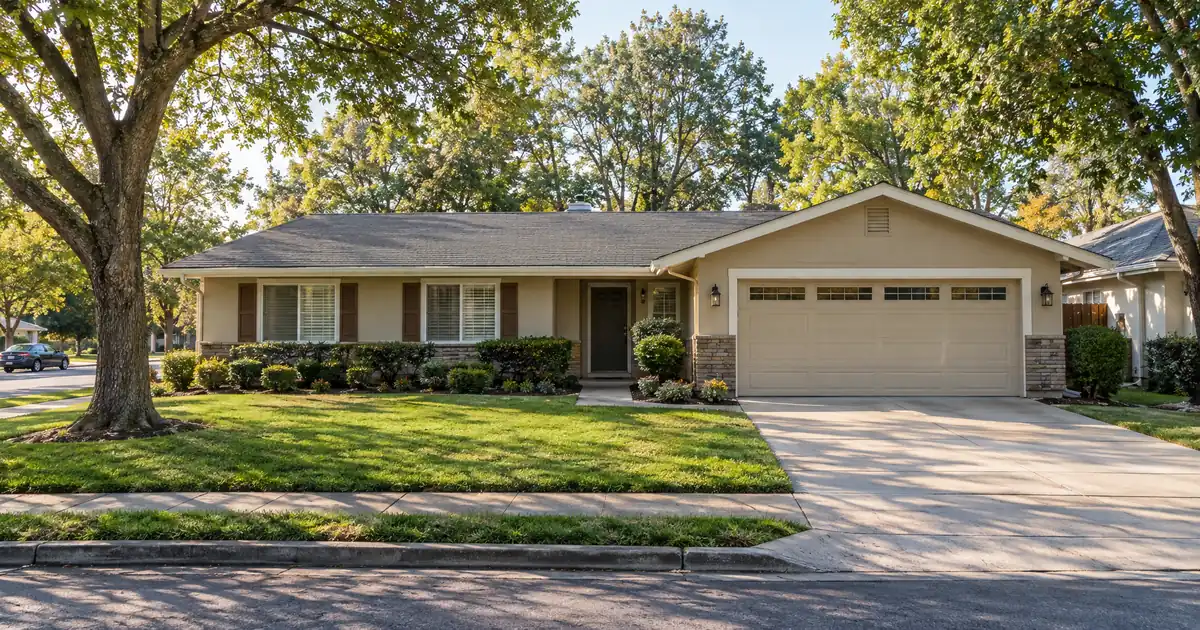
The Quick Read: Opening a home equity line on an inherited rental starts with getting legal title in your own name, either as an individual or through a revocable living trust. Tenants do not block the line. The lender judges you, the equity, and the property’s occupancy type.
- Title comes first. Finish probate, or confirm the property sits in a trust or passes by deed, and record the change.
- On an investment property, the network ceiling is 70% combined loan-to-value (CLTV), with a 700 credit minimum.
- Investment lines run from $25,000 up to $500,000 total.
- LLC-held property cannot take this line. A DSCR cash-out refinance is the usual alternative.
- Every figure is subject to lender guidelines and full file review.
You just inherited a duplex, the tenants are paying, and the roof needs work. Now you want cash without selling. This guide walks through how that line works, how underwriting treats the tenants, and where the process breaks.
How large a line the equity supports.
An equity line is sized by combined loan-to-value, occupancy, and credit — not by rental coverage. Switch the occupancy or the credit band and the ceiling moves with it.
Investment-property lines require a 700 minimum credit score; second-home lines start at a 640 minimum and primary-residence lines at 600, and the combined-LTV ceiling steps down as the credit band drops on primary-residence and second-home lines and holds on investment-property lines; the line cap steps down on primary-residence lines and holds at every tier on investment-property and second-home lines.
A debt-to-income ratio above 45% requires 680+ credit. Profiles under 640 are limited to single-family homes. At least 75% of the approved line is drawn at closing. Ceilings, floors, and caps update from Lendmire’s centralized guideline source.
Line estimate
Illustrative estimate only — not a quote, Loan Estimate, approval, or commitment to lend. The rate is an editable assumption; equity-line pricing is variable through both the draw and repayment periods and never converts to fixed. Occupancy and credit drive the ceiling together: an investment property tops out at 70% combined LTV (minimum credit 700, line cap $500,000); a second home tops out at 90% combined LTV (minimum credit 640, line cap $500,000), with the ceiling stepping down as the credit band drops (the cap holds at every tier); a primary residence tops out at 90% combined LTV (minimum credit 600), and its $750,000 maximum line is available only at 75% combined LTV or below with a 700-or-better credit profile (720 on the longer-runway program) and a full appraisal. Lines above $500,000 require a full appraisal. Credit, debt-to-income, property type, and full underwriting review all affect the final line.
What Is a HELOC on an Inherited Rental?
A HELOC (home equity line of credit) is a revolving line secured by the equity in a property. On an inherited rental, it lets you borrow against the property without selling it and without evicting anyone.
Three facts shape everything else:
- You must own it. A lender cannot place a lien on property that still sits in a decedent’s name.
- The line is sized on you. It is underwritten on your credit, your income, your debts, and the equity. It is not sized on rent.
- The occupancy is “investment.” A rental is non-owner-occupied, and that classification changes the ceilings and credit floors.
NerdWallet notes that qualifying on an investment property is typically stricter than on an owner-occupied home. It also notes that these lines are not widely available. That matches what a broker sees. A decline from a big bank is often a product-availability issue, not a verdict on your credit.
Key Terms Defined
CLTV (combined loan-to-value): Your existing mortgage balance plus the new line, divided by the property’s value.
Successor in interest: An heir who takes over a property with a mortgage and gains the right to deal with the servicer about it.
Vesting: How title is held, such as an individual, a trust, or an LLC.
DSCR (debt service coverage ratio): Monthly rent divided by the property’s monthly housing payment (principal, interest, taxes, insurance). DSCR loans qualify primarily on property-level rental income covering the payment, subject to lender guidelines.
Stepped-up basis: The reset of an inherited property’s tax value to its market value at the date of death.
Step by Step: How Underwriting Treats the File
Here is the sequence, in the order that protects you from wasted applications.
1. Settle title. Complete probate, or confirm the property sits in a living trust or passes by a transfer-on-death or survivorship deed. Record the deed and clear any liens. If several heirs share title, expect every owner to sign. If one heir wants the line, a buyout of the others usually has to come first.
2. Handle any existing mortgage. Keep paying it. Missed payments hurt credit even before the servicer confirms you. Nolo explains that federal law lets qualifying heirs take over a deceased borrower’s mortgage without being re-qualified. It also gives heirs successor-in-interest status, so you can get loan information from the servicer. Expect to supply a death certificate and proof of ownership. The debt does not disappear with the owner, and the heir takes the balance along with the house.
3. Find a lender that writes investment-occupancy lines. This is the hardest filter. The network Lendmire brokers through includes select wholesale partners that write them. Many large retail lenders do not.
4. Underwriting. The lender reviews credit, debt-to-income, combined leverage, and a property valuation. Because an investment line caps at $500,000, it falls in the automated-valuation lane and commonly closes without a traditional appraisal. A borrower can still request a full appraisal.
5. Valuation at today’s value. The lender values the property as it stands now, not at the date of death. Date-of-death value matters for taxes, not for the line.
6. Insure it as a rental. Move from the decedent’s policy to a landlord policy, and keep the leases or rent schedule on file.
How Do Tenants Change the File?
Tenants do not disqualify the property. On a standard HELOC the lender is not underwriting rent coverage. It is underwriting you. Rent shows up as supporting evidence, and the lender may ask for leases or a rent schedule to confirm the property is a rental.
Tenant status still shapes the paperwork:
| Tenancy | What a lender may want | What you can do |
|---|---|---|
| Fixed-term lease | Copy of the lease | Collect it from the estate’s files |
| Month-to-month | Current rent schedule | Ask tenants to confirm rent and deposit in writing |
| Rolled over, expired | Proof of ongoing payment | Pull bank deposits or payment records |
| No written lease | Written confirmation | Sign a simple lease with the tenant |
| Related-party tenant | Evidence of actual payment | Document payments from here on |
Heirs often inherit informal records. The decedent may have taken cash and kept notes in a drawer. Start a clean ledger now, and confirm where each tenant’s security deposit sits. A lien from your line does not change the lease or the tenant’s rights. Confirm the specifics with your attorney.
What Are the Network Limits on an Investment Line?
On an investment property, across the select wholesale lenders Lendmire works with, the picture looks like this:
- Ceiling: 70% CLTV, with no tier above it.
- Credit: a 700 minimum. A 720 score reaches the same 70% CLTV, so higher credit buys eligibility, not leverage.
- Line size: $25,000 to $500,000 on an investment property. Larger lines are limited to primary residences.
- Structure: a 5-year interest-only draw followed by a 25-year repayment, with at least 75% of the line drawn at closing. Pricing floats and does not convert to fixed.
- Debt-to-income: 50% maximum, qualified on the interest-only payment at the maximum draw.
- Property types: single-family, 2-4 units, PUDs, townhomes, and condos, including non-warrantable condos. Manufactured homes, co-ops, condotels, log homes, and commercial or mixed-use zoning are not eligible.
- Exposure: a borrower is limited to three lines, and anyone with more than 15 financed properties is not eligible.
- Availability: HELOCs are offered only in Lendmire’s 16 full-service states, which is narrower than its 41-market DSCR footprint.
Market surveys report that investment HELOCs elsewhere often sit around 70-75% CLTV (per Switchwize, a comparison site). On this network the investment ceiling is 70%.
A simple picture: say an heir inherits a fourplex worth $400,000 with a mortgage balance of roughly 40% of value. At a 70% CLTV ceiling, the remaining room is about 30% of value, so the line is limited by the equity left after the existing lien. These are modeled assumptions. Actual eligibility is subject to lender guidelines and a full file review.
Where the General Rule Breaks
LLC vesting. If the property was deeded into an LLC, a corporation, a partnership, or an irrevocable or land trust, this line cannot hold it. Only an individual or a revocable living trust can. A vesting change or a DSCR cash-out refinance is the fix. Moving a mortgaged property into an LLC can also raise due-on-sale questions, so ask counsel first.
Unfinished estates and co-heirs. An open probate, a partition fight, or a missing signature stops the file. Specialty estate-stage loans exist for property still held by an estate. They are a different product from a HELOC.
Due-on-sale and loan type. Protection for heirs is strong but not universal. The outcome depends on the loan type and the servicer. The National Housing Law Project reports that servicers still often impede assumptions for inherited property. A reverse mortgage falls outside those protections and generally comes due at death.
Occupancy language. Standard HELOC paperwork is written for owner-occupied homes. Disclose the rental use plainly at application.
Listed for sale. A property listed for sale, or listed within the past 60 days, is ineligible in NC, PA, TN, TX, and WA.
HELOC or DSCR Cash-Out: Which Fits an Heir?
The two products test different things. A HELOC tests your personal profile. A DSCR loan tests whether the property’s rent covers its payment.
| Factor | Investment HELOC | DSCR cash-out refinance |
|---|---|---|
| Reviewed on | Your credit, income, DTI | Property rent vs. payment |
| Title | Individual or revocable trust | LLC allowed, subject to program terms |
| Leverage | 70% CLTV on investment | Around 75% LTV, standard rentals |
| Credit | 700 minimum | Around 660 typical; 620 in parts of network |
| Size | $25,000-$500,000 | Up to $3,000,000 on standard programs |
| Existing first lien | Stays in place | Replaced |
DSCR cash-out typically wants about 6 months of seasoning, and 1.00 coverage is where select programs start. A separate select-lender path takes coverage below 1.00 with leverage and terms adjusted. Clearing 1.00 does not mean positive cash flow, because repairs, vacancy, and management sit outside the calculation.
Choose the HELOC when you own the property personally, have strong credit and income, and want to keep a low-balance first mortgage. Choose DSCR cash-out when the property sits in an LLC, your personal income is thin, or you own several properties. For the bigger picture, see Lendmire’s complete DSCR loans guide. Lendmire’s piece Should an Investor Cash Out a Rental, Open a HELOC or Bundle? covers the broader choice.
What the Heir Brings That Lenders Notice
Inheriting a rental changes your tax picture, which is why the funding decision deserves a pause. An inherited rental’s basis typically resets to market value at death, and you start a fresh depreciation schedule, per Taxes for Expats, which cites a 27.5-year schedule for residential rentals. Tax treatment can depend on how the funds are used and how the property is held; investors should keep clear records and speak with a qualified tax professional before relying on any deduction.
One practitioner pattern: heirs who get stuck are rarely stuck on credit. They are stuck on title, a missing co-heir signature, or a property deeded to an LLC they never knew about. Run a title check before you apply anywhere.
Document Checklist
- Recorded deed or trust documents showing your title
- Death certificate and proof of ownership for any existing mortgage
- Current mortgage statement, if there is a lien
- Leases or a rent schedule, plus tenant confirmation of rent and deposit
- Landlord insurance policy
- Government ID, credit authorization, and income documents
- Proof of any co-heir buyout or signatures
Mistakes to Avoid
- Applying before title is recorded.
- Ignoring co-heirs who must sign.
- Letting the existing mortgage go unpaid during probate.
- Applying for a line on an LLC-held property.
- Hiding the rental use from the lender.
- Assuming a big bank’s decline means you cannot qualify anywhere.
Frequently Asked Questions
Can I open a HELOC before probate ends?
Generally not. The lender needs you to hold legal title before it records a lien. Specialty estate-stage loans exist for property still held by an estate, but they are a different product.
Do my tenants have to consent to the line?
No. The line is a lien on the property, and it does not change the lease or the tenants’ rights. A lender may ask for leases or a rent schedule, so confirm specifics with your attorney.
What if my tenant pays in cash or has no written lease?
Document it now. Start a ledger, deposit rent into a bank account, and sign a short written lease. Heirs without a landlord history can show payments forward from today.
What if the inherited property has a mortgage?
Keep paying it. Federal protections let qualifying heirs continue the loan, and refinancing is optional. A HELOC can sit behind the first lien, subject to lender guidelines and the CLTV ceiling.
Does my credit score matter more than the rent?
On a HELOC, yes. An investment line needs a 700 minimum on this network. If your profile falls short, a DSCR cash-out refinance qualifies primarily on property-level rental income covering the payment, subject to lender guidelines.
If you are considering a home equity line and want to see how the numbers work, Lendmire can help you compare HELOC options based on the property, the equity available, credit profile, combined leverage, and your goals. Reach the team at 828-256-2183 for a quote.
Inherited rentals reward the heir who sorts out title first, because tenants rarely decide the deal and paperwork nearly always does.
About Lendmire
Lendmire — NMLS# 2371349 — is a mortgage broker that arranges home equity lines of credit in its 16 full-service states through wholesale lenders, on primary residences, second homes and investment properties. Every line is subject to the lender’s guidelines and full underwriting. Scotsman Guide named Lendmire a Top Mortgage Workplace in both 2025 and 2026.
Get Started
Ready to find the right loan for you?
In about 30 seconds you can review financing options available for your home or investment property. No commitment required.
Informational only. Not a Loan Estimate, approval, or commitment to lend. Program availability and eligibility are subject to lender guidelines, credit approval, property review, and underwriting.
References
1. NerdWallet: Can You Get a HELOC on an Investment Property?
2. Nolo: Taking Over the Mortgage When Your Loved One Dies
3. Switchwize: HELOC on Investment Property
4. National Housing Law Project: Servicer Obstacles to Inherited Property Assumptions
5. Taxes for Expats: Inherited Property and Capital Gains
This article is part of Lendmire’s investment property HELOC program — full qualification details, guidelines, and scenarios live on the program page.
Related reading: Cash-Out Refinance Title Requirements on an Inherited Tenanted Rental · Probate and Title Requirements for an LLC-Held Inherited Rental Refinance · How to Stress-Test DSCR on a Short-Term Rental Cash-Out Refinance
Brandon Miller
Founder & CEO, Mortgage Loan Originator, Lendmire LLC
- Mortgage Loan Originator · NMLS# 1129696 · Verify on NMLS Consumer Access
- North Carolina Real Estate Broker · License# 343312 · Verify on NCREC
- North Carolina Insurance Producer · License# 19053198 · Property, Casualty, Life, Health · Verify on NAIC SBS
- Lendmire LLC · Firm NMLS# 2371349 · Verify firm licensure
Compliance and disclosures. Lendmire (NMLS# 2371349) is a licensed mortgage broker and is not a direct lender, depository institution, financial advisor, or tax professional. Content in this article is general market analysis and educational information — not financial, legal, or tax advice for any specific situation. Lendmire does not guarantee loan approval; every transaction is subject to underwriting by the funding lender. Mortgage pricing and loan program guidelines are subject to change at any time without notice and vary by borrower characteristics, property type, and state regulations. Lendmire complies with Equal Housing Opportunity. Licensure verification: NMLS Consumer Access.