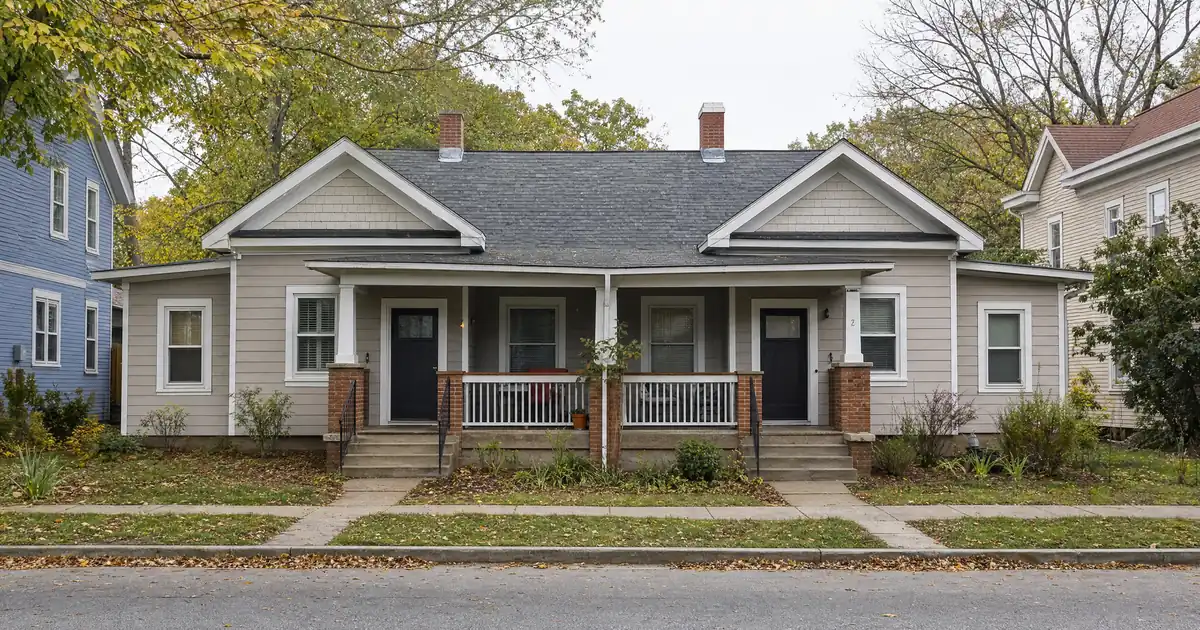
An out-of-state investor scanning Asheville for the first time usually notices two things at once: home values that kept climbing through a federally declared disaster, and rents that are now sliding backward. That combination — appreciation up, rents down — is the single most important fact shaping how a DSCR file underwrites here right now, and it’s easy to miss if the only data point pulled is a headline median price.
The Short Version: Investment property loans in Asheville, North Carolina are underwritten primarily against the subject property’s current market rent rather than 2022-peak rent comps, because citywide asking rents have pulled back roughly 6% year-over-year according to WLOS even as home values kept rising.
DSCR Calculator
Run the numbers in Asheville, NC
Rate source: Freddie Mac 30-yr average via FRED® — Federal Reserve Bank of St. Louis · effective Jul 2, 2026
Prefilled with local estimates — enter your own rent or nightly figures, taxes, insurance, and HOA for a more accurate picture.
As of Jul 2, 2026 · General Freddie Mac market benchmark, not a Lendmire loan offer. Rent, nightly rate, occupancy, taxes, and insurance are editable estimates. Short-term rental figures are estimates only and vary significantly by season, property type, management approach, and local short-term-rental rules — confirm local regulations before relying on them. Qualifying income for short-term rentals varies by program — some use appraisal market rent, others use documented STR history or projections — and is confirmed in underwriting. Not a Loan Estimate, approval, or commitment to lend. Program availability and eligibility are subject to lender guidelines, credit approval, property review, and underwriting.
- Buncombe County home prices climbed 53% cumulatively over a recent five-year stretch versus 46% nationally, per the Richmond Fed.
- Older 1 & 2 Star apartment stock runs 6.5% vacancy versus 13.5% for new 4 & 5 Star product, per CoStar-sourced Dewey Property Advisors data.
- East Asheville and Oakley average $1,750 in monthly rent — the strongest basis-to-rent stacking in the metro.
- Asheville is adding apartment inventory at more than five times the national average pace, per RealPage.
- Asheville ranks 9th nationally for new accessory dwelling unit permits, with roughly 235 issued.
Asheville Market Snapshot
A quick read on the Asheville investor landscape — figures come from the cited sources below. Confirm current property-level numbers before underwriting.
| Metric | Detail |
|---|---|
| Home prices | 53% vs 46% price growth (Richmond Fed) |
| Vacancy | 6.5% by class (CoStar/Dewey Property Advisors) |
The Two Ashevilles: Appreciation Up, Rents Down
Asheville’s median sold price sits at $494,600 with a price per square foot near $312, according to Asheville Real Property — a market that held up through Tropical Storm Helene rather than correcting the way disaster-hit markets typically do. The Richmond Fed’s Helene impact study confirms this isn’t an anomaly: Buncombe County’s five-year price appreciation outpaced the national rate even with the storm sitting mid-window.
Rent tells a different story. Yardi Matrix puts the citywide average rent at $1,678 a month, down nearly 3% year-over-year, with three-bedroom units averaging $1,991. Zumper’s methodology runs higher, at $1,781, and Zillow’s estimate lands highest of the three, at $1,950 — a reminder that source selection changes the comp, not just the number. WLOS reports rents are now running about 6% below year-ago levels and roughly 10% under their prior peak, a pullback tied directly to the apartment supply wave described below.
For a purchase-side DSCR file, this divergence matters more than almost any other local fact. A buyer underwriting today’s rent instead of last year’s asking price avoids the single most common coverage-ratio mistake in this market: overstating income because a listing agent quoted a 2022 comp.
Where the Coverage Math Actually Works: East Asheville and Oakley
East Asheville and the Oakley corridor produce the metro’s cleanest rent-to-price stacking, and it isn’t close. Average rent in Oakley runs $1,750 a month against older, lower-basis workforce housing stock — brick ranches and postwar single-family homes that never got caught up in the downtown price run.
Run the numbers on a workforce single-family purchase modeled at $275,000 — well below Asheville’s citywide median — financed at 75% loan-to-value with the Oakley-area average rent of $1,750 applied. Using a standard 30-year amortization and typical North Carolina carrying costs for property tax and insurance, that scenario produces a coverage ratio near 1.07x. Modest, but real, and the math holds without needing tourist-season upside to clear the bar. Most standard DSCR programs are built around a 1.00x baseline because rent covers the payment at that level on paper — a 1.07x reading here gives a little cushion above that floor, though the exact outcome always depends on lender guidelines, credit profile, reserves, and property review.
This is also where the CoStar-sourced vacancy split matters most. Dewey Property Advisors’ data shows older 1 & 2 Star apartment stock running just 6.5% vacancy while new 4 & 5 Star buildings sit at 13.5% — meaning the oversupply story dominating Asheville headlines is a large new-complex problem, not a workforce-housing problem. The two- and four-unit stock DSCR investors actually purchase in East Asheville isn’t competing against concession-heavy new construction; it’s absorbing tenants at close to equilibrium.
Downtown Condos and the STR Question
Downtown Asheville is a different animal entirely — and the purchase math reflects it. Downtown condos average $425,000 per Redfin data, selling in about 18 days, while median rent for the neighborhood runs $2,200 a month, roughly 13% above the national average. On paper that rent looks strong. Run it through a modeled 75% LTV purchase at that price point and standard carrying costs, though, and the coverage ratio comes in around 0.87x on long-term rent alone — below the typical coverage threshold. Terms vary by lender guidelines, property type, leverage, credit profile, and full file review.
That gap is the whole story of Downtown Asheville. This is the neighborhood sitting at the base of the Blue Ridge Parkway visitation engine, which drew 16.7 million visits in a recent year according to the National Park Service — more traffic than Grand Canyon, Yellowstone and Yosemite combined. Nearly 14 million visitors came through Asheville and Buncombe County in the same stretch, supporting roughly one in seven local jobs. That’s the demand base behind Asheville’s short-term rental market, which posted 56% average occupancy at a $225 average daily rate and $114 RevPAR across active listings, per AirDNA-sourced data — though a separate analytics provider, AirROI, reports meaningfully different figures for the same market, underscoring that STR income should be verified per property rather than assumed from a single source.
For a Downtown file that clears 1.00x on long-term rent alone, that’s the end of the conversation. For one that doesn’t, a lender may review a blended-income approach using trailing STR revenue, a sub-1.00 program structure, or an interest-only restructuring to bring the ratio into range — options a lender evaluates case by case, not a guaranteed path to approval. Lendmire’s DSCR guide walks through how rent used for lender review is calculated against the full monthly obligation, which is worth reviewing before assuming a downtown unit pencils on rent roll alone.
River Arts District and West Asheville — Renters Everywhere, Rent Growth Nowhere
River Arts District is arguably the most renter-heavy submarket in the city — 77.5% of residents rent versus 22.5% who own, with a median household income of $43,435, below the national figure. That’s a market built for long-term rental ownership, not speculation. The median sale price over a recent 12-month stretch reached $625,000, up 25% from the year before — a jump driven by the district’s transformation from mill corridor into an arts enclave now home to more than 250 resident artists. That price run outpaced rent growth by a wide margin, which is the appreciation-versus-cash-flow tension in its purest local form: RAD is a stronger equity story than an acquisition-day coverage story right now.
West Asheville sits a notch cheaper and a notch more workable. Single-family homes here carry a median price of $475,000, while the broader 12-month sales median across all property types — including older bungalows and smaller lots — runs $437,000, down 3% from the prior year. Haywood Road anchors a walkable local commercial strip that draws workforce and creative tenants rather than tourists, and older lot sizes have supported infill duplex conversions.
That infill angle connects directly to one of the more overlooked data points in this market: Asheville ranks ninth nationally for new accessory dwelling unit construction, with roughly 235 ADU permits granted in recent years, according to a major local employer — enough volume that the city reportedly has a construction waitlist. For a West Asheville or East Asheville workforce single-family purchase, adding a detached or garage-conversion ADU is a comp-able way to stack a second income stream onto one loan without a full duplex build-out, which can matter for a future refinance even though that math belongs to a separate conversation.
Montford, Kenilworth, and the Hospital Anchor
Montford and Kenilworth sit closest to Mission Hospital, and that proximity is the whole investment case. Montford’s Victorian and Arts & Crafts housing stock carries an average price near $450,000, and both neighborhoods draw a steady tenant base of hospital staff and university-adjacent professionals rather than tourist turnover. Mission Health, part of HCA Healthcare, employs roughly 12,000 colleagues across a system licensed for 1,219 beds across six acute care hospitals plus a rehab hospital — one of the largest employment anchors in western North Carolina and a source of recurring, lease-renewing tenant demand that isn’t tied to visitor seasonality.
UNC Asheville adds a second, smaller demand layer nearby: total undergraduate enrollment sits at 3,030, and per a regional college data, 45% of those students live off campus. That’s not a large enough base to anchor a dedicated student-housing strategy the way a big state school would, but layered on top of hospital and professional demand in Montford and North Asheville, it smooths out vacancy risk between lease turns. Lendmire, founded by CEO Brandon Miller, arranges DSCR financing for investors targeting this kind of hospital-and-university-adjacent workforce housing — a use case that fits the firm’s rental-income-first underwriting model well, subject to lender program eligibility. Investors weighing the math can call 828-256-2183 or see how the DSCR math pencils before writing an offer.
Grove Park and Biltmore Village — Different Games Entirely
Grove Park is a luxury play, plain and simple. Comparable properties near the historic Omni Grove Park Inn command a median around $1 million — a price point that doesn’t stack against standard workforce rent and only makes sense as an executive furnished-rental or high-end short-term strategy, not a coverage-ratio purchase.
Biltmore Village runs the opposite direction: it’s one of the more affordable entry points in the metro, with average one-bedroom rent near $1,380. Sitting adjacent to the Biltmore Estate — the largest privately-owned home in the country and a roughly 2,400-employee anchor institution in its own right — the neighborhood carries both workforce-rental fundamentals and tourist-adjacent upside, a rarer combination than it sounds given how few submarkets pull double duty like that.
The Supply Story Investors Keep Misreading
Asheville added a wave of new apartment units recently and was tracking toward even more supply — a pace of inventory growth that RealPage flags as among the fastest in the nation, well above the national average. Citywide occupancy has slipped modestly, landing just under the national norm.
That headline scares off investors who haven’t looked at where the supply is landing. It’s concentrated in new Class A complexes competing on concessions — not the older duplex and small-multifamily stock DSCR investors are actually financing. Treating a citywide “Asheville vacancy is rising” headline as evidence against a West Asheville duplex or an Oakley single-family purchase is a category error worth avoiding.
DSCR vs. conventional financing
Two common ways to finance an investment property in Asheville, NC. They qualify you differently — here’s how investors weigh them.
Why investors choose it
- Qualifies on the property’s rental income — no personal tax returns, W-2s, or pay stubs needed to document income.
- No personal debt-to-income ceiling to clear, so existing mortgages and obligations don’t cap your borrowing the same way.
- Can be closed in an LLC, keeping the property inside a business entity.
- Built for scaling — not held to the limit on number of financed properties that conventional financing applies.
- Underwriting centers on the deal: generally qualifies when the rent covers the payment, a 1.00x coverage ratio being a common baseline (confirmed in underwriting).
- Designed specifically for investment property, including long-term and, where the program allows, short-term rentals.
Where it’s strong
- Often the lowest ongoing financing cost for a buyer who fully qualifies on personal income — a fit for a first property or a cost-first purchase.
Trade-offs for investors
- Requires full personal income documentation and must fit within a debt-to-income limit — salary, existing debts, and other mortgages all count.
- Typically held in your personal name rather than a business entity.
- Caps how many financed properties you can carry, which can become a ceiling as a portfolio grows.
- Evaluates you as a borrower as much as the property, which usually means more paperwork.
How investors usually choose: a first or single property often optimizes for the lowest financing cost; portfolio builders often optimize for leverage, vesting in an LLC, and scaling past conventional caps. The right answer depends on your goals, the property, and current guidelines — both paths run through select lenders in Lendmire’s wholesale network, with eligibility and terms confirmed in underwriting.
Deal desks working files from markets with this kind of bifurcated supply picture — heavy new large-complex delivery layered over a tight older-stock segment — tend to see the same friction point again and again: borrowers pulling rent comps from the wrong tier. A rent comp pulled from a brand-new Class A building overstates what an older duplex or bungalow can actually command, and a comp pulled from pre-storm listings overstates what today’s softer rent environment will support. The cleaner files pull comps from buildings of comparable age and class, and from current listings rather than year-old ones.
For investors comparing DSCR against a conventional purchase loan here, the program-to-program comparison breaks down why rental-income underwriting tends to fit LLC-titled purchases better than a personal-income approach, particularly for buyers running multiple Asheville properties through one entity. North Carolina-specific program details are also covered on the North Carolina DSCR investor loans hub page, including the standard purchase leverage range most DSCR files fall into.
Frequently Asked Questions
Does Tropical Storm Helene affect DSCR appraisals in Asheville right now?
Storm damage was concentrated in specific flood-prone corridors, not citywide — FEMA mapping identified roughly 450 destroyed homes in the metro area. Comps in most neighborhoods profiled above held up through the disaster year, but any property near a river corridor or floodplain warrants a closer look at flood-zone status before underwriting.
Is West Asheville or River Arts District the better first DSCR purchase?
West Asheville generally offers a lower entry price and a workforce tenant base less exposed to the rent softening tied to River Arts District’s rapid recent price run. RAD’s renter-heavy composition is attractive long-term, but its 25% one-year price jump outpaced rent growth, which tightens acquisition-day coverage compared to West Asheville’s flatter pricing.
Can Airbnb income count toward DSCR lender review on a Downtown Asheville condo?
It may be reviewed as part of the file, subject to lender guidelines and documentation of trailing rental history. Because STR revenue estimates vary meaningfully between data providers, a lender will typically want verified per-property income history rather than a market-average nightly rate applied to the subject unit.
Why do apartment vacancy headlines and DSCR-reviewable duplexes tell different stories in Asheville?
Because the vacancy increase is concentrated in new Class A apartment complexes competing for lease-up, while older 1 & 2 Star stock — the category most duplexes and small multifamily properties fall into — is running vacancy less than half that of new construction, per CoStar-sourced data.
What credit score does a DSCR loan in Asheville typically require?
Programs generally start with a floor around 620, with stronger pricing and higher-leverage tiers opening up around 660, 680 and 700, depending on the lender and file. Exact eligibility depends on credit profile, reserves, property type and program guidelines, and can vary by lender.
Comparable Markets, and Where the Math Currently Favors Asheville
Investors cross-shopping Asheville against Greensboro, Winston-Salem or Wilmington will find flatter, more predictable rent-to-price ratios in those markets — none of them carry Asheville’s Blue Ridge Parkway visitation base or its Biltmore Estate anchor, and none of them are absorbing a supply wave five times the national average pace. Wilmington comes closest on tourism exposure, but it doesn’t have Asheville’s post-storm comp-resilience data point: a market that kept appreciating through a federally declared disaster year is a different underwriting conversation than one that hasn’t been tested. Right now, the math favors Asheville for investors willing to underwrite current rent instead of pre-storm rent — and favors the flatter comparables for investors who’d rather not think about a floodplain at all.
About Lendmire
Lendmire, NMLS# 2371349, places DSCR investor financing for Asheville, North Carolina through non-QM wholesale channels that cover 40 markets, including Washington, D.C. Lendmire is a non-QM mortgage broker serving real estate investors across that footprint through DSCR investor loan programs, with qualification generally reviewed around a subject property’s rental income rather than the borrower’s W-2 history — a practical fit for LLC-titled portfolios and self-employed investors, subject to program terms. All scenarios remain subject to lender review and program guidelines, and the firm was recognized as a top-ranked workplace in 2025 and again as a top-ranked workplace in 2026 by Scotsman Guide.
Asheville’s real risk for a DSCR investor isn’t the market — it’s the calendar. Underwrite this year’s rent and this year’s comp set, not the one from before the storm hit, and the coverage math tells the truth.
Investment property review
See how the DSCR math works for Asheville, North Carolina
Lendmire can review rent, leverage, property type, and DSCR fit before you get too far into the deal.
Informational only. Not a Loan Estimate, approval, or commitment to lend. Program availability and eligibility are subject to lender guidelines, credit approval, property review, and underwriting.
References
1. WLOS — Asheville Rental Vacancies Rise
2. Richmond Fed — Helene’s Impact on Housing in Western North Carolina
3. RealPage — Asheville Market Profile
4. CoStar/Dewey Property Advisors
5. Asheville Real Property — Post-Hurricane Helene Housing Market
6. a top-ranked workplace in 2025
7. a top-ranked workplace in 2026
Brandon Miller
Founder & CEO, Mortgage Loan Originator, Lendmire LLC
- Mortgage Loan Originator · NMLS# 1129696 · Verify on NMLS Consumer Access
- North Carolina Real Estate Broker · License# 343312 · Verify on NCREC
- North Carolina Insurance Producer · License# 19053198 · Property, Casualty, Life, Health · Verify on NAIC SBS
- Lendmire LLC · Firm NMLS# 2371349 · Verify firm licensure
Compliance and disclosures. Lendmire (NMLS# 2371349) is a licensed mortgage broker and is not a direct lender, depository institution, financial advisor, or tax professional. Content in this article is general market analysis and educational information — not financial, legal, or tax advice for any specific situation. Lendmire does not guarantee loan approval; every transaction is subject to underwriting by the funding lender. Mortgage pricing and loan program guidelines are subject to change at any time without notice and vary by borrower characteristics, property type, and state regulations. Lendmire complies with Equal Housing Opportunity. Licensure verification: NMLS Consumer Access.