
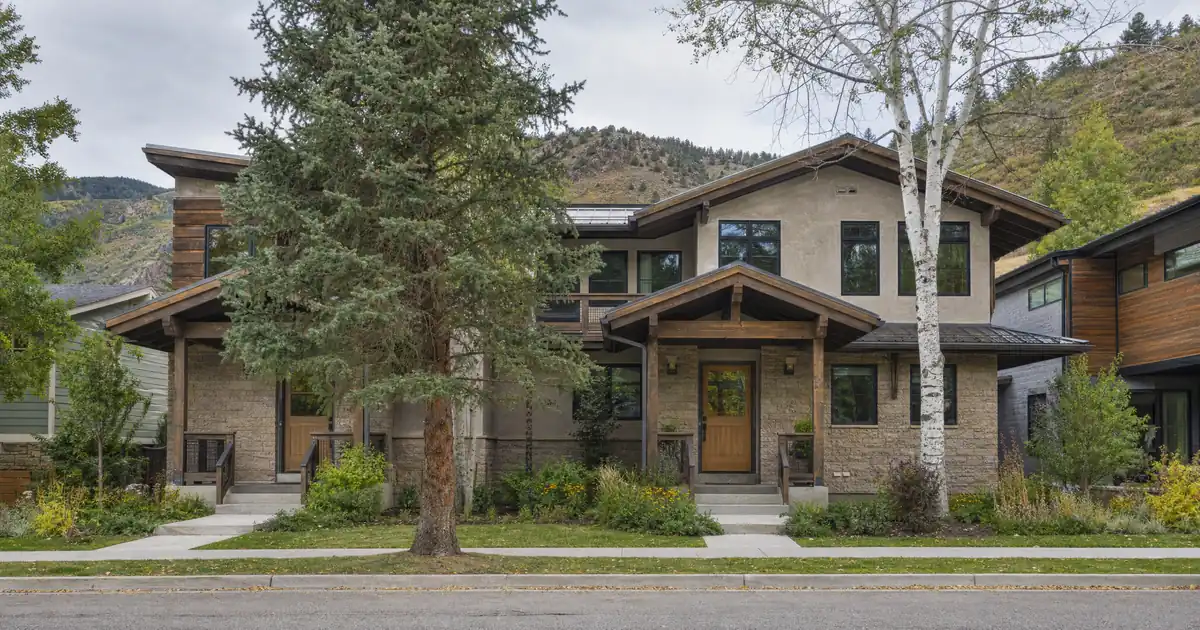
Picture an investor pulling up a listing in Aspen’s West End, drawn in by the mountain views and the name recognition, only to find the comparable sale down the block closed near $25 million for a townhome under 5,000 square feet. Run any realistic 12-month lease against that basis, at any loan-to-value ratio, and the coverage ratio doesn’t come close to clearing 1.00. It isn’t a documentation problem. It isn’t a credit problem. It’s a price-to-rent problem, since the loan is reviewed primarily on property-level rental income, subject to lender guidelines. So the investor closes that tab and opens one for Basalt instead — and that pivot is the entire story of this market.
The Quick Read: Investment property loans in Aspen, Colorado are underwritten primarily on the property’s rental income measured against its full monthly obligation, but that structure only produces workable coverage down valley — not inside city limits, where the median single-family sale price reached $13.2 million in 2025, per Colorado Sun.
DSCR Calculator
Run the numbers in your market
Rate source: Freddie Mac 30-yr average via FRED® — Federal Reserve Bank of St. Louis · effective Jul 30, 2026
Prefilled with starting assumptions — enter your own rent or nightly figures, taxes, insurance, and HOA for a more accurate picture.
Program parameters update from Lendmire’s centralized guideline source. Taxes and insurance are editable estimates.
As of Jul 30, 2026 · General Freddie Mac market benchmark, not a Lendmire loan offer. Rent, nightly rate, occupancy, taxes, and insurance are editable estimates. Short-term rental figures are estimates only and vary significantly by season, property type, management approach, and local short-term-rental rules — confirm local regulations before relying on them. Qualifying income for short-term rentals varies by program — some use appraisal market rent, others use documented STR history or projections — and is confirmed in underwriting. Not a Loan Estimate, approval, or commitment to lend. Program availability and eligibility are subject to lender guidelines, credit approval, property review, and underwriting.
- Aspen city limits carry no realistic long-term-lease DSCR product at current price levels.
- Basalt sits roughly 15 miles down Highway 82 and functions as the primary workforce town.
- Glenwood Springs’ median sale price ran near $1,195,000 in April 2026 — the valley’s softer entry point.
- APCHA directly manages just 251 long-term rental units, per Aspen Times.
- RFTA’s 42-mile bus rapid transit corridor connects Glenwood Springs to the Aspen job center.
Aspen Market Snapshot
A quick read on the Aspen investor landscape — figures come from the cited sources below. Confirm current property-level numbers before underwriting.
| Metric | Detail |
|---|---|
| Home prices | $13.2M median (Colorado Sun) |
| Typical rents | $2,152 avg (Apartments.com Glenwood Springs) |
| Recent appreciation | Missouri heights area sales +41% ytd volume (SKK Real Estate Q3 2025) |
| University enrollment | ~14,000 total annual students districtwide (Colorado Mountain College) |
| Population | 6,756 population (Census Reporter) |
| Employment | 1,500+ hospital employees (Pitkin County Civic Alert) |
Why Aspen City Limits Break the Standard DSCR Model
Aspen’s own housing market has priced itself out of long-term-rental underwriting, and the numbers aren’t close. Per Colorado Sun, the average single-family sale in Aspen ran $17.3 million in 2025, with a median of $13.2 million — more than double the $5.8 million median from a decade earlier. For scale, the statewide Colorado median sale price sat at $584,000 over the same period, meaning Aspen trades at roughly 20 to 25 times the state benchmark. Zillow’s broader Zestimate-based index, which blends property types differently than a realtor-board median, still shows a typical Aspen home value of $3,218,030, down 8.8% year over year. Redfin’s trailing-three-month tracker shows a lower $2.2 million median, a gap that most likely reflects a condo-heavy sample rather than a genuine price collapse — worth flagging, not reconciling, since the two figures measure different slices of the same market.
None of those numbers pair with a supportable long-term rent. Rentometer places Aspen’s average one-bedroom long-term rent around $3,130, with typical units landing closer to $3,300 to $3,500. No reliable 2- or 3-bedroom long-term figure exists for the city — most rental inventory here is either short-term vacation product, employer-provided housing, or deed-restricted units, which is why aggregator averages (some showing figures north of $70,000 a month) are picking up vacation-rental pricing rather than a usable apartment comp. Against a multimillion-dollar acquisition price, even a generous long-term lease produces a rental coverage ratio nowhere near 1.00. Not close.
Aspen’s population is small and aging into it, too: 6,756 residents across 3.9 square miles, a median age of 43.7 (about 20% above the Colorado median), and a per capita income of $113,282 against a median household income of just $74,033, per Census Reporter. That income gap — sky-high per capita, modest median — tells you this is a market of the very wealthy and the working seasonal, with little in between. The employer base backs this up: retail trade, accommodation and food services, and health care are the three largest employment sectors among Aspen residents, per Data USA, and citywide employment actually declined slightly from 2023 to 2024. There’s no corporate campus and no military base pushing rental demand inside the city limits. This is a mature, land-constrained tourism economy — good for the ski business, not a workforce-rental thesis.
Where the Real Investment Geography Sits
Lendmire, a non-QM mortgage brokerage carrying NMLS# 2371349, arranges DSCR investor loans across 40 states plus Washington, D.C. — 41 markets in total — and in this valley, that footprint matters more down Highway 82 than it does inside Aspen proper. The bifurcation here is unusually sharp: an ultra-luxury, cash-buyer core competing globally against markets like New York, Hong Kong, and London on one side, and a completely separate workforce-rental geography 15 to 40 miles away on the other.
Aspen Skiing Company is the clearest evidence of that split. Per its LinkedIn profile, the company operates four mountains — Aspen Mountain, Snowmass, Aspen Highlands, and Buttermilk — spanning 5,680 skiable acres, more than 40 lifts, and more than 410 trails, with 1,001 to 5,000 employees. It doesn’t rely on the open rental market to house them: the company runs its own program offering more than 1,300 employee-housing beds throughout the valley. That’s a private employer acting as its own landlord, competing with independent investors for the same tenant pool rather than depending on it.
The public housing safety net is thinner than most investors assume. Pitkin County’s entire deed-restricted system — the Aspen/Pitkin County Housing Authority, or APCHA — holds 3,200 total units split roughly 55% ownership and 45% rental, but APCHA directly manages only 251 long-term rental units, per Aspen Times. Out of an entire county workforce. That structural scarcity is the real argument for the geographic-arbitrage thesis — the overflow of Aspen-area employees renting in the open market down valley isn’t a soft claim, it’s a math problem with a fixed numerator.
They get there on a real transit backbone, not a marketing promise. The Roaring Fork Transportation Authority is the second-largest transit provider in Colorado after Denver and the largest rural transit provider in the United States, per Wikipedia, running a service area stretching 70 miles from Aspen to Rifle and covering Basalt, Snowmass Village, Carbondale, Glenwood Springs, New Castle, and Silt. A dedicated 42-mile bus rapid transit corridor connects Glenwood Springs to Aspen with its own lanes and stations. That’s a publicly funded commuter spine, and it means the towns along it are viable long-term rental markets regardless of an individual tenant’s car ownership or fuel budget.
Which Down-Valley Town Actually Pencils?
Three towns carry the bulk of the workforce-rental opportunity, and they don’t behave the same way on a coverage ratio.
| Town | Recent Sale/List Signal | Rent Signal | Trend |
|---|---|---|---|
| Glenwood Springs | $1,195,000 median sale (Apr. 2026) | $2,152 avg rent, +32% vs. national | List price down ~6% YoY |
| Carbondale | $1.4M median sale, $576/sq ft | Rents track close to Glenwood | +6.5% YoY, appreciation-led |
| Basalt | 16.2% annualized 3-yr appreciation | $2,506 avg 2BR / $3,423 avg 1BR (directional) | 13.77% vacancy share |
Glenwood Springs offers the tightest price-to-rent entry point in the corridor. A $2,152 average rent against a roughly $1.18 million median list price (per Movoto, down 6% year over year) is a far better multiple than Carbondale, where similar rents sit against a $1.4 million median sale, per Redfin. List prices in Glenwood have actually softened over the past year — a rare buyer’s window in a valley where most towns are still climbing.
Carbondale is the appreciation story, not the cash-flow story. Its median home value climbed from $256,998 in 2004 to more than $1.44 million in 2024 — a 460% gain that outpaced the national median’s 111.7% growth over the same stretch, per an analysis citing Zillow’s home-value index. That’s a genuine wealth-building market, but a fresh purchase at today’s price clears a much weaker coverage ratio on day one than a property acquired a decade ago and refinanced today (see the investor refinance breakdown). Carbondale is squarely an appreciation-first, refinance-later submarket — not a stabilized entry point for a first purchase.
Basalt is the toughest read of the three. Its single-family appreciation has run 16.2% annualized over three years, well above national norms, but 13.77% of its housing stock sits vacant, per NeighborhoodScout — almost certainly driven by second-home and seasonal ownership rather than failed rental demand, but it means a buyer can’t assume full absorption on a comp sheet without checking which units are actually occupied. This one’s a genuine toss-up: the appreciation case is strong, but the vacancy noise means underwriting has to lean on verified occupied comps, not the headline average.
Running the Numbers in Glenwood Springs
Take a modeled purchase near Glenwood Springs’ typical resale value for the area, financed at 75% loan-to-value — a leverage point within Lendmire’s typical purchase range. Using a modeled full monthly obligation (30-year principal and interest at an assumed rate in the high-6s, plus property tax and insurance costs typical for the area, kept qualitative rather than sourced figures) against an assumed monthly rent of roughly $3,900 for a single-family lease, the coverage ratio lands around 0.58x — well under the 1.00x benchmark most standard DSCR programs are built around, since that threshold reflects the point where rent covers the full payment.
Dropping leverage to something closer to 60% nudges the ratio up — modeled math puts it near 0.70x on the same rent assumption — but a single-tenant lease at full retail price still doesn’t clear 1.00 in this scenario. The bigger lever here isn’t down payment size, it’s unit count. That’s precisely why Basalt’s housing stock matters: per NeighborhoodScout, single-family detached homes make up 53.01% of Basalt’s units, but 9.43% are duplexes or homes converted into small apartment buildings, with another 25.53% in larger apartment complexes. A legal duplex where combined rents nearly double the income line, without doubling the acquisition cost, is the more realistic path to a workable ratio in this valley than a single-family lease at median price.
DSCR files in markets with a resort core and a distant workforce-rental shed like this one tend to follow a similar pattern: the purchase price sits near the outer edge of what the borrower can support, but the harder document to nail down is the rent comp itself, since public rent trackers in a thin secondary market swing meaningfully by season and sample size — Apartment Finder’s own Basalt figures, for instance, are flagged as directional given a limited sample. The stronger files typically come in with a signed lease or several tight local comparables rather than leaning on a single aggregator’s average.
Where a scenario lands below 1.00 on long-term rent alone, a few structures may be worth reviewing with the lender rather than walking away — a sub-1.00 program at reduced leverage, an interest-only restructure to lower the monthly obligation, or, where applicable, blended income from a legal accessory unit. None of that guarantees an outcome; qualification runs through lender guidelines, credit profile, reserves, and a full property review.
The File Doesn’t Look Like a Denver File
Appraisals are the first friction point on almost every Aspen-area file, and it doesn’t matter which side of the valley the property sits on. Inside city limits, comparable sales skew toward trophy-home and second-home transactions — a legacy mobile home in the Smuggler neighborhood recently traded above $2 million, which tells an appraiser more about scarcity than about workforce rental value. Down valley, the comp problem flips: sale comps are solid, but rent comps are thin and seasonal, which is why a lender reviewing a Glenwood Springs or Basalt file will often ask for a signed lease, a rent roll, or several tightly matched local comparables rather than accepting a single online average at face value.
Deed-restriction verification adds another layer specific to this county. Any property carrying an APCHA or similar workforce-housing overlay needs its restriction terms confirmed before anyone assumes free-market rent applies — that overlay can cap achievable rent well below what an open-market comp would suggest, and it needs to surface during underwriting, not after closing. Land constraints add friction too: since 2019, only 32 total demolition permits have been granted in Aspen, with just 9 actually pulled for demolition — a signal that redevelopment plays, including ADU additions on existing lots, run into local permitting review that a lender will expect documented before closing.
Wildfire exposure is a documentation item, not a deal-killer, but it’s a real one across this corridor — Redfin’s climate data flags 99% of Aspen-area properties as carrying some wildfire risk over a 30-year horizon. That tends to mean an underwriter wants current insurance quotes in the file earlier rather than later, since carrier availability and terms in wildfire-adjacent zones can shift a file’s numbers more than almost anything else on it. Investors should verify current local zoning, deed-restriction status, and insurance availability with qualified local professionals before underwriting any purchase in this corridor.
Who This Financing Path Actually Fits
DSCR financing here is built for the investor buying down valley through an LLC, or the self-employed buyer whose traditional personal-income documentation doesn’t cleanly support a conventional lender’s income documentation — DSCR lender review runs primarily off the property’s income rather than a personal pay stub, subject to lender guidelines. For that buyer, a Glenwood Springs duplex or a Basalt small-multifamily parcel is a workable target, and Lendmire’s typical purchase range runs 75% to 80% loan-to-value, with select strong files reaching as high as 85% where guidelines allow. Reserve requirements scale with price too — roughly 6 months of the full monthly obligation on standard files, closer to 9 months above a $1.5 million loan amount, which matters in a valley where median prices routinely cross that line.
A W-2 buyer purchasing a single Glenwood Springs rental with strong personal income might still find a conventional loan the cheaper structure, and the program-to-program comparison is worth reading before assuming DSCR is the default answer. The flip point tends to arrive once a borrower is holding a second or third financed property, titling acquisitions in an LLC (subject to program eligibility), or buying in Carbondale specifically for the appreciation thesis rather than day-one cash flow — at that point, property-income underwriting becomes the more practical lane. The Lendmire DSCR programs at a glance outline how those tiers apply across credit profiles, and Lendmire’s Colorado DSCR loan programs cover the state-specific detail this valley’s pricing tiers actually require.
Frequently Asked Questions
How do you qualify for a DSCR loan in Aspen, Colorado?
Qualification runs off the property’s rental income measured against its full monthly obligation rather than personal income documentation. Inside Aspen city limits, achievable long-term rents rarely clear a workable ratio given current price levels, so most files that actually pencil sit down valley in Glenwood Springs, Basalt, or Carbondale — subject to lender guidelines, credit approval, and property review.
What are the requirements for an investment property loan in Aspen-area properties?
Typical purchase leverage runs 75% to 80% loan-to-value, with up to 85% available on the strongest files where guidelines allow. Most standard programs are built around a 1.00x coverage benchmark, credit tiers commonly start near 620 with overlays near 700 for higher leverage, and reserve requirements scale from roughly 6 months up to 9 months of the monthly obligation above a $1.5 million loan amount — all subject to lender overlays and program eligibility.
DSCR vs. conventional financing
Two common ways to finance an investment property in Aspen, CO. They qualify you differently — here’s how investors weigh them.
Why investors choose it
- Qualifies on the property’s rental income — no personal tax returns, W-2s, or pay stubs needed to document income.
- No personal debt-to-income ceiling to clear, so existing mortgages and obligations don’t cap your borrowing the same way.
- Can be closed in an LLC, keeping the property inside a business entity.
- Built for scaling — not held to the limit on number of financed properties that conventional financing applies.
- Underwriting centers on the deal: generally qualifies when the rent covers the payment, a 1.00x coverage ratio being a common baseline (confirmed in underwriting).
- Designed specifically for investment property, including long-term and, where the program allows, short-term rentals.
Where it’s strong
- Often the lowest ongoing financing cost for a buyer who fully qualifies on personal income — a fit for a first property or a cost-first purchase.
Trade-offs for investors
- Requires full personal income documentation and must fit within a debt-to-income limit — salary, existing debts, and other mortgages all count.
- Typically held in your personal name rather than a business entity.
- Caps how many financed properties you can carry, which can become a ceiling as a portfolio grows.
- Evaluates you as a borrower as much as the property, which usually means more paperwork.
How investors usually choose: a first or single property often optimizes for the lowest financing cost; portfolio builders often optimize for leverage, vesting in an LLC, and scaling past conventional caps. The right answer depends on your goals, the property, and current guidelines — both paths run through select lenders in Lendmire’s wholesale network, with eligibility and terms confirmed in underwriting.
Why doesn’t Aspen proper work for standard DSCR financing?
The price-to-rent gap is too wide. A $13.2 million median single-family sale price against a roughly $3,130 average one-bedroom long-term rent can’t produce a supportable coverage ratio at any realistic leverage point, regardless of the borrower’s credit profile.
Which down-valley town has the strongest DSCR math?
Glenwood Springs currently shows the tightest price-to-rent multiple, with a median sale price near $1.195 million against average rents running meaningfully above the national benchmark. Carbondale carries stronger long-term appreciation but weaker day-one coverage at today’s prices, and Basalt’s high vacancy share (13.77%) means comps need verifying at the occupied-unit level before underwriting.
Does Basalt’s high vacancy rate hurt DSCR underwriting?
Not necessarily, but it changes how a file gets built. The vacancy figure appears to be driven mostly by second-home and seasonal ownership rather than failed rental demand, so a lender reviewing a Basalt file will typically want documented, occupied comparables rather than a blended town-wide average.
What property types work best for DSCR loans in Aspen?
Small multifamily and legal duplex product down valley, particularly in Basalt where roughly 9.43% of the housing stock is already duplex or converted-apartment format, tends to model better than single-family leases at full retail price. Lendmire arranges DSCR loans whose programs evaluate rent at the property level rather than personal income documentation, subject to lender guidelines.
Lendmire is a non-QM mortgage brokerage arranging DSCR investor loans through wholesale and investor-lending channels. Loans are evaluated by the lender on rental income rather than personal income, subject to lender guidelines, which tends to fit LLC-owned portfolios, self-employed investors, and operators scaling past conventional loan caps — a description that fits a fair share of the Roaring Fork Valley’s buyer pool.
Aspen’s city limits hold 6,756 residents packed into 3.9 square miles — a footprint smaller than most single neighborhoods in a mid-size metro. Yet the transit corridor built to move its workforce stretches 70 miles from Aspen to Rifle. The real Aspen rental market was never inside the city limits at all; it’s a 70-mile commuter shed wearing one famous name at the far end of it.
About Lendmire
Lendmire is a non-QM mortgage brokerage (NMLS# 2371349) arranging DSCR investor loans in 41 markets, including Washington, D.C., through wholesale and investor-lending channels. DSCR loans are evaluated by the lender on rental income rather than personal income, subject to lender guidelines — a fit for LLC-owned portfolios, self-employed investors, and operators scaling beyond conventional loan caps. Recognized as a Scotsman Guide Top Mortgage Workplace in 2025 and 2026.
Get Started
Ready to find the right loan for you?
In about 30 seconds you can review financing options available for your investment property. No commitment required.
Informational only. Not a Loan Estimate, approval, or commitment to lend. Program availability and eligibility are subject to lender guidelines, credit approval, property review, and underwriting.
References
1. Colorado Sun — Aspen Home Price Analysis
2. Aspen Times — APCHA Rental Housing
3. Apartments.com Glenwood Springs
4. SKK Real Estate Q3 2025 Roaring
8. Data USA — Aspen, CO Profile
9. Aspen Skiing Company — LinkedIn
10. Wikipedia — Roaring Fork Transportation Authority
11. Movoto — Glenwood Springs Market Trends
12. Redfin — Carbondale Housing Market
13. NeighborhoodScout — Basalt Real Estate
14. a 2026 Scotsman Guide Top Mortgage Workplace
15. a 2025 Scotsman Guide Top Mortgage Workplace
This article is part of Lendmire’s DSCR loan program — full qualification details, guidelines, and scenarios live on the program page.
Related reading: DSCR Cash Out Refinance Aspen Colorado · Luxury Rental DSCR Loans In Aspen: A Complete Guide · Investment Property Loans in Denver, CO: The 2026 DSCR Financing Guide to Denver Tech Center
Guides: DSCR Loans in Aspen, CO · DSCR Loans in Colorado
Brandon Miller
Founder & CEO, Mortgage Loan Originator, Lendmire LLC
- Mortgage Loan Originator · NMLS# 1129696 · Verify on NMLS Consumer Access
- North Carolina Real Estate Broker · License# 343312 · Verify on NCREC
- North Carolina Insurance Producer · License# 19053198 · Property, Casualty, Life, Health · Verify on NAIC SBS
- Lendmire LLC · Firm NMLS# 2371349 · Verify firm licensure
Compliance and disclosures. Lendmire (NMLS# 2371349) is a licensed mortgage broker and is not a direct lender, depository institution, financial advisor, or tax professional. Content in this article is general market analysis and educational information — not financial, legal, or tax advice for any specific situation. Lendmire does not guarantee loan approval; every transaction is subject to underwriting by the funding lender. Mortgage pricing and loan program guidelines are subject to change at any time without notice and vary by borrower characteristics, property type, and state regulations. Lendmire complies with Equal Housing Opportunity. Licensure verification: NMLS Consumer Access.