
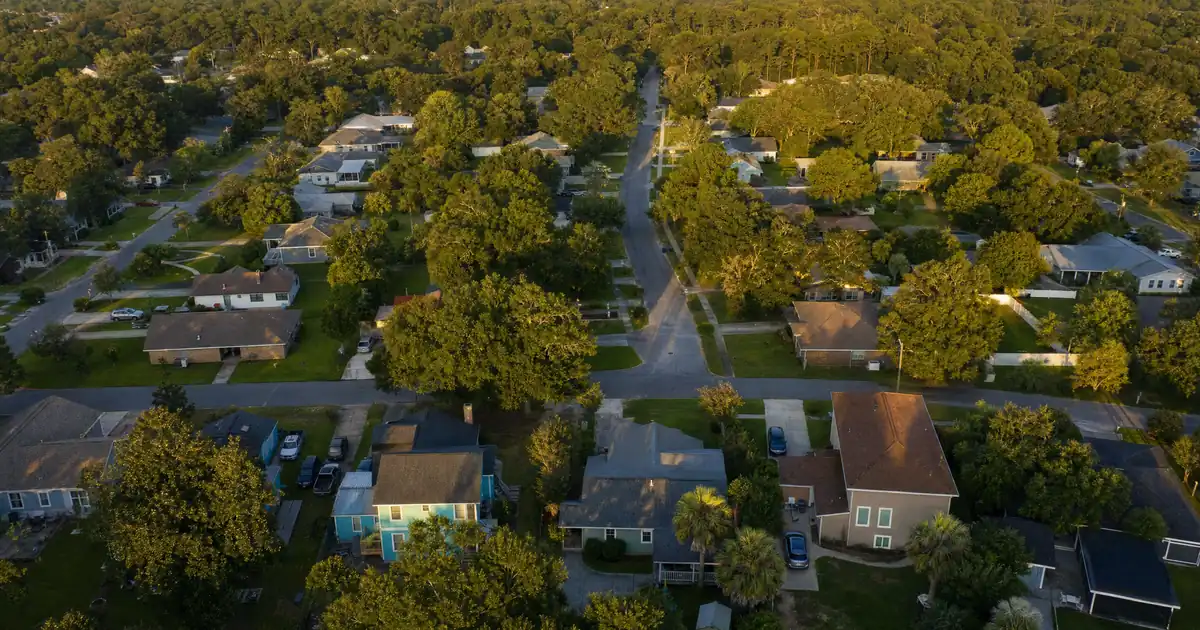
Property loans in Orange Beach draw investor interest partly because Columbia Southern University enrolls 17,763 students — every one of them studying online, per NCES College Navigator data. What makes that number matter for an investor isn’t the enrollment count. It’s where the university keeps its lights on. Columbia Southern’s corporate headquarters sits inside Orange Beach city limits, staffed by an estimated 500 to 1,000 employees who report to an office park, not a beach chair. That’s the detail most beach-town lending write-ups skip past. Orange Beach isn’t only a tourist economy stacked on condo towers. It’s a tourist economy with one genuine white-collar employer bolted onto the side of it, sitting next to a hospitality workforce numbering in the tens of thousands.
DSCR Calculator
Run the numbers in your market
Rate source: Freddie Mac 30-yr average via FRED® — Federal Reserve Bank of St. Louis · effective Jul 30, 2026
Prefilled with starting assumptions — enter your own rent or nightly figures, taxes, insurance, and HOA for a more accurate picture.
Program parameters update from Lendmire’s centralized guideline source. Taxes and insurance are editable estimates.
As of Jul 30, 2026 · General Freddie Mac market benchmark, not a Lendmire loan offer. Rent, nightly rate, occupancy, taxes, and insurance are editable estimates. Short-term rental figures are estimates only and vary significantly by season, property type, management approach, and local short-term-rental rules — confirm local regulations before relying on them. Qualifying income for short-term rentals varies by program — some use appraisal market rent, others use documented STR history or projections — and is confirmed in underwriting. Not a Loan Estimate, approval, or commitment to lend. Program availability and eligibility are subject to lender guidelines, credit approval, property review, and underwriting.
TL;DR: In Orange Beach, Alabama, a DSCR file is underwritten primarily on the property’s rental income measured against its full monthly obligation — principal, interest, taxes, insurance, and any HOA dues — with condo rental bylaws and flood-zone status reviewed alongside the numbers, subject to lender guidelines.
- Terry Cove and Bear Point favor long-term-lease math over Gulf-front condo purchases.
- Broadmoor and The Pass are rent-restricted; STR income can’t be underwritten there.
- Condo resale supply expanded from 2-4 months to 11-17 months of inventory, per SearchTheGulf.
- Median home price sits at $705,000, up 8.0 percent year over year, per Redfin.
- True duplex and triplex stock is just 5.17 percent of the housing base, per NeighborhoodScout.
Orange Beach Market Snapshot
A quick read on the Orange Beach investor landscape — figures come from the cited sources below. Confirm current property-level numbers before underwriting.
| Metric | Detail |
|---|---|
| Home prices | $705K median sale price (+8.0% yoy) (Redfin Housing Market Data) |
| Typical rents | $1,746 average (RentCafe Average Rent & Market) |
| Population | 8,407 population (Census Reporter) |
| Employment | 1,200+ employees (Indeed) |
Two Economies, One Zip Code
Orange Beach’s population sits at 8,407, with a median household income of $97,736 — roughly 25 percent above the Daphne-Fairhope-Foley metro and about 1.5 times the Alabama state figure, per Census Reporter’s ACS 2024 five-year profile. Median age runs 50.6, well above the state median of 39.3. This is not a young workforce town in the traditional sense. It’s a second-home and retirement-adjacent market layered on top of a tourism engine that, per the Alabama Tourism Department, employs more than 63,600 workers across Gulf Shores and Orange Beach combined. That same tourism office has backed a proposed housing facility for up to 2,000 seasonal workers — a public acknowledgment that the labor supporting this economy has nowhere affordable to live. For an investor holding a modest, non-Gulf-front rental, that’s not a footnote. That’s demand.
The Wharf at Orange Beach anchors the other side of the ledger. It’s Alabama’s first Entertainment District, built around a 10,000-seat amphitheater and a 200-slip marina, and it draws 3.9 million of the region’s roughly 8 million annual visitors specifically to that development. It’s also one of the largest single employers inside city limits — retail, food service, entertainment, property management. Between The Wharf’s payroll and Columbia Southern’s headquarters staff, Orange Beach has something most Gulf Coast resort towns its size don’t: a slice of year-round, non-seasonal renters who need a lease in December just as much as they do in July.
Terry Cove and Bear Point: Where the Lease Math Actually Works
Terry Cove is the strongest long-term-rental submarket in Orange Beach, and it’s not close. Single-family homes and waterfront properties with private boat slips dominate here, and the growing interest in permanent residential living has pushed steady demand for standard 12-month leases rather than week-to-week turnover.
That doesn’t mean the math is easy. Apartment Home Living data puts Orange Beach’s SFR and condo rental range at $1,200 to $4,200 a month, averaging $2,165 — figures that sit uncomfortably close to today’s acquisition costs. Run a modeled scenario: a single-family rental in the Terry Cove area priced at $525,000, financed at 75 percent LTV (25 percent down), carrying an assumed monthly rent of $2,850. Modeled PITIA — 30-year amortization using typical financing-cost assumptions, plus Alabama-average property tax and insurance loads factored in qualitatively — comes in high enough that the rent-to-debt ratio lands around 0.96x, below the 1.00x benchmark most standard DSCR programs are built around, since rent covers the payment in full only at that level.
That’s not a dead file. It’s a file that needs a different structure. Some lenders will review sub-1.00 scenarios with stronger compensating factors — additional reserves, lower leverage, or a blended income approach — and interest-only structuring can also change the coverage math. All of that is subject to lender guidelines, credit profile, and property review, not a guarantee.
Here’s the workaround Bear Point offers instead. One listing there shows a raised beach cottage with two separate living quarters — a main upstairs unit plus a ground-floor suite with its own entrance, kitchen, and full bath, not even counted in the tax-record square footage. That’s a naturally occurring second income stream inside a single-family shell, appraised and financed as one property rather than triggering multi-family or condo underwriting friction. Model that same purchase at a comparable leverage point, combining the main unit’s rent with the suite’s rent, and modeled coverage clears meaningfully above the 1.00 mark — roughly 1.22x, versus about 0.96x when only the main unit’s rent is counted. Same leverage, same neighborhood tier, roughly a quarter-point of coverage difference, purely because the property carries two rent rolls instead of one.
Working DSCR brokers see a recurring pattern in condo-dominant coastal markets like this one: single-unit long-term rentals routinely come in tight or sub-1.00 on standard 12-month lease comps, while any property carrying a second legal or de facto income stream — an in-law suite, a detached unit, a duplex configuration — clears coverage with meaningfully more room, which is exactly why files with stacked income get flagged early rather than treated as an afterthought.
The Perdido Beach Boulevard Corridor: Strong Averages, Rough Edges
Gulf-front condos here run hot on paper and thinner on stability. The Perdido Beach Boulevard corridor, plus the Phoenix complexes and the Tidewater and Regency Isle buildings near Perdido Pass, make up Orange Beach’s tourist-facing condo core. Listings span roughly $250,000 for modest one-bedroom units up past $1 million for premium beachfront stock, most in the 700 to 1,800 square foot range.
Rabbu’s short-term rental data shows why investors chase this corridor: 1,075 active Airbnb listings citywide, averaging $57,519 in annual revenue per property at a $191 average daily rate and 42 percent occupancy — both figures notably below and above, respectively, Alabama’s statewide averages. Model a $450,000 condo purchase at 75 percent LTV against that citywide average annual revenue (roughly $4,793 a month), and modeled coverage against the same PITIA base used in the Bear Point example comes out near 1.9x on paper.
Here’s the catch. That annual average flattens a brutal seasonal curve. July averages $13,979 in revenue — more than ten times December’s $1,189. March holds up as a strong shoulder month on spring-break traffic, but the trough months matter for reserve planning, not just the peak. A lender reviewing STR income typically wants to see that seasonality reflected in a stabilized rent figure or a market-rent schedule, not the peak month extrapolated across twelve.
There’s also a bylaw trap specific to this corridor. Broadmoor and The Pass are explicitly rent-restricted buildings — meaning STR income there can’t be underwritten at all, regardless of how the surrounding market performs. Regency Isle, a 12-story development offering 1,300 to 1,600 square foot two- and three-bedroom units, sits in the same district but doesn’t carry that restriction. Before a purchase contract goes anywhere near underwriting, pulling the condo association’s rental bylaws is a five-minute check that saves a week of file rework later. See how the DSCR math pencils on a specific condo before assuming Airbnb income is automatically usable.
Ono Island and Old River: The Quiet Money Corner
Ono Island is a gated, bridge-access community with high-end homes on deep-water canals or the Intracoastal Waterway — a few hundred residents, total isolation from the rest of the city, and a tenant profile skewed toward affluent primary and second-home owners rather than standard renters. It doesn’t fit a conventional long-term-rental DSCR strategy well; it fits a luxury furnished-rental play, and the underwriting there leans harder on comparable furnished-rental comps than on typical lease data.
Old River, near the Alabama-Florida line, is the more interesting play for a cash-flow-minded investor. Bella Luna, built in 2006, offers upscale finishes with views of Old River, Ono Island, and the back bays — but backwater and canal-front product here generally carries a lower acquisition cost per square foot than direct Gulf frontage. That’s a real DSCR lever. RealtyTrac data shows single-family homes citywide running roughly $33 per square foot above condos on average, even as condo list-price-per-square-foot has been climbing faster short-term — up 9.38 percent recently versus 1.93 percent for single-family. Translation: condo pricing is more volatile right now, single-family carries the steadier equity base, and Old River’s canal-front product often threads the needle between the two.
Multi-Family Is Scarce Here, and That’s the Point
Genuine 2-4 unit properties barely exist in Orange Beach — just 5.17 percent of the housing stock, against 68.77 percent large condo and apartment towers and 23.73 percent single-family detached, per NeighborhoodScout. Redfin’s multi-family listing data puts the current median list price for what little inventory exists at $695,000.
This cuts against the instinct investors bring from inland workforce metros, where duplexes and fourplexes are the cheap, abundant income-stacking play. Not here. Multi-family in Orange Beach is thin and competed-for, which means it gets priced at a premium rather than a discount to single-family. Investors chasing classic multi-unit stacking will generally find far more inventory — and better basis — in nearby Foley or Baldwin County’s unincorporated pockets than inside Orange Beach city limits itself. Inside the city, the Bear Point-style single-family-with-a-suite is the more realistic income-stacking play, not a platted duplex.
What Changes Here Over the Next Two Years
The condo side of this market is telling an oversupply story, not an appreciation story. Resold condo months-of-supply sat in a tight 2-to-4-month band in 2021 and 2022. By 2024 and 2025, it had expanded into double digits, briefly touching 15 to 17 months, per SearchTheGulf’s local brokerage analysis. Early 2026 data still shows an elevated 11-to-12-month range — down from the peak, but nowhere near the tight market that fueled the last cycle’s appreciation thesis.
Layer a valuation-history signal on top of that. Orange Beach home values have nearly doubled since 2010 and currently sit an estimated 48 percent above historical trend, according to a Home Stratosphere analysis — the same market that logged a 13.7 percent single-year price drop in 2011 and has already recorded a 2.7 percent pullback from its most recent peak. This one’s a genuine toss-up: the rental-demand fundamentals (Columbia Southern, The Wharf, the documented workforce housing gap) argue for staying power, but the condo supply data and the correction precedent argue for conservative comps on any purchase priced near the top of the current cycle. An investor modeling a future cash-out position off today’s appraisal should discount current comps rather than assume this pricing tier holds — a consideration the investor refinance breakdown covers in more depth for anyone planning that exit later.
Days on market already reflect the softening: homes sold after an average 145 days in the most recent reporting period, up from 80 days a year earlier, even as unit sales ticked up to 63 for the month. Slower turnover with more units moving is a market resetting its price discovery, not one collapsing — worth tracking over the next several quarters rather than reacting to in the moment.
DSCR vs. conventional financing
Two common ways to finance an investment property in Orange Beach, AL. They qualify you differently — here’s how investors weigh them.
Why investors choose it
- Qualifies on the property’s rental income — no personal tax returns, W-2s, or pay stubs needed to document income.
- No personal debt-to-income ceiling to clear, so existing mortgages and obligations don’t cap your borrowing the same way.
- Can be closed in an LLC, keeping the property inside a business entity.
- Built for scaling — not held to the limit on number of financed properties that conventional financing applies.
- Underwriting centers on the deal: generally qualifies when the rent covers the payment, a 1.00x coverage ratio being a common baseline (confirmed in underwriting).
- Designed specifically for investment property, including long-term and, where the program allows, short-term rentals.
Where it’s strong
- Often the lowest ongoing financing cost for a buyer who fully qualifies on personal income — a fit for a first property or a cost-first purchase.
Trade-offs for investors
- Requires full personal income documentation and must fit within a debt-to-income limit — salary, existing debts, and other mortgages all count.
- Typically held in your personal name rather than a business entity.
- Caps how many financed properties you can carry, which can become a ceiling as a portfolio grows.
- Evaluates you as a borrower as much as the property, which usually means more paperwork.
How investors usually choose: a first or single property often optimizes for the lowest financing cost; portfolio builders often optimize for leverage, vesting in an LLC, and scaling past conventional caps. The right answer depends on your goals, the property, and current guidelines — both paths run through select lenders in Lendmire’s wholesale network, with eligibility and terms confirmed in underwriting.
Where the DSCR Math Actually Pencils
Most standard DSCR purchase programs in this market run 75 to 80 percent LTV, meaning roughly 20 to 25 percent down, with a minimum debt-coverage floor generally set at 1.00x — rent covering the full payment at that threshold. Some files clear at higher leverage, up to 85 percent on the strongest credit and reserve profiles when program guidelines allow it, while credit tiers across the available programs generally start near 620 and step up toward 700 for the highest-leverage options. Reserve requirements typically run around six months of PITIA, stepping up toward nine months on loans above $1.5 million — relevant here given how many Gulf-front units clear that threshold. Most of these purchases close in an LLC, subject to lender program eligibility, which is standard practice for investor-titled Gulf Coast product. All of this sits subject to lender overlays, and none of it is a guarantee of approval — a lender still has to review the specific property, the borrower’s file, and the numbers as submitted.
The practical read for Orange Beach: Terry Cove and Bear Point-style single-family purchases need either a strong down payment cushion or a stacked-income property to clear standard coverage on straight long-term lease math, while Gulf-front and STR-corridor condos clear coverage more easily on paper but carry rental-bylaw and seasonality risk that a standard lease-based file doesn’t. The DSCR fundamentals explain how that ratio gets calculated in more general terms, and DSCR versus conventional financing lays out why rental-income underwriting suits an investor who doesn’t want traditional personal-income documentation driving the qualification.
Frequently Asked Questions
Can a rent-restricted condo like Broadmoor or The Pass qualify for a DSCR purchase loan in Orange Beach? Not on projected short-term rental income — those buildings’ rental bylaws restrict short-term leasing, so any DSCR file there needs to underwrite on long-term lease income instead. Pulling the association’s rental restrictions before contract is the step that prevents a mid-file surprise.
Does the current condo oversupply affect financing on Gulf-front units? It can affect the comps an appraiser leans on and the rent projections a lender is willing to credit. With resale condo supply running in the 11-to-12-month range as of early 2026 versus 2-to-4 months a few years earlier, appraisals and rent schedules on Gulf-front product deserve a conservative read rather than an assumption that recent peak pricing holds.
How does Columbia Southern University affect rental demand outside tourist season? Its headquarters staff — an estimated 500 to 1,000 employees — need housing year-round, independent of visitor traffic, which supports steady off-season demand for workforce-oriented rentals near the city core rather than the vacation-driven swings that hit Gulf-front condos.
Is a duplex or ADU-style property easier to finance here than a Gulf-front condo? Often, yes, on the income side — a single-family property with a legal second unit (like the Bear Point-style cottage-plus-suite layout) can produce stronger modeled coverage than a standalone rental, without triggering condo-association or multi-family underwriting complexity. True duplex and triplex stock covers only 5.17 percent of the local housing base.
What down payment does a typical Orange Beach investment purchase require? Most standard DSCR purchase programs run 20 to 25 percent down at 75 to 80 percent LTV, with some files reaching 85 percent LTV on stronger credit and reserve profiles — all subject to lender guidelines and program eligibility, and review details are subject to lender overlays.
Why does Terry Cove’s rental math run tighter than the STR corridor’s? Terry Cove leans on standard 12-month lease rents, which citywide average $2,165 against acquisition prices that have climbed 8.0 percent in the past year — a narrower spread than STR-corridor condos, which draw on Rabbu’s average $57,519 in annual short-term revenue per property, though that STR average carries its own seasonal volatility that a long-term lease doesn’t.
Lendmire arranges purchase-money DSCR loans for investors evaluating exactly this kind of split market, and a call to 828-256-2183 is a reasonable next step before locking in a specific submarket strategy. For investors comparing this footprint against other Gulf Coast counties, Alabama DSCR investor loans covers the state-level program parameters that apply across Baldwin County broadly, while the DSCR investor loan platform outlines how the same underwriting approach carries across Lendmire’s other markets.
Lendmire operates as a non-QM mortgage broker working with investors — Washington, D.C. included — structuring DSCR files that generally qualify on a property’s rental income rather than a borrower’s pay stubs or traditional personal-income documentation, always subject to lender guidelines. The firm places loans through wholesale investor-lender channels rather than funding them directly, and carries NMLS# 2371349.
So which side of Orange Beach’s split economy does an investor’s next purchase actually belong to — the tourist-driven condo cycle that’s still working through its supply glut, or the quieter, workforce-anchored rental base that Columbia Southern and The Wharf keep occupied twelve months a year?
For current guidelines and terms, see Lendmire’s DSCR loan programs page.
About Lendmire
Lendmire (NMLS# 2371349), a non-QM mortgage broker serving investors in 41 markets including Washington, D.C., helps structure DSCR scenarios commonly evaluated around a property’s rental income rather than personal income paperwork, subject to lender guidelines. A Scotsman Guide Top Mortgage Workplace in 2025 and 2026, Lendmire places loans through wholesale investor lenders and is not a direct lender.
Get Started
Ready to find the right loan for you?
In about 30 seconds you can review financing options available for your investment property. No commitment required.
Informational only. Not a Loan Estimate, approval, or commitment to lend. Program availability and eligibility are subject to lender guidelines, credit approval, property review, and underwriting.
References
1. NCES College Navigator — Columbia Southern University
2. Census Reporter — Orange Beach, AL ACS 2024 Five-Year Profile
3. Redfin — Orange Beach Housing Market Data
4. NeighborhoodScout — Orange Beach Real Estate Profile
5. RentCafe Average Rent & Market
7. Indeed
8. RealtyTrac — Orange Beach Market Trends
9. a 2025 Scotsman Guide Top Workplace
10. a 2026 Scotsman Guide Top Mortgage Workplace
This article is part of Lendmire’s DSCR loan program — full qualification details, guidelines, and scenarios live on the program page.
Related reading: Cash Out Refinance Investment Property Orange Beach Alabama · DSCR Cash Out Refinance Orange Beach Alabama · Cash Out Refinance Investment Property in Davie, Florida: The 2026 DSCR Guide to the Orange Drive Corridor
Guides: DSCR Loans in Orange Beach, AL · DSCR Loans in Alabama
Brandon Miller
Founder & CEO, Mortgage Loan Originator, Lendmire LLC
- Mortgage Loan Originator · NMLS# 1129696 · Verify on NMLS Consumer Access
- North Carolina Real Estate Broker · License# 343312 · Verify on NCREC
- North Carolina Insurance Producer · License# 19053198 · Property, Casualty, Life, Health · Verify on NAIC SBS
- Lendmire LLC · Firm NMLS# 2371349 · Verify firm licensure
Compliance and disclosures. Lendmire (NMLS# 2371349) is a licensed mortgage broker and is not a direct lender, depository institution, financial advisor, or tax professional. Content in this article is general market analysis and educational information — not financial, legal, or tax advice for any specific situation. Lendmire does not guarantee loan approval; every transaction is subject to underwriting by the funding lender. Mortgage pricing and loan program guidelines are subject to change at any time without notice and vary by borrower characteristics, property type, and state regulations. Lendmire complies with Equal Housing Opportunity. Licensure verification: NMLS Consumer Access.