
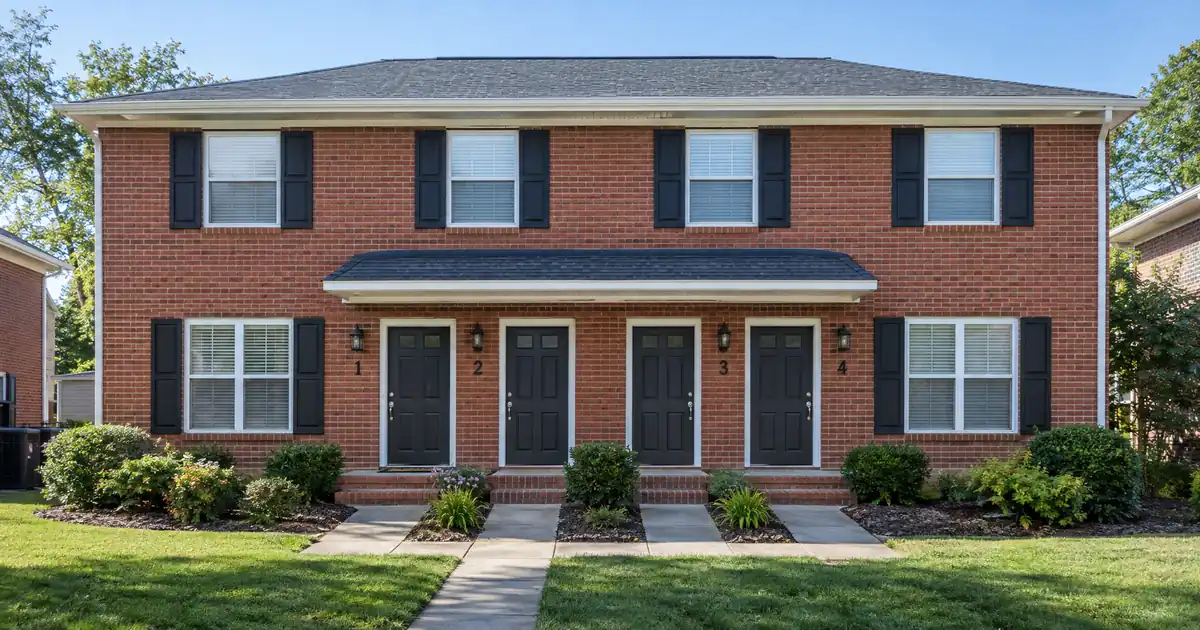
An investor pulls up a single-family listing on Chicago’s North Side, runs the asking rent against the price, and the ratio doesn’t clear the payment. Not a fluke. It’s the single most common mistake first-time buyers make chasing an investment property loan in this market. Chicago’s rental economics don’t run through single-family stock the way they do in Phoenix or Charlotte — they run through two-flats and three-flats, the city’s signature small-multifamily housing form, and until an investor understands why, most single-family purchases above roughly $400,000 simply won’t clear a lender’s coverage floor.
This piece works through where Chicago investment property loan math actually pencils — by building type, by submarket, and against current price and rent levels — and where it doesn’t, before the appraisal even gets ordered.
DSCR Calculator
Run the numbers in your market
Rate source: Freddie Mac 30-yr average via FRED® — Federal Reserve Bank of St. Louis · effective Jul 30, 2026
Prefilled with starting assumptions — enter your own rent or nightly figures, taxes, insurance, and HOA for a more accurate picture.
Program parameters update from Lendmire’s centralized guideline source. Taxes and insurance are editable estimates.
As of Jul 30, 2026 · General Freddie Mac market benchmark, not a Lendmire loan offer. Rent, nightly rate, occupancy, taxes, and insurance are editable estimates. Short-term rental figures are estimates only and vary significantly by season, property type, management approach, and local short-term-rental rules — confirm local regulations before relying on them. Qualifying income for short-term rentals varies by program — some use appraisal market rent, others use documented STR history or projections — and is confirmed in underwriting. Not a Loan Estimate, approval, or commitment to lend. Program availability and eligibility are subject to lender guidelines, credit approval, property review, and underwriting.
The Quick Read: In Chicago, Illinois, an investment property loan is underwritten primarily against the rent a two-, three-, or four-unit building generates relative to its full monthly obligation, not against a single-family comp — a distinction that decides whether a purchase clears coverage before financing terms even enter the conversation.
- Two-flats and three-flats carry rent-to-price ratios of 8 to 12 percent, roughly double comparable single-family stock.
- South Shore, Pullman, and Harvey post the strongest cash-flow coverage; premium North Side blocks post the tightest.
- Citywide apartment vacancy sits near a 20-year low, per MetLife Investment Management, tightening rent rolls broadly.
- West Loop and Fulton Market carry the heaviest new-supply pipeline in the city — a risk worth pricing in.
- Standard program guidelines call for roughly 25 percent down and a 1.00x coverage benchmark.
Chicago Market Snapshot
A quick read on the Chicago investor landscape — figures come from the cited sources below. Confirm current property-level numbers before underwriting.
| Metric | Detail |
|---|---|
| Typical rents | $1,877/month average (CoStar) |
| Recent appreciation | 5-6% vs 3-4% (Chicago’s Property Management) |
| Cap rates | ~6% cap rates (JPMorgan Chase Commercial) |
| University enrollment | 17,384 total students (CollegeTuitionCompare) |
| Population | 2,741,640 population (Fox 32 Chicago) |
Why Ordinary Single-Family Rentals Struggle Here
Chicago’s citywide median home price sits at $409,200, per the Chicago Association of Realtors — high enough that ordinary single-family rentals often can’t generate the rent needed to clear a lender’s coverage floor on their own. The fix isn’t a different loan. It’s a different building.
Local market analysis puts typical rent-to-price ratios for two-flats and three-flats in strong corridors at 8 to 12 percent annually, nearly double what a comparable single-family rental delivers at the same price point. One documented example: a $350,000 two-flat generating $3,600 in monthly rent — a 12.3 percent ratio — clears coverage in a range most single-family purchases in the same price band simply can’t touch. Classic brick two-flats in Jefferson Park run $2,400 to $3,600 a month in combined rent, while renovated multi-unit buildings in Logan Square can command $7,000 to $12,000-plus. Split across two, three, or four units, one building generates rent that no single-family home nearby will match. Citywide average rent runs $2,521 per unit, per RentCafe — a solid number for one apartment, but that rent multiplies once a building holds more than one unit.
For investors newer to this financing type, the DSCR fundamentals explain how qualification runs on the property’s rental income rather than personal income documentation. Compared with a conventional investment loan, this approach skips debt-to-income math entirely and looks at what the building itself produces — see the guide “Where DSCR and Conventional Diverge” for the full breakdown. Chicago sits inside Lendmire’s broader footprint for DSCR loans in Illinois, which matters here specifically because the state’s small-multifamily stock is unusually well suited to rent-based underwriting.
The South and West Side Yield Corridors
Bronzeville, Pilsen, and the far North Side deliver the strongest combination of entry price and appreciation for Chicago DSCR investors — Bronzeville alone has posted roughly 25 percent year-over-year price growth off a median sale price near $305,000. That’s not typical, and it won’t repeat every year, but it explains why South Side small-multifamily is drawing capital that used to default to the North Side.
Logan Square runs a different profile: homes averaging around $450,000 with rents near $2,000 a month, alongside one measure of home values up 24.6 percent year-over-year, with multiple-offer situations on quality listings. Tenant demand skews toward young professionals and artists priced out of neighboring Wicker Park and Bucktown, and the dense two-flat and three-flat stock here makes it a legitimate small-multifamily target rather than a pure single-family play.
Pilsen and the broader Lower West Side show a median detached home price of $569,313, up 7.2 percent, with historic two-flat and three-flat density that supports the same rent-stacking logic seen in Bronzeville and Logan Square. Rogers Park and Edgewater sit at the opposite end of the price spectrum — medians running $275,000 to $350,000 — offering the lowest entry point in the city, anchored by Loyola University Chicago’s Lake Shore Campus, which enrolled 17,384 students in the most recent academic year. That’s a durable renter base for a corridor that trades lower price for a longer commute and more block-by-block variation in property condition.
South Shore, Pullman, and Harvey get described in industry commentary as the city’s maximum-yield corridor — the South Side and South suburbs generally. That reputation is earned on price-to-rent math, but it comes with a caveat: these areas require deeper diligence on property condition and rehab scope than a turnkey North Side listing, and investors should budget accordingly rather than assume yield alone tells the whole story.
Lincoln Park or Lakeview — Appreciation or Cash Flow?
Lincoln Park and Lakeview sit blocks apart on Chicago’s North Side and answer two different investment theses. Lincoln Park has historically appreciated around 5 to 6 percent annually with vacancy near 3 percent, per Chicago’s Property Management; Lakeview runs 3 to 4 percent appreciation with vacancy closer to 4 percent, but at a lower entry price.
That’s the split. Lincoln Park is the appreciation-led play — buy, season, let equity build behind low vacancy and premium demand from families drawn to the neighborhood’s park system and lakefront access. Lakeview is the cash-flow-led play — lower purchase price, coverage that works from closing rather than after a few years of rent growth. This one’s a genuine toss-up: Lincoln Park’s appreciation is real, but the higher entry price leaves less first-year cushion than Lakeview’s rent-to-price profile offers. Modeling both scenarios before committing to either corridor is the responsible move, not a shortcut.
West Loop’s Downtown Halo Comes With a Catch
West Loop and the Near West Side benefit from proximity to CME Group, headquartered in Chicago and operating the Chicago Mercantile Exchange, Chicago Board of Trade, NYMEX, and COMEX as the world’s leading derivatives marketplace — a high-earning tenant pool that no comparable Midwest metro can replicate. Near West Side attached homes carry a median price of $415,000, up 1.2 percent, per local market data, showing steady rather than explosive demand.
The Illinois Medical District adds another anchor: Rush University Medical Center employs nearly 10,000 people directly, with more than $550 million in annual spending, inside a 560-acre medical district that is one of the largest in the country. The University of Illinois Chicago enrolls more than 33,000 students, including a large international population from over 100 countries, per University Living — hospital shift workers and off-campus students make for a tenant base that doesn’t disappear in a soft economic cycle.
Here’s the catch. West Loop and Fulton Market carry the heaviest proposed apartment pipeline in the city, with 806 adaptive-reuse units scheduled downtown and another 3,921 proposed, per Chicago Agent Magazine. That’s happening even as citywide vacancy sits near a 20-year low overall (the tightening is real, but it isn’t evenly distributed). An investor buying a small multifamily conversion in that specific corridor should stress-test rent growth against a supply wave the rest of Chicago simply isn’t facing.
Run the Numbers: A Three-Flat Scenario
Consider a scenario where an investor targets a fully leased three-flat listed near $475,000 in one of Chicago’s off-Loop corridors, with in-place rents of $1,850, $1,850, and $1,700 a month — a gross rent roll of $5,400 monthly, or $64,800 annually, producing roughly an 8 percent cap rate on in-place income, per a current Chicago-area brokerage listing.
Modeling that rent roll against a full monthly obligation — principal and interest at standard program terms, Illinois’s average property tax load near 2.08 percent of value annually, and insurance near 0.35 percent — produces coverage north of 1.4x at a 25 percent down, 75 percent LTV purchase structure. That’s well clear of the 1.00x benchmark most standard DSCR programs use as a baseline, though exact eligibility still depends on credit profile, reserves, and lender overlays. (Chicago’s appraisal comps for two- and three-flat sales can run thin outside the strongest corridors, which is worth flagging before an offer goes in.)
DSCR files in markets with heavy two-flat and three-flat stock, like Chicago, typically arrive with two rent rolls attached: one for occupied units, one modeled on market rent for anything vacant. Files supported by signed leases rather than a rent survey alone tend to face fewer underwriting follow-ups. Single-family workforce rental files in the same price band often show tighter coverage, since Chicago’s 8 to 12 percent two-flat rent-to-price ratios simply don’t show up in $400,000-plus single-family stock.
Program guidelines generally call for around six months of PITIA reserves on a loan this size, rising toward nine months above $1,500,000, with credit tiers stepping from 620 up to 700 affecting leverage and pricing — all subject to lender guidelines and program eligibility. Loan sizes on standard programs run up to $3,000,000, with smaller balances routed through select lenders in the network. Many Chicago two-to-four-unit purchases close in an LLC’s name, which is workable subject to lender program eligibility on the specific product. Investors modeling a building like this can reach Lendmire at 828-256-2183 or pull a DSCR quote before writing an offer. Investors buying in appreciation-heavy corridors like Bronzeville or Logan Square may eventually look at refi programs once a building has seasoned, though that’s a separate underwriting conversation from the purchase itself.
Frequently Asked Questions
How do you qualify for a DSCR loan in Chicago, Illinois?
Qualification runs primarily on the property’s rent measured against its full monthly obligation — taxes, insurance, and any HOA dues included — rather than personal income documents. Most standard programs look for coverage at or near 1.00x, with credit tiers generally starting near 620 and improving pricing and leverage at 660, 680, and 700. Reserves, property type, and lender overlays all factor into the final review.
What are the requirements for an investment property loan in Chicago, Illinois?
Standard program guidelines call for around 25 percent down on a purchase, roughly six months of PITIA in reserves, and a credit score generally starting near 620. Two-to-four-unit properties, which make up much of Chicago’s rental stock, typically qualify under the same framework as single-family rentals, provided the rent roll supports coverage.
DSCR vs. conventional financing
Two common ways to finance an investment property in Chicago, IL. They qualify you differently — here’s how investors weigh them.
Why investors choose it
- Qualifies on the property’s rental income — no personal tax returns, W-2s, or pay stubs needed to document income.
- No personal debt-to-income ceiling to clear, so existing mortgages and obligations don’t cap your borrowing the same way.
- Can be closed in an LLC, keeping the property inside a business entity.
- Built for scaling — not held to the limit on number of financed properties that conventional financing applies.
- Underwriting centers on the deal: generally qualifies when the rent covers the payment, a 1.00x coverage ratio being a common baseline (confirmed in underwriting).
- Designed specifically for investment property, including long-term and, where the program allows, short-term rentals.
Where it’s strong
- Often the lowest ongoing financing cost for a buyer who fully qualifies on personal income — a fit for a first property or a cost-first purchase.
Trade-offs for investors
- Requires full personal income documentation and must fit within a debt-to-income limit — salary, existing debts, and other mortgages all count.
- Typically held in your personal name rather than a business entity.
- Caps how many financed properties you can carry, which can become a ceiling as a portfolio grows.
- Evaluates you as a borrower as much as the property, which usually means more paperwork.
How investors usually choose: a first or single property often optimizes for the lowest financing cost; portfolio builders often optimize for leverage, vesting in an LLC, and scaling past conventional caps. The right answer depends on your goals, the property, and current guidelines — both paths run through select lenders in Lendmire’s wholesale network, with eligibility and terms confirmed in underwriting.
Do two-flats and three-flats qualify for DSCR financing the same way single-family homes do?
Yes, generally — lenders treat 2-4 unit buildings under the same rent-based framework, combining all unit rents against one loan payment. That combined rent roll is exactly what makes Chicago’s small-multifamily stock easier to qualify than comparable single-family homes at similar price points.
Why do coverage ratios vary so much between Chicago’s North Side and South Side?
Price is the driver. North Side neighborhoods like Lincoln Park carry higher purchase prices against rents that haven’t grown proportionally, pushing coverage toward the low end of a typical range. South and West Side corridors like South Shore and Pullman combine lower entry prices with comparable rents, producing meaningfully higher coverage on the same rent-based math.
What documents matter most for a Chicago DSCR cash-out review?
A current lease or rent roll and a recent valuation matter most, since the loan is arranged on the property’s income rather than traditional personal-income documentation or pay stubs. Lendmire (NMLS# 2371349) arranges these programs across 40 states plus Washington, D.C. — 41 markets total — and Illinois files typically move faster through review when signed leases, not rent estimates, back up the income figure.
The clearest blind spot in Chicago’s current market isn’t rent growth or citywide vacancy — both currently favor landlords. It’s supply concentration. West Loop and Fulton Market carry the heaviest new-unit pipeline in the city, even as vacancy elsewhere sits near a 20-year low. An investor buying multifamily in that specific corridor should stress-test rent assumptions against a supply wave the rest of Chicago isn’t facing at all.
About Lendmire
Lendmire (NMLS# 2371349), a non-QM mortgage broker serving investors in 41 markets including Washington, D.C., helps structure DSCR scenarios commonly evaluated around a property’s rental income rather than personal income paperwork, subject to lender guidelines. A Scotsman Guide Top Mortgage Workplace in 2025 and 2026, Lendmire places loans through wholesale investor lenders and is not a direct lender.
For broader investor-financing rules and property-type coverage across the state, see Illinois DSCR loans.
Get Started
Ready to find the right loan for you?
In about 30 seconds you can review financing options available for your investment property. No commitment required.
Informational only. Not a Loan Estimate, approval, or commitment to lend. Program availability and eligibility are subject to lender guidelines, credit approval, property review, and underwriting.
References
1. MetLife Investment Management — Chicago Multifamily Fundamentals
2. CoStar
3. Chicago’s Property Management — Lakeview vs. Lincoln Park
4. JPMorgan Chase Commercial
7. RentCafe / Yardi Matrix — Chicago rent trends
10. Wikipedia — Rush University Medical Center
11. University Living — UIC enrollment
12. Chicago Agent Magazine — Multifamily Market Report
13. a 2026 Scotsman Guide Top Workplace
14. Scotsman Guide — Top Workplaces 2025
This article is part of Lendmire’s DSCR loan program — full qualification details, guidelines, and scenarios live on the program page.
Related reading: DSCR Loans in Chicago, Illinois: Investor Financing for Logan Square, Pilsen, South Shore & Real Estate Investors · Investment Property Loans in Detroit, MI: What It Takes to Qualify on Duplex Rent Here · Cash Out Refinance Investment Property in Harvey, Illinois: The 2026 DSCR Cash-Out Guide for Harvey Investors
Guides: DSCR Loans in Chicago, IL · DSCR Loans in Illinois
Brandon Miller
Founder & CEO, Mortgage Loan Originator, Lendmire LLC
- Mortgage Loan Originator · NMLS# 1129696 · Verify on NMLS Consumer Access
- North Carolina Real Estate Broker · License# 343312 · Verify on NCREC
- North Carolina Insurance Producer · License# 19053198 · Property, Casualty, Life, Health · Verify on NAIC SBS
- Lendmire LLC · Firm NMLS# 2371349 · Verify firm licensure
Disclosures. The information presented in this article is general market commentary, not financial, legal, or tax advice. Lendmire is a mortgage brokerage (NMLS# 2371349) — not a direct lender or depository institution — and loan placement is subject to lender underwriting. Nothing in this content represents a commitment to lend. Loan terms, pricing, and program availability vary based on borrower qualifications, property characteristics, and state of subject property, and are subject to change at any time. Lendmire complies with Equal Housing Opportunity requirements. Consumer access: nmlsconsumeraccess.org.