
Kaumana/Pi’ihonua’s rental vacancy rate sits at 1.7 percent — a tighter market than 87.7 percent of U.S. neighborhoods, according to NeighborhoodScout. That’s the kind of number that gets an investor’s attention before the county tax records even come up. For anyone pricing out investment property loans in Hilo, Hawaii, Kaumana is the workforce submarket where the coverage math actually starts to work — though it doesn’t clear the bar on rent alone, and that gap is worth understanding before an offer goes in.
Key Takeaways: Investment property loans in Hilo, Hawaii are underwritten primarily on the subject property’s rental income measured against its full monthly obligation — principal, interest, taxes, and insurance — rather than the borrower’s traditional personal-income documentation, and Kaumana/Pi’ihonua’s 1.7 percent vacancy rate (NeighborhoodScout) gives underwriters a rare data point of genuine rent stability on the Big Island.
DSCR Calculator
Run the numbers in your market
Rate source: Freddie Mac 30-yr average via FRED® — Federal Reserve Bank of St. Louis · effective Jul 30, 2026
Prefilled with starting assumptions — enter your own rent or nightly figures, taxes, insurance, and HOA for a more accurate picture.
Program parameters update from Lendmire’s centralized guideline source. Taxes and insurance are editable estimates.
As of Jul 30, 2026 · General Freddie Mac market benchmark, not a Lendmire loan offer. Rent, nightly rate, occupancy, taxes, and insurance are editable estimates. Short-term rental figures are estimates only and vary significantly by season, property type, management approach, and local short-term-rental rules — confirm local regulations before relying on them. Qualifying income for short-term rentals varies by program — some use appraisal market rent, others use documented STR history or projections — and is confirmed in underwriting. Not a Loan Estimate, approval, or commitment to lend. Program availability and eligibility are subject to lender guidelines, credit approval, property review, and underwriting.
- Kaumana/Pi’ihonua’s median price runs $586,654 against average rent near $2,890 a month.
- Waiakea/UH Hilo carries a 14.1 percent vacancy rate tied to semester-based turnover.
- Keaukaha’s Redfin-tracked median sale price jumped 39.3 percent to $585,000 in November.
- The 96720 zip code has appreciated 48.30 percent over the past five years.
- Countywide multi-family inventory sits at just 22 active listings.
Kaumana/Pi’ihonua: Workforce Cash Flow With a Real Constraint
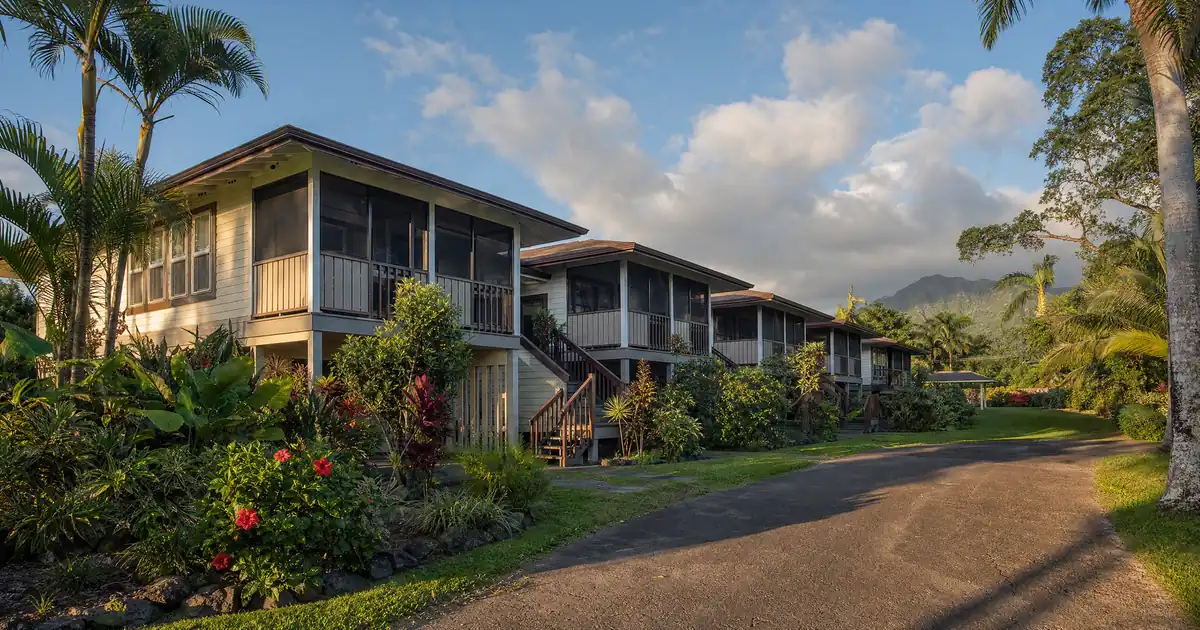
Kaumana/Pi’ihonua is the strongest single-family DSCR submarket in Hilo on paper, but the rent-to-price ratio still comes up short at standard leverage — which is exactly the kind of honest math investors need before they underwrite it. The median real estate price here is $586,654, cheaper than 81.8 percent of Hawaii neighborhoods, per NeighborhoodScout. Average rent runs $2,890 a month. The housing stock is mostly three- to five-bedroom single-family homes built between 1970 and 1999, and 42.7 percent of the working population holds executive, management, or professional jobs — a workforce and professional tenant base rather than a transient one. Nearby Kaumana City Subdivision, near Kaumana Elementary and Kaumana Caves State Park, shows a comparable median sale price around $500,000 per Hawaii Luxury Homes.
Run the numbers on a median-priced Kaumana purchase at 75 percent loan-to-value — 25 percent down, in line with the standard 20-to-25-percent-down band most DSCR programs use. Modeling 30-year principal and interest at a rate in the high-6s alongside Hawaii’s typical property-tax and insurance load, the full monthly obligation lands the $2,890 average rent in roughly 0.90x coverage — modestly under the 1.00x benchmark most standard DSCR programs are built around. That’s not a dealbreaker, but it does mean the file needs a plan. A sub-1.00 program review, a larger equity position, or an interest-only structure are all paths a lender might consider, subject to credit profile, reserves, and underwriting guidelines. The more interesting lever in Kaumana specifically is the detached guest house — one recently renovated Kaumana listing markets a main home with a separate guest structure suited to extended family or a second tenant, per Redfin. Stacking a second rent check onto the same lot, without a formal duplex conversion, is often the difference between a file that clears 1.00x and one that doesn’t. Investors can review how DSCR lender review works before running their own numbers on a specific address.
Waiakea and the University Cycle — Don’t Underwrite It Like a Regular Rental
Waiakea, the submarket surrounding the University of Hawaiʻi at Hilo, is priced too high relative to its rent to work as a standard single-family DSCR hold, and the enrollment data explains why. Median price here is $701,333, per NeighborhoodScout, while average rent runs just $2,488 — lower than 85.7 percent of Hawaii neighborhoods. Vacancy sits at 14.1 percent, well above the national norm. That’s consistent with a campus that’s had a rocky few years: University of Hawaiʻi at Hilo fall enrollment fell 4 percent, from 2,781 students in 2023 to 2,668 in 2024, the third consecutive year of decline, according to the Honolulu Star-Advertiser. Fall 2025 brought a reversal — new freshman enrollment jumped 18.8 percent, outpacing both UH Mānoa and UH West Oʻahu, per UH System News — but one strong semester doesn’t erase a multi-year slide, and DSCR files leaning on trailing rent rolls in this zone should treat the rebound as encouraging rather than settled.
Modeling that same 75 percent LTV structure against the $701,333 median and the $2,488 average rent, coverage falls to roughly 0.65x — well under breakeven on straight single-family lease math. Waiakea’s genuine strength is 19.5 percent of residents currently enrolled in college and one of the shortest average commutes in the country, at 63.4 percent under fifteen minutes — real demand, just not demand that a standard single-family purchase captures at today’s prices. This is a submarket built for small multifamily or room-by-room product, not a median-priced house rented to one household.
Keaukaha: More Affordable Entry, but the Numbers Don’t Agree With Each Other
Keaukaha has been the affordability play in Hilo, and it’s also the one submarket where two credible sources give meaningfully different numbers — worth flagging rather than smoothing over. Hawaii Luxury Homes lists Keaukaha’s median home value at $418,600, well under the statewide median. More recent transaction data from Redfin puts the November median sale price at $585,000, up 39.3 percent year over year, at $600 per square foot. That gap likely reflects how fast this coastal, Hawaiian Homestead-adjacent community has repriced in a short window rather than a contradiction between the two figures — Redfin’s number is newer and transaction-based, the older figure reflects a broader valuation snapshot. The market itself isn’t fast by Hawaii standards; homes here sell in 68 days on average. Keaukaha’s tenant base leans multigenerational and workforce, with deep ties to fishing and the ocean, near Richardson Beach Park and Wailoa River State Recreation Area. No independently verified rent figure exists for this submarket yet, so any DSCR coverage estimate here would be a guess rather than a number worth building a file around — investors buying in Keaukaha should pull current rent comps locally before underwriting.
Town Center/Pu’u’eo, Hilo West, Ainaola Park, Hilo Southeast, Wainaku, Hilo South, and Hilo East are all tracked NeighborhoodScout submarkets, but none of them turned up independently verified price or rent figures in this review pass. Downtown Hilo’s walkability to Bayfront and the county offices is real, but without hard comps, it’s not a submarket worth forcing numbers into. Investors interested in that corridor should pull current listing data directly rather than rely on citywide averages.
Multi-Unit Property in Hilo Runs a Completely Different Math Model
Hilo’s older plantation-era housing stock produces multi-unit conversions that don’t behave like a standard duplex or fourplex, and treating them the same way is a common underwriting mistake. One active downtown listing markets a “high-cash-flow” property priced at $495,500 with nine rentable rooms, three bathrooms, and two full kitchens — a room-by-room rental structure rather than a unit-by-unit one, per Homes.com. A separate Hilo listing describes a 15-unit congregate dwelling converted from a single-family residence, with the lower level’s six units renting for $350 a month each, per Homes.com. In a structure like that, door count — not per-unit rent size — is what clears the coverage ratio, and averaging it against a standard 2-4 unit DSCR model would badly understate its cash flow.
The catch is the comp pool. Only 22 multi-family homes and duplexes were listed for sale across all of Hawaii County at the time of this research, and the ones that do sell move in about 65 days. That’s a thin dataset for an appraiser to lean on, and it means appraised value on any Hilo multi-unit purchase or eventual DSCR refinance can swing wider than it would in a deeper market. Pulling an independent comp set before assuming a specific value is worth the extra step here.
DSCR files in markets with this kind of shallow multi-unit comp pool typically come in looking stronger on paper than the appraisal ultimately supports — a couple dozen listings across an entire county isn’t much for a review appraiser to triangulate against. The stronger files usually pair the listing agent’s comps with an independent set pulled by the investor’s own broker before the loan goes to underwriting, rather than assuming the listing price reflects value.
The Employment Base Behind the Rent Roll
Hilo’s tenant demand doesn’t run on tourism the way Kona’s does, and that shows up in who’s actually paying rent. Hilo Benioff Medical Center employs 1,500 people, including 250 community physicians, physician assistants, and Advanced Practice Registered Nurses across 33 specialties. It’s a Level III Trauma Center handling more than 46,000 patients a year, per its LinkedIn profile — round-the-clock staffing that produces shift-work renters who prioritize proximity over ownership. KTA Super Stores, headquartered in Hilo, employs close to 900 associates across eight Hawaii Island locations, per Wikipedia — a locally rooted, non-cyclical employment base. County of Hawaii government, headquartered at the Aupuni Center in Hilo, carries an employee range of 1,000 to 5,000, according to Glassdoor — public-sector jobs that anchor rent stability in workforce submarkets like Kaumana far more than any single tourist season would.
The Hilo CDP population runs 50,404, with median household income at $81,779 and per capita income at $41,708, per Census Reporter’s presentation of American Community Survey data. Zoomed out to the zip level, 96720 ranks fourth among Hawaii’s residential investment markets, with 48.30 percent appreciation over the past five years and an affordability ratio of 6.6 — the fifth most affordable market among the 176 evaluated statewide, according to Clever Real Estate. That combination — appreciation without Kona-level pricing — is the core argument for buying here now rather than waiting.
Investors comparing structures should understand where DSCR and conventional diverge before deciding how to title and finance a Hilo purchase, particularly for anyone building a multi-property LLC portfolio rather than buying under their own name.
Frequently Asked Questions
How do you qualify for a DSCR loan in Hilo, Hawaii?
Qualification centers on the subject property’s rent measured against its full monthly obligation rather than the borrower’s personal income documents. Most standard programs work around a 1.00x benchmark, with typical purchase leverage running 75 to 80 percent loan-to-value and credit profiles reviewed against tiers commonly starting near 620, subject to lender guidelines and property-level review.
What are the requirements for an investment property loan in Hilo, Hawaii?
Programs generally look for roughly 20 to 25 percent down, reserves around six months of the property’s monthly obligation, and a rent figure that supports the payment at or near a 1.00x coverage ratio. Loan amounts on standard programs commonly run up to $3,000,000, with reserve requirements stepping up on larger balances, all subject to lender program eligibility.
Why is Waiakea’s vacancy rate so much higher than Kaumana’s?
Waiakea sits directly adjacent to University of Hawaiʻi at Hilo, and its vacancy rate is 14.1 percent. Kaumana’s workforce and professional tenant base produces far steadier occupancy at 1.7 percent vacancy, which is why the two submarkets underwrite so differently even a few miles apart.
DSCR vs. conventional financing
Two common ways to finance an investment property in Hilo, HI. They qualify you differently — here’s how investors weigh them.
Why investors choose it
- Qualifies on the property’s rental income — no personal tax returns, W-2s, or pay stubs needed to document income.
- No personal debt-to-income ceiling to clear, so existing mortgages and obligations don’t cap your borrowing the same way.
- Can be closed in an LLC, keeping the property inside a business entity.
- Built for scaling — not held to the limit on number of financed properties that conventional financing applies.
- Underwriting centers on the deal: generally qualifies when the rent covers the payment, a 1.00x coverage ratio being a common baseline (confirmed in underwriting).
- Designed specifically for investment property, including long-term and, where the program allows, short-term rentals.
Where it’s strong
- Often the lowest ongoing financing cost for a buyer who fully qualifies on personal income — a fit for a first property or a cost-first purchase.
Trade-offs for investors
- Requires full personal income documentation and must fit within a debt-to-income limit — salary, existing debts, and other mortgages all count.
- Typically held in your personal name rather than a business entity.
- Caps how many financed properties you can carry, which can become a ceiling as a portfolio grows.
- Evaluates you as a borrower as much as the property, which usually means more paperwork.
How investors usually choose: a first or single property often optimizes for the lowest financing cost; portfolio builders often optimize for leverage, vesting in an LLC, and scaling past conventional caps. The right answer depends on your goals, the property, and current guidelines — both paths run through select lenders in Lendmire’s wholesale network, with eligibility and terms confirmed in underwriting.
Why do Keaukaha’s home values look different depending on the source?
One dataset places Keaukaha’s median home value at $418,600, while more recent Redfin transaction data shows a November median sale price of $585,000, up 39.3 percent year over year. The gap likely reflects timing — Redfin’s figure is newer and based on actual closed sales — rather than an error in either source, and it underscores how fast this submarket has repriced.
Is a multi-unit property harder to finance in Hilo than a single-family rental?
Not necessarily harder, but it underwrites differently. With only 22 multi-family listings countywide and roughly 65 days on market for those that sell, appraisers have a thinner comp set to work from, which can widen the range of supportable value on a 2-4 unit or congregate-style property compared to a single-family home.
Can Lendmire help arrange DSCR financing for investment properties in Hilo?
Lendmire, NMLS# 2371349, arranges DSCR financing through a wholesale lending network spanning 40 states plus Washington, D.C. — 41 markets total, including Hawaii. Files are typically reviewed on the property’s rental income rather than traditional personal-income documentation, and investors can review Hawaii DSCR financing or pull a DSCR quote to see how a specific Hilo property models.
Lendmire is a DSCR and non-QM mortgage brokerage. Eligibility is commonly reviewed around the property’s rent rather than a borrower’s personal income paperwork, subject to lender guidelines, and the brokerage helps structure financing for LLC-titled portfolios beyond conventional financed-property caps, depending on program eligibility. Investors can reach the team directly at 828-256-2183.
Twenty-two. That’s the entire pool of multi-family homes and duplexes listed for sale across Hawaii County the day this research was pulled — a reminder that in Hilo, the deal isn’t just about whether the rent covers the payment, it’s about whether there’s enough comparable inventory for anyone to prove what the property is actually worth.
About Lendmire
Lendmire — NMLS# 2371349 — is a DSCR and non-QM mortgage brokerage with investor loan programs in 41 markets, including Washington, D.C. DSCR eligibility is commonly reviewed by the lender on property-level rent rather than personal income documentation, subject to lender guidelines, and the brokerage helps arrange financing for LLC-owned portfolios beyond conventional financed-property limits. Recognized by Scotsman Guide as a Top Mortgage Workplace in 2025 and 2026.
Get Started
Ready to find the right loan for you?
In about 30 seconds you can review financing options available for your investment property. No commitment required.
Informational only. Not a Loan Estimate, approval, or commitment to lend. Program availability and eligibility are subject to lender guidelines, credit approval, property review, and underwriting.
References
1. Redfin
2. Honolulu Star-Advertiser – UH Hilo Enrollment
3. UH System News – 2025 State of the University
4. Homes.com – Hawaii County Multi-Family Listings
5. Homes.com – Hilo Multi-Family Listings
6. Hilo Benioff Medical Center
7. KTA Super Stores – Wikipedia
8. Glassdoor – County of Hawaii
9. Scotsman Guide — Top Workplaces 2025
10. a 2026 Scotsman Guide Top Workplace
This article is part of Lendmire’s DSCR loan program — full qualification details, guidelines, and scenarios live on the program page.
Related reading: DSCR Loans Big Island Hawaii: Investor Financing for Kona Coast, Volcano, Kohala Resorts, Hilo & Real Estate Investors · Super Jumbo DSCR Loans In Hawaii: Complete Guide · Cash Out Refinance Investment Property Hawaii
Guides: DSCR Loans in Hawaii
Brandon Miller
Founder & CEO, Mortgage Loan Originator, Lendmire LLC
- Mortgage Loan Originator · NMLS# 1129696 · Verify on NMLS Consumer Access
- North Carolina Real Estate Broker · License# 343312 · Verify on NCREC
- North Carolina Insurance Producer · License# 19053198 · Property, Casualty, Life, Health · Verify on NAIC SBS
- Lendmire LLC · Firm NMLS# 2371349 · Verify firm licensure
Important disclosures. Lendmire (NMLS# 2371349) is a licensed mortgage brokerage. Lendmire is not a direct lender, depository institution, or financial advisor. All loan inquiries are subject to lender underwriting; this article does not constitute a commitment to lend. Rates, terms, and program guidelines are subject to change without notice and vary by borrower profile, property type, and state. Information in this article is general in nature and is not financial, legal, or tax advice. Equal Housing Opportunity. NMLS Consumer Access: nmlsconsumeraccess.org.