
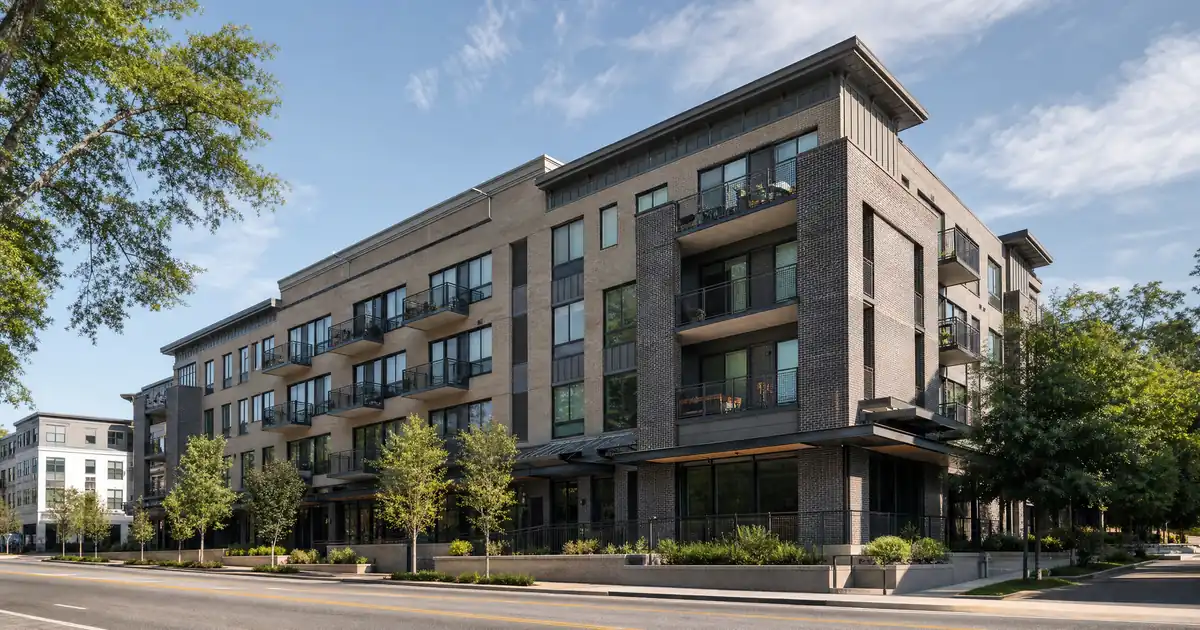
A renovated three-bedroom rental in East Point sells for roughly $215,000 and rents for $1,650 to $1,800 a month, according to the Luxury Realtor Group Atlanta Investment Guide — a gross rent yield in the 9-to-10 percent range that almost no intown BeltLine neighborhood can touch. That single data point reframes how an investor should approach investment property loans in Atlanta, Georgia: the neighborhoods with the best stories are frequently not the neighborhoods with the best coverage ratios.
At a Glance: Investment property loans in Atlanta, Georgia are underwritten primarily against the subject property’s monthly rental income measured against its full monthly obligation — taxes and insurance included — rather than a borrower’s traditional personal-income documentation, with East Point’s roughly 9-to-10 percent gross rent yield among the metro’s stronger rent-to-price setups for clearing that bar. Lendmire (NMLS# 2371349) works this market as a licensed DSCR mortgage broker, matching investor scenarios to lender programs rather than funding loans directly.
DSCR Calculator
Run the numbers in your market
Rate source: Freddie Mac 30-yr average via FRED® — Federal Reserve Bank of St. Louis · effective Jul 30, 2026
Prefilled with starting assumptions — enter your own rent or nightly figures, taxes, insurance, and HOA for a more accurate picture.
Program parameters update from Lendmire’s centralized guideline source. Taxes and insurance are editable estimates.
As of Jul 30, 2026 · General Freddie Mac market benchmark, not a Lendmire loan offer. Rent, nightly rate, occupancy, taxes, and insurance are editable estimates. Short-term rental figures are estimates only and vary significantly by season, property type, management approach, and local short-term-rental rules — confirm local regulations before relying on them. Qualifying income for short-term rentals varies by program — some use appraisal market rent, others use documented STR history or projections — and is confirmed in underwriting. Not a Loan Estimate, approval, or commitment to lend. Program availability and eligibility are subject to lender guidelines, credit approval, property review, and underwriting.
- East Point three-bedroom rentals: about $215,000 purchase price, $1,650-to-$1,800 rent, 9-to-10 percent gross yield.
- Kirkwood, East Atlanta, and Grant Park duplexes ($350,000-to-$450,000) let a second rent roll offset most of the mortgage.
- Metro apartment vacancy runs 7-to-8 percent; single-family and small-multifamily vacancy holds tighter, at 4-to-6 percent.
- Small multifamily comps trade around $189,000-to-$194,000 per unit — real appraisal support for 2-to-4-unit purchases.
- Metro Atlanta added 64,400 residents in the past year, per the Atlanta Regional Commission.
Atlanta Market Snapshot
A quick read on the Atlanta investor landscape — figures come from the cited sources below. Confirm current property-level numbers before underwriting.
| Metric | Detail |
|---|---|
| Home prices | $429K median (Redfin – Atlanta Housing Market) |
| Typical rents | $1,834 median (RealWealth – Georgia Housing) |
| Recent appreciation | 8.69% annual (RealWealth – Georgia Housing) |
| Cap rates | $325K/$285K adair park/capitol view (Luxury Realtor Group Atlanta) |
| University enrollment | 51,000+ students (Georgia State University) |
| Population | 5.3 million 11-county population (Atlanta Regional Commission) |
The East Point Math, Worked Out
East Point is the strongest purchase-side coverage story in the Atlanta metro. Renovated three-bedroom product priced near $215,000 with rent in the $1,650-to-$1,800 band clears standard DSCR thresholds with room to spare — a rarity inside the Perimeter at any price point.
Run the numbers. A renovated three-bedroom in East Point priced at $215,000, financed at 75-to-80 percent loan-to-value — the standard purchase band on most DSCR programs — and rented at a modeled $1,700 a month sitting within the reported range, produces a coverage ratio landing in the 1.2x-to-1.3x range once full PITIA (principal, interest, taxes, and insurance) is factored in. That clears the standard 1.00 floor, with margin left over even after Georgia’s property tax and insurance costs are folded into the obligation qualitatively.
East Point sits along the Red and Gold MARTA lines, roughly eight to nine miles southwest of downtown and about two miles from Hartsfield-Jackson International Airport — the busiest airport on the planet by passenger traffic, and a hub where Delta Air Lines alone employs roughly 34,500 people across flight crews, airport staff, and headquarters roles, per Wikipedia’s Economy of Atlanta. That’s the demand engine behind East Point’s rent stability. It’s not the only one. The Justin Landis Group notes that the Camp Creek Business Center, a logistics and commercial park minutes from the airport, houses facilities for Amazon, Wells Fargo, and Newell Brands — a second, non-airline employer base that diversifies workforce demand beyond Delta’s footprint. Worth flagging: the broader East Point median across all home types, not just renovated three-bedroom rental stock, runs higher, at $295,000 with average rent near $1,900, per the same Justin Landis Group report — a reminder that submarket data inside a single zip code can vary sharply by property condition and bedroom count.
Not a bad place to start a file.
Kirkwood’s Charm Doesn’t Cash Flow — East Atlanta Village Splits the Difference
Kirkwood is the neighborhood investors romanticize and East Atlanta Village is the one that pencils. Kirkwood’s renovated three-bedroom product runs $425,000 to $475,000 and rents for $2,000 to $2,200 — a 5.5-to-6 percent gross yield that lands the modeled coverage ratio in the 0.70x-to-0.80x range on standard leverage, below where most standard programs need it on long-term rent alone.
That’s not a disqualifier. It’s a different conversation. Properties landing below that threshold still have paths forward for review — a select sub-1.00 DSCR program with its own floor, an interest-only structure that lowers the qualifying obligation, or a larger down payment that shrinks the loan balance and lifts the ratio. Each path carries its own lender conditions, and eligibility review depends on credit profile, reserves, and property review — none of it guaranteed, all of it worth exploring with a broker before writing off a Kirkwood contract.
Shift one neighborhood over to East Atlanta Village and the math improves without leaving the same BeltLine-adjacent cluster. Prices there run about $50,000 below comparable Kirkwood product, with cap rates in the 6-to-7 percent range against Kirkwood’s 5.5-to-6 percent, per the Luxury Realtor Group’s comparison. Modeled on a $400,000 purchase renting near $2,000, the coverage ratio climbs into the low-0.80s — still short of a fully qualifying ratio on most standard programs, but a meaningful step in the right direction from a single zip-code shift. That’s the kind of granular lever a broad-brush “intown versus suburbs” framework misses entirely, and it’s exactly the sort of comparison worth running before locking in a Kirkwood contract on charm alone.
Grant Park sits in similar territory. Home prices there hit a median of $575,000 in the most recent reporting, with the average house at $627,000, up 13.0 percent year-over-year — Victorian architecture and a historic park drive premium pricing, and the neighborhood’s investment case leans on appreciation and furnished/short-term flexibility more than long-term rent coverage. Reynoldstown runs the same playbook at even steeper appreciation: median sale prices near $675,000 to $709,000 with year-over-year gains topping 20 percent. Neither is a coverage-ratio play at standard leverage. Both are bets on continued price growth.
The Duplex Play: Where House-Hacking Still Works
Two rent checks against one monthly obligation is a structurally different underwriting story than a single-family comp in the same zip code, and it’s the mechanism behind Atlanta’s most underused DSCR strategy: the intown duplex.
Duplexes still trade in Kirkwood, East Atlanta, and Grant Park in the $350,000-to-$450,000 range, where the rental unit covers most of the mortgage — a house-hacking setup that the Luxury Realtor Group’s investor analysis calls one of the most overlooked plays in the city. Precise per-unit rent rolls vary property by property, so modeling an exact ratio here would be guesswork. The structural point stands regardless: a duplex’s second unit does coverage-ratio work that appreciation alone can’t, and it’s the reason two-unit product in these neighborhoods behaves differently from the single-family comps used in most citywide rent surveys.
The same logic scales up. A recently marketed 11-unit property in Virginia-Highland, near the BeltLine, combined one two-bedroom, six one-bedrooms, and four studios into a diversified rent roll rather than relying on a single comp, according to Redfin’s Northeast Atlanta multifamily listings. A separate triplex listing in Northeast Atlanta was marketed on a projected $1,500-per-unit rent figure, built to perform whether an investor house-hacks, holds long-term, or leases room-by-room. Small multifamily in the 3-to-11-unit range is explicitly being underwritten on aggregate per-unit rent stacking rather than a single-family comp — the mechanism that lets these deals clear coverage where a comparable single-family purchase in the same corridor would not.
There’s real appraisal depth behind this, too. Metro Atlanta multifamily properties traded at a median of $189,100 per unit as of the most recent full-year data, rising to roughly $194,000 per unit in the first quarter of the current year with cap rates near 5.3 percent, according to NorthMarq and Matthews. That per-unit benchmark gives a lender’s appraisal review something concrete to lean on for a 2-to-4-unit purchase — a different comp set than the price-per-square-foot data driving single-family valuations.
Adair Park and Capitol View: A Bet on the BeltLine’s Southside Trail
This one’s a genuine toss-up. Adair Park’s median price for renovated homes has crossed $325,000, up from roughly $195,000 five years ago, while neighboring Capitol View trails 12 to 18 months behind at around $285,000 — cap rates on renovated buy-and-hold product in both neighborhoods run 5-to-6.5 percent, per the Luxury Realtor Group’s analysis. That’s a workable, if unspectacular, cash-flow story on its own.
The bigger question is whether the thesis holds. Both neighborhoods’ investment case leans heavily on the BeltLine’s Southside Trail completing on schedule, targeted for 2027 to 2028, to replicate the 20-to-30 percent appreciation premium the Eastside Trail delivered to neighborhoods like Kirkwood and Reynoldstown. That’s a bet on government-infrastructure timing, and BeltLine construction timelines have slipped before. An investor buying here on cash flow alone gets a modest, workable ratio at standard leverage; an investor buying on the appreciation thesis is underwriting a public-works schedule as much as a rent roll — worth sizing separately before committing capital.
Buckhead and West Midtown sit at the opposite end of the spectrum from the workforce belt. Buckhead remains Atlanta’s financial and luxury core, with top-tier schools and retail districts drawing affluent professionals and international buyers seeking trophy assets — high entry costs put coverage ratios out of reach at standard leverage, and the play there is almost purely appreciation and rent premium on Class-A product. West Midtown has become one of the city’s most active live-work-play corridors, with development around Westside Paper, The Interlock, and Echo Street West drawing young professionals and creative-sector tenants; specific price data for the corridor wasn’t available in this review, but the demand story is durable enough to watch as inventory turns over. Chamblee and Brookhaven, further north along the transit corridor near the CDC and Emory, average mid-$500,000s pricing and suit townhome and small-multifamily product better than single-family — a stability play rather than a high-yield one.
What’s Actually Driving the Renter Pool
Atlanta’s population growth and institutional anchors are what keep vacancy tight in the workforce submarkets even as new apartment supply softens the luxury tier. The city added 10,600 residents last year — a pace that has moderated from the 14,300 gain two years prior — while the broader 11-county metro grew by 64,400 people, pushing the region past 5.3 million, according to the Atlanta Regional Commission. Macrotrends places the wider metropolitan statistical area even higher, at 6,272,000, though that figure reflects a broader federal MSA boundary than the ARC’s 11-county core region, not a contradiction so much as a different geography.
Georgia State University enrolls more than 51,000 students across seven metro campuses, including roughly 45,000 undergraduates and 8,000 graduate students, and because on-campus housing can’t accommodate that population, roughly 81 percent of GSU students live off campus, according to student-housing data. That’s a durable, non-cyclical renter pool for Downtown, Old Fourth Ward, Summerhill, and East Midtown zip codes — insulated from corporate layoff cycles in a way employer-driven demand isn’t. Georgia Institute of Technology adds another 20,592 undergraduates, ranked No. 32 among national universities. On the healthcare side, Emory Healthcare operates 11 hospital and provider locations statewide as Georgia’s largest health system, while Piedmont Healthcare, WellStar, Northside Hospital, and the CDC’s federal public-health headquarters round out a demand base that doesn’t move with the tech-layoff cycle the way some Sun Belt peer metros do.
Vacancy tells a two-speed story worth understanding before picking a property type. Metro apartment vacancy currently runs 7-to-8 percent, driven largely by new supply concentrated in Class-A lease-up, according to property-management data from HomeScoutz — but single-family and small-multifamily vacancy holds much tighter, at 4-to-6 percent. Marcus & Millichap projects that gap closing as new apartment construction pulls back roughly 8,400 units compared to the prior year, tightening overall metro vacancy toward 5.2 percent and pushing multifamily rent growth to a projected 4.1 percent — a reversal from two years of declines and good for second-highest among major U.S. metros, per CRE Daily. The practical takeaway: the new-construction supply wave has hit large apartment product, not the 1-to-4-unit workforce housing where most DSCR purchases actually happen. That’s a structural argument for favoring smaller product over apartment-style comps when sizing a file.
On pricing, Redfin puts Atlanta’s citywide median sale price at $429,000 with a median $288 per square foot, down 1.6 percent year-over-year but up 2.1 percent per square foot — homes are selling in about 54 days with two offers on average, a moderately competitive but not frenzied market. A regional FMLS-sourced report puts the broader 11-county metro median lower, at $416,000, reflecting the wider geography rather than a conflicting number. Zoom out further and the decade-long trend is the more compelling story: Atlanta’s median home price has climbed more than $155,000 over the past ten years, a 67.5 percent increase from roughly $230,000, according to a Construction Coverage study reported by Urbanize Atlanta. Forward-looking, most housing-data providers expect modest appreciation with a meaningful uptick in inventory growth over the coming year — enough new selection to ease competition without tipping into oversupply. The broader rate environment remains a factor investors watch when timing a purchase, though specific pricing terms are set at the lender level and vary file to file.
Deal files from metros with this kind of intown-versus-outer-ring price spread tend to show a common pattern: the cleanest submissions come from investors who’ve already run the rent comp two ways — the optimistic intown figure and the conservative workforce-belt figure — before the file reaches underwriting. The common friction point shows up when a purchase contract gets signed on appreciation-tier product where the borrower expected the rent roll to clear a qualifying ratio and it doesn’t; catching that gap during the pre-approval conversation, rather than during the appraisal review, keeps the file cleaner and avoids added conditions later.
DSCR qualification is a different model than a conventional mortgage, which weighs the borrower’s traditional personal-income documentation and debt-to-income ratio. DSCR versus conventional investment loans diverge specifically on that point — DSCR programs measure the property’s own income against its obligation rather than the borrower’s personal financials, which is why an LLC-held rental in East Point can qualify differently than the same purchase made under a W-2 borrower’s name. For a fuller breakdown of how DSCR coverage is calculated, the ratio math and program mechanics are covered in more depth elsewhere.
Standard purchase programs in this market typically run 75-to-80 percent loan-to-value, with select strongest-file scenarios reaching up to 85 percent where guidelines allow — though higher leverage narrows the coverage ratio the way the Kirkwood and East Atlanta examples above illustrate. Credit-tier thresholds generally start in the low 600s and step up toward 700 for the highest-leverage scenarios, with reserve requirements typically running around six months of PITIA on standard-balance loans. None of these are guarantees; every file is subject to lender guidelines, credit approval, reserves, and property review, and terms vary by borrower, property, and program. Investors weighing an LLC-titled purchase — common across these submarkets — should confirm program eligibility for entity vesting, subject to lender program eligibility, before writing an offer.
Frequently Asked Questions
How do you qualify for a DSCR loan in Atlanta?
Qualification centers on the subject property’s monthly rental income measured against its full monthly obligation — taxes and insurance included — rather than a borrower’s traditional personal-income documentation or W-2s. Most standard programs also review credit tier, reserves (often around six months of PITIA), and loan-to-value, with exact terms set by the individual lender program a broker matches the file to.
Does the airport corridor actually beat intown Atlanta on coverage ratios?
Generally, yes, on current pricing. East Point’s $215,000 three-bedroom rental stock with $1,650-to-$1,800 rent produces modeled coverage in the 1.2x-to-1.3x range at standard leverage, while comparable Kirkwood product at $425,000-to-$475,000 lands closer to 0.70x-to-0.80x. That’s a function of price relative to rent, not neighborhood quality — Kirkwood’s appreciation history is real, it just isn’t the same trade as East Point’s yield.
DSCR vs. conventional financing
Two common ways to finance an investment property in Atlanta, GA. They qualify you differently — here’s how investors weigh them.
Why investors choose it
- Qualifies on the property’s rental income — no personal tax returns, W-2s, or pay stubs needed to document income.
- No personal debt-to-income ceiling to clear, so existing mortgages and obligations don’t cap your borrowing the same way.
- Can be closed in an LLC, keeping the property inside a business entity.
- Built for scaling — not held to the limit on number of financed properties that conventional financing applies.
- Underwriting centers on the deal: generally qualifies when the rent covers the payment, a 1.00x coverage ratio being a common baseline (confirmed in underwriting).
- Designed specifically for investment property, including long-term and, where the program allows, short-term rentals.
Where it’s strong
- Often the lowest ongoing financing cost for a buyer who fully qualifies on personal income — a fit for a first property or a cost-first purchase.
Trade-offs for investors
- Requires full personal income documentation and must fit within a debt-to-income limit — salary, existing debts, and other mortgages all count.
- Typically held in your personal name rather than a business entity.
- Caps how many financed properties you can carry, which can become a ceiling as a portfolio grows.
- Evaluates you as a borrower as much as the property, which usually means more paperwork.
How investors usually choose: a first or single property often optimizes for the lowest financing cost; portfolio builders often optimize for leverage, vesting in an LLC, and scaling past conventional caps. The right answer depends on your goals, the property, and current guidelines — both paths run through select lenders in Lendmire’s wholesale network, with eligibility and terms confirmed in underwriting.
What happens if a Kirkwood or Grant Park purchase doesn’t clear a qualifying coverage ratio?
It still has options worth reviewing rather than an automatic disqualification. A select sub-1.00 DSCR program, an interest-only structure, or additional cash down to reduce the loan balance can all move the ratio, though each carries its own lender conditions and depends on credit profile, reserves, and the specific property review.
Can a duplex in East Atlanta or Kirkwood qualify on rental income from both units?
Typically, yes — lenders generally count rent from all units on a 2-to-4-unit purchase toward the coverage calculation, which is exactly why duplex product in the $350,000-to-$450,000 band works differently than a single-family comp in the same zip code. Precise ratios depend on the specific per-unit rent roll and require underwriting review.
Is the rise in apartment vacancy a warning sign for single-family DSCR purchases?
Not directly. The vacancy increase to 7-to-8 percent is concentrated in new Class-A apartment supply; single-family and small-multifamily vacancy has held tighter, at 4-to-6 percent, according to property-management data. New construction is pulling back going into the next cycle, which should ease the apartment-tier softness without changing the workforce-housing picture much.
What credit score does a DSCR loan in Atlanta require?
Most standard DSCR programs start reviewing files around the low-600s, with higher-leverage scenarios — those approaching 85 percent loan-to-value — generally requiring scores closer to 700. Exact thresholds vary by lender, reserves, and the specific property, and review details are subject to lender overlays.
Investors weighing a specific East Point or Kirkwood contract can request a scenario quote to see how the numbers model against a particular rent roll.
Atlanta’s coverage-ratio map is unusually split for a single metro: 9-to-10 percent gross yields two miles from the world’s busiest airport, sitting alongside coverage ratios below where most standard programs need them in the neighborhoods drawing the most buyer attention. That gap is the metro’s clearest investor signal right now, and it’s unlikely to close until either East Point’s prices catch up or Kirkwood’s rents do.
For broader investor-financing rules and property-type coverage across the state, see Georgia DSCR loans.
About Lendmire
Lendmire (NMLS# 2371349) is a non-QM DSCR mortgage broker — not a direct lender — that arranges investor financing across 41 markets, including Washington, D.C. As a broker, Lendmire matches an investor’s scenario to the lender program best suited to the file rather than underwriting or funding loans itself, and its team has fielded enough Atlanta-specific scenarios to know the East Point-versus-Kirkwood tension is more the rule than the exception in this metro. Investors comparing acquisition targets across submarkets can review Lendmire’s Georgia DSCR loan programs for baseline eligibility before running city-specific numbers, or reach the team directly at 828-256-2183 to talk through a specific address and rent roll. Lendmire’s team was also named a top-ranked workplace in 2026 by Scotsman Guide, a distinction separate from any specific loan terms it arranges.
Disclaimer: This article is provided for general informational purposes only and does not constitute financial, legal, or lending advice. Lendmire is a licensed mortgage broker, not a lender, and does not guarantee loan approval, specific terms, or program availability. All figures cited are qualitative or sourced from third parties as noted and are subject to change. Actual coverage ratios, loan-to-value limits, credit thresholds, reserve requirements, and property eligibility are determined by individual lender guidelines and are subject to credit approval, underwriting review, and property appraisal. Investors should consult a licensed broker or financial professional before making purchase or financing decisions.
Get Started
Ready to find the right loan for you?
In about 30 seconds you can review financing options available for your investment property. No commitment required.
Informational only. Not a Loan Estimate, approval, or commitment to lend. Program availability and eligibility are subject to lender guidelines, credit approval, property review, and underwriting.
References
1. Luxury Realtor Group Atlanta Investment Guide
2. Atlanta Regional Commission — Population Estimates
3. Redfin – Atlanta Housing Market
4. RealWealth – Georgia Housing
6. Wikipedia — Economy of Atlanta
7. Justin Landis Group — East Point Seller’s Market
8. Redfin Northeast Atlanta Multi-Family Listings
9. NorthMarq — Atlanta Multifamily Vacancy Insight
10. Matthews — Atlanta Multifamily Q1 Report
11. Emory Healthcare
12. CRE Daily — Multifamily Rent Growth Drives Atlanta Gains
13. Construction Coverage study via Urbanize Atlanta
14. a top-ranked workplace in 2026 by Scotsman Guide
This article is part of Lendmire’s DSCR loan program — full qualification details, guidelines, and scenarios live on the program page.
Related reading: Cash Out Refinance Investment Property Atlanta GA Guide · DSCR Loans Atlanta: Investor Financing for Atlanta Rental Properties, Airbnb, and Real Estate Investors · DSCR Loans in Lake Oconee, Georgia: Investor Financing for Reynolds Lake Oconee, Greensboro, Harbor Club & Real Estate Investors
Guides: DSCR Loans in Atlanta, GA · DSCR Loans in Georgia
Brandon Miller
Founder & CEO, Mortgage Loan Originator, Lendmire LLC
- Mortgage Loan Originator · NMLS# 1129696 · Verify on NMLS Consumer Access
- North Carolina Real Estate Broker · License# 343312 · Verify on NCREC
- North Carolina Insurance Producer · License# 19053198 · Property, Casualty, Life, Health · Verify on NAIC SBS
- Lendmire LLC · Firm NMLS# 2371349 · Verify firm licensure
Compliance and disclosures. Lendmire (NMLS# 2371349) is a licensed mortgage broker and is not a direct lender, depository institution, financial advisor, or tax professional. Content in this article is general market analysis and educational information — not financial, legal, or tax advice for any specific situation. Lendmire does not guarantee loan approval; every transaction is subject to underwriting by the funding lender. Mortgage pricing and loan program guidelines are subject to change at any time without notice and vary by borrower characteristics, property type, and state regulations. Lendmire complies with Equal Housing Opportunity. Licensure verification: NMLS Consumer Access.