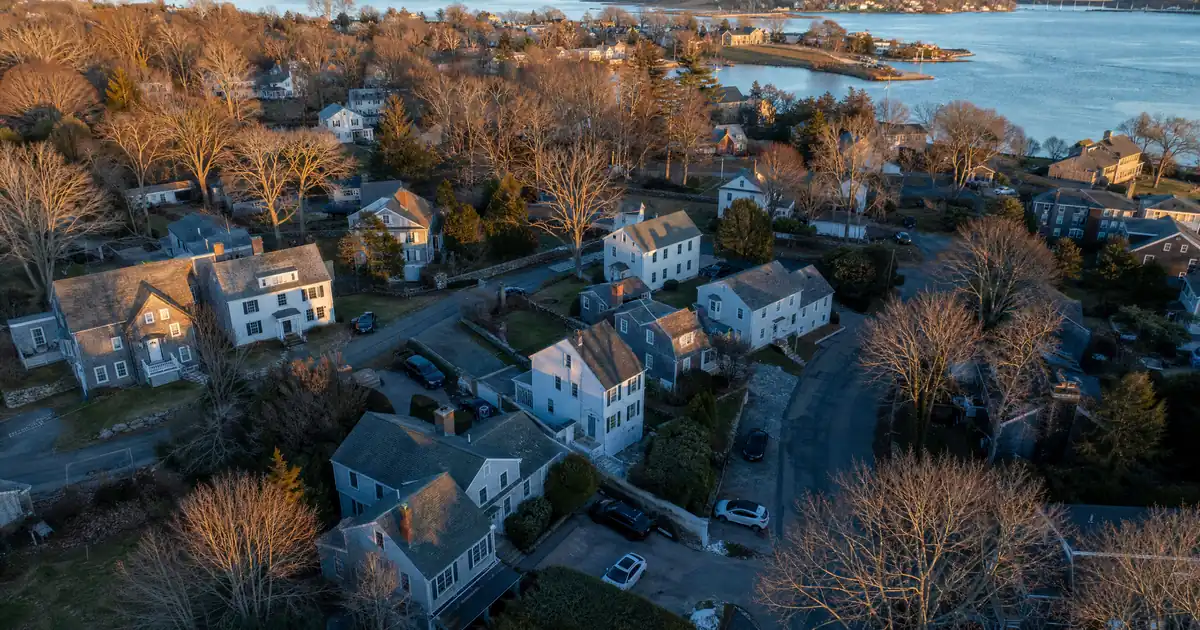
A single-family rental priced at Mystic’s ACS-based median value of $528,552 and renting at the census-derived median gross rent of $1,725 a month runs well under a 1.00 coverage ratio once a full PITIA payment is modeled against that rent — City-Data.com puts both figures on record, and the math simply doesn’t clear the standard DSCR benchmark before an underwriter even looks at credit or reserves. That single pairing tells an investor almost everything about why Mystic is a bifurcated market, not a uniform one, and why the neighborhood chosen matters more here than in most small coastal towns.
At a Glance: In Mystic, Connecticut, a rental property is underwritten primarily on whether its monthly rent clears its full monthly obligation — principal, interest, taxes, and insurance combined — with the strongest coverage math currently concentrated in workforce single-family and small multi-unit product near the Groton employment corridor rather than the tourist core.
DSCR Calculator
Run the numbers in Mystic, CT
Rate source: Freddie Mac 30-yr average via FRED® — Federal Reserve Bank of St. Louis · effective Jul 2, 2026
Prefilled with local estimates — enter your own rent or nightly figures, taxes, insurance, and HOA for a more accurate picture.
As of Jul 2, 2026 · General Freddie Mac market benchmark, not a Lendmire loan offer. Rent, nightly rate, occupancy, taxes, and insurance are editable estimates. Short-term rental figures are estimates only and vary significantly by season, property type, management approach, and local short-term-rental rules — confirm local regulations before relying on them. Qualifying income for short-term rentals varies by program — some use appraisal market rent, others use documented STR history or projections — and is confirmed in underwriting. Not a Loan Estimate, approval, or commitment to lend. Program availability and eligibility are subject to lender guidelines, credit approval, property review, and underwriting.
- Groton’s single-family median runs near $349,000, versus $750,000 to $1.5 million for multi-family stock (Homes.com)
- Downtown Mystic/waterfront median value sits at $528,552 against median gross rent of just $1,725 (City-Data.com)
- Electric Boat employs 24,000 total, more than 15,000 in Connecticut (CBIA)
- 82 percent of Groton’s roughly 27,000 jobs are filled by workers who commute in from elsewhere (CT Public)
- 52 percent of Mystic properties face severe flood risk over the next 30 years, per Redfin/First Street data
Mystic Market Snapshot
A quick read on the Mystic investor landscape — figures come from the cited sources below. Confirm current property-level numbers before underwriting.
| Metric | Detail |
|---|---|
| Home prices | $575K median (Sept 2025) (Redfin) |
| Typical rents | $1,981 avg (Apartments.com/CoStar) |
| Recent appreciation | 11.43% appreciation vs 8.27% us avg (BestPlaces Mystic Housing) |
| Population | Population 4,483 (Census Reporter) |
| Employment | 24,000 total eb employees (CBIA) |
The Groton Workforce Corridor Has the Cleanest Math
The strongest cash-flow case in the Mystic area isn’t in Mystic proper at all — it’s a short drive west, in the Groton neighborhoods closest to Electric Boat and the Naval Submarine Base: Poquonnock Bridge, Center Groton, and Conning Towers Nautilus Park. Rental listings in this corridor market themselves directly on proximity to the shipyard and the base, and the demand behind that marketing is documented, not speculative.
Electric Boat currently employs 24,000 people, with more than 15,000 based in Connecticut, according to the Connecticut Business & Industry Association, and the company is mid-expansion on both the Virginia-class and Columbia-class submarine programs. That hiring wave is colliding with a documented housing shortfall. A 2021 Groton housing study identified a need for roughly 4,000 additional units; a 2023 update raised that figure to about 6,500. And per CT Public, 82 percent of the town’s roughly 27,000 jobs are held by people who commute in from elsewhere because local housing supply hasn’t kept pace. That’s an unusually well-documented tenant pool for a market this size — a structural, multi-year deficit tied to defense payroll, not a seasonal rent bump.
Run the numbers on a single-family purchase near this corridor. Groton’s single-family median currently sits at $349,000, per Homes.com listing data. At 75 percent LTV — the purchase ceiling under Lendmire’s current program guidelines, which apply a geographic underwriting overlay in Connecticut — and using a modeled monthly rent assumption of $2,400 (not a cited figure, just a workable placeholder against CDP-wide rent data), the modeled PITIA calculation lands the coverage ratio around 1.03x. Workable, but thin. Drop the modeled rent to $2,200 and the same property slides just under 1.00.
That’s the honest picture on single-family in this corridor: the coverage math is close, not comfortable. Multi-unit stacking is where the math actually opens up. Only three multi-family properties were listed for sale in Groton in a recent snapshot, priced between $750,000 and $1.5 million, per Homes.com — a thin deal flow that makes sourcing, not financing, the real bottleneck. But run a modeled triplex at $950,000, same 75 percent LTV, with three units renting near $2,200 each (again, a modeled assumption, not a market-quoted rent roll), and the coverage ratio moves to roughly 1.04x — a meaningfully cleaner number than trying to force a single tenant’s rent to cover a $950,000 basis. The mechanism is straightforward: layering two or three rent rolls onto one tax and insurance basis is what fixes a rent-to-value problem that single-family product alone can’t solve in this price band.
Investors weighing this corridor against the Mystic tourist core should also know that the full DSCR explainer covers how the qualifying ratio is calculated in more general terms — worth a read before running specific numbers on any Groton listing.
Why Downtown Mystic and Mason’s Island Break the Math
Downtown Mystic and Mason’s Island are appreciation stories, not cash-flow stories, and an investor underwriting for yield in either submarket is very likely underwriting the wrong deal. The rent-to-value ratio here is the thinnest in the entire Mystic footprint.
Pricing itself is inconsistent across sources, which is a signal in its own right. Redfin’s city-level data shows a median sale price of $575,000 as of September 2025, down 8.0 percent year-over-year, with homes sitting 40 days on market versus 28 days the year before. Redfin’s narrower neighborhood polygon for “Mystic” shows something almost opposite — a $723,000 median, up 7.1 percent. Rocket’s June 2025 market report lands lower still, at $513,500. Three sources, three different medians, in the same small village during overlapping windows. That kind of spread usually means thin transaction volume and shallow comps depth — and it should make any investor cautious about leaning on an online estimate rather than a fresh, property-level valuation before writing an offer.
Running the City-Data figures — a $528,552 median value against $1,725 median gross rent — through a modeled PITIA calculation produces a coverage ratio near 0.49x. Not close. Not a marginal gap that a different loan structure could bridge. A property at that value-to-rent ratio would need either a materially lower purchase basis, a materially higher achievable rent, or a different property type entirely to reach standard DSCR lender review.
Mason’s Island compounds the problem. Waterfront lots with docks and privacy command a premium that’s driven by second-home and lifestyle demand, not by local rent growth — and Redfin’s migration data backs that up directly: 76 percent of Mystic homebuyers search to move out of the area, while just 24 percent look to stay in the metro, and the buyers searching to move in are disproportionately coming from New York, Miami, and Atlanta. That’s a classic high-cost-metro transplant pattern. It means price appreciation in this pocket may track outside wealth flows more than it tracks the CDP’s own wage and rent trends — a distinction that matters when projecting whether today’s purchase price will hold up on a future refinance appraisal.
One more factor worth flagging without turning it into its own conversation: Redfin/First Street data shows 52 percent of Mystic properties — 663 total — face severe flood risk over a 30-year window. That’s a factor for insurance cost and coverage availability that any investor in the downtown or waterfront submarkets should verify locally before finalizing a purchase, alongside current zoning and rental rules in whichever town the parcel sits.
Old Mystic and Inland Stonington: The Middle Ground
Old Mystic and inland Stonington sit between the two extremes above — a lower price-per-square-foot basis than the tourist core, without the workforce-corridor proximity to Electric Boat that makes Groton’s numbers work. It’s a reasonable middle path for an investor who wants Mystic-area exposure without betting entirely on either story.
Old Mystic Estates, a subdivision built around 2011 on one-acre homesites with homes running roughly 2,000 to 3,600 square feet, represents the most recent identifiable new-construction activity found in this area. Its selling point in listing language is straightforward: newer construction, larger lots, and convenient highway access to I-95, Mystic, and the shoreline — generally a lower basis than downtown or waterfront product, which tends to favor rent-to-value math even without a specific price point to cite here.
The town-level numbers reinforce the same pattern. Stonington’s town-wide ACS median owner-occupied value runs about $483,400, meaningfully below Mystic CDP’s own ACS figure of roughly $538,800, according to comparisons compiled by Town and Shore Realty. The inland parts of Stonington — away from the compact, harborfront lots of Stonington Borough — are the more plausible candidates for coverage math that actually clears 1.00, versus the Borough’s walkable seaside core, which prices for lifestyle rather than yield.
Stonington Borough itself deserves its own caution. A recent analysis from Shockley Rogers shows a median list price near $1.3 million alongside closed-sale medians closer to $590,000 to $600,000 — a gap common in small coastal towns where a handful of trophy waterfront listings inflate the headline number even though most actual closings happen well below it. An investor underwriting off the list-price median here risks overpaying against comps that will never appraise the same way on a future refinance. Anchor to the closed-sale figure, not the headline.
Property type also favors the inland and Old Mystic submarkets over the downtown core. Per RentCafe, 52 percent of Mystic’s existing rental stock is small-scale complexes under 50 units and 17 percent is single-family — meaning a small multifamily acquisition strategy here is competing for an established, already-proven property type rather than pioneering an unfamiliar one. That’s a meaningful advantage for an investor targeting a duplex or triplex in this price band: the local rental market already knows how to absorb that product.
One Village, Two Town Halls
Mystic is a census-designated place, not a municipality — it has no independent government of its own, and it splits between the towns of Groton and Stonington (Wikipedia). That’s not a trivia point for a DSCR investor. It’s a structural fact about how a purchase gets underwritten and taxed.
A duplex on the west side of the Mystic River answers to Groton’s tax assessor and zoning board. A triplex three blocks away, on the east side, answers to Stonington’s. Comps sets differ by town even within what feels like a single walkable village. Insurance carriers, flood-zone treatment, and permitted uses can all diverge depending on which side of the bascule bridge a parcel sits on — which is exactly why the pricing spread described above (three different median figures for what’s nominally “the same” market) shows up in the data. Investors evaluating a Mystic-area purchase should confirm early in the process which town actually governs the specific parcel, since that answer shapes everything from the tax bill to the appraisal comps pool.
The tenant base surrounding this split village is also unusually diverse for its size. The United States Coast Guard Academy in New London draws roughly 2,000 applicants a year against an entering class near 300 cadets — a small, niche renter pool, but a steady one. Lawrence + Memorial Hospital, a 308-bed acute-care facility affiliated with Yale New Haven Health, anchors regional healthcare employment nearby. Neither rivals Electric Boat in scale, but both add non-seasonal demand layers that a purely tourism-dependent coastal town wouldn’t have.
Who This Actually Fits
DSCR financing tends to make the most sense here for an investor targeting the Groton workforce corridor’s multi-unit product, or an entity-held portfolio buyer who wants qualification based on the property’s rent rather than traditional personal-income documentation. Lendmire, a non-QM mortgage broker (NMLS# 2371349), arranges this kind of financing through a 40-market DSCR footprint spanning 39 states plus the District of Columbia, and Connecticut is one of them — full detail on the program lives on Connecticut DSCR financing.
The flip point matters, though. An investor with strong traditional employment income buying a single Groton single-family home that’s borderline on coverage — the 1.03x scenario modeled above — might genuinely do better on a conventional loan, where debt-to-income underwriting can absorb a thin rental number that a strict DSCR file would flag. DSCR earns its keep once the portfolio grows past what conventional financing’s per-property limits allow, once the buyer is self-employed and can’t cleanly document income on traditional personal-income documentation, or once the target property is held in an LLC — a structure DSCR programs accommodate more readily than conventional loans do, subject to program guidelines. For a single lifestyle purchase on Mason’s Island bought mostly for appreciation, a much larger down payment and a longer hold horizon might matter more than the coverage ratio itself; that’s a different conversation than a cash-flow-first acquisition, and worth having honestly before underwriting begins. A quick look at where DSCR and conventional diverge lays out that comparison in more depth.
On program mechanics: current guidelines put purchase leverage at up to 75 percent LTV, a minimum qualifying coverage ratio of 1.00, credit tiers stepping at 620, 660, 680 and 700, and reserve requirements around six months of PITIA — rising to roughly nine months on loans above $1.5 million, which matters directly for a Stonington Borough waterfront purchase near that list-price range. Loan sizes on standard programs run up to $3 million, comfortably covering the Groton multi-family range described above. All of these are eligibility guidelines subject to lender overlays, credit profile, and property review — not guarantees of approval. Terms vary by lender guidelines, property type, leverage, credit profile, and full file review.
Files from markets structurally similar to Mystic — small coastal towns split across multiple taxing jurisdictions, with thin comps depth and a mix of workforce and tourist product — tend to move more smoothly when the borrower has already pulled a fresh appraisal-grade comp set for the specific submarket rather than relying on an online estimate; the wider-than-normal spread between AVM figures and actual appraised value in a market this size is the single most common friction point on the file. Investors can talk through the numbers on a specific Mystic-area address before making an offer, or reach Lendmire directly at 828-256-2183.
Frequently Asked Questions
How do you qualify for a DSCR loan in Mystic, Connecticut?
Qualification centers on the property’s rent measured against its full monthly obligation — principal, interest, taxes, and insurance combined — rather than the borrower’s personal income documents. In Mystic’s split market, that means the submarket matters enormously: a Groton workforce-corridor rental has a real shot at clearing the standard 1.00 benchmark, while a downtown Mystic single-family purchase, based on current value-to-rent figures, generally does not without a lower entry price or a different property type.
What are the requirements for an investment property loan in Mystic, Connecticut?
DSCR vs. conventional financing
Two common ways to finance an investment property in Mystic, CT. They qualify you differently — here’s how investors weigh them.
Why investors choose it
- Qualifies on the property’s rental income — no personal tax returns, W-2s, or pay stubs needed to document income.
- No personal debt-to-income ceiling to clear, so existing mortgages and obligations don’t cap your borrowing the same way.
- Can be closed in an LLC, keeping the property inside a business entity.
- Built for scaling — not held to the limit on number of financed properties that conventional financing applies.
- Underwriting centers on the deal: generally qualifies when the rent covers the payment, a 1.00x coverage ratio being a common baseline (confirmed in underwriting).
- Designed specifically for investment property, including long-term and, where the program allows, short-term rentals.
Where it’s strong
- Often the lowest ongoing financing cost for a buyer who fully qualifies on personal income — a fit for a first property or a cost-first purchase.
Trade-offs for investors
- Requires full personal income documentation and must fit within a debt-to-income limit — salary, existing debts, and other mortgages all count.
- Typically held in your personal name rather than a business entity.
- Caps how many financed properties you can carry, which can become a ceiling as a portfolio grows.
- Evaluates you as a borrower as much as the property, which usually means more paperwork.
How investors usually choose: a first or single property often optimizes for the lowest financing cost; portfolio builders often optimize for leverage, vesting in an LLC, and scaling past conventional caps. The right answer depends on your goals, the property, and current guidelines — both paths run through select lenders in Lendmire’s wholesale network, with eligibility and terms confirmed in underwriting.
Under current program guidelines, purchase leverage runs up to 75 percent LTV, credit tiers step at 620, 660, 680 and 700, and reserves generally run around six months of PITIA, rising near nine months above $1.5 million in loan amount. A Connecticut-specific geographic overlay applies to the LTV ceiling, so investors should confirm current terms before writing an offer on a specific address.
Does it matter whether a property sits in Groton or Stonington?
It matters a great deal. Mystic has no government of its own — it’s a census-designated place split between two towns, each with its own tax assessor, zoning board, and comps pool. A parcel’s exact side of the Mystic River determines which town’s rules and valuation practices apply, which in turn affects underwriting and future appraisal outcomes.
Why do single-family rentals struggle to hit a 1.00 coverage ratio in downtown Mystic?
The rent-to-value relationship is simply too thin at current pricing. Downtown/waterfront Mystic’s median home value of $528,552 against a median gross rent of $1,725 runs a modeled coverage ratio near 0.49x — well under the standard benchmark — because purchase prices in the tourist core are driven more by lifestyle and second-home demand than by achievable local rent.
Are multi-family properties available for DSCR financing near Mystic?
A limited number, mostly on the Groton side. Recent listing data showed only three multi-family properties for sale in Groton, priced between $750,000 and $1.5 million — thin inventory, but the coverage math on a duplex or triplex generally outperforms a comparably priced single-family home because rent from multiple units offsets one shared tax and insurance basis.
How does DSCR lender review differ from a bank’s approach in Mystic?
A traditional bank generally underwrites the borrower — W-2s, traditional personal-income documentation, debt-to-income ratios.
Brandon Miller, Founder and CEO of Lendmire, built the firm’s DSCR platform specifically around markets where property income, rather than a borrower’s personal tax documentation, is the cleaner underwriting basis — a fit that applies directly to Mystic’s split, entity-friendly ownership patterns.
A non-QM mortgage broker, Lendmire arranges DSCR financing for real estate investors. Because files are underwritten primarily on the subject property’s cash flow rather than personal income documentation, the structure tends to suit self-employed buyers and entity-owned portfolios particularly well. Lendmire places loans through wholesale investor lenders and is not itself a direct lender; it has also been recognized as a 2026 Scotsman Guide Top Mortgage Workplace.
A village of 4,483 people — up from 4,348 at the last decennial count, per the Census Reporter — with a median household income of $152,559, sitting directly between a submarine yard hiring toward a documented 6,500-unit regional housing shortfall and a tourist core where three separate data providers can’t agree on the median sale price within $200,000 of each other. That gap between the two Mystics is the entire investment thesis.
Program availability, loan terms, and eligibility are subject to lender guidelines, credit approval, property review, and full underwriting. This article is educational and is not a loan offer or commitment to lend.
About Lendmire
A non-QM mortgage broker (NMLS# 2371349), Lendmire arranges DSCR financing for real estate investors in 40 markets — 39 states plus Washington, D.C. Because deals are underwritten primarily on property cash flow rather than personal income documentation, the structure suits self-employed buyers and entity-owned portfolios. Lendmire places loans through wholesale investor lenders; it is not a direct lender.
Investment property review
See how the DSCR math works for Mystic, Connecticut
Lendmire can review rent, leverage, property type, and DSCR fit before you get too far into the deal.
Informational only. Not a Loan Estimate, approval, or commitment to lend. Program availability and eligibility are subject to lender guidelines, credit approval, property review, and underwriting.
References
1. City-Data.com — Mystic, CT Profile
2. Homes.com — Groton, CT Multi-Family Listings
3. CBIA — Electric Boat/Mystic Aquarium STEM Partnership
4. CT Public — Groton Housing Boost
5. Redfin
9. Town and Shore Realty — Mystic vs. Stonington
10. Shockley Rogers — Stonington Real Estate Trends
11. RentCafe — Mystic Apartments
12. Wikipedia — Mystic, Connecticut
13. United States Coast Guard Academy — Wikipedia
14. Lawrence + Memorial Hospital
15. a 2026 Scotsman Guide Top Mortgage Workplace
Brandon Miller
Founder & CEO, Mortgage Loan Originator, Lendmire LLC
- Mortgage Loan Originator · NMLS# 1129696 · Verify on NMLS Consumer Access
- North Carolina Real Estate Broker · License# 343312 · Verify on NCREC
- North Carolina Insurance Producer · License# 19053198 · Property, Casualty, Life, Health · Verify on NAIC SBS
- Lendmire LLC · Firm NMLS# 2371349 · Verify firm licensure
Disclosures. The information presented in this article is general market commentary, not financial, legal, or tax advice. Lendmire is a mortgage brokerage (NMLS# 2371349) — not a direct lender or depository institution — and loan placement is subject to lender underwriting. Nothing in this content represents a commitment to lend. Loan terms, pricing, and program availability vary based on borrower qualifications, property characteristics, and state of subject property, and are subject to change at any time. Lendmire complies with Equal Housing Opportunity requirements. Consumer access: nmlsconsumeraccess.org.