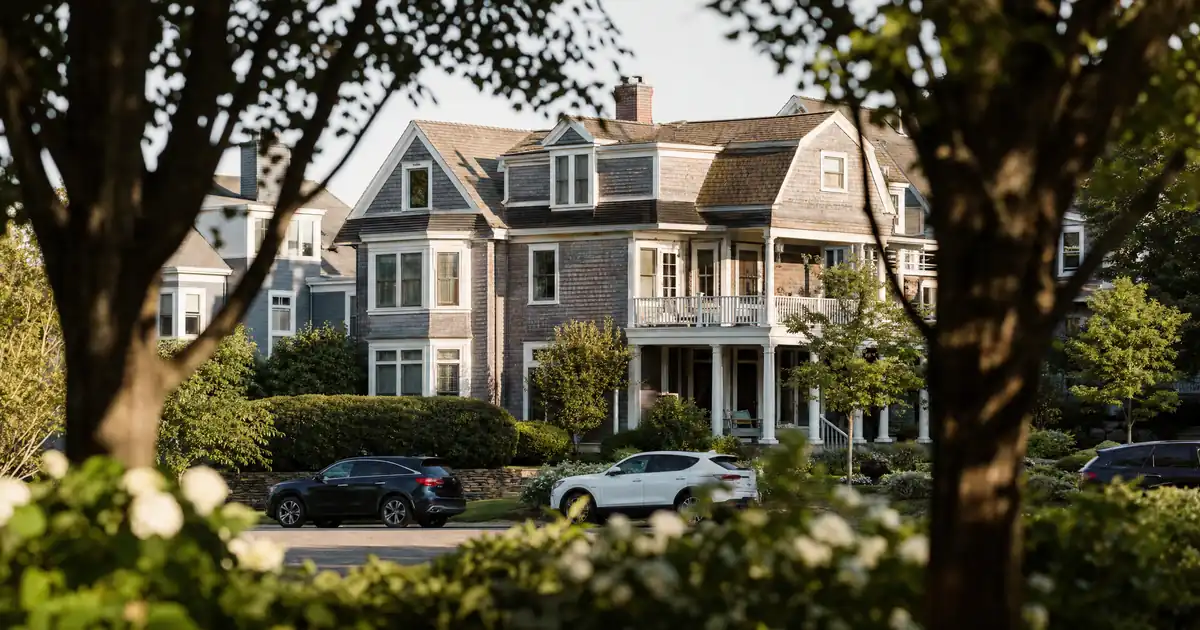
Most investors look at Provincetown and ask the same question: how does a market with roughly 3,700 year-round residents and home prices well north of $900,000 ever produce rent that covers a mortgage? It’s a fair objection. Long-term lease rents here run in the $3,000-$4,000 range while home values sit in seven figures — a rent-to-price ratio that would sink most conventional underwriting before it ever gets to closing. But Provincetown doesn’t play the long-term lease game the way most towns do, and understanding why is the entire thesis behind financing property here.
TL;DR: Investment property loans in Provincetown, Massachusetts are underwritten primarily on a property’s rental income measured against its full monthly carrying cost — a structure that favors small multi-unit or cottage-style properties over standalone single-family long-term rentals, given a summer population that swells from about 3,664 year-round residents to as many as 60,000, per Wikipedia.
DSCR Calculator
Run the numbers in Provincetown, MA
Rate source: Freddie Mac 30-yr average via FRED® — Federal Reserve Bank of St. Louis · effective Jul 2, 2026
Prefilled with local estimates — enter your own rent or nightly figures, taxes, insurance, and HOA for a more accurate picture.
As of Jul 2, 2026 · General Freddie Mac market benchmark, not a Lendmire loan offer. Rent, nightly rate, occupancy, taxes, and insurance are editable estimates. Short-term rental figures are estimates only and vary significantly by season, property type, management approach, and local short-term-rental rules — confirm local regulations before relying on them. Qualifying income for short-term rentals varies by program — some use appraisal market rent, others use documented STR history or projections — and is confirmed in underwriting. Not a Loan Estimate, approval, or commitment to lend. Program availability and eligibility are subject to lender guidelines, credit approval, property review, and underwriting.
- Standalone single-family long-term-lease coverage often runs well below 1.00x on current pricing.
- About 72% of Provincetown’s housing stock is multifamily, not single-family, per Cape Cod Commission data — unusual for a Cape town.
- Two-bedroom asking rents average $3,456 a month; three-bedroom units average $4,099.
- Town-wide employment swings from roughly 1,600 winter jobs to 3,800 by midsummer.
- Multi-family listings currently carry a $2.6 million median list price, per Redfin.
Provincetown Market Snapshot
A quick read on the Provincetown investor landscape — figures come from the cited sources below. Confirm current property-level numbers before underwriting.
| Metric | Detail |
|---|---|
| Home prices | Provincetown median $2.1M (Boston Globe) |
| Recent appreciation | +95% since 2020 (Boston Globe) |
| Population | 3,452 population (Census Reporter) |
| Employment | ~200 employees (largest non-govt employer) (Outer Cape Health Services) |
Why the Standalone Long-Term Lease Math Breaks Down Here
Provincetown’s pricing data is genuinely messy, and that’s a story in itself. Redfin puts the March median sale price at $877,000, down 22.1% year-over-year on just seven closed transactions — a single-digit sale count that makes any monthly “median” swing hard. Movoto’s May snapshot shows a median of $1,395,000 on 115 sales. Zillow’s automated home-value index lands at $924,274, up 4.0% year-over-year. And the Boston Globe, citing Warren Group data, reports Provincetown’s median jumped nearly 95% between 2020 and 2025 to $2.1 million — the Boston Globe’s 2025 Massachusetts price map flagged it as the largest gain of any Massachusetts community over that stretch.
None of these numbers are wrong. They’re measuring different slices of an extremely thin market. With single digits to low teens of home sales closing most months, Provincetown “medians” should be read as directional, not precise — a $900,000 to $1.4 million range is the honest way to frame entry pricing rather than pinning it to any one figure.
Set that pricing range against rents. ApartmentHomeLiving.com shows current two-bedroom asking rents averaging $3,456 a month, with three-bedrooms and studios priced higher and lower respectively. Run a modeled single condo purchase at $900,000, 75% loan-to-value, against that two-bedroom rent figure, and the arithmetic — full principal and interest plus Massachusetts-average property tax and insurance carried at typical regional levels for the state — lands coverage well under breakeven. That’s not a rounding error. It’s a structural gap, and it’s the reason standard 12-month-lease DSCR underwriting rarely works cleanly on a standalone single-family purchase at Provincetown’s current price levels.
That’s also exactly why Lendmire, a mortgage broker (NMLS# 2371349) arranging DSCR financing across 39 states plus Washington, D.C. — a 40-market footprint — treats Provincetown as a market where the qualification path runs through trailing short-term rental income or blended income structures rather than a straight long-term-lease comp. The DSCR fundamentals still apply: rent measured against the full monthly obligation, not a borrower’s W-2s. What changes here is which rent figure a lender actually uses.
The Multifamily Twist Most Investors Miss
Provincetown is structurally built for multi-unit ownership in a way most Cape towns aren’t. About 72% of the town’s housing stock is multifamily and only 19% is single-family, according to the Cape Cod Commission’s housing profile — a ratio that flips the typical Cape Cod zoning pattern on its head. That matters directly for coverage math: stacking two or three rent streams against one purchase price closes a gap that a single tenant’s rent never could.
The current multi-family listing set backs this up. Redfin shows five multi-family properties on the market with a median list price of $2.6 million, while Homes.com separately counts six active multi-family listings. Against single-family medians running $900,000 to $1.4 million, a per-unit cost inside a well-priced duplex or triplex can land close to or below what a single house costs — the exact condition that lets combined rent clear a coverage ratio a lone single-family tenant can’t.
Run a modeled scenario on a two-unit East End or West End property priced around $1.1 million, financed at 75% loan-to-value (25% down). Pair one unit’s rent at $2,500 a month — near the upper end of the town’s actual deed-restricted comps at Harbor Hill and the proposed Barracks project, both cited on the Town of Provincetown’s housing initiatives page — with a second unit at the town’s $3,456 two-bedroom average. Combined modeled rent lands in the neighborhood of those two figures added together. Against full carrying cost including taxes and insurance, that pencils to roughly 0.88x. Still short of the 1.00x figure some programs use as a floor, but a fraction of the gap seen on the standalone single-family scenario above. Terms vary by lender guidelines, property type, leverage, credit profile, and full file review.
That remaining shortfall is where structure comes in. A file landing in the high-0.80s to low-0.90s on long-term rent alone is a candidate for a sub-1.00 DSCR program, a blended long-term-plus-seasonal income approach, or additional down payment to bring leverage down — all reviewed subject to lender guidelines, credit profile, reserves, and property underwriting, not guaranteed by any single ratio. None of these paths are automatic. But they’re the tools that make Provincetown deals work where a straight 30-year fixed comp on 12 months of lease income wouldn’t.
Deal desks that see a steady stream of files from seasonal-resort and thin-inventory markets tend to notice a pattern here: the cleanest Provincetown files are the ones where the borrower brings a full trailing twelve months of rental platform statements rather than a broker’s projected nightly-rate estimate, and where the appraiser’s rent schedule reflects actual unit-level leases rather than a blended town average. Files that lean too heavily on projected income without documentation tend to get bounced back for more support before they clear underwriting.
Where the Doors Are: Neighborhood-by-Neighborhood
West End. The quieter, more residential end of town, running along Bradford and Commercial Streets close to Herring Cove Beach and the Cape Cod National Seashore. Home to the long-running West End Racing Club and a steady bike-traffic corridor to the beach. This is where the newer, lower-maintenance construction sits too — the Residences at 350 Bradford and the Point Street cluster feature homes upward of 3,300 square feet built in the last several years, appealing to out-of-state DSCR investors who want fewer capex surprises than a 19th-century “Captain’s home” carries.
East End / Gallery District. Northeast of downtown along Commercial and Bradford Streets, this is Provincetown’s arts corridor — galleries, the East End Market, and harbor-fronting homes that brokers consistently describe as among the most sought-after properties on the Outer Cape. This is also where the classic “Captain’s home plus accessory cottage” property type shows up most often: a main house and a separate carriage house or guest cottage on one lot, giving an investor two distinct income streams to underwrite against a single loan.
Town Center / Commercial Street core. The commercial spine — restaurants, shops, nightlife, and the MacMillan Wharf ferry terminal. Walkability here is the whole investment case: proximity to dining and the ferry drives the strongest nightly-rate performance in town, for investors who structure income around seasonal demand rather than a 12-month lease alone.
Beach Point. A shoreline strip along Route 6 at the entrance to town, historically built out as motel and cottage-colony inventory and increasingly condo-converted. This is where per-unit price points run more attainable than the harbor-front core, which matters for an investor trying to keep total acquisition cost down while still capturing walkable-to-town demand.
The dune enclaves — Highland Moors, Creek Round Hill Road, Somerset Heights. These are the weakest fit for rental-income underwriting, and it’s worth saying plainly: they’re privacy-oriented second-home markets, tucked into the dunes above downtown, and nightly-rate performance depends heavily on walking distance to Commercial Street. An investor buying here for appreciation or personal use has a case. An investor buying here expecting rent to carry the loan does not.
The Employer-Housing Squeeze Is a Landlord’s Opening
Provincetown’s economy runs on an extreme seasonal cycle, and that cycle is what makes the DSCR math work at all. Year-round population sits at roughly 3,664 as of the 2020 census, or 3,452 per the Census Reporter CDP-level ACS estimate — but the Wikipedia entry on Provincetown cites a summer population reaching as high as 60,000. That’s roughly a 16x expansion, and it’s paired with 4.5 million annual visitors to the surrounding Cape Cod National Seashore, a 43,600-acre park stretching from Chatham to Provincetown.
Employment tracks the same curve. Town data shows employment doubling from about 1,600 jobs in January to 3,800 by midsummer in 2021, and that pattern isn’t a pandemic anomaly — 2019 data shows the same structural swing, with August employment running more than 160% above the January low. The town’s most common resident employment sectors are Professional, Scientific & Technical Services (392 people), Accommodation & Food Services (336), and Retail Trade (314), according to Data USA.
That seasonal labor force needs somewhere to live year-round, and it’s struggling to find it. A Harvard Kennedy School-affiliated employer survey, cited on the Town of Provincetown’s housing studies page, found that 37% of business owners lost employees in the past year specifically because of housing costs, and 61% raised wages just to retain staff. That’s a documented, employer-validated demand gap — not speculation — for an investor offering a compliant, stable year-round lease.
The town has responded with its own incentive structure. The Lease to Locals program, reported by the Provincetown Independent, pays one-time grants of $6,000 to $20,000 to landlords who convert a seasonal or vacation property to a signed year-round lease — and about 80% of participating landlords keep renting long-term even after the subsidy period ends. Combine that with the fact that only about 200 properties in town hold a long-term rental certificate at all, and the picture is one of genuine scarcity in the private long-term rental stock, not oversupply. New deed-restricted projects like Province Post (65 units, 61 income-qualified) and the earlier Province Landing development add workforce housing supply, but both are AMI-capped and unlikely to compete directly with a market-rate DSCR acquisition.
None of this changes the underwriting reality that standalone long-term rent alone often falls short of covering Provincetown’s carrying costs. But it does mean an investor who structures around a durable year-round tenant — particularly in a multi-unit property — isn’t chasing a theoretical market. The demand is documented, and the private supply serving it is thin.
Where DSCR Purchase Terms Actually Land
On a typical Provincetown purchase, loan-to-value generally runs 75-80%, meaning a 20-25% down payment on most files, with select strong-file scenarios reviewed up to 85% loan-to-value where guidelines allow. The DSCR floor most programs are built around sits at 1.00x, though — as the scenarios above show — Provincetown deals frequently need a sub-1.00 structure, additional reserves, or blended income documentation to bridge the gap. Credit tiers on the DSCR side typically start around 620, with higher-leverage options generally requiring stronger credit, closer to 700.
Reserves are worth flagging specifically for this market. Standard DSCR programs generally call for about six months of PITIA in reserve, stepping up to roughly nine months on loan amounts above $1.5 million — and given that Provincetown’s median sale price frequently lands above that threshold across most of the pricing sources cited above, investors should plan for the higher reserve tier as the default assumption here, not the exception. Loan amounts on standard programs generally run up to $3 million, which covers the bulk of Provincetown’s single-family and small multi-unit inventory; smaller-balance files route through select lenders within the broader network.
Conventional financing, by comparison, is reviewed around the borrower’s personal income and debt-to-income ratio rather than the property’s rent — a structure that doesn’t fit well for an investor building a multi-property portfolio in a market this thin. Conventional vs DSCR financing is worth reviewing side by side before assuming either path is the default choice.
Common Questions From Provincetown Buyers
What are the requirements for an investment property loan in Provincetown, Massachusetts?
DSCR vs. conventional financing
Two common ways to finance an investment property in Provincetown, MA. They qualify you differently — here’s how investors weigh them.
Why investors choose it
- Qualifies on the property’s rental income — no personal tax returns, W-2s, or pay stubs needed to document income.
- No personal debt-to-income ceiling to clear, so existing mortgages and obligations don’t cap your borrowing the same way.
- Can be closed in an LLC, keeping the property inside a business entity.
- Built for scaling — not held to the limit on number of financed properties that conventional financing applies.
- Underwriting centers on the deal: generally qualifies when the rent covers the payment, a 1.00x coverage ratio being a common baseline (confirmed in underwriting).
- Designed specifically for investment property, including long-term and, where the program allows, short-term rentals.
Where it’s strong
- Often the lowest ongoing financing cost for a buyer who fully qualifies on personal income — a fit for a first property or a cost-first purchase.
Trade-offs for investors
- Requires full personal income documentation and must fit within a debt-to-income limit — salary, existing debts, and other mortgages all count.
- Typically held in your personal name rather than a business entity.
- Caps how many financed properties you can carry, which can become a ceiling as a portfolio grows.
- Evaluates you as a borrower as much as the property, which usually means more paperwork.
How investors usually choose: a first or single property often optimizes for the lowest financing cost; portfolio builders often optimize for leverage, vesting in an LLC, and scaling past conventional caps. The right answer depends on your goals, the property, and current guidelines — both paths run through select lenders in Lendmire’s wholesale network, with eligibility and terms confirmed in underwriting.
Most DSCR purchase files here run 75-80% loan-to-value with a 1.00x coverage benchmark, though sub-1.00 structuring is common given the town’s thin long-term rent-to-price ratio. Credit profiles in the 620-700 range are typical depending on leverage, and reserves generally run six to nine months of PITIA — with the higher tier likely given how often Provincetown pricing clears $1.5 million. All figures are guidelines subject to lender overlays, credit approval, and property review, not guaranteed terms.
How do you qualify for a DSCR loan in Provincetown given how small the long-term rental market is?
Most lenders serving this market lean on trailing short-term rental income, platform statements, or a blended long-term-plus-seasonal income approach rather than a single 12-month lease comp, since standalone long-term rent rarely covers full carrying cost on current pricing. Documentation quality matters more here than in a typical suburban market — a full trailing-twelve-month income history tends to move through underwriting more smoothly than a projected estimate.
How does rental income affect DSCR refinance eligibility in Provincetown?
Refinance eligibility still runs primarily on the property’s documented rental income relative to its monthly obligation, though cash-out refinances are capped lower than purchase financing — generally up to 75% loan-to-value rather than the 80% ceiling on a purchase. Lendmire arranges DSCR refinance options, and can weigh blended long-term and seasonal rental income where a lender’s program allows it, subject to program eligibility.
Why do multi-family listings carry a higher median price than single-family homes in Provincetown?
Redfin’s current multi-family listing set shows a $2.6 million median across five active listings, well above the town’s single-family range of roughly $900,000 to $1.4 million — but that total price typically covers two or three separate rental units, which often brings the per-unit acquisition cost close to or below what a single-family home costs alone. That’s the math that makes multi-unit acquisition the stronger DSCR play here.
Does Provincetown’s seasonal population swing actually affect loan underwriting?
Indirectly, yes. A town that expands from roughly 3,664 year-round residents to as many as 60,000 in summer creates a nightly-rate demand curve that most lenders account for by weighting trailing seasonal rental income more heavily than a flat 12-month lease projection, particularly on walkable Town Center and East End properties. Dune-enclave properties without that walkability typically don’t get the same seasonal-income benefit.
Is long-term leasing still a viable strategy for investors here?
It can work, particularly on multi-unit properties, and the town’s own Lease to Locals incentive program suggests local policy is actively trying to make it more viable — about 80% of participating landlords keep renting year-round even after the subsidy ends. But investors should model standalone long-term rent conservatively; the private long-term rental stock is scarce enough (roughly 200 certified rentals townwide) that comps are thin and appraisers tend to underwrite carefully rather than aggressively.
Investors weighing Provincetown against other Cape and coastal Massachusetts markets can compare structures through Lendmire’s Massachusetts DSCR loan programs, or review a specific scenario directly by phone at 828-256-2183. Lendmire, founded by CEO Brandon Miller, was recognized as a 2026 Scotsman Guide Top Workplace and arranges DSCR financing for Provincetown investors as part of a broader non-QM footprint
A local appraiser working this market would put it plainly: don’t underwrite Provincetown like a normal Massachusetts town, because it isn’t one. The rent roll that matters is the one built from three or four months of peak-season income stacked against a quieter shoulder season, not a flat annual average — and the properties that clear coverage cleanest are the ones with two doors, not one.
About Lendmire
Lendmire, NMLS# 2371349, is a mortgage brokerage focused on investor financing, arranging DSCR loans in 39 states plus Washington, D.C. — 40 markets total. Qualification is based on the property’s income rather than personal income documentation, subject to lender guidelines, making it a fit for LLC-held rentals and scaling portfolios.
Investment property review
See how the DSCR math works for Provincetown, Massachusetts
Lendmire can review rent, leverage, property type, and DSCR fit before you get too far into the deal.
Informational only. Not a Loan Estimate, approval, or commitment to lend. Program availability and eligibility are subject to lender guidelines, credit approval, property review, and underwriting.
References
1. Wikipedia — Provincetown, Massachusetts
2. Cape Cod Commission — Provincetown Housing Profile
3. Redfin — Provincetown Housing Market
4. Boston Globe — Massachusetts Median Home Sale Prices
8. Town of Provincetown — Housing Projects & Initiatives
9. Data USA — Provincetown, MA
10. Town of Provincetown — Housing Reports, Studies & Assessments
11. Provincetown Independent — Lease to Locals Incentives
12. a 2026 Scotsman Guide Top Workplace
Brandon Miller
Founder & CEO, Mortgage Loan Originator, Lendmire LLC
- Mortgage Loan Originator · NMLS# 1129696 · Verify on NMLS Consumer Access
- North Carolina Real Estate Broker · License# 343312 · Verify on NCREC
- North Carolina Insurance Producer · License# 19053198 · Property, Casualty, Life, Health · Verify on NAIC SBS
- Lendmire LLC · Firm NMLS# 2371349 · Verify firm licensure
Required disclosures. Lendmire (NMLS# 2371349) operates as a licensed mortgage broker, not a direct lender or depository. The discussion in this article is general in nature and should not be relied upon as financial, legal, or tax advice — every investment scenario is unique and should be reviewed by a qualified professional. Any loan inquiry is subject to lender underwriting, and this article is not a commitment to lend or a guarantee of approval. Mortgage rates, loan terms, and program guidelines vary by borrower, property, and state, and may change without notice. Equal Housing Opportunity. Verify licensure at NMLS Consumer Access.