
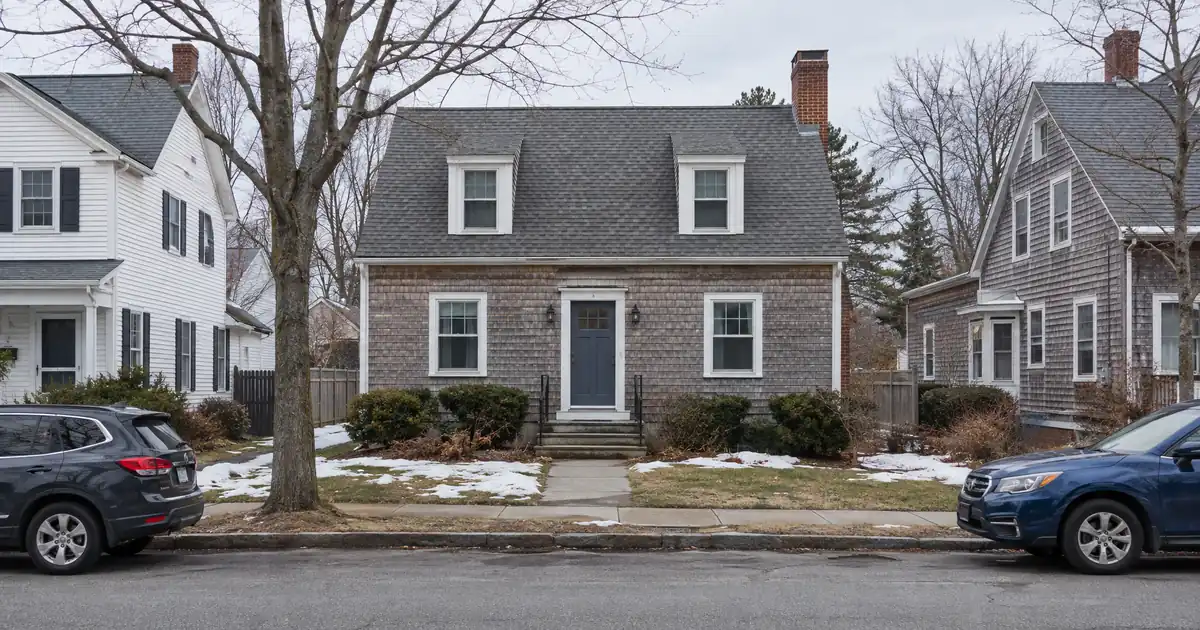
A single-family rental bought at Portland’s median price does not clear a 1.00x coverage test once taxes and insurance go into the denominator. Redfin puts the median sale price at about $623,000, while Zumper’s average rent runs near $2,300. Run those two numbers through a standard 75% LTV purchase and the ratio lands somewhere in the mid-0.5s to low-0.6s, including taxes and insurance. That is a modeled result, not a market print. It is also why this market belongs to small multifamily buyers, not house buyers. Every figure here varies by lender and program — guidelines, property type, leverage, and credit profile all apply.
The Quick Read: Investment property financing in Portland, Maine is underwritten primarily on the property’s rental income measured against its full monthly obligation, and with a 4.4% citywide vacancy rate, the rent side is dependable while the price side does the damage.
DSCR Calculator
Run the numbers in Portland, ME
Rate source: Freddie Mac 30-yr average via FRED® — Federal Reserve Bank of St. Louis · effective Sep 24, 2026
Prefilled with starting assumptions — enter your own rent or nightly figures, taxes, insurance, and HOA for a more accurate picture.
Program parameters update from Lendmire’s centralized guideline source. Taxes and insurance are editable estimates.
As of Sep 24, 2026 · General Freddie Mac market benchmark, not a Lendmire loan offer. Rent, nightly rate, occupancy, taxes, and insurance are editable estimates. Short-term rental figures are estimates only and vary significantly by season, property type, management approach, and local short-term-rental rules — confirm local regulations before relying on them. Qualifying income for short-term rentals varies by program — some use appraisal market rent, others use documented STR history or projections — and is confirmed in underwriting. Not a Loan Estimate, approval, or commitment to lend. Program availability and eligibility are subject to lender guidelines, credit approval, property review, and underwriting.
- Single-family at the citywide median sits well under 1.00x in modeled math.
- Duplex and triplex stacking is the structural fix for coverage.
- West End and Oakdale pair hospital and university demand with workable entry prices.
- Deering trades current coverage for multi-year appreciation.
Portland Market Snapshot
A quick read on the Portland investor landscape — figures come from the cited sources below. Confirm current property-level numbers before underwriting.
| Metric | Detail |
|---|---|
| University enrollment | 6,257 students (fall 2024) (University of Southern Maine) |
| Population | 69,572 population (Census Reporter Portland ME) |
| Employment | ~11,000 employees (2025) (IDEXX Laboratories) |
| Vacancy | 4.4% (Bangor Daily News) |
Why the Median-Priced House Fails
The peninsula’s price level outruns its rents. Zillow’s index shows the average Portland home value at $566,902, down 0.5% over the past year, and Downtown/Old Port sits higher at $658,336. Meanwhile the median one-bedroom rent is $1,922, up just over 2.5% year over year. Rent growth is positive. It is not outrunning the purchase price.
Here is the modeled version. Assume a $623,000 purchase at 75% LTV, a 30-year fixed structure, and Maine-average taxes and insurance folded into the full monthly obligation. A lone unit renting at $2,300 produces roughly 0.55x to 0.60x. A duplex with two units at the $1,922 one-bedroom median produces just under 1.00x. A triplex at the same price, with three units at that median, lands around 1.4x. (A triplex would not actually trade at the citywide median, so treat that figure as a ceiling, not an expectation.) Final terms depend on lender guidelines, property type, leverage, and the borrower’s complete credit picture.
The point isn’t the decimals. The point is that unit count moves the number more than neighborhood choice does. A local brokerage notes that cash flow is usually better on duplexes than single-family homes, with a lower gross rent multiplier on the multi-unit product. The DSCR math agrees.
Duplexes, Triplexes, and the Pre-1940 Stock
Portland’s housing stock is old and dense. Census-derived figures show 47.9% of units were built before 1940, and renters occupy 54.9% of housing units. That legacy stock produced the 2-4 unit buildings that DSCR programs are built to finance. Most standard DSCR programs use a 1.00x benchmark because rent covers the payment at that level. Some lenders will review lower ratios, but those files typically need lower leverage, more cash down, or stronger compensating factors.
Old buildings come with a skeptical footnote. A pre-1940 triplex can carry deferred systems, and a coverage ratio built on full-market rents assumes the units are rentable at those rents. Underwrite from actual leases, not asking rents. If a seller’s rent roll is 20% above what the building’s lease history shows, the DSCR the lender calculates won’t match the one in the listing.
Lender guidelines also matter. Typical purchase LTV runs 75% to 80%, meaning roughly 20% to 25% down, with 85% reserved for the strongest files where guidelines allow. Pricing and available terms vary by lender, borrower profile, property type, and full underwriting review. Loan sizes reach $3,000,000 on standard programs. Manufactured homes, log homes, and barndominiums fall outside these programs entirely. All of this is subject to lender guidelines and varies by borrower, property, and scenario.
West End and Oakdale: The Cash-Flow Pair
These two submarkets have the clearest tenant anchors in the city. The West End’s rental base leans on proximity to Maine Medical Center. MaineHealth operates the 929-licensed-bed flagship and employs about 23,000 people across the system, and Data USA shows 6,680 Portland residents working in health care and social assistance, the city’s largest resident sector. A West End fourplex marketed on its walk to the hospital is selling a lease-length story: shift-based employment doesn’t evaporate when tourism softens.
Pricing is the second reason. Zillow’s index puts the typical West End home at $553,716, up 2.8% over the past year, a hair below the citywide average and well under Downtown. West End is a cash-flow submarket, not an appreciation play. Buy it for coverage on day one.
Oakdale is the cheaper-rent version of the same thesis. Zumper lists it as one of the most affordable neighborhoods at $1,792 a month, alongside East End at $1,850 and Parkside at $1,870. A two-unit building there sits within walking distance of the University of Southern Maine, which reported 6,257 students in its fall figures. Enrollment counts differ by source (one aggregator shows 7,604), so verify against the school’s own fact book before leaning on either.
Low rents cut both ways, though. They signal affordable entry, but a $1,792 unit needs a lower purchase price to clear coverage than a $1,922 unit does. Entry price matters more than neighborhood label.
The Back Cove Mirage
Zumper reports Back Cove rents up 94.6% year over year to $2,950 a month. Skip that number. It rests on 14 rentals, and a sample that thin tells an underwriter almost nothing. A lender’s appraiser and rent schedule will lean on comparable leases, not a viral percentage. Underwrite Back Cove conservatively and don’t trend the spike forward.
Deering and South Portland (Cheaper Entry, Different Trade)
Deering is where the appreciation case lives. A published analysis found East Deering and Deering Center values more than doubling over nine years, with North Deering and Oakdale producing equity gains in the high-five and low-six figures. Those are trailing outcomes, and recent citywide prints have been flat to soft. Treat Deering as a hold-for-equity thesis with adequate, not spectacular, current coverage.
South Portland is the frequent value comparison. Zillow’s average value there is $540,160, up 2.5%, with homes going pending in around eight days. At that price, a modeled single-family at 75% LTV and $2,300 rent improves to roughly the high-0.6s, still under 1.00x. A two-unit building is where it crosses. The discount buys you a better ratio, not a passing one. These specifics are subject to lender guidelines and a full review of property, leverage, and credit.
Reading the Vacancy Data Skeptically
Tight vacancy supports full-rent underwriting. The 4.4% citywide figure is one of the tightest among large U.S. cities. But one analysis argues true apartment vacancy sits closer to 5.4%, with demand outpacing roughly 3,600 new units planned over three years statewide. Reasonable analysts disagree on the vacancy level. They agree on direction: thin supply, firm rents.
Honestly, that’s a genuine toss-up for modeling. Stress the file at 5% to 6% vacancy anyway. A 1.05x deal that needs zero downtime to work is a thin deal.
What a Portland Purchase File Looks Like
On files from markets structurally like this one, high-priced, old-stock, supply-constrained, the common friction point is the rent schedule, not the borrower. Cleaner files tend to arrive with signed leases, a unit-by-unit rent roll, and an appraisal-ready rent comparison for each unit. Files where the seller’s rents are asking figures rather than collected figures tend to get re-run at lower numbers, and the coverage ratio moves with them.
Title also matters. Investors buying through an LLC should expect that structure to be reviewed subject to lender program eligibility.
Before committing to any building, verify current local rental rules, taxes, and insurance with qualified Portland professionals. Those costs sit inside the denominator and vary by property.
To pressure-test a specific building, ask Lendmire to review the file or call 828-256-2183.
Frequently Asked Questions
Can a single-family rental in Portland reach 1.00x?
Rarely at peninsula prices. Modeled at the citywide median with full taxes and insurance, a single unit renting near $2,300 falls well short of 1.00x. Off-peninsula pockets and South Portland improve the ratio, but a duplex or triplex is the more reliable route to the benchmark. Some programs review sub-1.00 files with more cash down or stronger compensating factors.
Which Portland neighborhoods have the strongest entry-price-to-rent ratios?
Zumper lists Oakdale ($1,792), East End ($1,850), and Parkside ($1,870) as the most affordable by rent. The West End pairs a typical value near $553,716 with hospital-driven demand. Rent alone doesn’t decide coverage, so compare each building’s price against its documented unit rents.
DSCR vs. conventional financing
There are two common ways to finance an investment property in Portland, ME, and they qualify you differently — here’s how investors weigh them.
Why investors choose it
- Qualifies on the property’s rental income — no personal tax returns, W-2s, or pay stubs needed to document income.
- No personal debt-to-income ceiling to clear, so existing mortgages and obligations don’t cap your borrowing the same way.
- Can be closed in an LLC, keeping the property inside a business entity.
- Built for scaling — not held to the limit on number of financed properties that conventional financing applies.
- Underwriting centers on the deal: generally qualifies when the rent covers the payment, a 1.00x coverage ratio being a common baseline (confirmed in underwriting).
- Designed specifically for investment property, including long-term and, where the program allows, short-term rentals.
Where it’s strong
- Often the lowest ongoing financing cost for a buyer who fully qualifies on personal income — a fit for a first property or a cost-first purchase.
Trade-offs for investors
- Requires full personal income documentation and must fit within a debt-to-income limit — salary, existing debts, and other mortgages all count.
- Typically held in your personal name rather than a business entity.
- Caps how many financed properties you can carry, which can become a ceiling as a portfolio grows.
- Evaluates you as a borrower as much as the property, which usually means more paperwork.
How investors usually choose: a first or single property often optimizes for the lowest financing cost; portfolio builders often optimize for leverage, vesting in an LLC, and scaling past conventional caps. The right answer depends on your goals, the property, and current guidelines — both paths run through select lenders in Lendmire’s wholesale network, with eligibility and terms confirmed in underwriting.
Does Maine Medical Center really support rental demand?
It anchors the largest employment sector among Portland residents. MaineHealth’s flagship is a 929-licensed-bed teaching hospital, and health care and social assistance employs 6,680 residents. That supports steady occupancy for hospital-adjacent small multifamily, though it doesn’t override a bad purchase price.
How much down payment should a Portland investor expect?
Typically 20% to 25% on a purchase, with up to 85% LTV (15% down) only on the strongest files where guidelines allow. Reserves of about six months of full obligation are common. Exact terms vary by lender, credit profile, and property.
Is Deering better than the West End for a first purchase?
Depends on the goal. Deering has posted larger multi-year equity gains, while the West End offers firmer day-one coverage from hospital demand. A buyer who needs the ratio to clear at closing leans West End. A buyer comfortable with thinner coverage while waiting on appreciation might lean Deering.
For current guidelines and terms, see Lendmire’s DSCR loan programs page.
About Lendmire
Lendmire, NMLS# 2371349, is a non-QM mortgage broker serving real estate investors in 41 markets, including Washington, D.C., through DSCR investor loan programs. Qualification is generally reviewed around the subject property’s rental income rather than the borrower’s W-2 history, which suits LLC-titled portfolios and self-employed investors. All scenarios remain subject to lender review and program guidelines. The firm has earned two consecutive Scotsman Guide Top Mortgage Workplace recognitions: a 2025 Scotsman Guide Top Workplace and a top-ranked workplace in 2026.
For broader investor-financing rules and property-type coverage across the state, see Maine DSCR loans.
Get Started
Ready to find the right loan for you?
In about 30 seconds you can review financing options available for your investment property. No commitment required.
Informational only. Not a Loan Estimate, approval, or commitment to lend. Program availability and eligibility are subject to lender guidelines, credit approval, property review, and underwriting.
References
1. Redfin: Portland Housing Market
2. Zumper: Portland, ME Rent Research
3. Bangor Daily News: Portland’s tight rental market
4. University of Southern Maine
5. Census Reporter Portland ME
7. Zillow Home Values: Portland, ME
8. $658,336
9. brianporter.com — Portland Duplex
10. U.S. Census Bureau QuickFacts: Portland city, Maine
12. typical West End home at $553,716
13. Zillow — Home Values South Portland ME
14. blog.rentalbeast.com — Maines Rental Market
15. a 2025 Scotsman Guide Top Workplace
16. Scotsman Guide — Top Workplaces 2026
This article is part of Lendmire’s DSCR loan program — full qualification details, guidelines, and scenarios live on the program page.
Related reading: Luxury Rental DSCR Loans In New Jersey · Jersey Shore Vacation Rental Loans: DSCR Financing In Ocean City, Cape May And Long Beach Island · DSCR Cash-out Refinance In New Jersey: Pulling Equity From A Rental
Guides: DSCR Loans in Portland, ME · DSCR Loans in Maine
Brandon Miller
Founder & CEO, Mortgage Loan Originator, Lendmire LLC
- Mortgage Loan Originator · NMLS# 1129696 · Verify on NMLS Consumer Access
- North Carolina Real Estate Broker · License# 343312 · Verify on NCREC
- North Carolina Insurance Producer · License# 19053198 · Property, Casualty, Life, Health · Verify on NAIC SBS
- Lendmire LLC · Firm NMLS# 2371349 · Verify firm licensure
Required disclosures. Lendmire (NMLS# 2371349) operates as a licensed mortgage broker, not a direct lender or depository. The discussion in this article is general in nature and should not be relied upon as financial, legal, or tax advice — every investment scenario is unique and should be reviewed by a qualified professional. Any loan inquiry is subject to lender underwriting, and this article is not a commitment to lend or a guarantee of approval. Mortgage rates, loan terms, and program guidelines vary by borrower, property, and state, and may change without notice. Equal Housing Opportunity. Verify licensure at NMLS Consumer Access.