
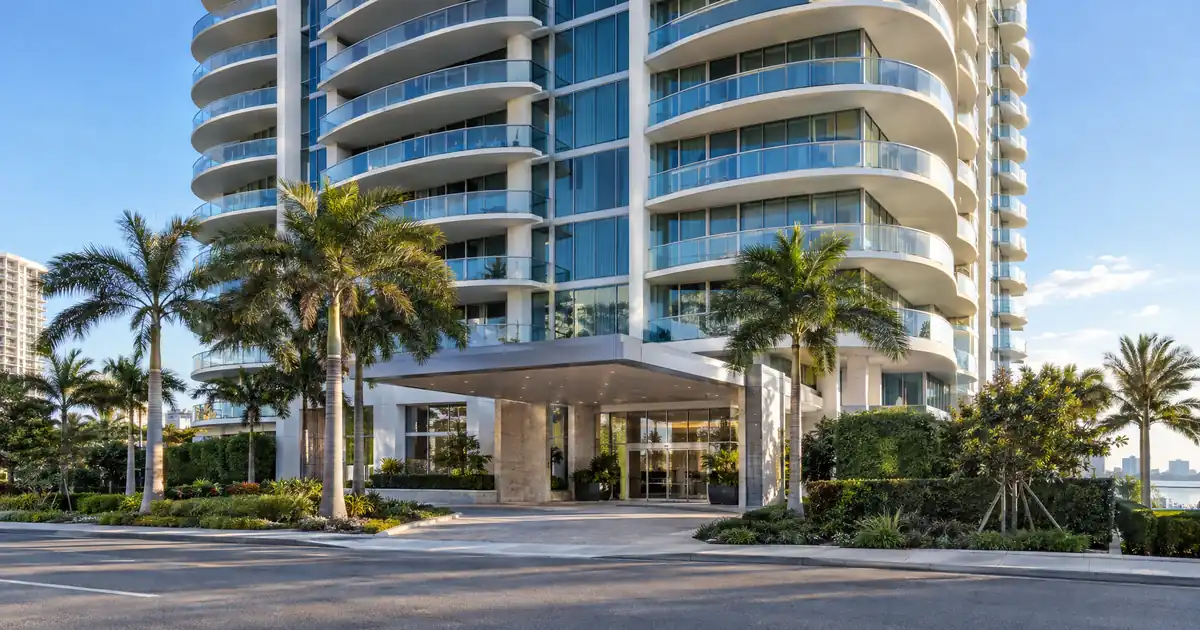
Jumbo DSCR Loan Requirements For A Warrantable Condo Rental — The Quick Read: A warrantable condo rental that needs jumbo-sized financing does not go through Fannie Mae or Freddie Mac review at all once it’s underwritten as a DSCR loan. The loan is reviewed on whether the unit’s rent covers its monthly payment — not on your personal income, and not on agency condo-approval rules. Leverage steps down as the loan size climbs, credit and reserve requirements tighten past certain thresholds, and HOA dues become a direct line item against your coverage ratio. Warrantable status still matters — it’s just not the gate you think it is. Terms vary by lender guidelines, property type, leverage, credit profile, and full file review.
Most investors assume “warrantable” is the finish line. Get the building approved, get the loan. That’s true if you’re going conventional. It’s mostly beside the point on a DSCR loan, because DSCR lenders never plug into the agency pipeline in the first place.
DSCR Calculator
Run the numbers in your market
Rate source: Freddie Mac 30-yr average via FRED® — Federal Reserve Bank of St. Louis · effective Sep 17, 2026
Prefilled with local estimates — enter your own rent or nightly figures, taxes, insurance, and HOA for a more accurate picture.
Program parameters update from Lendmire’s centralized guideline source. Taxes and insurance are editable estimates.
As of Sep 17, 2026 · General Freddie Mac market benchmark, not a Lendmire loan offer. Rent, nightly rate, occupancy, taxes, and insurance are editable estimates. Short-term rental figures are estimates only and vary significantly by season, property type, management approach, and local short-term-rental rules — confirm local regulations before relying on them. Qualifying income for short-term rentals varies by program — some use appraisal market rent, others use documented STR history or projections — and is confirmed in underwriting. Not a Loan Estimate, approval, or commitment to lend. Program availability and eligibility are subject to lender guidelines, credit approval, property review, and underwriting.
Key Terms Defined
Warrantable condo: A condo building that meets Fannie Mae and Freddie Mac’s project standards for owner-occupancy, HOA financial health, insurance, and litigation status — the standard that lets a lender sell the loan to the agencies.
Non-warrantable condo: A condo building that fails one or more of those agency standards — often too many investor-owned units, ongoing litigation, or a shaky HOA budget.
DSCR loan: A business-purpose loan sized around the property’s own rental income rather than your traditional personal-income documentation or W-2s — the debt-service coverage ratio measures whether rent covers the full monthly obligation.
PITIA: Principal, interest, taxes, insurance, and HOA association dues — the full monthly obligation a lender measures rent against on a condo file.
HO-6 policy: The unit owner’s personal condo insurance policy, which fills the gap the HOA’s master policy leaves in the interior of the unit.
Why Warrantability Barely Moves the Needle on a DSCR File
Warrantable status determines whether a condo can go through conventional, agency-eligible financing. It does not determine whether a DSCR lender will finance the unit, because DSCR loans are never sold to Fannie Mae or Freddie Mac to begin with.
Fannie Mae maintains its condo project standards through the Selling Guide and a lender-facing tool called Fannie Mae Condo Project Manager, which certifies whether a project clears occupancy, litigation, insurance, and HOA-financial thresholds. That entire system exists to protect the agencies’ ability to buy and securitize the loan later. A DSCR lender in Lendmire’s wholesale network holds a different kind of file — the loan is priced and reviewed on its own merits, never packaged for agency purchase. So the CPM certification, the Limited Review, the full agency condo questionnaire — none of that machinery is part of the underwriting.
That’s why non-warrantable condos aren’t a dead end on the DSCR side. Across the programs Lendmire’s team places files with, non-warrantable condos are reviewable to 75% leverage and up to $1,500,000, subject to underwriting — a door conventional lending typically closes outright.
Warrantable status still shapes the file, just less dramatically. A warrantable building is usually the cleanest version of a condo collateral type, and it typically draws the most favorable leverage tier available for condos on a given file. Non-warrantable buildings get treated more conservatively — lower leverage, a lower cap on loan size — but they’re not excluded.
How Underwriting Actually Treats the Condo, Step by Step
the deal works through five practical stages, and none of them route through an agency approval desk.
Step 1 — Property classification. The lender flags the collateral type: warrantable condo, non-warrantable condo, condotel, single-family, or small multifamily. This sets the leverage and reserve overlay for the file. A warrantable condo typically clears the friendliest terms among condo types; a condotel gets the tightest.
Step 2 — Appraisal. Condo units get appraised on the standard industry form built for individual units within a project, which asks project-level questions — construction quality, common elements, recreational amenities, whether there’s commercial space in the building — alongside the usual unit-specific valuation. That same appraisal, paired with a rent schedule, supplies the market rent figure your coverage ratio gets built on.
Step 3 — HOA document pull. Instead of a formal agency project submission, the lender collects a condo questionnaire, HOA financial statements, master insurance declarations, and any litigation disclosure. This gets reviewed qualitatively against the lender’s own condo overlay rather than checked off an agency form.
Step 4 — Insurance stack review. Two policies matter here: the HOA’s master policy and your own HO-6 policy. Master policies typically fall into “bare walls-in” coverage, which stops at the unfinished structure, or “all-in” coverage, which extends further into the unit’s original fixtures. Your HO-6 needs to fill whatever gap the master policy leaves — a bare-walls building requires meaningfully more personal coverage than an all-in building.
Step 5 — DSCR calculation. The lender divides the property’s rent by its full monthly obligation — principal, interest, taxes, insurance, and HOA dues together. On a condo, that HOA line item is real money against your coverage number. A high monthly assessment can turn an otherwise strong rental into a marginal file compared to a similarly priced single-family rental with no dues at all.
Reserve and appraisal detail moves with loan size, which is where the ladder starts to matter more than the warrantability label. Two appraisals become standard practice above $2,000,000, and files typically carry six months of PITIA reserves on the subject property — twelve for first-time investors — regardless of whether the building is warrantable.
Where the Dollar Amount Actually Changes the Deal
Key Takeaways:
- Leverage steps down as loan size climbs — it’s not a flat percentage across every price point.
- Warrantable condos generally clear the best available leverage tier for condo collateral; non-warrantable condos cap out lower.
- Credit requirements tighten from a 660 floor to 700+ once you cross $3,000,000.
- HOA dues count directly against your coverage ratio — model them, don’t ignore them.
- Cash-out proceeds shrink as leverage rises and disappear entirely above $3,000,000.
Across select programs in Lendmire’s network, loan-size tiers on a business-purpose investment condo run roughly like this at full 1.00 DSCR coverage or better: purchase and rate-and-term leverage runs to 80% from $150,000 to $1,000,000 with a 660 credit floor, then steps to 75% from $1,000,000 through $3,000,000 with 700+ credit above $1,000,000. Cash-out is scoped tighter — a 75% ceiling on standard rental collateral in that same $150,000-$1,000,000 band, dropping to 70% through $1,500,000 and 60% through $3,000,000. No cash-out is available above $3,000,000 at all.
Past $3,000,000, the standard DSCR program hands off to a higher-balance ladder that carries qualified investors to $10,000,000, purchase or rate-and-term only. Leverage runs 65% from $3,000,000 to $4,000,000 and 60% from $4,000,000 through $10,000,000, with every request above $4,000,000 reviewed case by case before submission — never a flat “up to” figure at that size.
Coverage below 1.00 isn’t automatically off the table, either. Ratios between roughly 0.75 and 0.99 are a real path on select programs up to $2,000,000, though leverage and terms adjust to compensate, subject to underwriting. No-ratio qualification — where the file doesn’t lean on a coverage number at all — is available through a handful of programs in the network up to $2,000,000, generally requiring a seven-year clean housing history and no late payments or major derogatory events in the trailing two years.
Warrantable Condotels and STR Condos Break the General Rule
A condo doesn’t need the word “condotel” in its HOA documents to get treated like one. Heavy short-term rental activity can pull a building into hotel-style underwriting on the lender side. A public booking presence on platforms like Airbnb can do this too. This can happen even to a nominally “warrantable” building. This is a separate issue entirely from agency warrantability.
Where a building does get classified as a condotel, leverage caps lower: 75% on purchase, 65% on refinance, capped at $1,500,000, and cash-out on a condotel requires $250,000 in cash-in-hand on top of the leverage limit. That’s meaningfully tighter than a standard warrantable condo, even one in the same building complex that happens not to carry the condotel label.
Short-term rental income counts at 80% of gross rent. This applies to any qualifying condo, condotel or not. On a refinance, this income comes from twelve months of documented operating history. On a purchase, it comes from the appraisal’s short-term-rent analysis. This path generally requires the investor to have owned income property in the trailing thirty-six months. It isn’t available on the no-ratio path. Municipal permission to operate a short-term rental must be documented for the specific unit. Short-term rental rules vary by city, county, HOA, and property type. So investors should confirm local rules first. Don’t assume a building’s warrantable status means STR is allowed.
Florida Buildings Add a Layer Independent of Warrantability
A building can be fully warrantable and still carry real underwriting friction from structural-reserve law, which has nothing to do with Fannie Mae or Freddie Mac eligibility.
Florida has a rule for condo buildings with three or more habitable stories. Their associations must order a structural integrity reserve study. This study covers eight critical structural components. This comes from Florida Statute 718.112(2)(g). Some buildings also meet certain age thresholds. These buildings face milestone inspection requirements too. These inspections check structural safety directly. A DSCR lender’s condo review can flag problems here. A missing or overdue reserve study is one example. A stale milestone inspection is another. Either one can be a real risk factor. This can happen even on a technically warrantable building. This is property-condition risk. It sits entirely outside the agency’s warrantable/non-warrantable label.
DSCR vs. conventional financing
Two common ways to finance an investment property in this market. They qualify you differently — here’s how investors weigh them.
Why investors choose it
- Qualifies on the property’s rental income — no personal tax returns, W-2s, or pay stubs needed to document income.
- No personal debt-to-income ceiling to clear, so existing mortgages and obligations don’t cap your borrowing the same way.
- Can be closed in an LLC, keeping the property inside a business entity.
- Built for scaling — not held to the limit on number of financed properties that conventional financing applies.
- Underwriting centers on the deal: generally qualifies when the rent covers the payment, a 1.00x coverage ratio being a common baseline (confirmed in underwriting).
- Designed specifically for investment property, including long-term and, where the program allows, short-term rentals.
Where it’s strong
- Often the lowest ongoing financing cost for a buyer who fully qualifies on personal income — a fit for a first property or a cost-first purchase.
Trade-offs for investors
- Requires full personal income documentation and must fit within a debt-to-income limit — salary, existing debts, and other mortgages all count.
- Typically held in your personal name rather than a business entity.
- Caps how many financed properties you can carry, which can become a ceiling as a portfolio grows.
- Evaluates you as a borrower as much as the property, which usually means more paperwork.
How investors usually choose: a first or single property often optimizes for the lowest financing cost; portfolio builders often optimize for leverage, vesting in an LLC, and scaling past conventional caps. The right answer depends on your goals, the property, and current guidelines — both paths run through select lenders in Lendmire’s wholesale network, with eligibility and terms confirmed in underwriting.
Historically, agency review treated occupancy type very differently. Investment-property condo transactions almost always needed the deepest level of agency scrutiny. Industry sources tracking Fannie Mae condo approval standards summarize this guidance. Primary residences and second homes got materially different LTV and CLTV treatment too. This is one more reason rental-condo buyers already faced friction on the conventional side. This happened long before they reached a DSCR lender. The agency path was never built with the landlord in mind.
Trust and Entity Vesting on a Warrantable Condo
Investors who hold rental property in an LLC or trust generally find vesting works cleanly on a DSCR condo file. There are no layered-entity restrictions like agency lending imposes. Lendmire’s complete DSCR loans guide walks through how property-level qualification interacts with entity ownership more broadly. Some investors are specifically weighing whether a trust-held condo clears a jumbo file. For them, the mechanics of holding a super-jumbo condo in trust are worth a closer look before the file goes in.
DSCR loans are built for non-owner-occupied investment properties. They are business-purpose investor loans. Because of this, they get reviewed differently than a standard owner-occupied mortgage. DSCR loans are also exempt from TRID disclosure rules. This includes the Loan Estimate and Closing Disclosure timeline. Those rules apply to consumer-purpose mortgages. They don’t apply to business-purpose investment financing.
What This Looks Like on an Actual File
Run the numbers on a warrantable condo priced around $1.2 million with rent that clears roughly 1.15x coverage after the HOA dues are factored into the monthly obligation. At that loan size, the file sits in the $1,000,000-$1,500,000 leverage band — purchase and rate-and-term to 75%, cash-out to 70%, with a 700+ credit floor. Because the coverage ratio clears above 1.00, the file draws full leverage rather than the reduced terms a sub-1.00 file would carry.
Now compare that against a similarly priced non-warrantable building with an identical rent roll. The DSCR math doesn’t change — same rent, same HOA dues, same coverage ratio. What changes is the leverage ceiling: non-warrantable condos cap at 75% and $1,500,000 regardless of loan size band above that, so a non-warrantable unit priced past that ceiling needs a larger down payment to make the deal work, or doesn’t clear the program at all.
Lendmire places files across a wholesale network. In that network, condos that stall in underwriting almost never stall on warrantability itself. They stall on the HOA side instead. A litigation disclosure might surface mid-file. A reserve study might be years overdue. A special assessment might not have been in the original questionnaire. Any of these can slow a deal down. This happens regardless of the agency label the building carries. Getting current HOA financials and the master insurance declarations pulled before the appraisal is ordered tends to save the most time. This is true for condo files specifically, warrantable or not.
Above $2,000,000, expect two independent appraisals rather than one — a standard practice on higher-balance condo files, and worth reading about in more depth if you’re weighing a two-appraisal jumbo purchase against a smaller, single-appraisal deal.
How This Compares to Conventional Financing
| Factor | DSCR Jumbo | Conventional Jumbo |
|---|---|---|
| Review basis | Property rent vs. PITIA | Personal income, DTI, traditional personal-income documentation |
| Condo review | Lender’s own overlay | Agency CPM / Full Review |
| Non-warrantable option | Yes, to 75% and $1,500,000 | Generally no |
| Entity/LLC vesting | Generally straightforward | Typically restricted |
For a broader look at how the two paths differ beyond condos specifically, Lendmire’s DSCR vs. conventional investment loan comparison covers the structural differences in more depth.
Tax treatment can depend on how the funds are used and how the property is held; investors should keep clear records and speak with a qualified tax professional before relying on any deduction.
Frequently Asked Questions
Does a non-warrantable condo disqualify me from jumbo DSCR financing?
No. Non-warrantable condos are reviewable through select programs in Lendmire’s network to 75% leverage and up to $1,500,000, subject to underwriting. Warrantability affects the leverage ceiling and loan-size cap on condo collateral — it doesn’t eliminate the option the way it typically does on conventional financing.
Do HOA dues really affect my DSCR ratio?
Yes, directly. The coverage ratio measures rent against the full monthly obligation, which includes taxes, insurance, and HOA dues alongside principal and interest. A high monthly assessment can pull an otherwise strong rental below the coverage threshold needed for full leverage.
Can I use short-term rental income to qualify a condo?
Yes, on qualifying properties, at 80% of gross rent sourced from either twelve months of operating history or the appraisal’s short-term-rent analysis. This generally requires you to have owned income property within the trailing thirty-six months, and it isn’t available on the no-ratio path. Confirm the building and local rules actually permit short-term rental use before counting on that income.
What credit score do I need for a jumbo condo purchase?
Most programs in Lendmire’s network start at a 660 floor, stepping up to 700 or better once the loan crosses $3,000,000. Reserve requirements also rise for first-time investors, typically to twelve months of PITIA rather than six.
Does a warrantable condotel get the same terms as a warrantable regular condo?
No. Buildings with heavy short-term rental activity often get treated as condotels regardless of their formal agency classification, capping leverage at 75% purchase, 65% refinance, and $1,500,000 — with $250,000 in cash-in-hand required for any cash-out request.
Are you buying or refinancing a rental condo? Do you want to see how the numbers actually work? Lendmire can help you compare DSCR loan options. This comparison looks at the property’s rental income, the building’s condo classification, your credit profile, and your investor goals.
For current guidelines and terms, see Lendmire’s super jumbo DSCR loan programs page.
Self-employed borrowers can compare both super jumbo programs on Lendmire’s self-employed mortgages page.
About Lendmire
As a non-QM mortgage broker (NMLS# 2371349), Lendmire facilitates DSCR investor loans across 40 markets, including Washington, D.C. DSCR eligibility is generally reviewed around property-level rental income instead of personal income documentation, subject to lender guidelines, serving LLC-structured portfolios and self-employed borrowers who don’t fit conventional boxes. A two-time Scotsman Guide Top Mortgage Workplace (2025, 2026).
Lendmire’s Top Mortgage Workplace recognition is documented by Scotsman Guide 2025 Top Mortgage Workplace and Scotsman Guide 2026 Top Mortgage Workplace.
Get Started
Ready to find the right loan for you?
In about 30 seconds you can review financing options available for your home or investment property. No commitment required.
Informational only. Not a Loan Estimate, approval, or commitment to lend. Program availability and eligibility are subject to lender guidelines, credit approval, property review, and underwriting.
References
1. Fannie Mae Condo Project Manager (CPM)
2. Florida DBPR Condominium Information & Resources FAQs
3. Condo-Approval.com — Fannie Mae Condo Approval Guide
Brandon Miller
Founder & CEO, Mortgage Loan Originator, Lendmire LLC
- Mortgage Loan Originator · NMLS# 1129696 · Verify on NMLS Consumer Access
- North Carolina Real Estate Broker · License# 343312 · Verify on NCREC
- North Carolina Insurance Producer · License# 19053198 · Property, Casualty, Life, Health · Verify on NAIC SBS
- Lendmire LLC · Firm NMLS# 2371349 · Verify firm licensure
Legal disclosures. Lendmire (NMLS# 2371349) is a state-licensed mortgage brokerage that arranges financing through wholesale lender relationships. Lendmire is not a direct lender, depository institution, or registered financial advisor. The discussion above is general informational content about real estate financing — it is not financial, legal, or tax advice, and readers should consult licensed professionals for guidance on their individual circumstances. Loan inquiries are subject to lender underwriting; this article does not represent a commitment to lend. Loan terms, rates, and qualification standards vary by borrower, property, and state, and are subject to change at any time. Equal Housing Opportunity. NMLS Consumer Access: nmlsconsumeraccess.org.


