
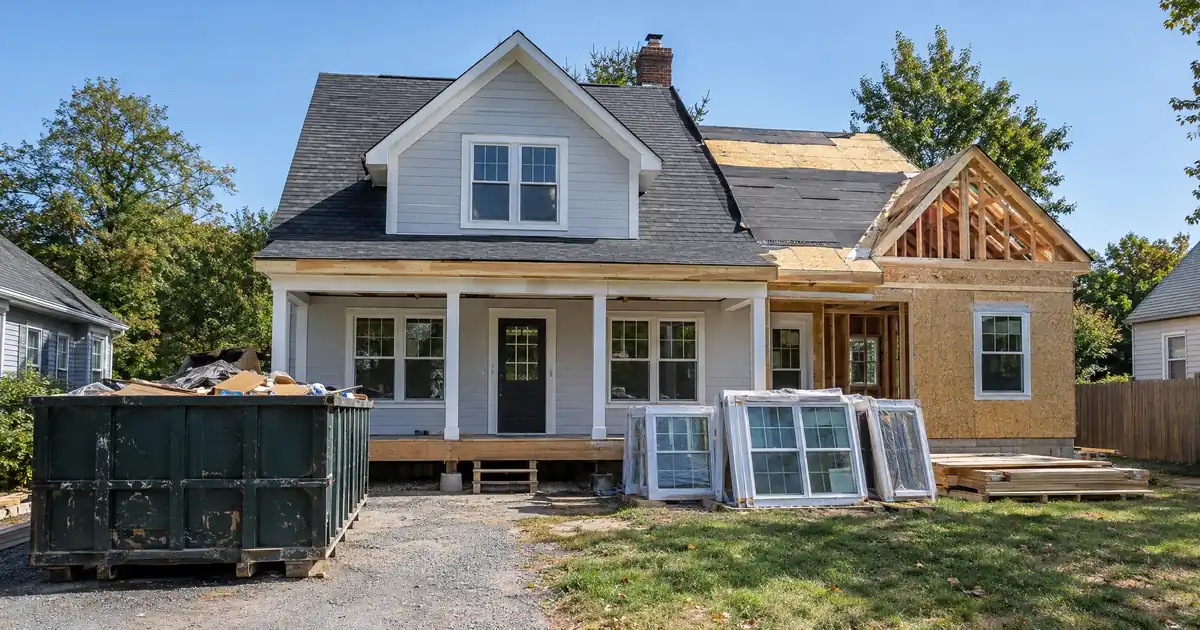
The Quick Read: The new lender’s own appraisal, not your after-repair estimate, decides whether the refinance pays off the private note. The loan has to be large enough to cover the payoff statement plus closing costs, and the rent has to support the coverage test as well.
- The exit lender orders its own appraisal. Your ARV is only a planning number.
- On a DSCR cash-out refinance, the ceiling is typically 75% of appraised value on a standard rental, subject to lender guidelines.
- The break-even appraisal is the payoff plus closing costs, divided by that leverage cap.
- Value and rent are two separate tests. The tighter one controls the loan size.
- Seasoning is typically about 6 months from title recording, and an early refinance may be sized on cost instead of value.
A BRRRR (buy, rehab, rent, refinance, repeat) deal in an LLC lives or dies at one moment. The appraiser walks the finished property, and that value sets the loan that has to retire your private money. This guide walks through how that works, step by step, and where it breaks.
DSCR Cash-Out Calculator
Run the cash-out numbers in your market
Rate source: Freddie Mac 30-yr average via FRED® — Federal Reserve Bank of St. Louis · effective Oct 8, 2026
Prefilled with starting assumptions — enter your property’s value, balance, taxes, and insurance for a more accurate picture.
Program parameters update from Lendmire’s centralized guideline source. Taxes and insurance are editable estimates.
As of Oct 8, 2026 · General Freddie Mac market benchmark, not a Lendmire loan offer. Property value, balance, taxes, and insurance are editable estimates. Maximum loan-to-value varies by lender, program, property type, and seasoning. Not a Loan Estimate, approval, or commitment to lend. Program availability and eligibility are subject to lender guidelines, credit approval, property review, and underwriting.
Key Terms Defined
- Private loan: short-term, interest-only money used to buy and rehab the property. Hard money is the common version.
- ARV (after-repair value): your estimate of what the property is worth once the work is done.
- Appraised value: the number the exit lender’s appraiser reports. It sizes the new loan.
- Payoff statement: the private lender’s written figure for principal, accrued interest, and fees, good through a stated date.
- Seasoning: the waiting period a lender wants between buying and refinancing against value.
- Break-even appraisal: the lowest appraised value at which the new loan still covers the payoff and closing costs.
- DSCR (debt service coverage ratio): monthly rent divided by the full monthly payment, meaning principal, interest, taxes, insurance, and any HOA dues.
What Does “Clearing the Private Loan” Mean at Closing?
It means the new loan funds, the title company pays the private lender’s payoff first, then covers closing costs, and sends whatever is left to your LLC. If the new loan is smaller than payoff plus costs, the file does not close unless you bring cash.
The private loan is usually interest-only and runs 6 to 18 months on hard money, varying by lender, property, and experience. The payoff keeps growing as interest accrues, and extension or exit fees can add to it. So the number you needed on day one is not the number you need at the refinance.
At the table, the order is simple:
1. The title company confirms the lien and the payoff statement’s valid-through date.
2. The new lender’s funds pay off the private lien.
3. Closing costs come out.
4. Anything left goes to the LLC as cash back.
Cash back is the new loan, minus the payoff, minus closing costs. Nothing in that equation includes what you spent on the rehab. Per a practitioner glossary on the BRRRR method, the refinance amount is a function of the appraisal, not of the money you put in. The strategy is not a regulated product either. It is an ordinary refinance, and the lender’s own policy governs it.
Why Your ARV Is Not the Number
Your ARV is a planning figure. The exit lender orders its own appraisal, and that report sizes the loan. A DSCR appraisal is a standard value appraisal with a rent opinion attached. For a single-family home, the rent opinion is usually the Form 1007 comparable rent schedule, paired with the standard value report. For 2-4 units, Fannie Mae’s Form 1025 combines value and unit-level rent analysis in one report. The forms are named here only because appraisers use them. They do not set DSCR program rules.
Appraisers tend to credit finished work such as a new roof or completed kitchen. Half-finished work can pull the value down. Some conditions can also make a property ineligible until repaired, so finish the scope before the appraiser arrives.
The Break-Even Appraisal Formula
Run this before you buy and again before you order the appraisal. It takes four lines:
1. Take the payoff statement figure, good through your expected closing date.
2. Add estimated closing costs.
3. Divide by the leverage cap, 75% on a standard rental cash-out.
4. The result is the minimum appraised value that clears the private loan.
Here is a modeled example in index units, not dollars. Say the payoff is 70 and closing costs are 3. Seventy-three divided by 0.75 gives roughly 97. An appraisal at 97 or better clears the note with nothing left over. Anything above that produces cash back. Anything below it leaves a gap.
The cap matters. A DSCR cash-out refinance tops out around 75% of value on a standard rental across most of the network, and a short-term rental cash-out is typically held to 70%. Both are subject to lender guidelines, so use the lower figure if your plan involves hosting.
This is also where the private loan gets sized backward from the exit. The hard money program typically funds up to 85% to 93% of project cost depending on experience, capped at 75% of after-repair value, varying by lender, property, and experience. A bridge sized near that ceiling can leave you with a payoff no realistic appraisal clears at a 75% refinance. Work out the break-even before you accept the private loan, not after.
What a Miss Does to Your Cash
Appraisal misses hit harder than they look, because the cash back is a thin slice of a large number. Consider a modeled example where a plan produces a 5-point cash-out. If the appraisal comes in 10% under plan, that does not just erase 10% of the cash. At a 75% cap, a 10% miss drops the new loan by 7.5 points. The 5-point cash-out becomes a 2.5-point shortfall. That is a 7.5-point swing from one number. These are index units for illustration only, not market data.
If you want a safety margin, a lender-side rule of thumb is to budget for an appraisal five to ten percent below your best case. Treat that as a heuristic, not a forecast.
| Appraisal vs. plan | New loan | Result |
|---|---|---|
| At plan | Covers payoff and costs | Cash back to the LLC |
| Slightly low | Roughly covers payoff | Little or no cash back |
| Well below plan | Short of payoff plus costs | Bring cash, shrink, wait, or contest |
Why the Payoff Keeps Growing
Every month you wait adds interest to the private loan. Extension fees and exit fees can stack on top. Ask the private lender for a written payoff statement that lists principal, accrued interest, fees, and a valid-through date, plus the per diem. A per diem is the daily interest that accrues after that date.
The private lender usually will not accept a partial payoff and release the lien. Plan on a full payoff. Because the hard money program runs interest-only with no prepayment penalty, early payoff itself is not usually a cost on the private side. Check the new loan too, since a prepayment penalty on a first-step loan can interfere with a later cash-out step.
The LLC Layer
An LLC can do this, subject to lender program eligibility. The practical issue is consistency. The LLC that holds title on the private loan, the deed, the insurance policy, and the lease should be the same entity that borrows on the exit loan.
Expect to provide:
- the operating agreement
- the EIN letter
- a certificate of good standing, where the program asks for it
- a personal guaranty from the owner, on most DSCR programs
Documents vary by program. Decide on vesting before you buy. Moving a property into an LLC after purchase can trigger a title review, and some lenders may treat the transfer as a new ownership date.
One more point. An LLC alone does not guarantee liability protection, so ask an attorney how to structure it.
Two Tests, Not One
Value sets the maximum loan. Rent sets the coverage ratio. The lower of the value-based limit and the rent-based limit governs.
DSCR compares rent to the full monthly payment only. On most standard programs the floor starts at 1.00, and stronger ratios open better pricing and leverage. A separate select-lender path takes coverage below 1.00, with leverage and terms adjusted. Strong rent does not rescue a weak appraisal, and a high appraisal does not rescue weak rent.
Clearing 1.00 is also not the same as positive cash flow. Repairs, vacancy, management, utilities, and capex all sit outside the calculation. A property can pass the ratio and still be thin in your pocket.
A cash-out refinance on a DSCR loan typically wants a score of about 660 on most programs, with 620 available in parts of the network and 700+ unlocking the strongest tiers. Reserves are commonly about 6 months of payment, and about 9 months above $1,500,000. Loan sizes run up to $3,000,000 on standard programs. All of this is subject to lender guidelines and varies by borrower and property.
Seasoning: When the Clock Starts
Seasoning is lender policy, not law. On DSCR cash-out files, about 6 months of ownership is the common expectation, measured from title recording rather than from the day the rehab ends. Policies vary by lender and program, so treat any single anecdote about seasoning as just that.
For contrast only, the agency side runs differently. Fannie Mae’s Selling Guide sets a 6-month ownership requirement for its own cash-out refinances and carves out a delayed-financing exception for cash buyers. That exception does not carry over to DSCR programs, and it fails a BRRRR anyway. Under the earlier version of that guide, the purchase had to be arm’s length, and the settlement statement had to show no mortgage financing. A private-loan purchase fails that test.
Inside the seasoning window, a lender may size the new loan on your cost basis, meaning purchase price plus documented rehab, instead of appraised value. The value you created stays locked in the property. If you are close to the window, waiting a few weeks can change the loan size, and each month adds to the payoff. Run both numbers before you decide.
Work backward from your private loan’s maturity date. If it ends before the seasoning clears, ask early about an extension and what it costs.
If the Appraisal Comes In Low
Diagnose first. Is the problem value, rent, or both?
| Problem | What it affects | Typical fix |
|---|---|---|
| Value low | Loan size and cash back | Contest with documented errors, or resize |
| Rent low | Coverage ratio | Support with lease or better rent comps |
| Both | Loan size and eligibility | Wait, restructure, or bring cash |
Opinion disputes usually lose. Documented errors and missed facts can win. Think wrong square footage, closed comps the appraiser skipped, or completed work the report left out. Build a packet with closed comps and an itemized rehab scope, and route it through the lender, not the appraiser.
You do not have a legal right to a value appeal on an investor loan. Federal guidance on reconsideration of value describes how regulated banks and similar institutions may handle such requests, but it does not hand investors a right to one, so a non-bank investor loan follows the lender’s own policy.
If the contest fails, your fallbacks are:
| Option | Trade-off |
|---|---|
| Bring cash to close | Keeps the deal, ties up capital |
| Take a smaller loan | Possible only if the payoff is covered |
| Wait and extend | Adds to payoff each month |
| Pay off with other funds | Resets your next cycle |
A disappointing appraisal means the shortfall stays in the property, and the next cycle gets smaller or does not happen. That is the real cost.
Back-Solving Before You Buy
Run the formula in reverse. Start with the realistic appraised value, multiply by 75% for a standard rental cash-out, subtract closing costs, and you have the maximum payoff you can clear. Then work back to your maximum all-in cost, meaning purchase, rehab, carry, and fees. If a plan only works at the top of your value range, it does not work.
A conservative appraisal assumption protects you. An improvement may support a higher appraised value, depending on comps and underwriter review, but it never guarantees one.
Many investors refinance out of hard money into long-term DSCR financing once the property is stabilized, and Lendmire brokers that path through its hard money exit refinance program. Start planning that exit at purchase, not at maturity. For the full picture of how these loans work, see the complete DSCR loans guide.
Tax treatment can depend on how the funds are used and how the property is held; investors should keep clear records and speak with a qualified tax professional before relying on any deduction. This article is not legal or tax advice, so consult a qualified attorney or CPA about your own situation.
Frequently Asked Questions
Can the refinance pay off my private loan?
Yes, if the appraised value times the leverage cap covers the payoff plus closing costs. On a standard rental cash-out the ceiling is typically 75% of value, subject to lender guidelines. Run the break-even formula before you order the appraisal.
Does the lender use my ARV?
No. The exit lender orders its own appraisal, and that value sizes the loan. Your ARV is a planning number. Inside the seasoning window, the lender may size on cost basis instead.
Can an LLC do this?
Generally yes, subject to lender program eligibility. The same LLC should hold title, insurance, and the lease, and expect to supply the operating agreement and EIN letter. Decide on vesting before you buy.
What if the appraisal is low?
Diagnose whether value, rent, or both fell short. Contest documented errors through the lender, not the appraiser. Otherwise bring cash, take a smaller loan, wait, or extend the private loan.
Does clearing the coverage ratio mean I have cash flow?
No. DSCR compares rent to the monthly payment only. Repairs, vacancy, management, utilities, and capex sit outside it, so a file can clear 1.00 and still run thin.
If you are buying, rehabbing or refinancing an investment property on a short timeline and want to see how the numbers work, Lendmire can help you compare hard money options based on the project, the exit plan, leverage, and your goals.
About Lendmire
Lendmire (NMLS# 2371349) is a mortgage brokerage built around DSCR investor lending, with programs available in 41 markets, including Washington, D.C. DSCR lenders commonly evaluate rental-income coverage instead of personal income paperwork — a practical fit for LLC-owned and multi-property investors. Terms vary by lender, property, leverage, and program. Scotsman Guide named Lendmire a Top Mortgage Workplace in both 2025 and 2026.
Get Started
Ready to find the right loan for you?
In about 30 seconds you can review financing options available for your investment property. No commitment required.
Informational only. Not a Loan Estimate, approval, or commitment to lend. Program availability and eligibility are subject to lender guidelines, credit approval, property review, and underwriting.
References
3. Fannie Mae Selling Guide B2-1.3-03
This article is part of Lendmire’s hard money loan program — full qualification details, guidelines, and scenarios live on the program page.
Related reading: Investment Property HELOC Requirements for a Five-Rental Airbnb Portfolio · How to Handle a Low Rental HELOC Appraisal in a Five-Plus Portfolio · Can an Airbnb Cash Out When the Lender Discounts Its Income?
Brandon Miller
Founder & CEO, Mortgage Loan Originator, Lendmire LLC
- Mortgage Loan Originator · NMLS# 1129696 · Verify on NMLS Consumer Access
- North Carolina Real Estate Broker · License# 343312 · Verify on NCREC
- North Carolina Insurance Producer · License# 19053198 · Property, Casualty, Life, Health · Verify on NAIC SBS
- Lendmire LLC · Firm NMLS# 2371349 · Verify firm licensure
Disclosure information. Lendmire is a state-licensed mortgage brokerage under NMLS# 2371349. Lendmire is not a depository institution, direct lender, or financial advisor — all loans referenced are placed through wholesale lender partners and are subject to each lender's underwriting standards. This article is provided for general informational purposes and is not a commitment to lend, nor does it constitute financial, legal, or tax advice. Loan programs, terms, rates, and qualification standards change without notice and depend on borrower profile, property type, and the state in which the subject property is located. Equal Housing Opportunity provider. NMLS Consumer Access: nmlsconsumeraccess.org.