
The Quick Read: Yes, in most DSCR programs an LLC can be the borrower on a short-term rental, subject to lender guidelines. The loan is reviewed primarily on property-level rental income covering the payment. The LLC’s owner usually signs a personal guaranty, so the entity does not remove personal liability on the loan.
- Form the LLC before you go under contract, so title starts in the entity’s name.
- Short-term rental purchases typically reach up to 75% LTV on the strongest files, and cash-out or refinance up to 70%.
- Expect a 640 minimum credit score and about 12 months of hosting experience.
- Coverage starts at 1.00 on purchases and on refinances.
- Moving a property you already own into an LLC can trigger a due-on-sale clause. Sequence it carefully.
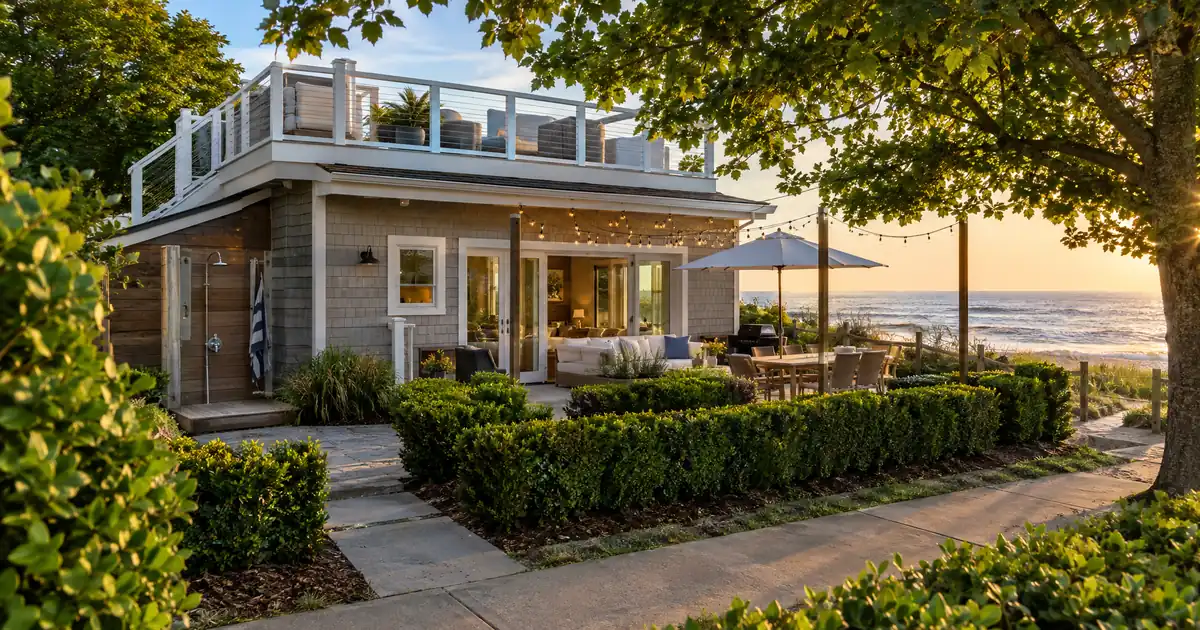
Picture a first-time buyer with a clean credit file and a lakeside cabin that books well. The only question is whether to sign the contract as an individual or as “Cabin Holdings LLC.” That choice shapes the loan, the title, the insurance, and what happens if a guest sues. This guide walks through it.
Short-Term Rental Calculator
Run the STR numbers in your market
Rate source: Freddie Mac 30-yr average via FRED® — Federal Reserve Bank of St. Louis · effective Oct 15, 2026
Prefilled with starting assumptions — enter your nightly rate, occupancy, taxes, and insurance for a more accurate picture.
Short-term rental income is documented with a 12-month history or a market data report. Program parameters update from Lendmire’s centralized guideline source.
As of Oct 15, 2026 · General Freddie Mac market benchmark, not a Lendmire loan offer. Nightly rate, occupancy, taxes, and insurance are editable estimates. Qualifying income for short-term rentals varies by program — some use appraisal market rent, others use documented STR history or projections — and is confirmed in underwriting. Not a Loan Estimate, approval, or commitment to lend. Program availability and eligibility are subject to lender guidelines, credit approval, property review, and underwriting.
How Does a DSCR Loan Work for an LLC-Owned Airbnb?
A DSCR loan, short for debt service coverage ratio, compares the property’s rental income to its monthly housing payment. The LLC is the named borrower. The lender looks at whether the property’s income covers the payment, then reviews the guarantor’s credit and reserves.
The payment in that formula is PITIA: principal, interest, taxes, insurance, and HOA dues if any. Divide the qualifying income by that payment and you get the coverage number. Across the wholesale network Lendmire works with, short-term rental files start at 1.00 on purchases and on refinances. Stronger ratios tend to open better terms.
A separate select-lender path takes coverage below 1.00, with leverage and terms adjusted. Treat that as an exception, not a plan.
One caution. Clearing 1.00 is not the same as positive cash flow. Repairs, vacancy, cleaning, management, utilities, and furniture replacement all sit outside the calculation. Plenty of Airbnbs pass the lender’s test and still lose money. Lendmire’s complete DSCR loans guide covers the ratio in more depth.
What Program Numbers Apply to an LLC Airbnb Purchase?
Short-term rental files carry tighter terms than long-term rental files. Here is what most programs we place files with look like, always subject to lender guidelines and not a commitment to lend.
| Factor | Short-Term Rental Range |
|---|---|
| Purchase LTV | Up to 75% on the strongest files |
| Cash-out / refinance LTV | Up to 70% |
| Minimum credit score | 640 |
| Coverage floor | 1.00 purchase, 1.00 refinance |
| Experience | About 12 months hosting |
| Loan size | Up to $3,000,000 standard |
A 70% cash-out ceiling applies to short-term-rental collateral. A standard long-term rental can go higher. Reserves vary by lender, leverage, and loan size, and many files land near six months of PITIA. Investment properties that are manufactured homes, log homes, or barndominiums are not offered through these programs.
A bigger down payment lowers the payment and can lift the ratio. It does not erase credit floors, reserve rules, or leverage caps. The strongest files clear both tests: enough equity and enough rental coverage.
What Does the LLC Do (and Not Do)?
The LLC separates the property’s operating risk from your other assets. It does not make the loan non-recourse. In nearly every DSCR file, the owner signs a personal guaranty, and a multi-member LLC typically has its members guarantee.
Think of it as two layers. The LLC can help shield you from claims that arise from running the property, such as a guest injury. The guaranty keeps you on the hook for the loan itself if the LLC stops paying. Your score, as guarantor, still drives your pricing tier.
Any page that implies an LLC buys you a guarantee-free loan is oversimplifying. Which members must sign varies by program, so ask before you structure partners.
For the liability side, talk to an attorney. The LLC is a legal tool, and its protection depends on how you run it.
How Do You Buy the Airbnb in Your LLC, Step by Step?
Form the entity first. Closing in the LLC from day one avoids a later deed transfer and the risks that come with it. Here is the usual sequence.
1. Form the LLC and get the EIN. Open a business bank account in the entity’s name.
2. Confirm the program accepts entity borrowers. This is subject to program terms, and most DSCR programs do.
3. Confirm the rental is allowed. Short-term rental rules can vary by city, county, HOA, and property type, so investors should confirm local rules before relying on projected rental income.
4. Choose your income evidence. More on this below.
5. Order the appraisal. The lender typically wants a market rent schedule along with the value opinion.
6. Gather entity documents. Lenders commonly ask for articles of organization, the operating agreement, a good-standing certificate, the EIN letter, and a signing-authority resolution for multi-member LLCs.
7. Close in the LLC’s name. The deed records to the LLC and the guarantor signs the guaranty.
Match everything to the entity. If your booking account or permit sits in your personal name while the loan sits in the LLC, expect questions or a request to change the name. Insurance should match too. A standard homeowner policy is rarely written for an entity-owned rental, so ask your agent early.
For deeper comparisons, see Lendmire’s piece How Vesting in an LLC Changes Your Airbnb Loan Choice.
How Is Short-Term Rental Income Proven?
Lenders accept different evidence, and the method you pick can decide whether the number clears. Common paths include an appraiser’s short-term rental income analysis, a trailing-12-month property-manager or platform statement, bank statements showing deposits, or a market-data projection on a purchase.
Many investors assume a booking history is optional. On our files, most short-term rental programs expect about 12 months of hosting experience from the borrower, and projections for a property with no history are usually discounted. Ask each lender which method applies before you pay for an appraisal.
The appraisal form is a trap for the unwary. The standard rent schedule form, Form 1007, estimates traditional 12-month rent for a one-unit property. Fannie Mae’s June 2024 appraiser update says the form was not designed for appraising homes used as short-term rentals. Form 1025 serves 2-4 unit properties. DSCR loans are not agency products, so this is context only. The practical point: a long-term rent estimate can come in well below true Airbnb income, and your ratio shifts with it.
Run the math both ways. Calculate coverage on short-term income and on supportable long-term rent. If the long-term number also clears, you have a cushion if bookings soften.
Already Own the Airbnb?
Think Twice Before Deeding It In.
If you own the property personally with a mortgage, deeding it to your LLC can trigger the due-on-sale clause. That clause lets a lender demand the full balance when the property transfers.
Federal law protects some transfers. The Garn–St Germain Act bars lenders from calling the loan on listed transfers, such as to a relative after the borrower’s death. It applies only to residential property with fewer than five dwelling units. The implementing rule, 12 CFR 191.5, frames its limits around a home occupied by the borrower. A landlord moving a rental into an LLC has no clear safe harbor.
Many lenders never enforce it. But you carry the risk, and you have no federal protection if one does.
Three cleaner routes exist:
- Get the existing lender’s written consent first.
- Refinance into a DSCR loan, vesting the property in the LLC at that closing. The old loan pays off at the same closing, so no gap exists.
- Leave it personal if the LLC adds little for you.
The first two need coordination with your attorney, CPA, and lender. For the loan-choice side, see Lendmire’s article, DSCR vs Conventional When Vesting an Airbnb in an LLC vs Your Name.
DSCR vs. conventional financing
There are two common ways to finance an investment property, and they qualify you differently — here’s how investors weigh them.
Why investors choose it
- Qualifies on the property’s rental income — no personal tax returns, W-2s, or pay stubs needed to document income.
- No personal debt-to-income ceiling to clear, so existing mortgages and obligations don’t cap your borrowing the same way.
- Can be closed in an LLC, keeping the property inside a business entity.
- Built for scaling — not held to the limit on number of financed properties that conventional financing applies.
- Underwriting centers on the deal: generally qualifies when the rent covers the payment, a 1.00x coverage ratio being a common baseline (confirmed in underwriting).
- Designed specifically for investment property, including long-term and, where the program allows, short-term rentals.
Where it’s strong
- Often the lowest ongoing financing cost for a buyer who fully qualifies on personal income — a fit for a first property or a cost-first purchase.
Trade-offs for investors
- Requires full personal income documentation and must fit within a debt-to-income limit — salary, existing debts, and other mortgages all count.
- Typically held in your personal name rather than a business entity.
- Caps how many financed properties you can carry, which can become a ceiling as a portfolio grows.
- Evaluates you as a borrower as much as the property, which usually means more paperwork.
How investors usually choose: a first or single property often optimizes for the lowest financing cost; portfolio builders often optimize for leverage, vesting in an LLC, and scaling past conventional caps. The right answer depends on your goals, the property, and current guidelines — both paths run through select lenders in Lendmire’s wholesale network, with eligibility and terms confirmed in underwriting.
Key Terms Defined
DSCR: the property’s qualifying income divided by its full monthly housing payment.
PITIA: principal, interest, taxes, insurance, and HOA dues if any.
Personal guaranty: your signed promise to repay if the LLC does not.
Recourse: the lender’s right to pursue your personal assets after default.
Due-on-sale clause: a loan term that lets the lender demand payoff when ownership transfers.
Vesting: how title is held, such as in your name or in an LLC.
Seasoning: the waiting period a lender wants between events, such as buying and refinancing.
When Is an LLC the Wrong Move?
An LLC is not automatic. Skip it, or delay it, when:
- You hold a low-balance property with minimal liability exposure, and the formation and annual costs outweigh the benefit.
- Your existing loan has a strict due-on-sale position and you cannot refinance yet.
- You have not confirmed the program accepts entity borrowers, or the entity is owned by another entity or trust. Extra ownership layers get traced and can complicate the file.
- You expect to buy with a spouse or partner and have not settled who guarantees.
Scaling is the flip side. Because qualification runs on the property rather than on your personal income, adding properties does not stack personal debt-to-income the way conventional files do. Many investors use one LLC per property, others group several. Your attorney should guide that choice, including where to form the entity.
Tax treatment varies; consult a qualified professional before relying on any deduction.
Common Mistakes
- Deeding first, refinancing later. This invites a due-on-sale problem.
- Treating strong nightly rates as approval. Permits, HOA rules, and income evidence can still sink the file.
- Mismatched names. The booking account, utilities, and insurance should line up with the borrower.
- Multiplying the nightly rate by 30. The appraisal rent schedule does not work that way.
- Assuming credit does not matter. The guarantor’s credit is reviewed, and the score sets the pricing tier.
If you want help comparing options, Lendmire is a broker arranging DSCR financing through select lenders in its wholesale network, across 41 markets including Washington, D.C. You can reach the team at 828-256-2183.
This article is educational and is not legal or tax advice. Consult a qualified attorney or CPA about your own entity, title, and tax situation.
Frequently Asked Questions
Can an LLC get a DSCR loan on an Airbnb?
Usually, yes, subject to program terms. The LLC signs the note and mortgage, and the owner signs a guaranty. The file is judged on the property’s rental coverage plus the guarantor’s credit and reserves. Purchases typically reach up to 75% LTV on the strongest short-term rental files.
Do I still guarantee the loan personally?
In most cases, yes. The guaranty keeps the loan recourse to you even though the LLC holds title. The LLC can still help protect you from claims arising from operating the property, but it does not erase the repayment obligation.
Do I need rental history to buy?
Programs commonly expect about 12 months of hosting experience from the borrower. For a property with no booking history on a purchase, a market-data projection or an appraiser’s income analysis may be used, usually discounted. Refinances lean on actual history. Lender practice varies, so ask first.
Can I move my existing Airbnb into an LLC?
You can, but the existing mortgage may include a due-on-sale clause. Get written lender consent, or refinance into a DSCR loan and vest the property in the LLC at that closing. Cash-out refinances on short-term rental collateral go up to 70% LTV. Terms depend on the lender’s guidelines, the property type, the leverage, and a full review of the credit profile.
Do I need a separate LLC for each property?
No rule requires it. Some investors use one entity per property to contain liability, and others hold several in one entity. Both can work with lenders, but ownership layers and multi-member structures add documentation, so decide with your attorney.
About Lendmire
Lendmire (NMLS# 2371349) is a mortgage brokerage built around DSCR investor lending, with programs available in 41 markets, including Washington, D.C. DSCR lenders commonly evaluate rental-income coverage instead of personal income paperwork — a practical fit for LLC-owned and multi-property investors. Terms vary by lender, property, leverage, and program. Scotsman Guide named Lendmire a Top Mortgage Workplace in both 2025 and 2026.
Get Started
Ready to find the right loan for you?
In about 30 seconds you can review financing options available for your investment property. No commitment required.
Informational only. Not a Loan Estimate, approval, or commitment to lend. Program availability and eligibility are subject to lender guidelines, credit approval, property review, and underwriting.
References
1. Fannie Mae, Appraiser Update June 2024
2. Cornell LII, 12 U.S.C. §1701j-3
This article is part of Lendmire’s short-term rental loan program — full qualification details, guidelines, and scenarios live on the program page.
Related reading: Can You Refi Into a DSCR Loan Before 12 Months of Airbnb Bookings? · Can a Resort Condo Airbnb Get a DSCR Loan With HOA Restrictions? · How to Qualify for a Portfolio DSCR Loan for an LLC STR Investor
Brandon Miller
Founder & CEO, Mortgage Loan Originator, Lendmire LLC
- Mortgage Loan Originator · NMLS# 1129696 · Verify on NMLS Consumer Access
- North Carolina Real Estate Broker · License# 343312 · Verify on NCREC
- North Carolina Insurance Producer · License# 19053198 · Property, Casualty, Life, Health · Verify on NAIC SBS
- Lendmire LLC · Firm NMLS# 2371349 · Verify firm licensure
Disclosure information. Lendmire is a state-licensed mortgage brokerage under NMLS# 2371349. Lendmire is not a depository institution, direct lender, or financial advisor — all loans referenced are placed through wholesale lender partners and are subject to each lender's underwriting standards. This article is provided for general informational purposes and is not a commitment to lend, nor does it constitute financial, legal, or tax advice. Loan programs, terms, rates, and qualification standards change without notice and depend on borrower profile, property type, and the state in which the subject property is located. Equal Housing Opportunity provider. NMLS Consumer Access: nmlsconsumeraccess.org.