
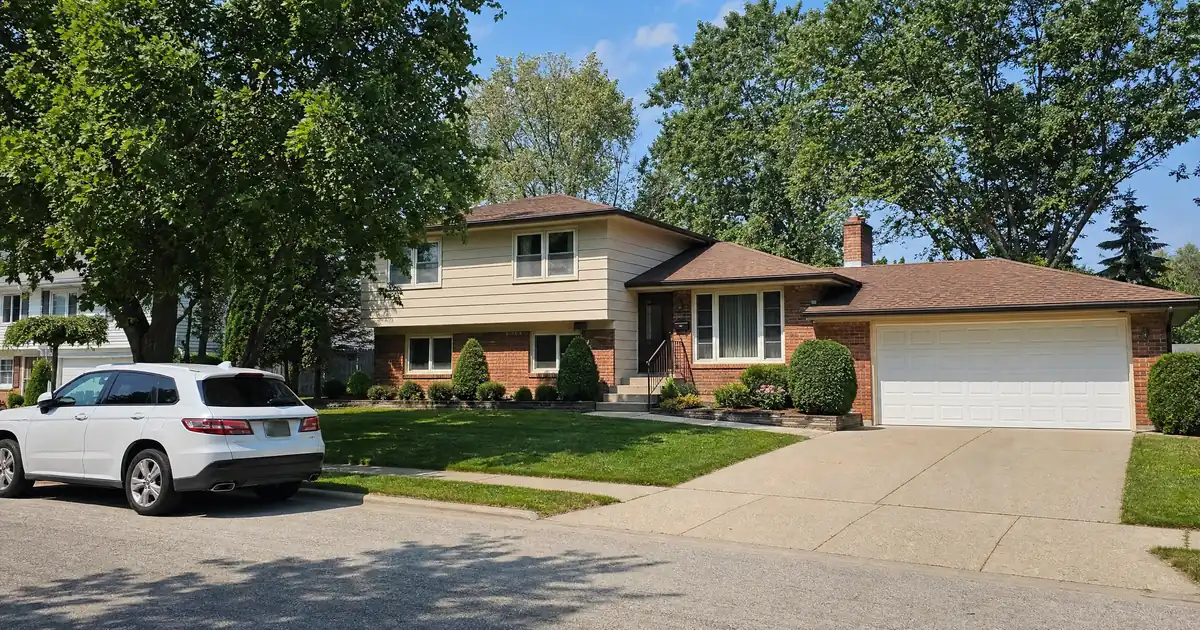
Long Distance Landlording For Beginners — The Quick Read: Long-distance landlording means you own and run a rental property far from home. Sometimes it’s a few states away. Sometimes it’s across the country. This works today because financing, rent documentation, and day-to-day management no longer need you nearby. A lender looks at the property’s rental income. It doesn’t care about your commute. The real work isn’t managing the distance. It’s building the right systems — a manager, a lease, an inspection routine, and a solid grasp of local landlord-tenant law. Get those right, and distance stops being a problem.
A few things matter more than everything else once you start looking at properties outside your own backyard:
DSCR Calculator
Run the numbers in your market
Rate source: Freddie Mac 30-yr average via FRED® — Federal Reserve Bank of St. Louis · effective Aug 13, 2026
Prefilled with local estimates — enter your own rent or nightly figures, taxes, insurance, and HOA for a more accurate picture.
Program parameters update from Lendmire’s centralized guideline source. Taxes and insurance are editable estimates.
As of Aug 13, 2026 · General Freddie Mac market benchmark, not a Lendmire loan offer. Rent, nightly rate, occupancy, taxes, and insurance are editable estimates. Short-term rental figures are estimates only and vary significantly by season, property type, management approach, and local short-term-rental rules — confirm local regulations before relying on them. Qualifying income for short-term rentals varies by program — some use appraisal market rent, others use documented STR history or projections — and is confirmed in underwriting. Not a Loan Estimate, approval, or commitment to lend. Program availability and eligibility are subject to lender guidelines, credit approval, property review, and underwriting.
- DSCR financing qualifies a property based on rent versus payment — not on where the buyer lives. Geography doesn’t move the underwriting needle.
- Rent gets documented through a standardized appraisal exhibit (Form 1007 for a single unit, Form 1025 for two-to-four units). It’s not a spreadsheet the buyer puts together.
- Professional management commonly runs 8%-12% of collected rent for long-term leases, according to National Association of Residential Property Managers data cited by industry sources. On top of that come separate leasing and renewal fees most first-time remote owners forget to budget for.
- Landlord-tenant law is state (and sometimes city) law, full stop. Eviction notice periods and procedures vary a lot by jurisdiction. Owners should confirm current requirements with a qualified local attorney or property manager, not assume the rules from one market apply elsewhere.
- Short-term rentals, reserve requirements, and a short list of property types work differently under DSCR programs. Know the exceptions before you assume the general rule applies to your deal.
Key Terms Defined
DSCR (debt-service coverage ratio): This ratio compares a property’s monthly rent to its full monthly housing payment. Clear 1.00, and the rent covers that payment, dollar for dollar, on paper.
PITIA: This stands for principal, interest, taxes, insurance, and association dues — all combined into one monthly obligation. It’s the figure DSCR measures rent against.
LTV (loan-to-value): This is the percentage of a property’s value the loan covers. The rest is the down payment.
Seasoning: This is how long a lender wants an investor to own a property before refinancing it. Lenders usually measure it from the date title was recorded at purchase.
Business-purpose loan: This is a loan made against a property held for rental income or investment — not as someone’s primary home.
Form 1007 / Form 1025: These are the standardized appraisal exhibits used to document a rental property’s market rent. Form 1007 covers a single unit. Form 1025 covers a two-to-four unit building.
What Actually Counts as Long-Distance Landlording?
Long-distance landlording covers anyone who owns a rental they can’t drive to on a whim. Maybe it’s a relocated homeowner who kept the old house as a rental. Maybe it’s an heir managing a property they inherited in another state. Or maybe it’s an investor who bought outside their home market on purpose, chasing better rent-to-price math. All three end up in the same spot: someone else has to be your eyes on the ground.
This isn’t a fringe strategy anymore. Real estate investor activity in the U.S. single-family market held at roughly 30% of all purchases through 2025. Out-of-state buyers specifically accounted for 6.53% of single-family purchases in the first quarter of 2026, up from 6.28% a year earlier, according to HousingWire’s coverage of out-of-state investment trends. That’s a meaningful and growing slice of buyers who never set foot in the county before closing.
DSCR loans are built for non-owner-occupied investment properties. Because they’re business-purpose investor loans, lenders review them differently than a standard owner-occupied mortgage. That’s exactly why they’ve become the go-to financing tool for remote buyers. Nobody on the underwriting side asks where you sleep at night.
How Underwriting Actually Treats a Remote Owner
The lender underwrites the property, not the buyer’s zip code. Rent versus payment is the whole test. A Charlotte-based investor buying in Ohio gets evaluated on the same rent-to-PITIA math as someone buying three blocks from home.
That’s the mechanical core of a DSCR loan. The lender checks whether the property’s rent covers its monthly obligation. It doesn’t pull your W-2s, standard income documents, or run a personal debt-to-income calculation. Qualification runs mainly on whether the property’s rental income covers the payment, subject to lender guidelines — not on your job, your employer, or where you physically live.
Most files across Lendmire’s wholesale network land at 75%-80% LTV on a purchase — meaning 20%-25% down. Select high-leverage programs reach 85% LTV for borrowers with a credit score around 700 or better. Credit floors run as low as 620 in parts of the network, though most programs prefer something closer to 660. A score of 700 or higher tends to unlock the strongest leverage tiers.
Coverage itself is flexible by design. A 1.00 ratio is where a number of programs start — it’s a floor for specific programs, never a universal standard. Stronger ratios open better pricing and leverage across most of the network. A handful of lenders will review files that land below 1.00, but leverage and terms shift to offset the thinner cushion. This isn’t a fixed, published threshold — lenders review it file by file. Reserve requirements are the liquid cash a lender wants left over after closing. These vary by lender, leverage, and loan size, but commonly run around six months of PITIA. Lenders occasionally waive this on conservative rate-and-term refinances under $1,500,000, and step it up toward nine months above that size.
None of this changes because the buyer lives in a different time zone than the property. The full DSCR loan requirements for investment properties that apply to a local buyer apply the exact same way to a remote one. Underwriting doesn’t have a “how far away do you live” field.
Where the Rent Number Actually Comes From
Rent gets documented through an appraisal exhibit, not a number the buyer supplies. When a lender will use a subject property’s rental income to review a loan, the industry standard is the Single-Family Comparable Rent Schedule — Fannie Mae’s Form 1007 — for one-unit properties. Form 1025 covers two-to-four unit buildings. These are agency-originated forms. But the naming and methodology have become the shared vocabulary across non-QM and DSCR underwriting too.
An appraiser pulls comparable rentals near the subject property. They adjust for differences in size, condition, and amenities. Then they land on a supportable monthly rent figure. That number — not a listing price the buyer saw on a rental site — feeds the DSCR calculation. For a remote buyer who’s never toured the block, this is a real safeguard. It means the rent figure driving the loan comes from a licensed third party analyzing actual local comps, not the buyer’s optimism.
Building the Team That Stands In for You
A property manager becomes the owner’s eyes, hands, and day-to-day judgment once the buyer is hundreds of miles away. Fees generally stack in layers rather than showing up as one flat number. Industry surveys put the average management fee somewhere between 8% and 12% of collected rent for long-term leases. One broader survey landed closer to 8.49%, with a range from 3.75% up to 14% depending on the market and service level. On top of that recurring fee, expect a leasing or placement fee — commonly a half-month to a full month’s rent when a new tenant signs — plus a separate lease renewal charge.
Short-term rentals run a completely different fee structure, often 25%-40% of gross booking revenue. That reflects the heavier day-to-day workload of turnover, guest communication, and nightly pricing. Multifamily management tends to run lower, often 4%-12%, since the per-door overhead spreads across more units. Treating “10%” as a blanket planning number regardless of asset type is a common mistake. The fee structure has to match the property type you actually bought.
Beyond the manager, a remote investor typically needs a short local bench: an agent who understands investor deals, a contractor for repairs the manager can’t handle in-house, and — critically — someone who knows the specific eviction and notice rules in that state. Smart-lock and self-showing technology has closed a lot of the physical-distance gap for leasing and turnovers. A manager, or even the owner, can handle showings and move-ins without anyone flying in.
A quick note on operator experience: DSCR files tied to remote-owned properties tend to move cleaner through underwriting when the rent figure on the appraisal already lines up with what the property manager’s lease actually charges. Mismatches between the appraised rent and the executed lease are one of the more common things that slow a file down. Getting the management contract signed before the appraisal is ordered helps avoid it.
Self-Manage, Hire a Manager, or Sell?
Not every long-distance rental should stay long-distance. Some remote owners are better served selling and putting their money somewhere they can reach. Treating that as a legitimate outcome — not a failure — is honest advice most first-timers never hear.
| Approach | Effort Required | Risk Profile | Best Fit |
|---|---|---|---|
| Self-manage remotely | High — tenant calls, repairs, showings all on you | Highest — no local buffer for problems | Handy owners, simple properties, strong tenant relationships |
| Hire a property manager | Low — manager handles operations | Moderate — depends on manager quality | Most remote owners, especially first-timers |
| Sell and reinvest closer | None ongoing | Lowest ongoing, but a transaction event | Owners overwhelmed by distance or a difficult market |
The middle path — hiring a manager — is where most long-distance landlords land. That’s largely because the fee cost is usually smaller than the cost of a bad remote decision made without local eyes on the ground.
Where the General Rule Breaks: Edge Cases
Programs financing short-term rentals through the network generally lean on booking-platform history and require roughly 12 months of hosting track record, alongside a 1.00 coverage floor on both purchases and refinances—with reduced leverage available below that floor through select lenders—and a credit profile around 640 or better. Appraisers are specifically told not to simply multiply a nightly rate by 30 to estimate monthly rent. That approach ignores vacancy, business expenses, and seasonality baked into short-term rental income. Short-term rentals qualify at a 1.00 coverage threshold on purchase and refinance at reduced maximum leverage, and require a 12-month income history or market data report at most lenders. Purchase leverage on short-term rentals tops out at 75% LTV. Refinance and cash-out generally cap closer to 70%.
Fair housing exemptions rarely help a remote owner. Some fair-housing carve-outs exist for owner-occupied small buildings — a duplex where the owner lives in one unit, for example. A long-distance landlord, by definition, doesn’t occupy the property. So those narrow exemptions almost never apply. Full compliance with federal protections against discrimination based on race, color, national origin, religion, sex, familial status, and disability is the default, not a special case, for anyone renting from a distance. These protections are enforced through HUD’s Office of Fair Housing and Equal Opportunity.
Eviction and notice timelines vary a lot by state. A remote owner can badly misjudge how fast a problem tenant can actually be removed. Notice periods for nonpayment run as short as a few days in some states. No-fault removals with over a year of tenancy can require 30 to 60 days’ notice plus relocation assistance in tenant-protective states. Justia’s 50-state landlord-tenant survey documents just how wide this range runs. An investor moving capital from a landlord-friendly home state into a more tenant-protective destination state is often surprised by how differently the same problem plays out.
Geographic concentration of out-of-state buying isn’t evenly spread. Resort and vacation markets dominate the list of destinations with the highest nonresident ownership shares. Value markets in the Midwest and Sun Belt attract a different type of remote buyer chasing cash flow over appreciation. HousingWire’s analysis of out-of-state investment breaks down how uneven this activity is by region. Where a remote investor buys shapes everything downstream: the manager pool available, the eviction timeline they’re working with, and the property types typically for sale.
That last point matters more than beginners expect. Remote investors chasing a more affordable entry point sometimes end up looking at manufactured homes, log homes, or barndominiums in value markets. These property types fall outside DSCR eligibility across the network entirely. They aren’t “harder to finance.” They’re simply not offered under these programs. A remote buyer should rule them out early, rather than falling in love with a listing that can’t get financed this way.
What the Financing Actually Looks Like in Practice
Loan sizes across the standard DSCR programs generally run up to $3,000,000. Smaller balances get routed through select lenders in the network rather than following one fixed minimum. Above $2,500,000, the network generally sticks to 30-year fixed structures rather than adjustable terms. The 30-year fixed is the spine of most files. But extended 40-year terms and interest-only periods are available through select lenders, and adjustable-rate structures exist for investors who specifically want them.
A handful of state overlays matter for remote buyers targeting higher-cost markets. Purchases in Connecticut, Florida, Illinois, and New Jersey generally cap near 75% LTV rather than the standard 80%. Overlay-state deals often cap around $2,000,000 in loan size. Cash-out refinances top out around 75% LTV network-wide, with roughly six months of seasoning — meaning ownership time since the purchase closing — the common expectation before a lender will consider pulling equity back out.
Investment-property home equity lines are a separate product with a hard ceiling. These cap at $500,000 total, and there’s no higher tier available above that for investment properties. A larger down payment lowers the monthly obligation and can lift the coverage ratio. But it never erases a leverage cap, a credit floor, a reserve requirement, or a property-type restriction. The strongest files clear both the equity test and the rental-coverage test at the same time. Final terms depend on lender guidelines, property type, leverage, and the borrower’s complete credit picture.
Lendmire (NMLS# 2371349) arranges DSCR loans through a wholesale network spanning 40 states plus Washington, D.C. That’s part of why remote, out-of-state buying and DSCR financing show up together so often in practice. Investors comparing options can review Lendmire’s complete DSCR loans guide for a fuller walkthrough of how the qualification math works property by property.
Tax treatment can depend on how rental income is used and how the property is titled. Investors should keep clear records and talk to a qualified tax professional before relying on any deduction, including travel costs tied to visiting an out-of-state rental.
If you’re buying or refinancing a rental property and want to see how the numbers actually work, Lendmire can help compare DSCR loan options based on the property’s income, your credit profile, target leverage, and overall investor goals. Reach the team at 828-256-2183 or request a quote directly.
Loan approval is never guaranteed, and nothing here is a commitment to lend. Every scenario described here is subject to lender approval and to borrower, property, and program guidelines that can change. This article is general information only, not financial, legal, or tax advice. Investors should confirm current terms with a lender before making a purchase or refinance decision.
Frequently Asked Questions
Do I need to have visited the property before closing on a DSCR loan?
No — DSCR underwriting looks at the property’s rent versus its payment, not the buyer’s physical familiarity with the address. Many remote investors close on properties they’ve only seen through video walkthroughs or a local agent’s photos. The appraisal, not a personal visit, supplies the market rent figure the loan gets reviewed against.
How do I know if a market I’ve never lived in will actually cash flow?
Look at the rent-to-price relationship for comparable properties, not just the purchase price. A cheap property in a market with weak rents can produce a worse coverage ratio than a pricier property where rents run strong relative to value. The appraisal’s Form 1007 or Form 1025 comparable rent is the number that ultimately drives DSCR lender review, so pulling local rent comps before making an offer beats guessing.
Can I self-manage a rental if I live in a different state?
It’s possible, but it’s a much heavier lift than local self-management. Every showing, repair call, and lease signing has to happen without you physically there. Most first-time remote owners find a licensed property manager closes that gap more reliably than trying to coordinate everything themselves from a distance. That said, a hands-on owner with strong local contacts can make it work.
Do landlord-tenant laws change based on where I live, or where the property is?
The property’s location controls, not the owner’s. Notice periods, eviction procedures, security-deposit rules, and fair-housing obligations all follow state (and sometimes city) law where the rental sits. An owner living in a landlord-friendly state still has to follow the destination state’s tenant-protective rules if that’s where the property is.
Are short-term rentals treated the same as long-term rentals for DSCR qualification?
No — short-term rentals generally require roughly 12 months of hosting history, a credit profile around 640 or better, and purchase leverage that tops out at 75% LTV rather than the higher ceilings sometimes available on long-term rental purchases. Appraisers also can’t simply annualize a nightly rate to estimate rent used for lender review, so short-term rental files typically lean more heavily on actual booking-platform income history.
About Lendmire
Lendmire is a non-QM mortgage brokerage (NMLS# 2371349) arranging DSCR investor loans in 41 markets, including Washington, D.C., through wholesale and investor-lending channels. Lenders evaluate DSCR loans based on rental income rather than personal income, subject to lender guidelines. This makes them a fit for LLC-owned portfolios, self-employed investors, and operators scaling beyond conventional loan caps. Recognized as a Scotsman Guide Top Mortgage Workplace in 2025 and 2026.
Lendmire’s Top Mortgage Workplace recognition is documented by Scotsman Guide 2025 Top Mortgage Workplace and Scotsman Guide 2026 Top Mortgage Workplace.
Get Started
Ready to find the right loan for you?
In about 30 seconds you can review financing options available for your home or investment property. No commitment required.
Informational only. Not a Loan Estimate, approval, or commitment to lend. Program availability and eligibility are subject to lender guidelines, credit approval, property review, and underwriting.
References
1. HousingWire – Out-of-State Home Investment 2025
2. Fannie Mae Selling Guide – Rental Income (Form 1007/1025)
3. HUD – Fair Housing Rights and Obligations
This article is part of Lendmire’s DSCR loan program — full qualification details, guidelines, and scenarios live on the program page.
Related reading: Using A Property Manager For Your First Rental · Can A Property Manager Statement Help Document DSCR Rental Income? · Out Of State Investing For First Time Buyers
Brandon Miller
Founder & CEO, Mortgage Loan Originator, Lendmire LLC
- Mortgage Loan Originator · NMLS# 1129696 · Verify on NMLS Consumer Access
- North Carolina Real Estate Broker · License# 343312 · Verify on NCREC
- North Carolina Insurance Producer · License# 19053198 · Property, Casualty, Life, Health · Verify on NAIC SBS
- Lendmire LLC · Firm NMLS# 2371349 · Verify firm licensure
Compliance and disclosures. Lendmire (NMLS# 2371349) is a licensed mortgage broker and is not a direct lender, depository institution, financial advisor, or tax professional. Content in this article is general market analysis and educational information — not financial, legal, or tax advice for any specific situation. Lendmire does not guarantee loan approval; every transaction is subject to underwriting by the funding lender. Mortgage pricing and loan program guidelines are subject to change at any time without notice and vary by borrower characteristics, property type, and state regulations. Lendmire complies with Equal Housing Opportunity. Licensure verification: NMLS Consumer Access.