
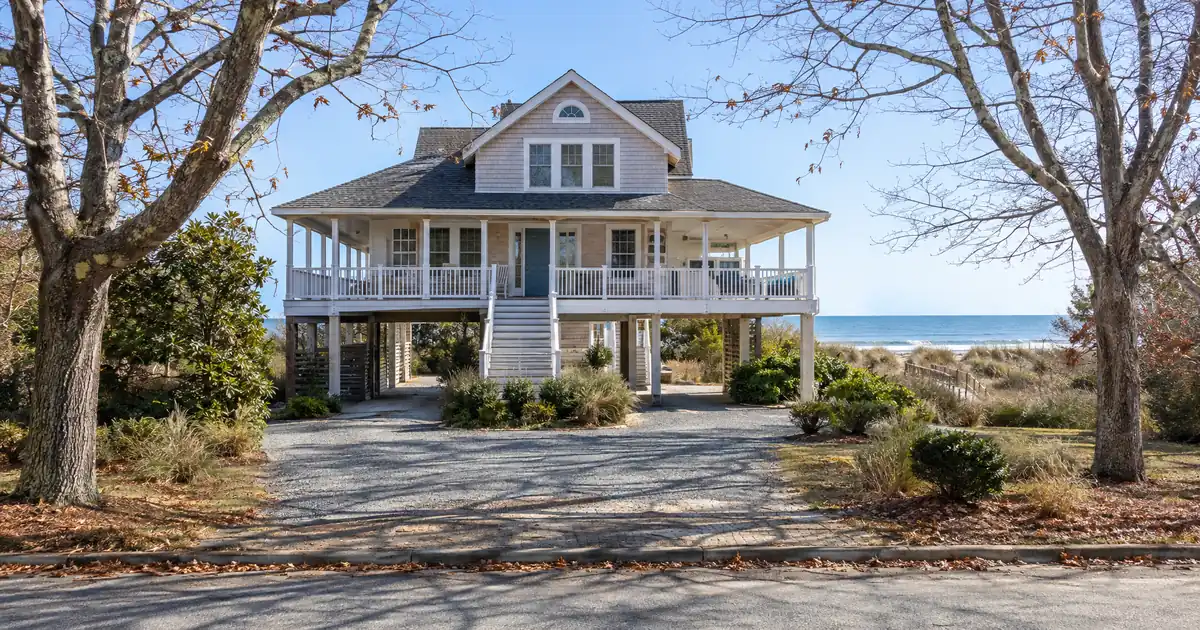
The Quick Read: Lenders in the network qualify this purchase on the property’s projected short-term rental income, measured against the full monthly payment, and where you live does not enter that math. A missing hosting record is handled with a market projection or an appraiser’s rental analysis, and the lender usually discounts that income before testing coverage. Financing the purchase is realistic. Refinancing or cashing out later generally needs real hosting statements.
- On a short-term-rental purchase, leverage runs up to 75% LTV on the strongest files, with a 640 minimum credit score.
- Coverage on a purchase starts at 1.00 for select programs, and stronger ratios open better terms.
- Projections are estimates, so check the comparable listings yourself.
- Permits, zoning, and HOA rules decide whether the income is real, and you must confirm them before you offer.
- Clearing the coverage test does not mean the property cash flows. Final terms depend on lender guidelines, property type, leverage, and the borrower’s complete credit picture.
This article is about the owner and property having no history. It is not about guests who have no reviews.
Key Terms Defined
DSCR (debt service coverage ratio) is the property’s monthly income divided by its monthly housing payment. A result of 1.00 means income equals the payment.
PITIA is principal, interest, taxes, insurance, and any HOA dues. It is the payment the income gets divided by.
LTV (loan-to-value) is the loan as a percentage of the property’s value or price.
Projection is an income estimate built from comparable nearby listings. It is used when the property has never been hosted.
Haircut is the discount a lender applies to projected gross revenue before testing coverage.
Seasoning is the waiting period or track record a lender wants before a refinance. For short-term rentals it usually means a stretch of hosting statements.
Does Living Out of State Change the Loan?
Very little changes. DSCR loans are designed for non-owner-occupied investment properties. Because they are business-purpose loans, they are reviewed differently from a standard owner-occupied mortgage. The loan is reviewed primarily on property-level rental income covering the payment, subject to lender guidelines. Your home address is not a variable in that test.
What changes is logistics.
| Item | Changes if you live elsewhere? |
|---|---|
| Coverage test (income vs. PITIA) | No |
| Credit and reserve checks | No |
| Which lenders cover the property’s state | Sometimes |
| LLC registration in the property’s state | Possibly |
| Cleaning, management, local upkeep | Yes |
| Local permit and HOA research | Yes, harder remotely |
If you close in an LLC, that is subject to lender program eligibility. Whether the entity must register in the property’s state is a question for your attorney.
Notice that the last rows are not lending questions. They are operating questions, and the lender’s ratio does not price them.
How Do Lenders Replace Missing Booking History?
They substitute an estimate for the history. Which estimate they accept depends on the program, so lender choice matters here more than on a long-term rental.
| Income basis | What it is | Tradeoff |
|---|---|---|
| Your own bookings | 12 months of platform statements | Strongest, but you have none |
| Market projection | Comp-based revenue estimate for the address | Accepted by some programs, not all |
| Appraiser STR analysis | Appraiser’s nightly-rental review | Depends on the program accepting it |
| Long-term market rent | Standard rent schedule (Form 1007 or 1025) | Conservative, not built for nightly stays |
Actual hosting history applies mainly to refinances and cash-outs. For a purchase, the projection is the usual stand-in. Many lenders also test the same deal on long-term rent as a cross-check, so know that number before you offer.
Here is the sequence underwriting follows.
1. Pick the income basis. The file uses the projection, the appraiser’s analysis, or long-term rent, depending on what the program accepts.
2. Pull the estimate for the exact address. Enter the real bedroom count, bathroom count, and guest capacity. RentalRecon’s walkthrough says a ZIP code or neighborhood input gives a wider, weaker comp set.
3. Check the comps. Underwriters want comparable condition, size, location, and bed-bath count, with outliers removed.
4. Apply the haircut. The lender discounts projected gross revenue. The size varies by lender.
5. Divide by PITIA. The discounted annual figure becomes monthly income, and that gets divided by the full payment.
6. Size the loan at the lower of two tests. The loan cannot exceed the LTV cap or the amount the income supports. A loan can pass on LTV and still fail on coverage.
What Do the Numbers Look Like?
Take a four-bedroom cabin priced at the middle of a typical file, financed at 75% LTV on a purchase. These ratios are illustrative assumptions, not market data. These specifics are subject to lender guidelines and a full review of property, leverage, and credit.
- Raw projection against the payment: about 1.45x.
- After the lender’s haircut: about 1.15x.
- Same property on long-term rent alone: about 0.90x.
- After a stress test with a weak off-season: about 1.00x.
The property clears 1.00, which is where many select programs start. The long-term rent number falls short. That is why the income basis decides the loan.
A separate select-lender path takes coverage below 1.00, with leverage and terms adjusted. Those files typically need more equity and a stronger credit profile.
Now the hard part. A ratio at 1.00 or better is not positive cash flow. DSCR compares rent to PITIA only. Repairs, vacancy, cleaning, utilities, management, and capital expenses sit outside it. A remote owner usually carries more of those costs, because someone else does the local work.
A larger down payment lowers the payment and can lift the ratio. It never removes leverage caps, credit floors, reserve rules, or property eligibility. The strongest files clear both tests: enough equity and enough rental coverage.
How Accurate Is a Projection?
It is an estimate, and it can miss in either direction. A market source, an STR analytics publisher, says property-level estimates tend to run 15–30% off actual results, usually on the optimistic side. Data vendors advertise high accuracy figures.
The lesson is practical. Do not treat the report as a forecast. Treat it as a starting point.
Three checks catch most problems:
- Look at the comp similarity. Comps should match your bedroom count, size, and condition. A projection can be weak simply because the comps vary.
- Check what the model cannot see. Finishes, views, landscaping, and amenities affect nightly rates and are invisible to the tool.
- Compare against the appraisal. If the appraiser’s number lands well below the projection, expect the lender to use the lower figure.
Reviewing comps before the appraisal is ordered can prevent surprises later.
Can You Validate a Market You Do Not Live In?
Yes, if you treat legality as a gate and not an afterthought. A projection reflects listings that are operating today. It does not tell you whether a permit is still available to you.
Work through this list before you make an offer:
1. Confirm in writing that the address can operate as a short-term rental. 2. Pull the municipal code yourself instead of relying on a listing agent. HonestCasa’s regulation guide makes the same point. 3. Ask whether a permit is transferable or capped. 4. Read the HOA documents if the property has an HOA. Ask Doss notes that associations can ban stays under 30, 60, or 90 days, and a property can face an HOA hurdle and a municipal one at once. 5. Pressure-test the comps for seasonality. A market that books in one season needs a stronger off-season cushion. 6. Line up a local manager and cleaner before closing, and price them into your own budget.
Where Does the General Rule Break?
Four situations change the picture.
Refinance or cash-out on an unproven property. These lean on actual statements. Short-term-rental refinances run around 70% LTV, and cash-out on short-term-rental collateral tops out at 70%. Programs commonly expect about 12 months of hosting history for these transactions. Lendmire’s piece How to Cash Out an Airbnb to Buy Out of State With No Local History covers that route from the other side.
Ground-up or newly converted property. If the home is not yet in rentable condition, financing often starts with a construction or renovation loan. A DSCR refinance follows once the property operates.
A first-time host. The property has no history, and you may have none either. Programs commonly look for about 12 months of landlord or host experience on the borrower. Prior long-term landlord experience can strengthen the file. Ask a broker up front how lenders treat thin experience, because treatment varies.
Ineligible property types. Manufactured homes, log homes, and barndominiums are not offered in the network’s DSCR programs. A rural cabin may fall into one of those categories, so confirm the construction type before you fall in love.
What If the Numbers Do Not Work?
Run the same property through these levers, in this order.
| Lever | What it does |
|---|---|
| Larger down payment | Lowers the payment and lifts coverage |
| Different income basis | Moves from long-term rent to an accepted projection |
| Sub-1.00 select-lender path | Accepts lower coverage, with leverage and terms adjusted |
| Longer or interest-only term | Available through select lenders, lowers the payment |
| Different property | Better comps, a lower price, or a stronger market |
Extended terms of 40 years and interest-only periods exist through select lenders in the network. They change how the payment is calculated, so ask for the structure before you assume the property cannot work.
A bank-statement loan is a different product. It underwrites your deposits and ignores the target property’s income. It is not a variation of DSCR, and it suits a different borrower.
What Should a Remote Borrower Have Ready?
Gather the file in this order. Items one through four set the loan. Five and six keep it moving.
1. Credit profile (a 640 minimum on short-term-rental files, with most programs wanting more). 2. Reserves, which vary by lender, leverage, loan size, and transaction, and often sit around 6 months of PITIA. 3. The purchase contract and the property’s income basis, such as the projection or appraiser analysis. 4. Evidence that the use is legal: permit status, zoning confirmation, and HOA documents. 5. Entity paperwork if you will close in an LLC, subject to lender program eligibility. 6. A proposed management plan for the property.
Loan sizes run up to $3,000,000 on standard programs, and each file is underwritten individually.
The first year matters later. The statements you build become the basis for a refinance or cash-out, so keep every payout record and your bank deposits clean from the first booking.
Mistakes Remote Buyers Make
- Using the raw projection as the qualifying income, when the lender will discount it.
- Skipping the permit check because the listing shows other hosts nearby.
- Leaving the HOA documents unread.
- Treating a coverage ratio above 1.00 as profit.
- Ignoring the cost of a remote property manager and cleaning crew.
- Choosing a property type that falls outside program eligibility.
- Buying with no exit plan if rules or demand change.
Tax treatment can depend on how the funds are used and how the property is held; investors should keep clear records and speak with a qualified tax professional before relying on any deduction.
Frequently Asked Questions
Can I finance an Airbnb if I have never hosted anywhere?
Sometimes. Programs differ in how they treat thin hosting experience, and many expect about 12 months of landlord or host experience on short-term-rental files. Prior long-term landlord experience can help. Ask the broker before you choose a property.
Does my home state affect the DSCR test?
No. The test measures the property’s income against its payment. Your state affects entity registration, which lenders cover the property’s state, and how you manage the property from a distance.
Will the lender use the projection as written?
Usually not. Lenders typically discount projected revenue before testing coverage, and some check the comps. The size of the discount varies by lender, which is why two programs can size the same property differently.
What leverage can I expect on a short-term-rental purchase?
Up to 75% LTV on the strongest files, with a 640 minimum credit score and a 1.00 coverage floor on select programs. A refinance runs around 70%. Terms are subject to lender guidelines, and every file is underwritten individually.
Is a 1.00 ratio enough?
It can be enough to qualify on select programs. It does not mean the property cash flows, because repairs, vacancy, cleaning, utilities, and management sit outside the calculation. Stronger ratios also open better pricing and leverage.
About Lendmire
Lendmire (NMLS# 2371349) is a mortgage broker that arranges DSCR investor loans through select lenders in its wholesale network, across 41 markets including Washington, D.C. Investor loans qualify primarily on property-level rental income covering the payment, subject to lender guidelines. This article is for information only and is not a commitment to lend. For the full picture of how these loans work, read the complete DSCR loans guide. Scotsman Guide named Lendmire a Top Mortgage Workplace in both 2025 and 2026.
If you are buying or refinancing a rental property and want to see how the numbers work, Lendmire can help you compare DSCR loan options based on the property income, credit profile, leverage, and investor goals.
A remote buyer’s best protection is not a better projection. It is a permit confirmed in writing and a cushion that survives the slowest month of the year.
Investors focused on short-term rentals can review DSCR loans for Airbnb and short-term rentals.
Get Started
Ready to find the right loan for you?
In about 30 seconds you can review financing options available for your investment property. No commitment required.
Informational only. Not a Loan Estimate, approval, or commitment to lend. Program availability and eligibility are subject to lender guidelines, credit approval, property review, and underwriting.
References
1. RentalRecon
2. HonestCasa
3. Ask Doss
This article is part of Lendmire’s short-term rental loan program — full qualification details, guidelines, and scenarios live on the program page.
Related reading: How to Get an STR Projection Report With No Local Rental History · How to Finance a Rural Lake House Airbnb With a DSCR Loan · How an Out-of-State LLC Owner Refinances a Rental With a DSCR Loan
Brandon Miller
Founder & CEO, Mortgage Loan Originator, Lendmire LLC
- Mortgage Loan Originator · NMLS# 1129696 · Verify on NMLS Consumer Access
- North Carolina Real Estate Broker · License# 343312 · Verify on NCREC
- North Carolina Insurance Producer · License# 19053198 · Property, Casualty, Life, Health · Verify on NAIC SBS
- Lendmire LLC · Firm NMLS# 2371349 · Verify firm licensure
Disclosure information. Lendmire is a state-licensed mortgage brokerage under NMLS# 2371349. Lendmire is not a depository institution, direct lender, or financial advisor — all loans referenced are placed through wholesale lender partners and are subject to each lender's underwriting standards. This article is provided for general informational purposes and is not a commitment to lend, nor does it constitute financial, legal, or tax advice. Loan programs, terms, rates, and qualification standards change without notice and depend on borrower profile, property type, and the state in which the subject property is located. Equal Housing Opportunity provider. NMLS Consumer Access: nmlsconsumeraccess.org.