
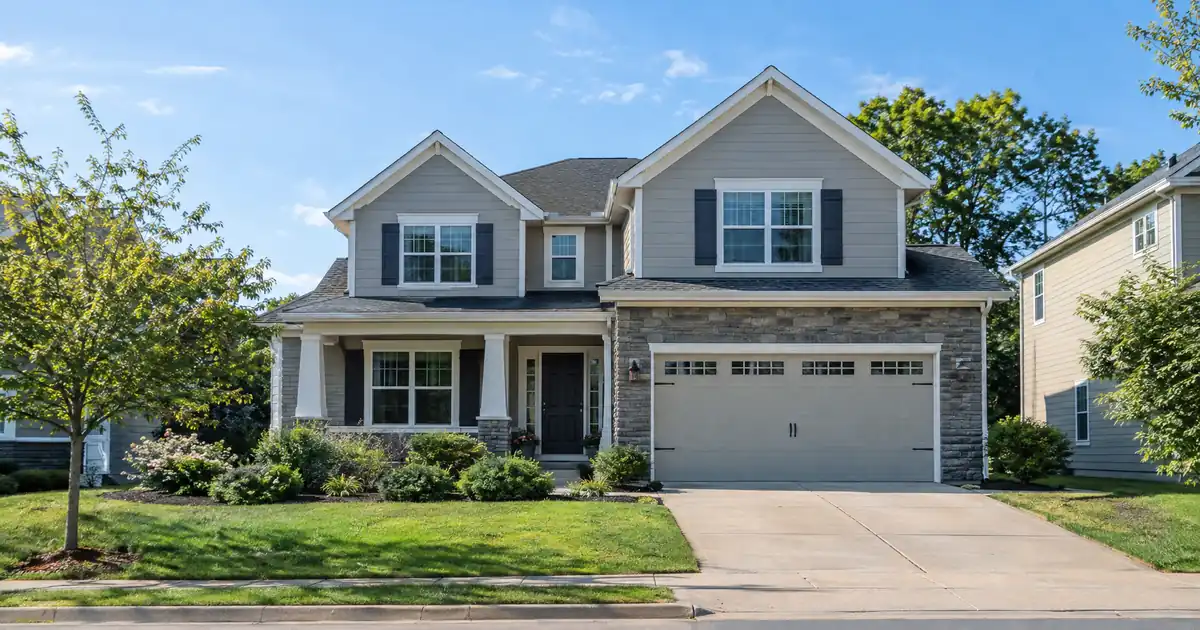
The Quick Read: Ownership percentage decides who signs the personal guaranty, whose credit gets pulled, and which entity papers a lender asks for. Changing anyone’s stake therefore rewrites parts of the file. The rules differ sharply between a DSCR rental loan closed in a multi-member LLC, which qualifies primarily on property-level rental income covering the payment, subject to lender guidelines, and a loan for an operating franchise business.
- Franchise mortgage is not a standard product name. Ask which loan you actually have.
- On a DSCR rental loan, guarantor thresholds are lender conventions, not laws.
- On a government-backed business loan, the 20% line is written into the rules.
- A smaller stake does not mean smaller liability once you sign.
- Raising, cutting, adding, or removing an owner each triggers different documents.
Which “Franchise Mortgage” Are You Asking About?
Two loans hide behind that phrase, and they follow different rulebooks. One is a DSCR loan on a rental property held in an LLC with several members. The other is a government-backed small-business loan that finances real estate used by an operating franchise.
DSCR Calculator
Run the numbers in your market
Rate source: Freddie Mac 30-yr average via FRED® — Federal Reserve Bank of St. Louis · effective Oct 15, 2026
Prefilled with starting assumptions — enter your own rent or nightly figures, taxes, insurance, and HOA for a more accurate picture.
Program parameters update from Lendmire’s centralized guideline source. Taxes and insurance are editable estimates.
As of Oct 15, 2026 · General Freddie Mac market benchmark, not a Lendmire loan offer. Rent, nightly rate, occupancy, taxes, and insurance are editable estimates. Short-term rental figures are estimates only and vary significantly by season, property type, management approach, and local short-term-rental rules — confirm local regulations before relying on them. Qualifying income for short-term rentals varies by program — some use appraisal market rent, others use documented STR history or projections — and is confirmed in underwriting. Not a Loan Estimate, approval, or commitment to lend. Program availability and eligibility are subject to lender guidelines, credit approval, property review, and underwriting.
The first is Lendmire’s lane. A DSCR loan (debt service coverage ratio loan) is an investor loan that qualifies primarily on property-level rental income covering the payment, subject to lender guidelines. DSCR loans are designed for non-owner-occupied investment properties. Because they are business-purpose loans, they are reviewed differently from a standard owner-occupied mortgage.
The second is a different animal. It finances a business that occupies the building, not a tenant-occupied rental. No DSCR product exists for franchise operations as such. If your franchise unit is a rental you lease to a franchisee, the DSCR reading applies. If you run the franchise out of the building, the business-loan reading applies.
This article walks through both, starting with the DSCR side. For the full picture of how these loans work, see the complete DSCR loans guide.
Key Terms Defined
Guarantor: A person who personally promises to repay the loan if the borrowing entity does not.
Ownership percentage: The share of an entity a person holds, recorded in the operating agreement or ownership schedule. It can differ from voting power.
Aggregate ownership: The combined stake of everyone who signs a guaranty.
Operating company and real-estate holding company: The business that runs the franchise, and a separate entity that owns the building and leases it to that business.
Change of ownership: Any shift in who holds the entity, whether a buyout, a new investor, a transfer, or an exit.
How Underwriting Treats Ownership on a DSCR Loan
Across the wholesale network Lendmire works with, the pattern is consistent: the lender looks through the LLC to the people behind it. The entity can hold title, subject to lender program eligibility, but individuals still stand behind the loan. Here is how the review usually runs.
1. Map the owners. The lender asks for the operating agreement and an ownership table. Every member, and every entity above a member, gets listed.
2. Apply the threshold. Many lenders require a guaranty from each member holding a set minimum, commonly in the 20%–25% range. Many also want the guarantors to hold roughly a majority between them. This is an informal convention that varies by lender, not a regulatory floor.
3. Pull credit on the signers. The guarantors’ scores drive pricing and leverage tiers. Most programs want around 660. A 620 floor exists in parts of the network. A 700+ score unlocks the strongest leverage tiers.
4. Check the property. Coverage, leverage, reserves, and property type get tested. Purchases typically land at 75%–80% LTV, and a cash-out refinance tops out around 75%. Reserves commonly sit near 6 months of PITIA, the full monthly obligation of principal, interest, taxes, insurance, and association dues.
5. Collect signing authority. The lender wants to see who can bind the LLC and sign for it.
An LLC does not make the loan non-recourse. A guaranty is still given. And clearing 1.00 coverage is not the same as positive cash flow, since repairs, vacancy, management, and capex sit outside the calculation.
Here is the catch with several guarantors. The weakest credit profile can set the terms for the whole loan. Three partners with strong files and one with a thin file can still land in a lower pricing tier.
Document-by-Document: What Moves When Percentages Move
Most articles on this topic stop at “notify your lender.” The useful question is which paper changes. This table maps the usual DSCR file.
| Document | What a percentage change does |
|---|---|
| Operating agreement | Updated ownership table; signed by all members |
| Ownership certification | Re-issued showing new splits |
| Guaranty | New signer added, or a departing signer’s release requested |
| Authorizing resolution | Re-signed if signing authority shifts |
| Note and security instrument | Usually unchanged; the borrower entity stays the same |
The note and mortgage belong to the entity. If the same LLC stays on title, those papers typically stay put. The guaranty and the entity papers are what move.
Direction of change matters too.
| Type of change | Usual document consequence |
|---|---|
| Stake increases | Guaranty may become required |
| Stake decreases | Release is requested, not automatic |
| New owner enters | New credit pull and new guaranty possible |
| Owner exits | Lender consent and replacement guarantor |
| Same owners, same shares | Often only a records update |
A 51/49 Split Is Not a Liability Shield
Say two partners hold an LLC 51/49. The majority partner controls decisions. But if both stay above the lender’s threshold, both sign. The split clarifies control. It does not change who guarantees.
The reverse myth is just as common: a smaller stake means less exposure. Not so. A guaranty is generally a promise about the loan, not about your share of the entity. A lender can pursue a guarantor for the loan balance, and partners sort out reimbursement among themselves later. Make sure your operating agreement says how.
Layered ownership adds a twist. If a holding company owns part of your LLC, effective ownership multiplies through the chain. A person owning half of a company that owns half of the borrower holds a quarter in effect. Some programs also bar trusts as members, so check before restructuring.
The Government-Backed Reading: Where the 20% Line Is Written Down
Now the other loan. The Small Business Administration (SBA) guarantees loans to small businesses, including franchises. Unlike DSCR conventions, its ownership tests are fixed in rules.
A law-firm playbook on the SBA 7(a) program summarizes the regulation this way: every holder of 20% or more must give an unconditional guaranty. If no one reaches 20%, at least one owner still must guarantee. The lender or SBA can also demand more guarantors regardless of percentage. A holding-company layer does not avoid the rule, since ownership is traced up through the layers.
The lender rulebook adds detail. Under SBA SOP 50 10 8, each 20%-plus holder of the real-estate holding company or the operating company must guarantee. A spouse owning less than 20% must still guarantee in full when the combined interest of both spouses and minor children reaches 20%. A non-owner spouse signs the collateral documents, with that spouse’s guaranty limited to jointly held collateral. The plan sponsor on a 401(k)-funded business purchase must guarantee regardless of percentage.
Franchise deals add paperwork. SBA Form 2234 Part C is the lender’s eligibility checklist. It has a franchise section asking the lender to confirm the brand’s eligibility. It also requires at least 51% ownership by U.S. citizens or verified lawful permanent residents who control management and daily operations. The guaranty itself is SBA Form 148, which carries a federal choice-of-law clause and broad waivers of defenses.
One more point matters for investors. SBA 504 financing cannot fund speculation or investment in rental real estate, so a rental buyer should not expect an SBA product to fit. DSCR is the usual path for that purchase.
Where the General Rule Breaks
Partial change of ownership. Readings of the rulebook differ on this point. One reading says a seller who keeps under 20% gives a limited guaranty for two years. A law-firm alert on the same rulebook reads it more strictly: all equity holders in a partial change must guarantee for at least two years, regardless of stake. In a complete change, small investors need not guarantee. Confirm against the rulebook text for your file.
Cutting your stake before applying. An earlier rulebook edition removed the old six-month look-back, according to one law-firm note. Later commentary points the other way. These tie to different editions, so do not assume trimming your stake will help. Ask the lender what applies today.
Affiliation. Ownership can also make two businesses count as one. If no owner holds more than 50% and a 20%-plus owner is a business in the same industry subsector, the applicant and that owner may be affiliated. That test comes from an older edition, so verify it is current.
Property types. On the DSCR side, manufactured homes (single- and double-wide), log homes, and barndominiums are not offered in the network’s programs, whatever the ownership structure.
Three Approvers, One Sequence
Franchise ownership changes can need three separate yeses: the lender, the franchisor, and your own entity documents. Each has its own consent rules. They can conflict, and the order matters.
- Entity documents first. Your operating agreement may require member votes or transfer restrictions. Skip this and the change is invalid on its face.
- Franchisor second. Franchise agreements often list approval triggers for ownership changes, including shifts in existing holders’ percentages. Read yours.
- Lender third. Get consent in writing before the change takes effect, not after.
The timing of the ownership change is a toss-up. Changing ownership before a purchase closes gives the lender one clean picture, but it can complicate the franchisor’s review. Changing after closing avoids that, but may breach a transfer clause in the loan. The safer play is usually to disclose the planned change up front and let the lender tell you which sequence it accepts.
What the Decision Looks Like in Practice
Partner buyout. Two partners hold a duplex LLC 50/50, and one buys out the other. The remaining owner now holds 100%. Expect a new ownership certification and re-signed entity papers. The departing partner will ask for a guaranty release. That release is a lender decision, and it often depends on whether the remaining owner’s credit and the property’s coverage stand on their own.
Investor enters. A third member takes a 15% stake in a three-member LLC. If the lender’s threshold is 20%–25%, the newcomer may not sign. But the lender still reviews the updated ownership table, and some will want a credit look regardless.
Family transfer. A parent moves a portion of an LLC to a child. Same entity, shifted shares. On the business-loan side, family aggregation can pull a small holder into the guaranty. On the DSCR side, expect updated records and possibly a new signer.
Death or divorce. Shares pass to someone who never underwrote with the lender. Call the lender before anything is retitled.
A short checklist
- Before: pull the operating agreement, franchise agreement, and loan documents. Find every consent clause.
- At the change: sign the amended ownership table and resolutions. Collect written lender consent.
- After: confirm the guaranty status in writing, and update insurance and any property-management authority.
Common mistakes: assuming a release is automatic, changing percentages before reading the franchise agreement, and forgetting that the lowest credit score among guarantors can reprice everyone.
If you already own a rental and want to pull equity while owners are shifting, Lendmire’s piece on how a low first-lien mortgage changes the cash-out versus HELOC math shows how the first loan shapes your options. Programs change and every file is underwritten individually. Tax treatment varies; consult a qualified professional.
Frequently Asked Questions
Does owning under 20% mean I never sign a guaranty?
No. Many DSCR lenders set an informal threshold near 20%–25%, but they can ask for more signers on credit grounds. On a government-backed business loan, the lender can require guaranties from small holders, and spousal and partial-change rules can pull them in.
Is the 20% or 25% threshold a law?
On a DSCR loan, no. It is a lender convention that varies by lender and capital source. On a government-backed business loan, the 20% line comes from the program’s own regulation and rulebook.
Will a 51/49 split keep one partner off the guaranty?
Not if both partners clear the lender’s threshold. The split settles control of the entity. It does not change who guarantees.
Can a departing partner be released automatically?
Usually no. A release typically requires lender approval, and the lender looks at whether the remaining owners and the property still carry the loan. Request it in writing before you transfer the stake.
Does a bigger down payment change any of this?
It can lower the monthly obligation and lift coverage. It does not erase credit floors, reserve rules, leverage caps, or property eligibility. The strongest files clear both tests: enough equity and enough rental coverage.
Next Step
If you are buying or refinancing a rental property and want to see how the numbers work, Lendmire can help you compare DSCR loan options based on the property income, credit profile, leverage, and investor goals. Call 828-256-2183 or request a quote at Lendmire.
About Lendmire
Lendmire — NMLS# 2371349 — is a DSCR and non-QM mortgage brokerage with investor loan programs in 41 markets, including Washington, D.C. DSCR eligibility is commonly reviewed by the lender around property-level rent rather than personal income documentation, subject to lender guidelines, and the brokerage helps arrange financing for LLC-owned portfolios beyond conventional financed-property limits. Recognized by Scotsman Guide as a Top Mortgage Workplace in 2025 and 2026.
Get Started
Ready to find the right loan for you?
In about 30 seconds you can review financing options available for your investment property. No commitment required.
Informational only. Not a Loan Estimate, approval, or commitment to lend. Program availability and eligibility are subject to lender guidelines, credit approval, property review, and underwriting.
References
1. Promise Legal SBA 7(a) playbook
2. SBA SOP 50 10 8 (hosted copy)
4. Whiteford, Taylor & Preston client alert
5. Starfield & Smith commentary
This article is part of Lendmire’s DSCR loan program — full qualification details, guidelines, and scenarios live on the program page.
Related reading: How to Get a DSCR Loan With Only Three Months of Rental History · How to Use a DSCR Loan to Buy a Turnkey Rental Out of State · DSCR Cash-Out Lease Documents for a Duplex, Triplex or Fourplex
Brandon Miller
Founder & CEO, Mortgage Loan Originator, Lendmire LLC
- Mortgage Loan Originator · NMLS# 1129696 · Verify on NMLS Consumer Access
- North Carolina Real Estate Broker · License# 343312 · Verify on NCREC
- North Carolina Insurance Producer · License# 19053198 · Property, Casualty, Life, Health · Verify on NAIC SBS
- Lendmire LLC · Firm NMLS# 2371349 · Verify firm licensure
Legal disclosures. Lendmire (NMLS# 2371349) is a state-licensed mortgage brokerage that arranges financing through wholesale lender relationships. Lendmire is not a direct lender, depository institution, or registered financial advisor. The discussion above is general informational content about real estate financing — it is not financial, legal, or tax advice, and readers should consult licensed professionals for guidance on their individual circumstances. Loan inquiries are subject to lender underwriting; this article does not represent a commitment to lend. Loan terms, rates, and qualification standards vary by borrower, property, and state, and are subject to change at any time. Equal Housing Opportunity. NMLS Consumer Access: nmlsconsumeraccess.org.