
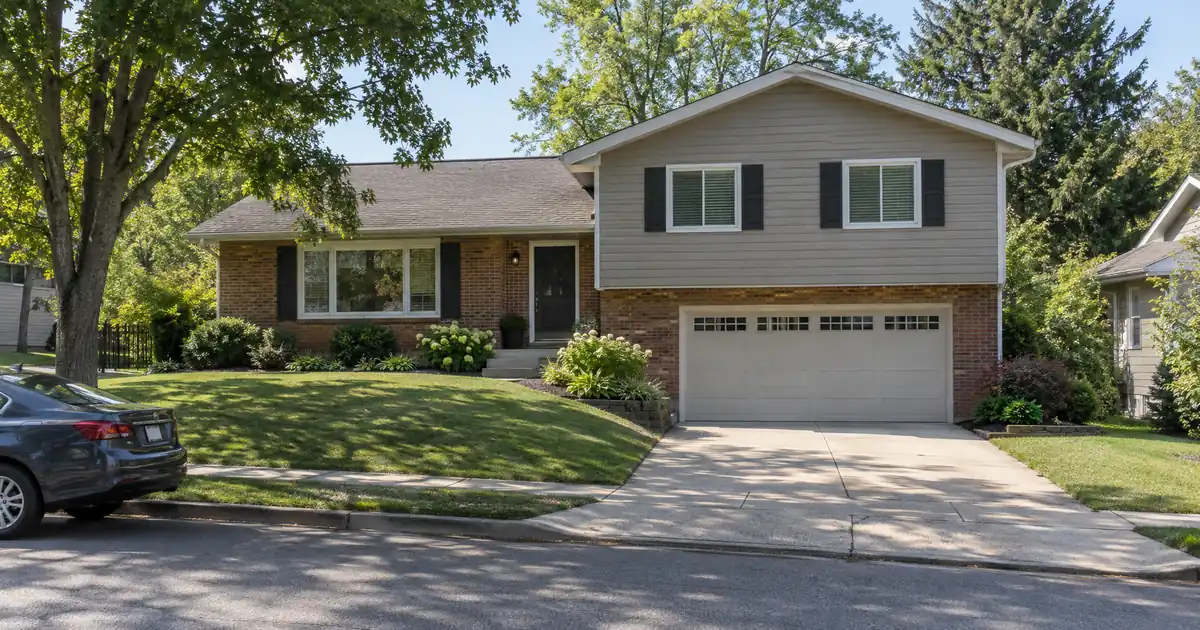
Paying HELOC Versus Mortgage Vs Investment — The Quick Read: Paying down a HELOC first usually makes sense because that balance is typically variable-rate and sits behind your first mortgage, so it’s the most exposed debt on your file. Paying down the mortgage builds guaranteed, illiquid equity but doesn’t free up cash you can use elsewhere. Putting that same money into a down payment on another rental — usually financed with a DSCR loan that qualifies primarily on the property’s own rental income — keeps your capital working, but it adds a new debt obligation that has to clear its own coverage math. None of these is universally “right.” The better fit depends on how much liquidity you need, how leveraged you already are, and whether your goal is fewer doors with less risk or more doors with more upside.
The Short Version
- A HELOC is usually variable-rate, second-lien debt — paying it down first often removes the shakiest piece of your balance sheet.
- Extra principal on a first mortgage builds equity, but that equity stays locked up until you sell, refinance, or open a new line against it.
- Redirecting cash into a down payment on another property — typically through a DSCR loan — keeps capital deployed, but the new property has to carry its own weight.
- HELOCs and mortgages qualify off your personal financial picture. DSCR loans qualify primarily on the subject property’s rent covering its payment, subject to lender guidelines.
- Most investors don’t pick one lane forever — they sequence all three depending on the deal, the property, and the season they’re in.
Key Terms Defined
HELOC (home equity line of credit): an open-end credit line secured by a property’s equity that you can draw against repeatedly, similar to a credit card, rather than receiving one lump sum.
How large a line the equity supports in your market.
An equity line is sized by combined loan-to-value, occupancy, and credit — not by rental coverage. Switch the occupancy or the credit band and the ceiling moves with it.
Investment-property lines require a 700 minimum credit score. Second-home tiers reach 640; primary-residence tiers reach 600.
A debt-to-income ratio above 45% requires 680+ credit. Profiles under 640 are limited to single-family homes. At least 75% of the approved line is drawn at closing. Ceilings, floors, and caps update from Lendmire’s centralized guideline source.
Line estimate
Illustrative estimate only — not a quote, Loan Estimate, approval, or commitment to lend. The rate is an editable assumption; equity-line pricing is variable through both the draw and repayment periods and never converts to fixed. Occupancy and credit drive the ceiling together: investment property runs to 70% combined LTV with a 700 credit floor and a $500,000 cap; a second home runs to 90% at a 640 floor with a $500,000 cap; a primary residence reaches up to 90% at a 600 floor, and its $750,000 maximum line applies only at 75% combined LTV or below with 720+ credit and a full appraisal. Lines above $500,000 require a full appraisal. Credit, debt-to-income, property type, and full underwriting review all affect the final line.
DSCR (debt-service coverage ratio): a rental property’s monthly rent divided by its full monthly housing payment — the number lenders use to judge whether the property covers itself.
PITIA: the full monthly housing obligation — principal, interest, taxes, insurance, and any association dues — bundled into one figure.
LTV / CLTV (loan-to-value / combined loan-to-value): the loan balance, or combined balance of multiple liens, expressed as a percentage of what the property is worth.
Seasoning: the waiting period a lender wants between two events, most commonly between buying a property and later pulling cash out of it.
Business-purpose loan: a loan made for an investment or business reason rather than to finance a personal residence. DSCR loans fall into this category and are reviewed differently from a standard owner-occupied mortgage.
Side-by-Side: HELOC, Mortgage Paydown, and Reinvestment
The three paths don’t compete on the same terms — one is debt reduction, one is also debt reduction with a different lien position, and one is a brand-new loan on a different property. Here’s how the mechanics actually line up.
| Factor | Paying Down a HELOC | Paying Down the Mortgage | Reinvesting the Cash |
|---|---|---|---|
| Review basis | Not a new loan — debt reduction only | Not a new loan — debt reduction only | New loan is reviewed primarily on the property’s rental income |
| Documentation | None required beyond your usual servicer paperwork | None required beyond your usual servicer paperwork | Lease or market-rent support, an appraisal rent schedule, entity paperwork if vesting in an LLC |
| Property/entity treatment | Line generally stays with an individual borrower; LLC vesting isn’t eligible on most investment HELOC programs | Vesting stays as originally closed | DSCR loans commonly close directly in an entity’s name, subject to program eligibility |
| Timeline described qualitatively | Immediate — reduces balance and frees up available credit right away | Immediate on balance, but doesn’t free cash until sold or refinanced | Runs a full purchase file: appraisal, rent schedule, entity docs, underwriting |
| Reserve expectations | Not applicable | Not applicable | Commonly a handful of months of PITIA, varying by lender, leverage, and loan size |
| Typical use case | Cutting variable-rate, second-lien exposure | Building guaranteed, illiquid equity | Adding a door and keeping capital deployed |
When Paying Down a HELOC Is the Better Fit
HELOC paydown wins when the line is your most expensive, least predictable debt and you want that exposure gone. A HELOC is what the Consumer Financial Protection Bureau describes as a line you can borrow against repeatedly up to a set limit, tied to the equity in the property — the value minus what you still owe. It sits behind your first mortgage in lien position, which is exactly why lenders treat it as riskier debt and typically price it as variable. During the draw period, many HELOCs only require interest payments, according to the Federal Trade Commission — which means the balance doesn’t shrink on its own unless you actively pay it down.
On an investment property line brokered through Lendmire’s wholesale network, the ceiling generally runs near 70% combined loan-to-value, with a credit profile typically at 700 or better and a maximum line size around $500,000. Investment lines run a single structure — a five-year draw period followed by a twenty-five-year fully amortizing repayment period — with no shorter option available on investment collateral. Because the investment ceiling sits at $500,000 and full appraisals only apply above that threshold, most investment lines close through an automated valuation with no traditional appraisal needed, which simplifies the documentation path relative to a purchase loan.
Paying this balance down makes the most sense in two cases. First, if you’re worried about payment volatility once the draw period ends and the line converts to full amortization. Second, if you simply want to preserve borrowing capacity for a future need rather than carry an outstanding draw. Are you weighing a HELOC against a standalone home equity loan for the same purpose? The structural differences — lump sum versus revolving credit — matter enough to compare side by side. Lendmire’s HELOC versus home equity loan comparison breaks down which structure fits which goal.
When Paying Down the Mortgage Is the Better Fit
Mortgage paydown is the right call when you want a guaranteed, no-risk return and you don’t need the liquidity elsewhere. Every dollar of extra principal reduces your balance dollar for dollar, with none of the market risk that comes with reinvesting.
Here’s the catch most investors miss: paying extra principal on a fixed-rate loan doesn’t lower your scheduled monthly payment unless the loan recasts. That means your property’s current coverage ratio — rent divided by PITIA — doesn’t change just because you put extra cash toward the balance. What does change is your loan-to-value, and that matters a great deal if you’re planning to refinance later. A cash-out refinance on a standard rental typically caps around 75% loan-to-value across most of the wholesale network, generally after about six months of seasoning from the purchase or last refinance. So building equity now through extra principal is really a bet on future refinance flexibility, not an immediate cash-flow improvement.
This path fits investors who are already carrying leverage across several properties and want at least one asset with lower risk, or anyone approaching a stage where reducing debt matters more than adding more of it. It’s a legitimate, boring, reliable strategy — just don’t expect it to change your DSCR math today.
When Reinvesting the Cash Is the Better Fit
Reinvesting wins when your goal is growth and the next property’s numbers actually work. Instead of shrinking a balance, you put the same cash toward a down payment on another rental. This is most commonly financed with a DSCR loan. A DSCR loan qualifies primarily on the property’s rental income covering the payment, subject to lender guidelines, rather than on your personal income documentation.
DSCR loans are designed for non-owner-occupied investment properties. Because they’re business-purpose investor loans, lenders review them differently than a standard owner-occupied mortgage. Across the wholesale network Lendmire brokers through, most purchase files land in the 75%-to-80% loan-to-value range. Select high-leverage programs reach 85% for credit profiles generally at 700 or above. A coverage ratio of 1.00 is where some programs start — it’s a floor for specific programs, never a universal standard. Stronger ratios tend to unlock better leverage. Loan sizes typically run up to $3,000,000 on standard programs, with smaller balances available through select lenders. Reserve expectations vary by lender, leverage, and loan size. Plan on something in the neighborhood of six months of PITIA on a typical file. Some conservative, lower-leverage rate-and-term deals waive reserves, while larger loans can push that closer to nine months.
Short-term rentals work differently than standard leases. For an STR purchase, leverage typically tops out around 75% loan-to-value. You’ll generally need a credit profile of 700 or higher, about twelve months of hosting history, and a coverage ratio of at least 1.00 on the purchase file. Refinancing an STR is different. The cash-out ceiling drops to around 70% loan-to-value for STR collateral specifically, compared to roughly 75% for a standard rental’s cash-out refinance. What if the coverage ratio on the new property falls under that 1.00 benchmark using long-term rent alone? Select lenders in the network still work with these sub-1.00 files, generally by adjusting leverage or terms. Separately, borrowers who already own a primary residence sometimes qualify through a no-ratio path. Both routes get reviewed case by case, based on credit profile, reserves, and the property itself.
Reinvesting has one structural advantage over the other two paths: DSCR loans commonly close directly in an LLC’s name, subject to program eligibility. This sidesteps a problem that trips up many buy-and-hold investors. If you move a property’s title into an entity after closing, it can create exposure with your existing lender. Closing in the entity from day one avoids this entirely. A handful of property types stay off the table no matter your leverage or credit: manufactured homes, log homes, and barndominiums aren’t offered through these programs. If your next deal falls into one of these categories, confirm eligibility before you get attached to the numbers. For a full walkthrough of how the qualification math works property by property, see Lendmire’s complete DSCR loans guide. It covers the mechanics in more depth than fits here.
In practice, the files that come through a DSCR broker’s desk with the fewest surprises are the ones where the investor already knows their rough rent number before they call. That means a market-rent estimate pulled from comparable listings — not a guess. Files built on optimistic rent assumptions tend to stall in underwriting once the appraiser’s rent schedule comes back lower than expected. Getting a realistic number early saves a round of renegotiating the deal structure mid-file.
What If You’re Carrying Both a HELOC and a Mortgage?
This is the scenario most comparison articles skip, and it’s the one real investors hit constantly. If you’re sitting on cash and you’ve got both an outstanding HELOC balance and a first mortgage on the same property, the usual sequencing logic is to attack the HELOC first — it’s the variable-rate, second-lien piece, and reducing it lowers your exposure faster than the same dollar applied to a fixed first mortgage. Once that line is paid down or eliminated, you’re back to a straightforward choice between mortgage paydown and reinvestment.
There’s a related structural question a lot of investors ask before they ever get to the paydown decision: whether it’s even possible to carry a HELOC and a new mortgage on the same property, or across properties, at the same time. Lendmire’s breakdown of taking out a HELOC and a mortgage together on an investment property walks through how lenders typically look at combined exposure when both liens are in play. Worth a read before you assume one blocks the other.
Sourcing matters here too. If part of your surplus cash originally came from a HELOC draw and you’re now using it as a down payment on the next property, that money still has to be documented and seasoned like any other down-payment source — the origin of funds gets checked regardless of which loan type ultimately covers the new purchase.
So Which One Wins?
There isn’t a single winner, and any answer that claims otherwise is skipping the parts of your file that actually matter — your liquidity needs, your existing leverage, and whether the next deal’s rent genuinely covers its payment. Paying down a HELOC removes your riskiest, most variable debt. Paying down the mortgage builds equity you can tap later, but it sits idle until you do. Reinvesting keeps capital moving and adds a door, provided the new property’s coverage ratio clears what the lender needs to see.
Tax treatment can depend on how you use the funds and how you hold the property. Investors should keep clear records and speak with a qualified tax professional before relying on any deduction. Review details are always subject to lender overlays, credit profile, reserves, and a full property review. None of these paths comes with a guaranteed outcome. The right sequence for one investor’s file often isn’t the right sequence for the next one.
Are you weighing whether to pay down debt or put that cash toward your next acquisition? Lendmire can help you compare DSCR loan options based on the property’s income, your credit profile, available leverage, and where you’re trying to take the portfolio next. Lendmire arranges DSCR investor loans through select lenders in its wholesale network, spanning 40 markets, including Washington, D.C.
Frequently Asked Questions
Does paying down my HELOC balance improve my DSCR on that property?
Only if the HELOC sits against the same property being evaluated for DSCR and its payment was counted in that property’s total debt service. Standard DSCR math is rent divided by PITIA on the subject property; paying off an unrelated line on a different asset doesn’t change that calculation at all.
Can I use HELOC funds as a down payment on a DSCR loan?
Yes, many investors do exactly this. The funds still need to be documented and seasoned like any other down-payment source, and the new purchase is underwritten on the target property’s rental income, subject to lender guidelines, regardless of where the down payment cash originated.
Does paying extra principal on a DSCR loan lower my monthly payment?
No, not on a standard fixed-rate structure. Extra principal shortens the payoff timeline and builds equity, but the scheduled payment stays the same unless the loan recasts — so your current coverage ratio doesn’t shift until you refinance into a new loan amount.
What if my next property’s rent doesn’t quite cover the payment?
Some select lenders in the network still review files below the typical 1.00 coverage benchmark, usually paired with adjusted leverage or terms. Borrowers who already own a primary residence sometimes qualify through a separate no-ratio path, though every scenario runs through credit profile, reserves, and full lender review.
Can an investment property HELOC close in my LLC’s name?
Generally no. Investment property lines through this network are titled to an individual borrower or an inter vivos revocable trust — LLCs, corporations, and irrevocable trusts aren’t eligible vesting types, so a property already deeded to an LLC typically needs a vesting change or a different loan structure, such as a DSCR cash-out, to access its equity.
This page is for informational purposes only. It is not a commitment to lend. Loan programs, eligibility requirements, and terms are subject to change and are determined by individual lenders based on borrower and property qualifications. Contact Lendmire to confirm current program details for your specific scenario.
About Lendmire
Lendmire (NMLS# 2371349) is a DSCR-focused mortgage broker that helps arrange investor financing across 40 markets, including Washington, D.C., through wholesale and investor-lending channels. DSCR eligibility is generally reviewed by the lender around the property’s rental income rather than personal income documentation, subject to lender guidelines — which works for self-employed investors, LLC operators, and portfolios above four financed properties. Scotsman Guide named Lendmire a Top Mortgage Workplace in both 2025 and 2026.
Get Started
Ready to find the right loan for you?
In about 30 seconds you can review financing options available for your home or investment property. No commitment required.
Informational only. Not a Loan Estimate, approval, or commitment to lend. Program availability and eligibility are subject to lender guidelines, credit approval, property review, and underwriting.
References
1. Consumer Financial Protection Bureau — What is a home equity line of credit (HELOC)?
2. Federal Trade Commission — Home Equity Loans and Home Equity Lines of Credit
Brandon Miller
Founder & CEO, Mortgage Loan Originator, Lendmire LLC
- Mortgage Loan Originator · NMLS# 1129696 · Verify on NMLS Consumer Access
- North Carolina Real Estate Broker · License# 343312 · Verify on NCREC
- North Carolina Insurance Producer · License# 19053198 · Property, Casualty, Life, Health · Verify on NAIC SBS
- Lendmire LLC · Firm NMLS# 2371349 · Verify firm licensure
Legal disclosures. Lendmire (NMLS# 2371349) is a state-licensed mortgage brokerage that arranges financing through wholesale lender relationships. Lendmire is not a direct lender, depository institution, or registered financial advisor. The discussion above is general informational content about real estate financing — it is not financial, legal, or tax advice, and readers should consult licensed professionals for guidance on their individual circumstances. Loan inquiries are subject to lender underwriting; this article does not represent a commitment to lend. Loan terms, rates, and qualification standards vary by borrower, property, and state, and are subject to change at any time. Equal Housing Opportunity. NMLS Consumer Access: nmlsconsumeraccess.org.


