
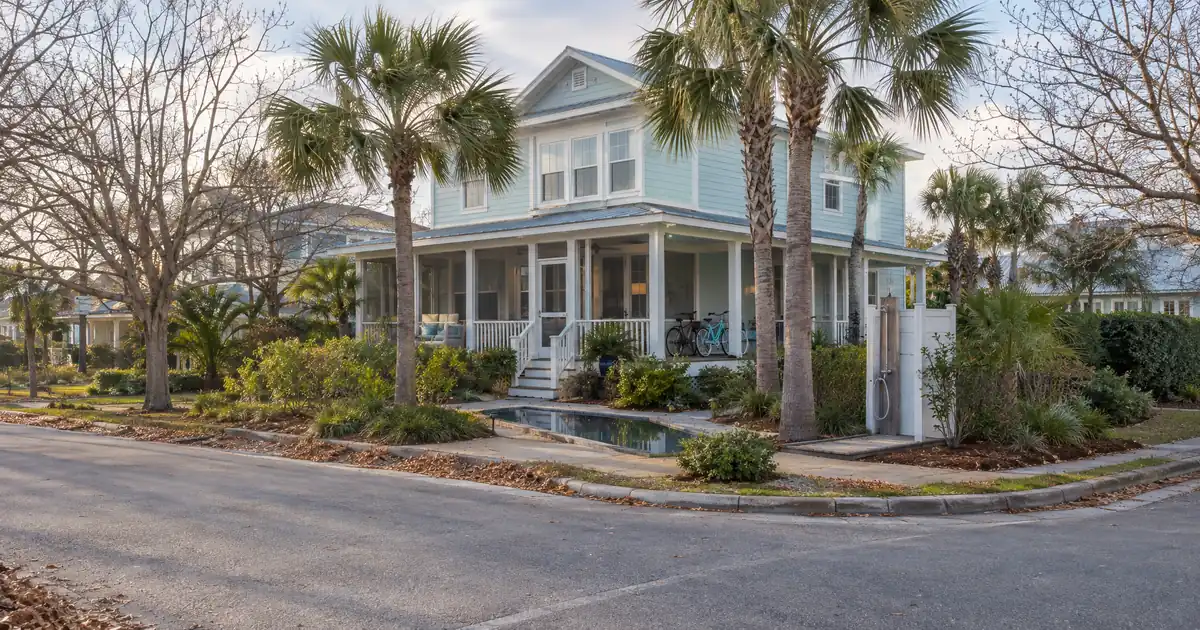
The Quick Read: Usually yes, as long as the property can be underwritten on long-term rent and that rent covers the full monthly payment. A permit cap blocks nightly-rental income, not the home itself, so the file shifts to the appraiser’s rent opinion or a signed lease, which typically means a lower qualifying income and a tighter coverage ratio.
- A permit cap limits who may run nightly stays. It does not stop you from leasing the home on a standard lease.
- When no valid short-term permit exists, the lender generally counts long-term rent only.
- Long-term rent usually runs below Airbnb revenue, so the deal has to work on the smaller number.
- Many select programs start at 1.00 coverage, and a separate select-lender path goes below 1.00 with leverage and terms adjusted.
- Clearing 1.00 is not the same as positive cash flow.
Plenty of investors find a furnished, photo-ready Airbnb in a city that has stopped issuing permits, then assume the loan is dead. It isn’t. The loan question and the permit question are two separate questions, and only one of them is about the property’s legal use for nightly stays.
Short-Term Rental Calculator
Run the STR numbers in your market
Rate source: Freddie Mac 30-yr average via FRED® — Federal Reserve Bank of St. Louis · effective Oct 15, 2026
Prefilled with starting assumptions — enter your nightly rate, occupancy, taxes, and insurance for a more accurate picture.
Short-term rental income is documented with a 12-month history or a market data report. Program parameters update from Lendmire’s centralized guideline source.
As of Oct 15, 2026 · General Freddie Mac market benchmark, not a Lendmire loan offer. Nightly rate, occupancy, taxes, and insurance are editable estimates. Qualifying income for short-term rentals varies by program — some use appraisal market rent, others use documented STR history or projections — and is confirmed in underwriting. Not a Loan Estimate, approval, or commitment to lend. Program availability and eligibility are subject to lender guidelines, credit approval, property review, and underwriting.
What Does “Permit-Capped” Actually Mean?
A permit cap is a limit on how many nightly-rental licenses a city or county will issue. Once the limit is reached, no new permits go out, or new applicants join a waitlist or lottery. The cap changes which income a lender is allowed to count.
Caps come in several shapes, and the shape matters:
| Cap type | How it works | Likely income basis |
|---|---|---|
| Hard count cap | Fixed number of licenses | Long-term rent unless you hold one |
| Percentage cap | Share of housing units | Long-term rent unless you hold one |
| Lottery or waitlist | Applicants drawn or queued | Long-term rent until a permit is issued |
| Non-transferable permits | License ends on sale | Long-term rent for the buyer |
| Per-block or per-owner limit | One license per block or owner | Depends on whether you hold one |
The National League of Cities describes cities adopting permit requirements with a quota, either a number or a percentage, in a geographic area. Caps are one tool among several. Night limits, zone bans, and primary-residence rules are others, and each treats your income differently.
How a cap plays out. KPBS reported that the whole-home tier was capped at 1% of housing units, which is 5,416 licenses, with a separate 1,100-license cap in Mission Beach. The same report noted an advocacy group suspecting many operators were not following the rules. That is the practical point: a live listing is not proof of a valid permit.
Short-term rental rules can vary by city, county, HOA, and property type, so investors should confirm local rules before relying on projected rental income.
How Does a Lender Decide Which Income Counts?
The lender counts short-term income only when the property can legally operate as a short-term rental. If it can’t, the file runs on long-term rent. The order of questions is simple: is nightly use legal, is a permit held and valid, and then which income basis applies.
DSCR stands for debt service coverage ratio. It divides the property’s qualifying monthly rent by its monthly PITIA, which is principal, interest, taxes, insurance, and any association dues. A result of 1.00 means rent equals the payment. Above 1.00, rent exceeds it.
Across the wholesale network Lendmire places files with, short-term programs generally want a permit or legal-use confirmation, plus roughly 12 months of hosting experience. Those same lenders can underwrite a property that lacks a permit as an ordinary long-term rental. That is the escape hatch for a capped market.
Qualifying long-term rent typically comes from one of two places:
1. An appraiser’s rent schedule. For a one-unit home the form is the Single-Family Comparable Rent Schedule, known as Form 1007. Freddie Mac’s form states its purpose as helping the appraiser estimate market rent, and the result appears as the Indicated Monthly Market Rent line. Fannie Mae lists it in its forms library under the same title. Two-to-four-unit properties use a different appraisal report that carries its own rent analysis.
2. A signed lease, where one is already in place, as the lender’s guidelines allow.
One trap: nightly rate times 30 is not a monthly rent. The appraiser works from monthly lease comparables, not booking calendars. Class Valuation, an appraisal-industry firm, argues the 1007 cannot support a short-term appraisal at all. For a capped property that is fine, because long-term rent is exactly the income you are underwriting.
What Changes When the Basis Drops to Long-Term Rent?
Qualifying income usually falls, so coverage falls with it. Same property, same payment, lower rent in the numerator. A file that clears comfortably on booking income can land near or below 1.00 on appraised long-term rent.
Run the numbers this way, using modeled ratios rather than market figures. Say a property shows coverage near 1.5x on a short-term projection. The appraiser’s long-term rent opinion comes in lower, and coverage drops to roughly 1.05x. It still clears 1.00, but with little cushion. A different property might show 1.3x on short-term income and 0.90x on long-term rent. That second file doesn’t clear a 1.00 floor.
If you land under 1.00, you have options a lender would review:
- More down payment. A larger down payment shrinks the loan and lowers the payment, which lifts the ratio.
- A sub-1.00 path. Coverage below 1.00 is available through select lenders in the network, with leverage and terms adjusted.
- Structure changes. Extended terms of 40 years and interest-only periods are available through select lenders in the network, and either can reduce the monthly obligation counted in the ratio.
- A different property or price. Sometimes the cleanest fix is a lower purchase price.
Here is the catch with the down-payment lever. More cash in lowers the payment, but it never erases leverage caps, credit floors, reserve rules, or property eligibility. The strongest files clear both tests: enough equity and enough rental coverage.
On leverage, most purchase files in the network land at 75% to 80% LTV on an investment property, with select high-leverage programs reaching 85% for strong credit, roughly a 700 score or better. Those figures apply to standard long-term rentals. Once a capped property is underwritten as a long-term rental, you are in that standard lane rather than the short-term lane, where purchase leverage tops out at 75% and cash-out and refinance sit lower at about 70%. LTV is loan-to-value, the loan amount divided by the property’s value. All of this is subject to lender guidelines, credit approval, and property review.
Lendmire is a broker, so the practical value is comparison. Most programs read a long-term-rent file the same basic way, while credit floors, reserves, and pricing differ lender to lender. Most programs want around 660 for credit, a 620 floor exists in parts of the network, and 700 or higher unlocks the strongest leverage tiers.
Who Gets to Use Short-Term Income Anyway?
A permit holder can, and that is the main exception. If the permit is valid and the property qualifies as a legal short-term rental, short-term income may be usable. The program then looks like a standard short-term file: 640 or higher on credit, about 12 months of hosting history, and a 1.00 coverage floor on both purchases and refinances.
Three checks decide it:
- Does the permit transfer on sale? Some don’t. In unincorporated Lincoln County, Oregon, licenses are reportedly non-transferable, and the pool is designed to shrink through attrition, per a host-focused blog. San Diego licenses are likewise described as non-transferable by a vendor blog. A buyer in that situation should expect to underwrite on long-term rent.
- Is the permit in the right name? An entity change can matter. If you plan to hold the property in an LLC, that works depending on program guidelines, but confirm how the permit follows the owner.
- Is the history legal? Booking history built without a valid permit is weak evidence. A lender counting short-term income wants the operation to be lawful at the city, county, and HOA level.
Waitlists deserve their own note. “Cap reached, waitlist open” is different from “no new permits ever.” If the city may issue permits later, a long-term-rent loan now can be followed by a refinance onto short-term income once you hold a permit and have hosting history. Don’t count on it, though. Underwrite the loan you can get today.
Scenario Table: Which Basis Applies?
| Situation | Likely underwriting basis |
|---|---|
| Valid, transferable permit in hand | Short-term income may be usable |
| Permit non-transferable, buyer has none | Long-term rent |
| Waitlisted or lottery pending | Long-term rent for now |
| Hard ban or zone exclusion | Long-term rent |
| HOA bars nightly stays | Long-term rent |
| Stays long enough to fall outside local rules | Check local definitions first |
The last row is the mid-term rental idea. Furnished stays of a month or more may sidestep nightly-rental rules in some places. And a long lease can still run into rental registration or rent-control rules.
What Does the File Need on the Long-Term Route?
Expect a short document list. The appraisal with the rent schedule does the heavy lifting.
| Document | Purpose |
|---|---|
| Appraisal with rent schedule | Sets qualifying market rent |
| Lease, if in place | Supports rent |
| Permit status evidence | Shows why short-term income isn’t used |
| HOA or CC&R confirmation | Confirms rental rules |
The permit evidence can be a cap notice, a waitlist letter, or a municipal response. It explains to the lender why you are asking for a long-term-rent underwriting.
Tell the appraiser the truth about the property. A furnished, photo-staged home can still be appraised on long-term comparables. Don’t let staging distract from the number that counts.
Verify Before You Offer
Run these checks before you write an offer, not after the appraisal comes back:
1. Ask the city and the county separately. Rules differ between them.
2. Ask whether permits transfer on sale and whether new permits are still issued.
3. Read the HOA documents. An HOA can block nightly stays even where the city allows them.
4. Ignore the neighbor’s listing. It proves nothing about your eligibility.
5. Run the deal on appraised long-term rent. If it only works on Airbnb income, the permit is the deal risk.
Caps vary widely, from percentages of housing units to per-block lotteries to one license per owner, as Staystra’s overview of permit caps lays out. The right contingency in a contract is a permit-status and eligibility check that fits your local rules.
For related reading, Lendmire’s piece How to Stress-Test an Airbnb in a Permit-Capped Market at Long-Term Rent walks through the downside case and compares a short-term projection against the long-term fallback.
After Closing: Cap Risk and Exit Value
The loan stays even if the cap arrives later. The income may not. If a city adopts a cap or stops renewing permits after you own the property, your mortgage terms don’t change, but short-term revenue may disappear. This is why a deal that clears coverage on long-term rent makes a future cap an inconvenience rather than a default.
Exit value follows the same logic. A transferable permit can lift what a buyer will pay. A cap that shrinks supply, as in Lincoln County, removes that premium. A buyer pool that wants a nightly-rental business shrinks along with it.
Coverage also isn’t cash flow. DSCR compares rent to PITIA only. Repairs, vacancy, management, utilities, and capital expenses all sit outside the calculation. Clearing the ratio gets you the loan. It doesn’t tell you whether the property pays you.
A few property types are not offered through the network’s DSCR programs at all: manufactured homes (single- and double-wide), log homes, and barndominiums. The cap isn’t the only eligibility question on a unique property.
Tax treatment varies; consult a qualified professional.
DSCR vs. conventional financing
There are two common ways to finance an investment property, and they qualify you differently — here’s how investors weigh them.
Why investors choose it
- Qualifies on the property’s rental income — no personal tax returns, W-2s, or pay stubs needed to document income.
- No personal debt-to-income ceiling to clear, so existing mortgages and obligations don’t cap your borrowing the same way.
- Can be closed in an LLC, keeping the property inside a business entity.
- Built for scaling — not held to the limit on number of financed properties that conventional financing applies.
- Underwriting centers on the deal: generally qualifies when the rent covers the payment, a 1.00x coverage ratio being a common baseline (confirmed in underwriting).
- Designed specifically for investment property, including long-term and, where the program allows, short-term rentals.
Where it’s strong
- Often the lowest ongoing financing cost for a buyer who fully qualifies on personal income — a fit for a first property or a cost-first purchase.
Trade-offs for investors
- Requires full personal income documentation and must fit within a debt-to-income limit — salary, existing debts, and other mortgages all count.
- Typically held in your personal name rather than a business entity.
- Caps how many financed properties you can carry, which can become a ceiling as a portfolio grows.
- Evaluates you as a borrower as much as the property, which usually means more paperwork.
How investors usually choose: a first or single property often optimizes for the lowest financing cost; portfolio builders often optimize for leverage, vesting in an LLC, and scaling past conventional caps. The right answer depends on your goals, the property, and current guidelines — both paths run through select lenders in Lendmire’s wholesale network, with eligibility and terms confirmed in underwriting.
Decision Flow
1. Is nightly use legal here? If no, underwrite on long-term rent.
2. Is a permit available to you, or held and transferable? If no, underwrite on long-term rent.
3. Does appraised long-term rent cover the full monthly payment? If yes, the file is worth taking to lenders.
4. If not, test more down payment, a lower price, or a select-lender sub-1.00 path with adjusted terms.
5. If still no, pass on this property.
On the calculator on this page: it is an editable, illustrative estimate, and its starting inputs are sample values. If it shows a short-term rental scenario as the strongest strategy, that view does not apply to a property that cannot legally host nightly stays. For a permit-capped home, compare the long-term rental scenario only, and enter the appraised or leased rent rather than a booking projection.
For the full picture of how these loans work, see Lendmire’s complete DSCR loans guide.
Key Terms Defined
DSCR: the property’s qualifying monthly rent divided by its monthly PITIA.
PITIA: principal, interest, taxes, insurance, and association dues, the full monthly obligation counted in the ratio.
LTV: loan-to-value, the loan amount as a share of the property’s value.
Rent schedule: the appraiser’s opinion of market rent, based on comparable monthly leases.
Permit cap: a local limit on how many nightly-rental licenses will be issued.
Frequently Asked Questions
Can I count my Airbnb income if I have no permit?
Generally no. Short-term income counts when the property can legally operate as a short-term rental. Without a valid permit, the lender relies on long-term rent, from the appraiser’s rent schedule or a lease. Unpermitted booking history is weak evidence and may not be counted at all.
What if my DSCR is under 1.00 on long-term rent?
Many select programs start at 1.00, so you may need a different route. A separate select-lender path goes below 1.00 with leverage and terms adjusted. A larger down payment or a lower price can also lift the ratio. Eligibility depends on lender guidelines, credit, reserves, and property review.
Can I refinance later if the city reopens permits?
Possibly. Once you hold a valid permit and build roughly 12 months of hosting history, a short-term refinance may be an option, with leverage around 70% on short-term collateral. Nothing guarantees the city will reopen permits, so the original loan should stand on long-term rent.
Does an HOA ban work the same way as a city cap?
Yes, for underwriting purposes. If the HOA bars nightly stays, the property can’t legally operate that way, and the file runs on long-term rent. Check the HOA documents before you offer.
Will a lender look at a lower loan amount on a capped property?
Often, yes. Lower rent used for lender review can support a smaller loan at the same coverage ratio. Loan sizes run up to $3,000,000 on standard programs (smaller balances available through select lenders), subject to lender guidelines.
If you are buying or refinancing a rental property and want to see how the numbers work, Lendmire can help you compare DSCR loan options based on the property income, credit profile, leverage, and investor goals. Reach the team at 828-256-2183 or request a quote.
For current guidelines and terms, see Lendmire’s DSCR loan programs page.
About Lendmire
As a DSCR and non-QM mortgage broker, Lendmire (NMLS# 2371349) connects investors with wholesale lending channels across 41 markets, including Washington, D.C. The property’s rental income, not the borrower’s traditional personal-income documentation, is central to lender review, which works for self-employed operators and portfolios beyond four financed properties. Scotsman Guide named Lendmire a Top Mortgage Workplace in both 2025 and 2026.
Get Started
Ready to find the right loan for you?
In about 30 seconds you can review financing options available for your investment property. No commitment required.
Informational only. Not a Loan Estimate, approval, or commitment to lend. Program availability and eligibility are subject to lender guidelines, credit approval, property review, and underwriting.
References
1. National League of Cities: Short-Term Rental Regulations
2. KPBS: San Diego STR license cap
3. Freddie Mac Form 1000 / Fannie Mae Form 1007
4. Fannie Mae Selling & Servicing Guide Forms
5. Class Valuation: Form 1007 and short-term rentals
6. Book With Haven – Lincoln County ruling
7. Truvi – San Diego STR regulations
8. Staystra: permit caps and ownership limits
This article is part of Lendmire’s short-term rental loan program — full qualification details, guidelines, and scenarios live on the program page.
Related reading: How Much Is the Minimum Short-Term Rental DSCR Loan for Cabin and Rural Properties? · How to Qualify for a 40-Year Super Jumbo DSCR Loan · Can a Retiree With a Large Portfolio Qualify for a Super Jumbo DSCR Loan?
Brandon Miller
Founder & CEO, Mortgage Loan Originator, Lendmire LLC
- Mortgage Loan Originator · NMLS# 1129696 · Verify on NMLS Consumer Access
- North Carolina Real Estate Broker · License# 343312 · Verify on NCREC
- North Carolina Insurance Producer · License# 19053198 · Property, Casualty, Life, Health · Verify on NAIC SBS
- Lendmire LLC · Firm NMLS# 2371349 · Verify firm licensure
Disclosure information. Lendmire is a state-licensed mortgage brokerage under NMLS# 2371349. Lendmire is not a depository institution, direct lender, or financial advisor — all loans referenced are placed through wholesale lender partners and are subject to each lender's underwriting standards. This article is provided for general informational purposes and is not a commitment to lend, nor does it constitute financial, legal, or tax advice. Loan programs, terms, rates, and qualification standards change without notice and depend on borrower profile, property type, and the state in which the subject property is located. Equal Housing Opportunity provider. NMLS Consumer Access: nmlsconsumeraccess.org.