
The Quick Read: Preparing means getting three things in front of the appraiser before the inspection: a line-by-line scope of work with costs, a set of closed renovated comparable sales that match your planned finish level, and a property that is safe and fully accessible on inspection day. The appraiser reports two values, one for the property today and one for the property once the work is finished. Your preparation decides how clearly the second number is supported.
- Send the itemized scope and contractor bids with the appraisal order, not after it.
- Bring three to five closed renovated comps, matched to your planned finish level.
- Expect two values: as-is and after-repair value (ARV).
- The lower valuation controls the loan size, so a weak appraisal means more cash from you.
- Rehab money arrives in draws after inspections, so your submitted scope becomes the yardstick for later funding.
Hard money rehab loans are business-purpose loans, so each lender sets its own valuation rules. Programs vary by lender, property, and experience, and nothing here is a commitment to lend. What follows is how the appraisal works on a typical file and how to prepare for it.
What this loan actually costs to carry.
Hard money is sized against the project and priced by time. Enter the deal and see how much the program will lend, the cash required at closing, the carry while you hold it, and what is left at the exit.
Leverage tiers on the current program: 85% with fewer than 2, 90% with 2 or more, 93% with 5 or more completed projects — every tier capped at 75% of after-repair value. Loan amounts up to $5,000,000, larger by exception; terms of 6 to 18 months, interest-only, no prepayment penalty. The rehab portion funds in draws against completed work, not at closing.
Program parameters shown update from Lendmire’s centralized guideline source. Rate, points, and months are editable assumptions, not quoted terms.
Cost cap sets the loan · positive spread
Illustrative estimate only — not a quote, Loan Estimate, approval, or commitment to lend. Rate, points, and months are editable assumptions. Hard money is business-purpose financing for real estate investors, not a consumer mortgage. Leverage on the current program tops out at 93% of project cost for investors with a documented track record, capped at 75% of after-repair value, with rehab funding up to 100% of the documented budget released in draws; actual terms vary by lender, borrower experience, property, and exit. Lendmire is a mortgage broker, not a lender.
What Does the Appraiser Actually Value on a Rehab?
The appraiser values two things: the property in its current condition and the property as it will look when your planned work is done. A practitioner interview on AppraisalBuzz makes the same point about fix-and-flip assignments, and adds that the appraiser needs plans and specifications when they cannot picture the finished product.
The as-is value tells the lender what the collateral is worth on day one if the project stalls. The ARV is the “subject to completion” value. It rests on what appraisers call a hypothetical condition: the appraiser values the home as if the work were done, even though it is not. The Appraisal Institute’s USPAP guide notes define that term and require the appraiser to disclose it in the report.
| Value | What it assumes | Why it matters to you |
|---|---|---|
| As-is | Property exactly as it stands | Sets the lender’s day-one safety floor |
| ARV | Work finished per your scope | Sets the ceiling on how much the lender will fund |
Your leverage depends on both. Across the wholesale network where Lendmire places hard money files, fix-and-flip leverage is sized on project cost and then capped against after-repair value. More on that below.
Key Terms Defined
ARV (after-repair value): the appraiser’s opinion of what the property is worth once your planned work is complete.
As-is value: what the property is worth today, in its current condition.
Scope of work: an itemized list of every repair and upgrade, with costs and who will do the work.
Hypothetical condition: an appraisal assumption that something is true when it is not yet, such as finished renovations.
Extraordinary assumption: an assumption about something the appraiser could not verify, which could change the value opinion if it turns out false.
Comps (comparables): recent closed sales of similar nearby properties used to support a value.
Draw: a release of rehab funds after the lender confirms completed work.
BPO (broker price opinion): a lighter valuation by a real estate agent, sometimes used instead of or alongside a full appraisal.
What Goes in Your Appraisal Packet?
Build the packet before the order goes in. The appraiser can only credit what they can see and verify. Assemble these items:
- An itemized scope of work with costs and contractor bids.
- Plans or specifications for any addition, layout change, or structural work.
- Three to five closed renovated comps with short adjustment notes.
- Photos of the current condition, including problem areas.
- Purchase contract and any permit paperwork for work already done.
Scope is the biggest lever you control. Scotsman Guide warns that if the remodeling plan does not reach the appraiser, the result can be an as-is value around $200,000 paired with an ARV of only $210,000. Its examples of features worth flagging include enclosing a carport into a garage, adding a primary suite, and improving landscaping. It also recommends meeting your contractor and building a full budget before the appraisal is ordered, so the appraiser sees the project line by line.
A common mistake is treating the contractor bid as a lender document only. It is also an appraiser document. An addition with no plans reads as a guess, and appraisers do not give credit for guesses.
How Do You Build a Comp Package an Appraiser Can Use?
Pick closed sales, not listings. The ARV rests on sold properties of similar type, size, and finish level near the subject. Industry commentary from Note Servicing Center advises avoiding active listings, pending sales, and automated estimates, and matching the finish level of the comps to what you will actually build.
That last point trips up many flippers. If you plan mid-grade finishes, do not hand over comps that sold with high-end custom work. The appraiser will spot the mismatch, and it costs you credibility on every other number in the package.
Here is a simple way to organize the comps:
1. List three to five closed sales, with address, sale date, size, bedrooms, and baths.
2. Note the finish level of each, from photos.
3. Write one line per comp on the differences from your subject, such as a larger lot or an extra bath.
4. Leave out outliers, even flattering ones. One inflated comp can undermine the set.
The same note also says lenders may discount ARV internally for execution risk and cross-check the as-is value against a BPO. So the number you build is a starting argument, not the final word.
How Do You Get the Property Appraisal-Ready?
Make the house safe, open, and easy to walk. The standard residential appraisal form, Freddie Mac Form 70, shows the baseline: the appraiser performs a complete interior and exterior visual inspection, inspects the neighborhood, and views each comp from at least the street. Its check boxes for “as is,” “subject to completion per plans and specifications,” and “subject to repairs” show how the appraiser frames the assignment. Hard money appraisers work from their own reports, but the inspection logic is similar.
Use this walk-through:
- Exterior: clear debris from walkways and entries, secure open hazards, and make sure the lot lines and any addition footprint are visible.
- Interior: unlock every room, including basements, attics, and crawl spaces. Clear a path.
- Systems: turn utilities on if possible so the appraiser can see what works.
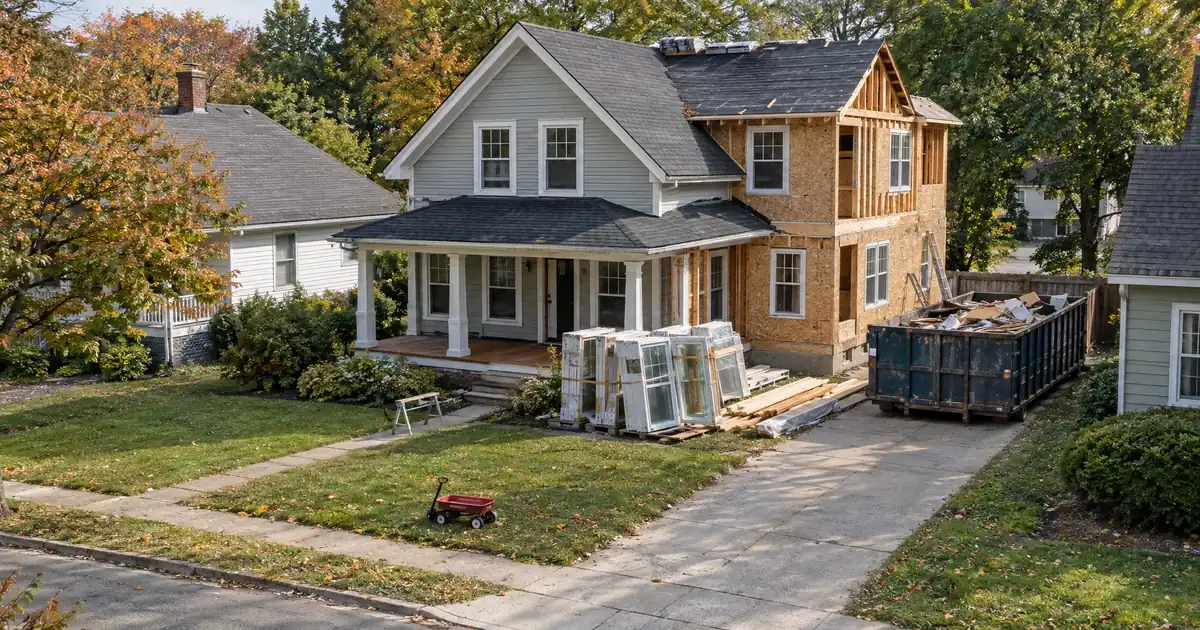
- Open work: leave demolition and exposed framing visible, and have photos of anything already hidden, such as new wiring or plumbing.
Access matters more than most investors expect. An extraordinary assumption applies when the appraiser cannot verify something, and a TheCEShop explainer notes the difference: a hypothetical condition is contrary to what exists, while an extraordinary assumption could turn out to be false and change the opinion. A locked room or blocked crawl space can trigger that caveat, and lenders do not love caveats.
What Happens on Appraisal Day?
Be reachable, be honest, and let the appraiser work. Here is the sequence that tends to go well.
Before: Confirm the appraiser has the scope, bids, and plans. Confirm access and send the comp package as a courtesy, not a demand.
During: If you attend, answer questions and point out features that are hard to see, such as a permitted addition or a new roof. Do not argue values or pressure the appraiser. Do not claim finishes you have not budgeted.
After: Respond promptly to any follow-up question. Appraisers often need one more document to finish the report.
Be upfront about weak points. A foundation crack or unpermitted work the appraiser discovers on their own hurts more than one you disclosed with a repair plan.
Which Mistakes Cause a Low or Inaccurate Value?
Most low values trace back to a handful of fixable problems.
| Mistake | Fix |
|---|---|
| Scope never reached the appraiser | Attach scope, bids, and plans to the order |
| Comps do not match your finish level | Use closed sales with similar finishes |
| Wrong square footage or unpermitted additions | Verify size and permit status before the visit |
| Locked or blocked areas | Open every room and space |
| Aspirational ARV from listings | Use closed sales only |
| Underestimated costs | Get firm bids and a contingency line |
Cost overruns deserve a note of their own. A thin budget can damage both the appraisal and the draws, so build in room for surprises before the scope reaches the appraiser.
Does the Appraisal Change How Much You Can Borrow?
Yes. The appraised values feed two leverage tests, and the lower result controls. On the hard money files Lendmire places through its wholesale network, fix-and-flip leverage is tiered by documented completed projects: typically 93% of project cost at five or more completed projects, 90% of project cost at two or more, and 85% with fewer than two. Every tier is capped at 75% of after-repair value. Bridge purchases without rehab run up to 80% of purchase price, and refinances up to 65% of value. Up to 100% of the rehab budget funds in draws against completed work. All of this varies by lender, property, and experience, and the top tier is reserved for experienced investors.
Notice what that means. If the ARV comes in low, the 75% cap bites even when your cost-based leverage looks fine, and you bring more cash. A lower as-is value hurts the same way on the purchase side, because lenders size against the lower of contract price or appraised value.
Credit matters too, though underwriting stays asset-based. A 620 minimum score is typical, with additional conditions below 660, and first-time investors generally qualify at the lower leverage tiers. Loan amounts run up to $5,000,000, larger by exception, with terms of 6 to 18 months, interest-only, and no prepayment penalty.
How Does the Appraisal Connect to Your Draws?
Rehab money is reimbursed after inspection, not handed over at closing. That makes your scope more than an appraisal document. It becomes the yardstick for every draw inspection.
A BiggerPockets investor thread describes one borrower whose inspector did not credit repairs discovered after the original scope was submitted, so the next draw came in short and the borrower had to add cash. That is one anecdote, but the mechanism is common. An older BiggerPockets discussion quotes a veteran investor saying every lender follows a draw request with an inspection.
The practical move: build a contingency into the scope up front, and tell your lender in writing when hidden conditions force a change. Lendmire’s piece How Much Margin a Hard Money Rehab Needs After an Under-Cost Appraisal goes deeper on sizing that cushion.
Where Does the General Rule Break?
A few situations change the playbook.
Heavy rehab and additions. When you are adding square footage or changing the layout, the appraiser may need architectural plans to value the finished product, and thin comps for a unique layout make the value harder to support. Bring more documentation, not less.
Appraisal, BPO, or internal review. The lender chooses the valuation type. Some files get a full independent appraisal, others a BPO or an internal comp review. Do not assume you will get one or the other.
Safety and structural problems. Agency lending draws a hard line here. The Fannie Mae Selling Guide requires an appraisal “subject to” completion when deficiencies affect safety, soundness, or structural integrity. That is a conventional-loan rule, not a hard money rule, but it shows how appraisers think about a damaged property: they will not value it as if it were fine.
The exit appraisal. After the rehab, a take-out loan is usually a separate appraisal on the stabilized property, often with a rent schedule. Many investors refinance out of hard money into long-term DSCR financing once the property is stabilized, and Lendmire brokers that path. Lendmire’s complete DSCR loans guide explains how that stage works.
What If the Appraisal Comes In Low?
You have options, and the first is a written reconsideration request. Typical practice is to send specific comp addresses, sale dates, and adjustments that the appraiser did not consider, never a general complaint. Keep it factual.
If that fails, work through the choices:
| Option | Tradeoff |
|---|---|
| Rebut with added comps | Free, but works only if the comps are genuinely better |
| Bring more cash | Keeps the deal alive, thins your margin |
| Renegotiate the purchase price | Works when the as-is value is the problem |
| Reduce the scope or restructure | Lowers cost basis but may lower ARV too |
| Walk away | Costs the appraisal fee, protects your capital |
A low appraisal is also information. The market is testing ARV assumptions right now. HousingWire reports that one in five flippers sold mostly below their projected ARV in the latest quarter, and Scotsman Guide reports flippers typically buy at 70% or less of projected ARV. If your deal only works at the top of the comp range, the appraiser may be doing you a favor.
What Is the Decision in Practice?
Spend your effort where it moves the number. Scope and comps are worth more than any staging or cosmetic cleanup. Get firm bids before you order. Match your comps to your actual finish level. Open every room. Then treat the result as a stress test of your plan, not an insult.
The investors who struggle are usually the ones who learn the ARV from the appraiser instead of knowing it going in. If you are buying, rehabbing, or refinancing an investment property on a short timeline and want to see how the numbers work, Lendmire can help you compare hard money options based on the project, the exit plan, leverage, and your goals.
Frequently Asked Questions
Do I need to be at the appraisal?
No, but attending can help. You can point out permitted additions, new systems, and hidden work the appraiser might miss. Stay factual and do not debate value on site.
What if the work is half done on appraisal day?
The appraiser typically values the property as-is and also reports a subject-to-completion value based on your scope. Leave open walls and exposed systems visible, and bring photos of anything already covered, such as new wiring or plumbing.
Can I dispute a low value?
Usually, through a written reconsideration request with specific comp addresses, sale dates, and adjustments. A request built on stronger closed sales has a real chance. A request built on opinion rarely moves the number.
Is a full appraisal always required?
No. The lender decides whether to order a full appraisal, a BPO, or an internal review. Lendmire’s piece Does a Hard Money Lender Require an Appraisal on an Investment Property? covers the question in more depth. Ask your broker what the lender intends to use before you spend on prep.
Does a bigger rehab budget raise my ARV?
Not by itself. Improvements may support a higher appraised value, depending on comps and underwriter review. The appraiser values the finished product against sold comparables, not the amount you spend.
Tax treatment varies; consult a qualified professional.
For current hard money guidelines and terms, reach out to Lendmire directly, since leverage, credit, and loan size vary by lender, property, and experience.
About Lendmire
Lendmire, NMLS# 2371349, is a non-QM mortgage broker serving real estate investors in 41 markets, including Washington, D.C., through DSCR investor loan programs. Qualification is generally reviewed around the subject property’s rental income, not the borrower’s W-2 history — a practical fit for LLC-titled portfolios and self-employed investors. All scenarios remain subject to lender review and program guidelines. Two consecutive Scotsman Guide Top Mortgage Workplace recognitions (2025, 2026).
Get Started
Ready to find the right loan for you?
In about 30 seconds you can review financing options available for your investment property. No commitment required.
Informational only. Not a Loan Estimate, approval, or commitment to lend. Program availability and eligibility are subject to lender guidelines, credit approval, property review, and underwriting.
References
2. appraisalinstitute.org: Guide Notes
3. Scotsman Guide: Take a Tutorial on Hard Money Loans
5. Freddie Mac Form 70 (hosted by Fannie Mae)
6. TheCEShop: Extraordinary Assumption
7. BiggerPockets: Hard Money Draw Question
8. BiggerPockets: HML Strategy for Fix and Flip
9. Fannie Mae Selling Guide B4-1.3-06
10. HousingWire: Fix-and-Flip Market Strain
11. Scotsman Guide: Longer Holds, Weaker Pricing
This article is part of Lendmire’s hard money loan program — full qualification details, guidelines, and scenarios live on the program page.
Related reading: How a Hard Money Lender Uses the Appraisal to Size a Loan · How to Transfer an LLC-Owned Property Into a New LLC for Hard Money · How ADU Builders Draw Funds on a Hard Money Construction Loan
Brandon Miller
Founder & CEO, Mortgage Loan Originator, Lendmire LLC
- Mortgage Loan Originator · NMLS# 1129696 · Verify on NMLS Consumer Access
- North Carolina Real Estate Broker · License# 343312 · Verify on NCREC
- North Carolina Insurance Producer · License# 19053198 · Property, Casualty, Life, Health · Verify on NAIC SBS
- Lendmire LLC · Firm NMLS# 2371349 · Verify firm licensure
Disclosures. The information presented in this article is general market commentary, not financial, legal, or tax advice. Lendmire is a mortgage brokerage (NMLS# 2371349) — not a direct lender or depository institution — and loan placement is subject to lender underwriting. Nothing in this content represents a commitment to lend. Loan terms, pricing, and program availability vary based on borrower qualifications, property characteristics, and state of subject property, and are subject to change at any time. Lendmire complies with Equal Housing Opportunity requirements. Consumer access: nmlsconsumeraccess.org.