
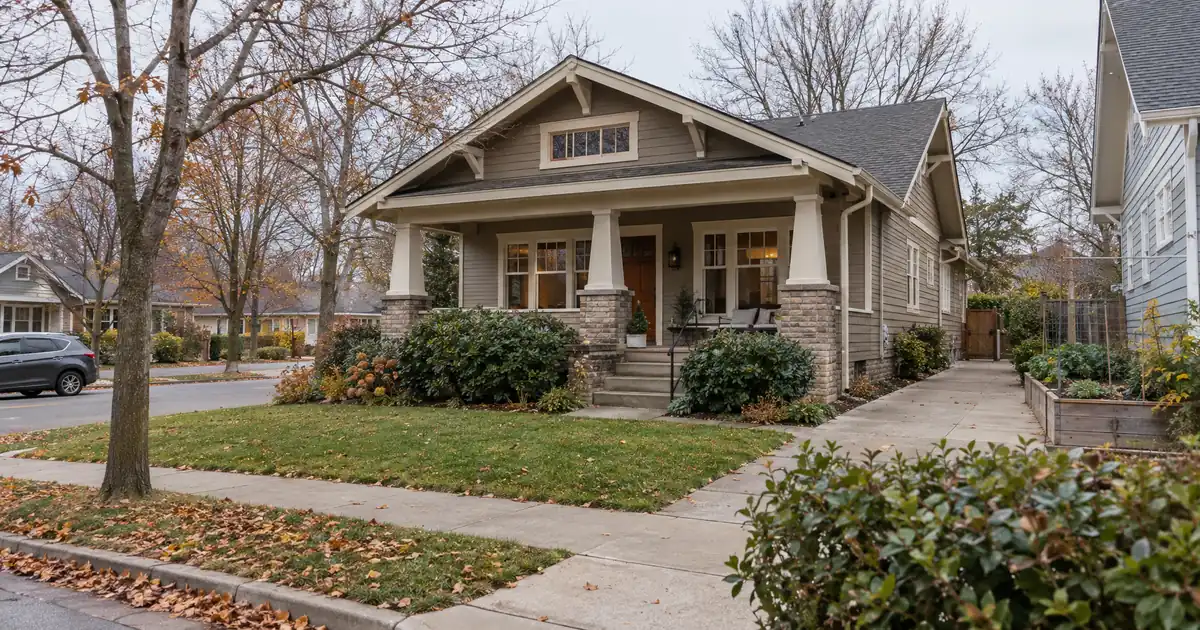
The Quick Read: Yes, on many programs, when the program allows it and the same people ultimately stand behind each LLC. One note secures several rentals, and the lender tests rent against debt service across the whole pool. Expect more paperwork for each added entity, and a shared liability wall between the houses.
- One loan secured by several rentals is called a blanket, portfolio, or cross-collateralized DSCR loan. All three names mean the same thing here.
- The 30-year portfolio DSCR loan covers 2 to 20 properties under one note, subject to lender guidelines.
- Coverage is measured on the pool, so stronger rentals can offset a weaker one.
- Several LLCs can sometimes co-borrow one note. Other programs want one note per entity.
- The trade-off is shared risk. One problem can reach every house on the note.
What Does One DSCR Loan on Several Rentals Actually Mean?
It means one mortgage note, one payment, and one closing, with two or more rentals pledged as collateral. Lenders call this a blanket loan. Each property secures the whole debt, not just its own slice.
A quick word on terms. When a bank says portfolio loan, it often means a loan the bank keeps on its own books. That is a different sense of the word. Here, portfolio DSCR loan means one note secured by several rentals.
DSCR stands for debt service coverage ratio. It compares a rental’s income to its full monthly obligation: principal, interest, taxes, insurance, and any association dues. On a single-property loan, one house has to carry its own payment. On a pooled loan, the test blends the properties.
Across the wholesale network Lendmire works with, two structures cover this need:
- The 30-year portfolio DSCR loan. It covers 2 to 20 properties under one note. Loan sizes run roughly $300,000 to $5,000,000, with larger balances reviewed case by case. Leverage goes up to 80% of value on a purchase or rate-and-term refinance of investment property. Rate types include fixed and adjustable, and an interest-only period is available. Eligible property types are single-family, 2-4 unit, condo, and townhome.
- The rental portfolio term loan. It fits five or more rental properties or units under one loan. Loan sizes run roughly $500,000 to $50,000,000, with larger balances on review. Leverage goes up to 75% of value. Terms are fixed at 3, 5, 7, or 10 years with a balloon at maturity, and it can be recourse or non-recourse. Small multifamily of five or more units is eligible only on this structure.
Every figure is a program ceiling or floor, not a quote. Each file is reviewed individually, subject to lender guidelines.
Can Several LLCs Share One Note?
Sometimes. Whether it works depends on the program and on who owns the LLCs. Some lenders let several LLCs sign as co-borrowers on one note. Others require one note per entity.
An LLC borrower is normal for this product, subject to lender program eligibility. A special-purpose entity, usually an LLC, is required on some structures. The lender looks through the LLC to the people behind it. Recourse loans carry a personal guarantee, so a new entity does not reset the lender’s view of the person standing behind it.
The ownership picture drives the answer:
| Scenario | How lenders typically view it | Usual setup |
|---|---|---|
| One LLC owns every house | Simplest case | One borrower, one note |
| Several LLCs, same owners | Workable on many programs | Co-borrowers on one note |
| Partial owner overlap | Needs program review | Often separate notes or a restructure |
| Different owners per LLC | Hardest to pool | Usually separate loans |
| One house in a personal name | Adds sequencing questions | Vesting cleaned up or house left out |
The more overlap in ownership, the easier the file. When the owners differ, the lender is asked to pool unrelated risk, and most programs decline.
Mixed vesting is common. Some rentals sit in an LLC and others in a personal name. It can be solved, but it adds questions about signers and title. Lendmire’s piece Can an Investor Finance Several Rentals Under One DSCR Loan? covers the basic pooled structure. The broader complete DSCR loans guide explains the product from the ground up.
How Does the Pooled Coverage Test Work?
Lenders add up the rent on every property in the pool and divide it by the total debt service on the new loan. That is the pooled coverage ratio. On the 30-year portfolio DSCR loan, the coverage floor is 1.00, measured on the pool.
Here is a modeled illustration, not market data. Assume four similar rentals with roughly equal debt service. Three clear about 1.25x on their own, and one sits near 0.85x. Pooled, the four land near 1.15x. That weak house would struggle alone. Inside the pool, it can ride along. Underwriting tests the pooled coverage, the leverage, and the terms.
Two cautions keep this honest.
First, clearing 1.00 is not the same as positive cash flow. The ratio compares rent to the payment only. Repairs, vacancy, management, utilities, and capital spending sit outside the calculation.
Second, the weak house still has to be documented. Every property needs a lease or an appraiser-supported market rent. The pool is only as clean as its messiest file.
What Does the Lender Review for Each LLC?
Every entity brings its own file, so the paperwork grows with each LLC you add. Plan on a similar set for each one:
| Item | What it proves |
|---|---|
| Formation records | The LLC exists and is in good standing |
| Operating agreement | Who owns it and who can sign |
| EIN confirmation | The entity’s tax identity |
| Authority to borrow | The signer may bind the LLC |
| Vesting and title | Each house is held in the right name |
Title should be clean and consistent across every property. The named insured on each insurance policy should match the vesting. Existing liens matter too, because a pooled loan has to pay off or account for them at closing.
Ownership reporting comes up often with LLCs, so here is where it stands. FinCEN states that entities created in the U.S. and their beneficial owners are exempt from beneficial-ownership reporting. A Federal Register interim rule narrowed that reporting to foreign-formed companies. A lender may still collect ownership documents for its own review. State rules are separate, so check with your attorney.
What Happens to the Liability Walls?
They get tied together. Investors use one LLC per house so a problem at one property stays at that property. A shared note weakens that design.
Nav explains the underlying idea for business loans. When several assets secure one loan, terms can improve, but more assets are at risk. The same logic applies to rentals.
Here is how the structures differ in practice:
| Structure | Where a default spreads | Best for |
|---|---|---|
| One LLC, one note | Every house | Stabilized long holds |
| Several LLCs, one note | Across those LLCs | Same owners, similar assets |
| Grouped pools | Inside one pool | Mixed goals or exit dates |
| One note per LLC | Inside one house | Staggered buys, partners, sales |
A blanket also does not erase the guarantor. On a recourse loan, the person behind the LLC is on the hook regardless of how the houses are titled. The rental portfolio term loan includes non-recourse structures, which look to the real estate, with carve-outs for items such as fraud and bankruptcy.
Ask your attorney how a shared note interacts with the protection your entities were built to give.
Selling One House Out of the Pool
Selling one property from a blanket requires a partial release. Because every house secures the whole debt, you cannot simply pay off one slice and walk.
Release terms follow the loan documents and the lender’s release terms. The release price typically runs above the property’s allocated balance. The remaining portfolio must still cover its debt service afterward. Substitutions, where you swap in a different property, follow the same documents.
Plan to sell soon? A separate note per LLC, or grouped pools, avoids a release negotiation. That is often the cleaner path for an investor who expects to sell individual houses.
Blanket, Separate Loans, or a Partial Pool?
This is the real decision. Neither side wins every time.
| Situation | Pool them | Stay separate |
|---|---|---|
| Similar stabilized houses, long hold | Yes | Not needed |
| Buying one at a time over months | No | Yes |
| Partners differ by LLC | No | Yes |
| One weak house, strong others | Often | Less useful |
| Planned sales within the pool | No | Yes |
| Wanting one payment and one servicer | Yes | No |
Honestly, the pooled test is the main reason investors choose a blanket. It can turn one marginal house into a financeable package, and it simplifies administration. The cost is liquidity and shared risk. A partial pool is a legitimate middle road: pool the houses that share owners and exit plans, and leave the rest on their own notes.
Some properties do not belong in a pool at all. Owner-occupied property, co-ops, mixed-use property, and commercial property are ineligible. Manufactured and mobile homes are not reviewable on any of these programs.
Restructuring to Fit One Note
Some investors fix a mismatch by moving houses into one entity, or by placing a parent entity above several LLCs. This can work. It has side effects worth checking before you sign anything.
Deeding a house into a new entity can touch the existing loan, the title policy, and the insurance. Existing loans may carry due-on-sale terms. Sequencing matters, because some programs look at how long the current owner has held the property.
Across the wholesale network, a clean file usually beats a clever one. Lenders react well to entity records that are already tidy and to vesting that already matches. Reworking ownership mid-file tends to slow things down and raises questions. If a restructure is truly needed, finish it before the file is submitted.
Pre-Quote Checklist
Before asking for options, gather this for each LLC:
- Formation records, operating agreement, and EIN confirmation.
- Proof of who can sign for the entity.
- Current vesting and title for every house.
- Existing lien balances and servicers.
- Leases, or evidence of market rent, for each property.
- Insurance named to match the owner of record.
- Your credit profile. The portfolio programs generally look for a floor around 640, and some structures want 680 or 720.
- Your reserves. On the term loan, reserves are held for taxes, insurance, and capital expenditures. Requirements vary by lender, leverage, and loan size.
Key Terms Defined
Blanket loan: One note secured by several rentals. Also called a portfolio DSCR loan or cross-collateralized loan.
Cross-collateralization: Every property in the pool secures the whole debt, not just its own share.
Cross-default: A default on one property puts the entire note in default.
Release clause: The loan term that lets one property leave the pool when the lender’s release terms are met.
Guarantor: The person who promises to repay if the borrowing entity cannot.
Pooled coverage: Total rent across the pool divided by total debt service on the loan.
A Note on Terms and Advice
Programs change, and every file is underwritten individually, subject to lender guidelines and not a commitment to lend. This article is not legal or tax advice. Tax treatment varies, so consult a qualified professional such as an attorney or CPA about your own situation.
Frequently Asked Questions
Do I need one LLC for all my rentals to use a blanket loan?
No. Some programs allow several LLCs to co-borrow on one note, especially when the same people own them. Others require a separate note per entity. Each added LLC adds documents and signers, so the file grows quickly in complexity, not just in size.
Can a weak rental ride along in a pool?
Yes, in many cases. A rental below 1.00 coverage can sit in the pool, and underwriting tests the pooled coverage, the leverage, and the terms. The property still needs its own appraisal and rent support. The pooled number helps coverage only.
How many properties can go on one note?
The 30-year portfolio DSCR loan covers 2 to 20 properties. The rental portfolio term loan fits five or more properties or units. Both depend on lender guidelines, property types, and your credit and reserves.
Does a blanket loan reduce how many properties I own?
No. Four houses on one note are still four financed rentals. What changes is the paperwork, not the count.
Should I use a blanket if I plan to sell a house soon?
Usually not. Selling from a pool needs a partial release, and the release price typically runs above the allocated balance. Separate notes or grouped pools keep a sale simpler.
If You Are Weighing It
If you are buying or refinancing several rentals and want to see how the numbers work, Lendmire can help you compare DSCR loan options based on the property income, credit profile, leverage, and investor goals. As a mortgage broker, Lendmire arranges financing through select lenders in its wholesale network, across 41 markets including Washington, D.C. Call 828-256-2183 to talk through your entity setup.
About Lendmire
Lendmire (NMLS# 2371349), a non-QM mortgage broker serving investors in 41 markets including Washington, D.C., helps structure DSCR scenarios commonly evaluated around a property’s rental income rather than personal income paperwork, subject to lender guidelines. A Scotsman Guide Top Mortgage Workplace in 2025 and 2026, Lendmire places loans through wholesale investor lenders and is not a direct lender.
Get Started
Ready to find the right loan for you?
See your offer in seconds. No credit pull, no obligation.
Informational only. Not a Loan Estimate, approval, or commitment to lend. Program availability and eligibility are subject to lender guidelines, credit approval, property review, and underwriting.
References
1. FinCEN BOI Reference Materials
3. Nav: Cross Collateralization
This article is part of Lendmire’s DSCR loan program — full qualification details, guidelines, and scenarios live on the program page.
Related reading: How to Add Another DSCR Loan to an LLC That Already Holds Rentals · Can You Buy a Vacation Rental in an LLC With a DSCR Loan? · Can You Put Four Cabins on One Short-Term Rental DSCR Loan?
Brandon Miller
Founder & CEO, Mortgage Loan Originator, Lendmire LLC
- Mortgage Loan Originator · NMLS# 1129696 · Verify on NMLS Consumer Access
- North Carolina Real Estate Broker · License# 343312 · Verify on NCREC
- North Carolina Insurance Producer · License# 19053198 · Property, Casualty, Life, Health · Verify on NAIC SBS
- Lendmire LLC · Firm NMLS# 2371349 · Verify firm licensure
Disclosures. The information presented in this article is general market commentary, not financial, legal, or tax advice. Lendmire is a mortgage brokerage (NMLS# 2371349) — not a direct lender or depository institution — and loan placement is subject to lender underwriting. Nothing in this content represents a commitment to lend. Loan terms, pricing, and program availability vary based on borrower qualifications, property characteristics, and state of subject property, and are subject to change at any time. Lendmire complies with Equal Housing Opportunity requirements. Consumer access: nmlsconsumeraccess.org.