
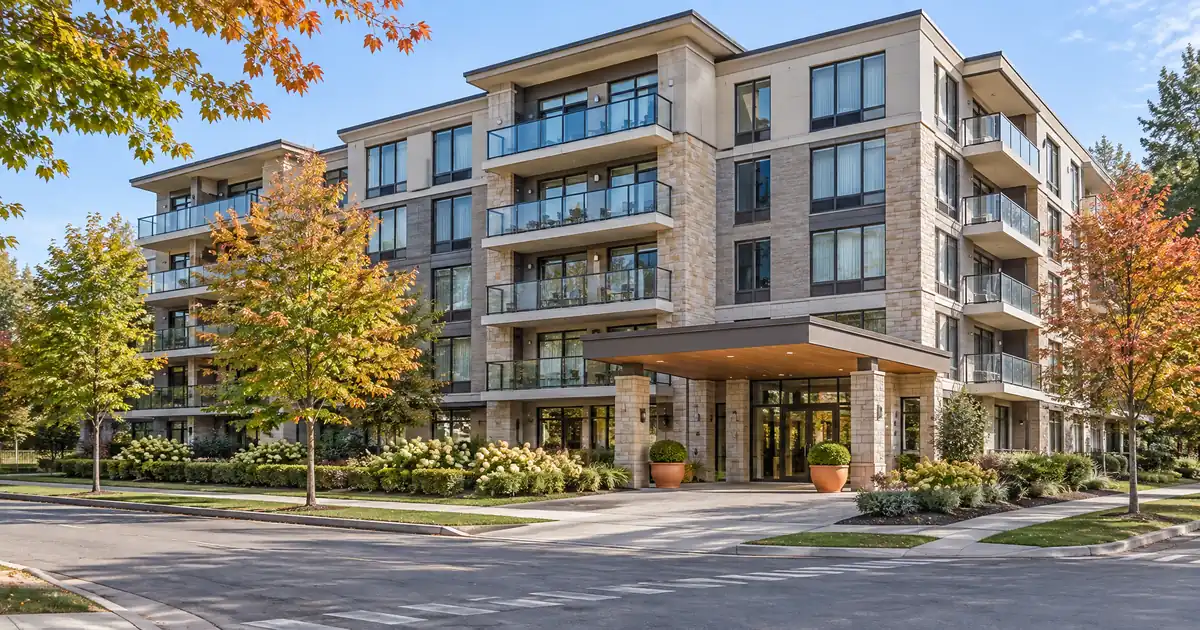
The Quick Read: Qualifying starts with confirming how your building is classified, because condotels are not an eligible property type for a home equity line across the wholesale network Lendmire brokers through. If your building is not classed as a condotel, a rental condo can qualify on an investment line, subject to lender guidelines and full file review.
- Warrantable and non-warrantable condos are eligible, but a condotel is not.
- Your building’s operation decides the label, not the deed or the marketing.
- On an investment property, the ceiling is 70% CLTV, with a 700 minimum score and a $500,000 maximum line.
- LLC ownership blocks this product, so a vesting change may be needed.
- Equity from a different property or a DSCR cash-out is the usual alternative when a building is flagged.
Many investors who ask this question already own the unit and want to tap equity without refinancing the first mortgage. This guide explains how reviewers sort condos from condotels, how the underwriting works when your building passes, and what to do when it does not.
How large a line the equity supports.
An equity line is sized by combined loan-to-value, occupancy, and credit — not by rental coverage. Switch the occupancy or the credit band and the ceiling moves with it.
Investment-property lines require a 700 minimum credit score; second-home lines start at a 640 minimum and primary-residence lines at 600, and the combined-LTV ceiling steps down as the credit band drops on primary-residence and second-home lines and holds on investment-property lines; the line cap steps down on primary-residence lines and holds at every tier on investment-property and second-home lines.
A debt-to-income ratio above 45% requires 680+ credit. Profiles under 640 are limited to single-family homes. At least 75% of the approved line is drawn at closing. Ceilings, floors, and caps update from Lendmire’s centralized guideline source.
Line estimate
Illustrative estimate only — not a quote, Loan Estimate, approval, or commitment to lend. The rate is an editable assumption; equity-line pricing is variable through both the draw and repayment periods and never converts to fixed. Occupancy and credit drive the ceiling together: an investment property tops out at 70% combined LTV (minimum credit 700, line cap $500,000); a second home tops out at 90% combined LTV (minimum credit 640, line cap $500,000), with the ceiling stepping down as the credit band drops (the cap holds at every tier); a primary residence tops out at 90% combined LTV (minimum credit 600), and its $750,000 maximum line is available only at 75% combined LTV or below with a 700-or-better credit profile (720 on the longer-runway program) and a full appraisal. Lines above $500,000 require a full appraisal. Credit, debt-to-income, property type, and full underwriting review all affect the final line.
What Is a Condotel, and Why Does the Label Matter?
A condotel is a condo building run like a hotel, with nightly rentals and often a shared rental pool. On the network Lendmire works with, that operating style puts the property outside the HELOC programs, even when the deed says condominium.
Wikipedia’s overview of the condo hotel describes the idea in general terms. Owners can use a hotel operator’s marketing and management to rent the unit like a hotel room when they are not using it. The same overview notes that estimating income is hard, because guest revenue swings with travel patterns.
That swing is part of why lenders treat these buildings differently. The income is transient, the operator takes a cut, and resale buyers are fewer. Agency-backed conventional loans generally steer away from hotel-operated projects, so financing tends to sit with non-agency lenders. Equity lines in this network go one step further: condotels are simply not offered.
Compare three building types so you can see where yours lands.
| Building type | HELOC on the investment line | Why |
|---|---|---|
| Warrantable condo | Eligible | Meets standard project tests |
| Non-warrantable condo | Eligible | Each lender weighs the building issues |
| Condotel | Not offered | Hotel-style operation |
Non-warrantable and condotel get confused all the time. They are different things. A non-warrantable project misses standard project rules, often over investor concentration, delinquent dues, or litigation. A condotel is excluded on how it operates.
Is Your Unit Actually a Condotel?
Classification follows how the building operates, not the label on the listing. A project can market itself as a condo and still be read as a condotel, so ask how the project is classed rather than how it is advertised.
Reviewers look for hotel-like features. These are the signals that tend to matter:
- A short-term rental program run by the association or an operator.
- A rental pool, where owners share nightly revenue.
- Front-desk services, such as check-in and housekeeping.
- Shared-ownership use, such as fractional or timeshare-style arrangements.
- Heavy nightly-rental concentration across the building.
- Resort branding or hotel-operator involvement.
A rental-pool or hotel-run unit is the case that most often catches borrowers. A building that leans heavily on nightly rentals can also look like a condotel to a reviewer, even without a formal hotel flag.
To confirm, pull the association’s governing documents, any rental-program agreement, and the project’s budget. Ask management directly how the project is described. If the answer is murky, treat the building as borderline and get a read from a broker before you spend money on an application.
Classification can also drift. A building that passes today can slide out of eligibility if litigation starts, reserves fall, or delinquencies climb. Approval is never permanent.
How Underwriting Treats a Condo That Passes
When the building clears, the equity line is underwritten on you, not on the unit’s rent. That is the sharpest difference from DSCR financing, and it shapes everything below.
Our wholesale network runs two gates on a condo. The first is the borrower: credit, income, and debt load. The second is the project: finances, insurance, and litigation.
Gate one: you
On an investment property, the network ceiling is 70% CLTV, which means the first mortgage plus the new line, divided by the property’s value. Scores of 700 or better are required, and the maximum line is $500,000. A higher score buys eligibility, not extra leverage on a rental.
Investors sometimes hear higher numbers. Some lenders allow far more. NerdWallet’s guide to HELOCs on investment properties notes that not every lender offers these lines and that requirements are stricter than on a primary home. The network figure for an investment line stays at 70% CLTV. The 90% ceiling exists only on primary residences and second homes, and only at a 720-or-better credit profile.
Other borrower tests include:
- Debt-to-income of 50% at most.
- Qualification on the interest-only payment calculated on the maximum draw.
- A credit report no more than 90 days old at closing.
- Exposure limits: no more than three lines, and no more than 15 financed properties.
Gate two: the building
For the project, the review covers pending litigation, reserve adequacy, delinquent dues, and the split between owner-occupied units and investor-owned units. Pending litigation does not automatically bar a rental line. It depends on what the suit is about and who is being sued.
A strong score or income cannot fix a weak building. The second review stands on its own.
Title, valuation, and structure
The property must be held by you personally or by an inter vivos revocable living trust. An LLC cannot hold title. If the unit is already deeded to an LLC, you need a vesting change or a different product.
Lines at or below $500,000 ordinarily use an automated valuation instead of a traditional appraisal, though you can request a full appraisal. Investment lines run a 5-year interest-only draw followed by a 25-year repayment period. At least 75% of the line is drawn at closing, and the pricing floats and never converts to fixed.
You must already own the rental, and seasoning applies to a recent purchase or refinance. A recent low-down-payment purchase usually leaves little CLTV room, so equity has to build first.
A Worked Example of the Equity Math
Say you own a rental condo that is not a condotel, valued at $400,000. Assume the first mortgage balance is $240,000. These are modeled assumptions for illustration, not a quote.
The 70% CLTV investment ceiling caps the first mortgage and the new line together at $280,000. Subtract the $240,000 first mortgage, and the room left for a line is $40,000. That sits well under the $500,000 maximum line, so the CLTV test is the one that binds.
Now change one input. If the first mortgage balance were $150,000, the same $280,000 ceiling would leave $130,000 of room. If it were $280,000 or more, there would be no room at all, which is common after a purchase with a small down payment.
Scores above 700 do not stretch the 70% ceiling. On most condo rentals, equity decides the size of the line long before the $500,000 cap does.
Where the General Rule Breaks
A few edge cases cause the most confusion.
Non-warrantable is not condotel. Non-warrantable units are eligible on the network, though each lender weighs the building problems. Condotel is a harder exclusion.
Litigation. A lawsuit does not automatically disqualify the unit. A heavy nightly-rental building in litigation, though, can end up treated as a condotel.
Heavy short-term-rental buildings. Even without a hotel flag, high nightly-rental concentration can push a reviewer toward the condotel label. Short-term rental rules can vary by city, county, HOA, and property type, so investors should confirm local rules before relying on projected rental income. The association can also limit rentals through caps, even when a lender approves the line.
Recently listed. In NC, PA, TN, TX, and WA, a property listed for sale within the past 60 days is ineligible.
State availability. These lines are brokered only in 16 states: AL, CA, CO, FL, GA, IN, MI, MT, NM, NC, OH, PA, TN, TX, VA, and WA. That is narrower than Lendmire’s 41-market DSCR footprint, so check that your condo sits in one.
If Your Building Is a Condotel: The Real Options
You have several paths. The right one depends on where your equity sits and how the property is held.
| Route | How it works | Best fit |
|---|---|---|
| HELOC on another property | Uses equity from a different eligible property | You own a primary home or other rental with room |
| DSCR cash-out refinance | Replaces the first mortgage, is reviewed on rent | LLC-held or HELOC-ineligible rentals |
| Wait or restructure | Build equity, change vesting, or sell | Thin equity or a flagged building |
A HELOC keeps your existing first mortgage and is underwritten on you. A DSCR cash-out replaces the first mortgage and qualifies primarily on property-level rental income covering the payment, subject to lender guidelines. NerdWallet separately notes that for a mostly rented property, a DSCR second mortgage may be the best option.
Our complete DSCR loans guide covers how property-rent-based lender review works from the ground up.
Cash-out refinances on standard rentals top out around 75% LTV across most of the network, with about six months of seasoning as the common expectation. A coverage ratio of 1.00 is where select programs start, and clearing it is not the same as positive cash flow. Repairs, vacancy, management, and utilities sit outside the calculation. Each figure is subject to lender guidelines and a complete review of property type, leverage, and credit.
If the other equity is in a home you live in, that line is reviewed as a primary-residence line, which has its own credit tiers and leverage limits. Your first mortgage on that home stays in place. Draw on the other home’s equity first, then put the cash toward your condotel plans, rather than expecting the condotel to carry its own line.
Key Terms Defined
Condotel: a condo building run like a hotel, with nightly rentals and often a rental pool.
CLTV (combined loan-to-value): your first mortgage plus the new line, divided by the property’s value.
Non-warrantable condo: a project that misses standard project rules, often over investor concentration, unpaid dues, or litigation.
Seasoning: the waiting period a lender wants after a recent purchase or refinance.
Vesting: how the title is held, such as personally, in a revocable trust, or in an LLC.
DSCR cash-out: a refinance that replaces your first mortgage and qualifies primarily on the property’s rent.
Documents to Gather
Start with the paperwork that proves the building type, since it decides the file first:
- Association governing documents and any rental-program agreement.
- The project budget and master insurance.
- Government ID.
- Mortgage statements on every financed property.
- Your own insurance and income documentation.
- Current leases for the rental.
Common Reasons Files Stall
Borrowers often assume a condo is a condo. Some bring an LLC-held title to an individual-only product. Others count on a strong score to offset a flagged building. Still others buy with a small down payment and find no CLTV room left.
Another common miss is assuming that any lender will offer a rental line. Programs differ, so confirm that a lender offers one for your property type before you commit. Check classification before you buy, because a condotel purchase narrows later exit and refinance choices. A plain condo that is not flagged keeps the home equity route open.
What the Decision Looks Like in Practice
Work through it in order. First, confirm whether the building is a condotel. If yes, move straight to another property’s equity or a DSCR cash-out. If no, check title, then CLTV room, then your score and debt load.
If you are considering a home equity line and want to see how the numbers work, Lendmire can help you compare HELOC options based on the property, the equity available, credit profile, combined leverage, and your goals. Reach the team at 828-256-2183 or request a quote.
Frequently Asked Questions
Can I get a HELOC on a condotel?
Not through the network Lendmire works with, where condotels are listed as not offered. Warrantable and non-warrantable condos are eligible, so the label on your building is what matters. If it is flagged, equity from another property or a DSCR cash-out are the usual paths.
What makes a condo count as a condotel?
The way the project operates. Rental pools, front-desk services, hotel-run rental programs, and heavy nightly-rental use are the common signals. Marketing language and deed type do not settle it, so review the association documents.
Can an LLC hold title on the line?
No. Title must sit with you personally or in a revocable living trust. A unit already deeded to an LLC needs a vesting change, or a DSCR cash-out instead, subject to program terms.
Does my rental income count toward qualifying?
Not for the HELOC. It is underwritten on your credit, debt load, and equity, not on the unit’s rent. DSCR cash-out works the other way, qualifying primarily on rent covering the payment.
How much equity do I need?
On an investment property, the first mortgage plus the new line cannot exceed 70% CLTV, and the line tops out at $500,000. A recent low-down-payment purchase often leaves little room, so equity may need to build first. Every figure is subject to lender guidelines and full file review.
About Lendmire
Lendmire is a mortgage brokerage (NMLS# 2371349) arranging home equity lines of credit — primary-residence, second-home and investment-property lines — through a wholesale lending network in its 16 full-service states. Eligibility is determined by the lender on each file. Scotsman Guide named Lendmire a Top Mortgage Workplace in both 2025 and 2026.
Get Started
Ready to find the right loan for you?
See your offer in seconds. No credit pull, no obligation.
Informational only. Not a Loan Estimate, approval, or commitment to lend. Program availability and eligibility are subject to lender guidelines, credit approval, property review, and underwriting.
References
2. NerdWallet’s guide to HELOCs on investment properties
This article is part of Lendmire’s HELOC & home equity loan program — full qualification details, guidelines, and scenarios live on the program page.
Related reading: Banks That Offer a HELOC When Your Debt-to-Income Ratio Is Near the Limit · Banks That Offer a DSCR HELOC on a Vacant Rental Using a Market-Rent Study · Banks That Offer a HELOC With Steady Employment and Income
Brandon Miller
Founder & CEO, Mortgage Loan Originator, Lendmire LLC
- Mortgage Loan Originator · NMLS# 1129696 · Verify on NMLS Consumer Access
- North Carolina Real Estate Broker · License# 343312 · Verify on NCREC
- North Carolina Insurance Producer · License# 19053198 · Property, Casualty, Life, Health · Verify on NAIC SBS
- Lendmire LLC · Firm NMLS# 2371349 · Verify firm licensure
Required disclosures. Lendmire (NMLS# 2371349) operates as a licensed mortgage broker, not a direct lender or depository. The discussion in this article is general in nature and should not be relied upon as financial, legal, or tax advice — every investment scenario is unique and should be reviewed by a qualified professional. Any loan inquiry is subject to lender underwriting, and this article is not a commitment to lend or a guarantee of approval. Mortgage rates, loan terms, and program guidelines vary by borrower, property, and state, and may change without notice. Equal Housing Opportunity. Verify licensure at NMLS Consumer Access.