
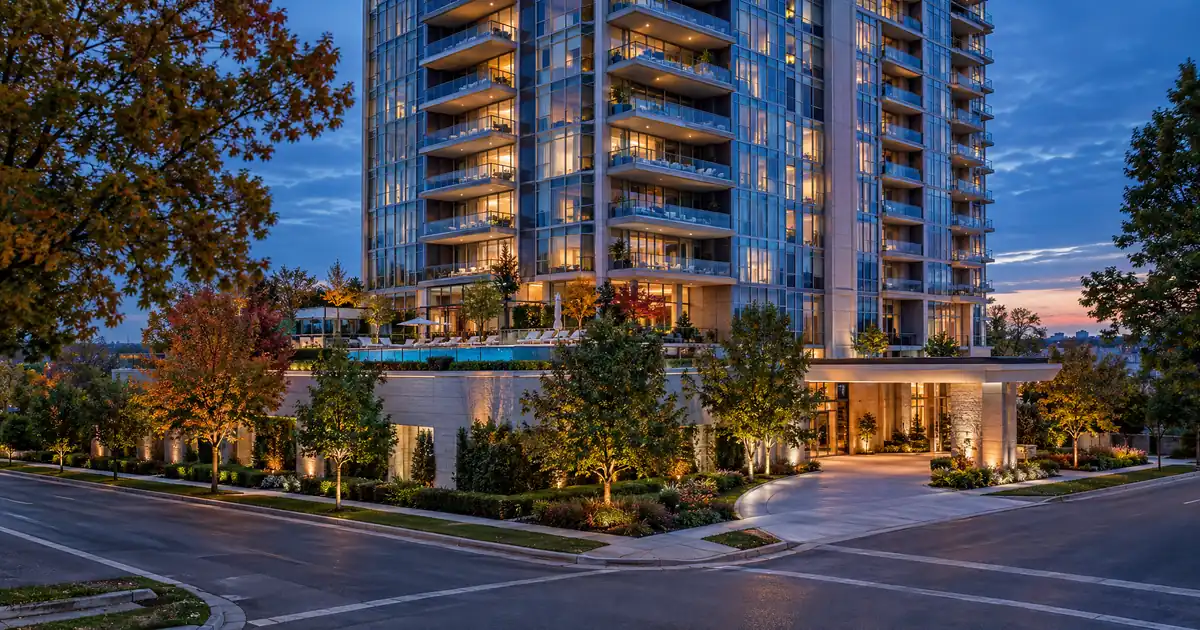
The Quick Read: A super jumbo DSCR lender runs two separate tests on a tower unit, one on the unit’s rent against its full monthly obligation and one on whether the building itself is reviewable, and the luxury label changes neither. Here, the “pool” means the mix of units in the tower: owner-occupied, investor-owned, rental-program and developer-held.
- The unit test compares rent to principal, interest, taxes, insurance and HOA dues, and dues sit in the denominator.
- The building test reads the HOA’s reserves, litigation, delinquencies, insurance and ownership mix.
- A building’s status can cap leverage and loan size before the rent math matters.
- Above $3,000,000 on the loan, the program ladder tightens on leverage, credit and appraisals, subject to underwriting.
- Many building problems can be cured and re-reviewed, but hotel-style operation and mandatory rental pooling usually cannot.
Key Terms Defined
DSCR (debt service coverage ratio) is the monthly rent divided by the full monthly obligation on the loan.
Warrantable condo describes a building whose project paperwork fits standard agency-style project rules; non-warrantable means it falls outside them, usually over concentration, litigation, reserves or use.
Condotel is a building run like a hotel, often with a front desk and a rental program.
Rental pool is an arrangement where unit owners put their units into a shared rental program.
Project review is the lender’s check of the building, separate from the check of you and the unit.
Single-entity ownership means one owner or investor holds several units in the same building.
PITIA is principal, interest, taxes, insurance and association dues, the full monthly obligation.
What Are the Two Tests?
The two tests are the unit test and the building test, and a file must pass both. The unit test asks whether the rent covers the full monthly obligation. The building test asks whether the project is healthy enough to lend against.
DSCR loans are designed for non-owner-occupied investment properties. Because they are business-purpose investor loans, they are reviewed differently from a standard owner-occupied mortgage. Across the wholesale network Lendmire works with, the loan is reviewed primarily on property-level rental income covering the payment, subject to lender guidelines. That does not mean the building gets ignored.
A BiggerPockets forum answer makes the same split. It says condos are eligible for DSCR programs and tells the investor to learn the project’s warrantable status first. It names owner-occupied share, HOA reserve contributions and a clean record on litigation and delinquencies as the key determinants.
Your credit and your reserves can be spotless while the building sinks the file. Plenty of brokers have watched that happen.
What Does the Lender Read in the Building, in Order?
The lender reads the HOA questionnaire first, then the financials and reserves, then insurance, litigation and ownership mix. Each item produces a clean, conditioned or failing read. The table shows how a typical reviewer sorts the signals.
| Item | Green flag | Yellow flag | Red flag |
|---|---|---|---|
| HOA questionnaire | Complete, consistent | Gaps, stale answers | Refused or contradicted |
| Budget and reserves | Funded, recent study | Thin reserves | No study, deferred repairs |
| Delinquent dues | Low share of units | Rising arrears | Heavy arrears |
| Master insurance | Full coverage, current | Short on limits | Lapsed or inadequate |
| Litigation | None | Minor, insured | Construction or structural suit |
| Ownership mix | Mostly owners | Investor-heavy | One entity dominates |
| Use | Residential only | Some commercial space | Hotel operation, mandatory pooling |
Reserves get the hardest look in older towers. The Surfside collapse killed 98 people, and NAR reports that investigators found a building that needed major repairs but lacked the reserves to pay for them. Reviewers took that lesson seriously. A tower that has deferred a facade or elevator project, with no reserve study behind it, draws questions that no amount of rent can answer.
What Is Different About a Tower?
A tower adds operating complexity that a small walk-up lacks. Concierge and valet staffing, shared mechanical systems, facade work and life-safety upgrades all push dues up and make capital needs larger and lumpier. A podium of retail or commercial floors adds a use test, because heavy commercial space can push a building out of warrantable status at any price.
Developer control is another tower issue. A newer building where the developer still holds many units, or still runs the HOA, gets a harder read than one with an owner-run board. High dues are not automatically bad news. Dues that look suspiciously low for the amenities can signal a budget that underfunds reserves, which is the exact problem lenders worry about.
How Does a Lender Read the Pool Itself?
The lender reads the pool as a population and asks who owns the units and how they are used. A building with mostly owner-occupants and a modest investor share looks stable. A building where investors hold most units can be harder to sell into or refinance later, even when it passes review today.
Agency rules shaped the vocabulary here, but they do not govern DSCR loans. Fannie Mae and Freddie Mac recently retired the 50% investor-concentration cap for established projects, according to a Michigan community-association law blog. The same source says individual lenders remain free to set their own investor-concentration rules, and it notes that single-entity limits remain. A law firm note on the new project standards says the presale requirement for new projects remains too.
In practice, some investor-heavy towers can now qualify for conventional money, and DSCR lenders may keep their own overlays regardless. Across our wholesale network, overlays differ by lender. The strictest want a low investor share and a clean HOA record, while a few will look at a heavier mix with stronger compensating factors.
Rental programs deserve their own read. An optional rental program, where some owners rent through the building, is a different animal from mandatory pooling or front-desk operation. Optional programs usually draw questions about how much of the building participates. Mandatory pooling and hotel-style operation generally stay outside standard condo treatment. Condotel financing exists through select programs, up to 75% on a purchase and 65% on a refinance, with a $1,500,000 loan ceiling, subject to underwriting.
How Do Dues Change the Coverage Ratio?
Dues go into the denominator, so they compress coverage before anything else does. The ratio is monthly rent divided by principal, interest, taxes, insurance and dues. Dues are not netted out of rent. That is why a high-amenity tower can lose coverage that a comparable house would keep.
Run an illustrative case with modeled inputs, not market data. Say the same unit, at the same price and the same loan, sits in two buildings. In a lean-dues building, coverage might land near 1.25x. In a full-service tower with much heavier dues, the same rent might land near 1.05x. The unit did not change. The building did.
Rent comps matter here too. A tower unit should be compared to rentals at a similar amenity level, or the rent assumption will not hold up. At a coverage of 1.00, most DSCR programs treat the unit as qualifying for full leverage. Coverage from 0.75 to 0.99 is a real path through select programs, to a $2,000,000 loan, but LTV and terms adjust, subject to underwriting.
Short-term rental units are a separate path. They qualify on documented operating history or the appraisal’s short-term-rent analysis, at a discount to gross rent. Both the HOA documents and local rules must allow that rental term, and permission is documented for the specific property, never assumed. Rules vary by city, county, HOA and property type, so investors should confirm local rules before relying on projected rental income.
Where Does Leverage Land on a Super Jumbo Loan?
Leverage steps down as the loan grows, and the bands apply to the loan amount, not the purchase price. Multiply price by leverage first, then read the band that loan falls into. These are ceilings through select wholesale programs at coverage of 1.00 or higher, subject to underwriting.
| Loan band | Purchase | Rate-and-term | Cash-out |
|---|---|---|---|
| $150K to $1M | 80% | 80% | 75% |
| $1M to $1.5M | 75% | 75% | 70% |
| $1.5M to $2M | 75% | 75% | 60% |
| $2M to $3M | 75% | 75% | 60% |
| $3M to $4M | 65% | 65% | — |
| $4M to $6M | 60% on review | 60% on review | — |
| $6M to $10M | 60% on review | 60% on review | — |
Each band’s top leverage needs a credit score that rises with the band. The top cell to $1,000,000 needs 660 or better, the next bands need 700 and then 720, and the $3,000,000-plus bands need 700 or better. A lower score takes a lower cell in the same band. The program floor is 660 on loans to $3,000,000 and 700 above that. Above $4,000,000, every request is reviewed case by case before submission.
Other pieces carry over from the program: six months of reserves on the subject property (twelve for first-time investors), two appraisals above $2,000,000, and interest-only for 120 months up to 75%. Entity vesting is welcome, subject to program terms, with no layered entities.
How Does Building Status Change the Loan Size?
Building status can cap the loan before leverage even comes up. Non-warrantable condos run to 75% and a $1,500,000 loan on the programs in the network, subject to underwriting. A luxury unit that needs a larger loan therefore needs a building that passes as warrantable, or a different structure.
That interaction is the heart of super jumbo condo work. Many investors assume the loan ladder sets the limit. In a tower, the project often sets it first. For single-entity exposure, Lendmire’s piece How Super Jumbo DSCR Exposure Caps Work for Luxury Tower Condo Buyers covers what happens when you hold several units in one building.
The more you own in one tower, the more your own share becomes part of the building’s profile. Lenders also set their own exposure limits per building, which is one reason a second unit can get harder to finance than the first.
What Do Three Building Files Look Like Side by Side?
A clean file passes, a conditioned file gets cured and re-reviewed, and a failing file moves to another structure. The three mini-cases below are hypothetical and use ratios only.
The clean tower. The building is mostly owner-occupied, with funded reserves and a recent reserve study. The questionnaire comes back complete and the master policy is current. The unit clears roughly 1.15x. This file reads as a standard condo review, and the debate is about leverage and loan band, not the building.
The conditioned tower. Delinquent dues have crept up and the reserve study is stale. Coverage clears roughly 1.10x. Delinquencies, thin reserves, insurance gaps and some litigation can sometimes be cured, and then the project gets re-reviewed. The practical move is to ask the HOA for updated financials and a current study before you offer, not after.
The failing tower. The building runs a mandatory rental pool with a front desk. Rent clears above 1.20x, and it does not matter. Hotel-style operation and mandatory-membership structures generally stay non-warrantable, and a rental ban at your term length is a hard stop. The investor either looks at a condotel program with its own limits or walks.
In every case, coverage did not decide the outcome. The building’s documents did.
What Breaks the General Rule?
A few edge cases break the usual pattern. State reserve laws are one. Florida, for example, requires a structural reserve study every ten years for buildings of three or more stories, and a Florida association resource says associations cannot vote to waive structural reserve funding. That is one state’s rule, not a national one, so check what applies where your tower sits.
Developer-controlled or incomplete projects are another break. Some lenders want a certificate of occupancy and owner control of the HOA before they look at a unit. Second liens are a third: some programs finance only warrantable condos on a second lien, even when their first-lien guidelines are flexible.
A fourth break is the appraisal. A luxury unit with a rare floor plan or a penthouse position is hard to comp, so lenders may want a condo-experienced appraiser. Above $2,000,000, two appraisals are required. Lendmire’s piece on how a bank statement lender reads a luxury appraisal covers the valuation side in more depth.
What Should an Investor Do in Practice?
Order the project documents before you make a firm offer, because the building usually decides the file. Request the questionnaire, budget, reserve study, master insurance certificate and litigation disclosures early. Check dues against rent before you bid. Compare your intended leverage to the building’s status and the loan band.
Then decide whether the building supports your exit. An investor-heavy or financially weak tower can be harder to sell or refinance later. A special assessment can reprice a deal overnight, and NAR ties the new disclosure expectations to reserve and repair transparency. If the numbers only work at the loosest leverage in a marginal building, treat that as a warning, not a plan. Our complete DSCR loans guide covers the wider mechanics behind these files.
If you are buying or refinancing a high-balance rental property and want to see how the numbers work, Lendmire can help you compare super jumbo DSCR loan options based on the property income, the loan balance, credit profile, leverage and investor goals. Lendmire is a broker arranging business-purpose financing through select lenders in its wholesale network across 41 markets, including Washington, D.C. Nothing here is a commitment to lend. Tax treatment varies, so consult a qualified professional.
Frequently Asked Questions
Can a non-warrantable tower get a DSCR loan?
Yes, through select programs, with limits. On the network’s programs, non-warrantable condos run to 75% leverage and a $1,500,000 loan, subject to underwriting. A loan above that size generally needs a building that passes as warrantable.
Can a building’s status change?
Yes, when the cause is fixable. Delinquent dues, thin reserves, insurance gaps and some litigation can be cured, and the project can be re-reviewed. Hotel-style operation and mandatory rental pooling usually stay non-warrantable.
Does luxury matter to underwriting?
No. Luxury is not an underwriting category. A high price brings a larger loan band and tighter leverage, and the building is still judged on reserves, ownership mix, use and litigation.
How do dues affect my ratio?
Dues sit in the full monthly obligation, so heavier dues lower coverage for the same rent. High-amenity towers compress coverage first. Check dues before you offer.
What makes a tower condotel-like?
Front-desk operation, a rental program that runs the units like hotel rooms, or mandatory rental pooling. Those features move the building into a narrower category with its own limits. A rental ban at your term length is a hard stop.
Lendmire’s self-employed mortgages page presents both super jumbo programs, bank statement and DSCR, side by side.
About Lendmire
Lendmire (NMLS# 2371349) is a mortgage brokerage built around DSCR investor lending, with programs available in 41 markets, including Washington, D.C. DSCR lenders commonly evaluate rental-income coverage instead of personal income paperwork — a practical fit for LLC-owned and multi-property investors. Terms vary by lender, property, leverage, and program. Scotsman Guide named Lendmire a Top Mortgage Workplace in both 2025 and 2026.
Get Started
Ready to find the right loan for you?
In about 30 seconds you can review financing options available for your investment property. No commitment required.
Informational only. Not a Loan Estimate, approval, or commitment to lend. Program availability and eligibility are subject to lender guidelines, credit approval, property review, and underwriting.
References
1. BiggerPockets – DSCR Loan for a Condo
2. NAR – Why and How Condo Lending Rules Are Changing
3. Michigan Community Association Law Blog
4. HGAR – New Fannie Mae and Freddie Mac Project Standards
5. AMI Sun – Surfside Collapse Impacts Today’s Condo Owners
This article is part of Lendmire’s super jumbo DSCR loan program — full qualification details, guidelines, and scenarios live on the program page.
Related reading: How Luxury Airbnb DSCR Loan Sizes Work From Jumbo to Super Jumbo · Can a Luxury STR Operator Get a Super Jumbo DSCR on a Non-Warrantable Unit? · Can You Get a Super Jumbo DSCR Loan on a Luxury Airbnb?
Brandon Miller
Founder & CEO, Mortgage Loan Originator, Lendmire LLC
- Mortgage Loan Originator · NMLS# 1129696 · Verify on NMLS Consumer Access
- North Carolina Real Estate Broker · License# 343312 · Verify on NCREC
- North Carolina Insurance Producer · License# 19053198 · Property, Casualty, Life, Health · Verify on NAIC SBS
- Lendmire LLC · Firm NMLS# 2371349 · Verify firm licensure
Important disclosures. Lendmire (NMLS# 2371349) is a licensed mortgage brokerage. Lendmire is not a direct lender, depository institution, or financial advisor. All loan inquiries are subject to lender underwriting; this article does not constitute a commitment to lend. Rates, terms, and program guidelines are subject to change without notice and vary by borrower profile, property type, and state. Information in this article is general in nature and is not financial, legal, or tax advice. Equal Housing Opportunity. NMLS Consumer Access: nmlsconsumeraccess.org.