
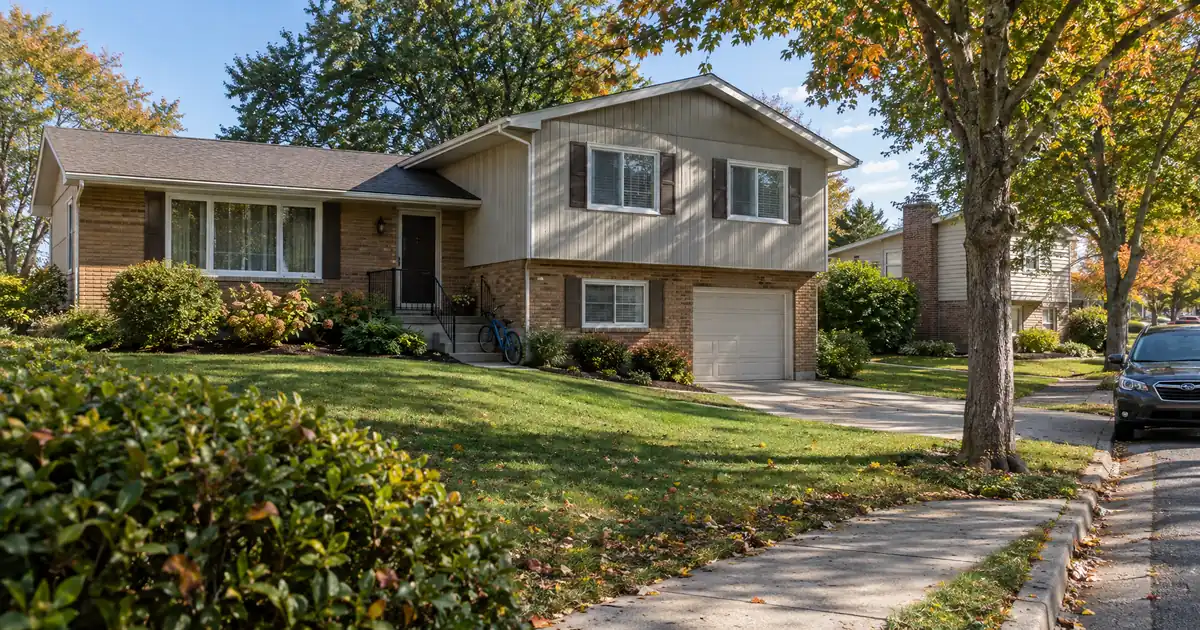
The Quick Read: Usually yes, because a DSCR refinance can keep both ex-spouses on the new loan or leave one owner on it alone, since the lender qualifies the file primarily on property-level rental income covering the payment, subject to lender guidelines, and the new note pays off the old joint loan. Which version you want matters more than whether it is possible. Keeping both names is allowed, but it leaves both people liable.
- A divorce decree and a quitclaim deed do not remove anyone from the old mortgage. A new loan that pays off the old note does.
- Both names can stay on a new DSCR loan, as borrowers or guarantors, depending on the lender’s program rules.
- An equity payment to the departing spouse usually makes the deal a cash-out refinance, which tops out around 75% LTV on a standard rental.
- Rent has to cover the larger payment after a buyout, so a file that passed before can fail after.
- Court-awarded property is a common exception to seasoning, but the exception varies by lender.
DSCR loans are designed for non-owner-occupied investment properties. Because they are business-purpose investor loans, they are reviewed differently from a standard owner-occupied mortgage. For a divorcing investor, that difference is the draw. The lender cares about what the rental earns against what it costs to carry, not about the income of whoever ends up holding the deed.
DSCR Cash-Out Calculator
Run the cash-out numbers in your market
Rate source: Freddie Mac 30-yr average via FRED® — Federal Reserve Bank of St. Louis · effective Oct 15, 2026
Prefilled with starting assumptions — enter your property’s value, balance, taxes, and insurance for a more accurate picture.
Program parameters update from Lendmire’s centralized guideline source. Taxes and insurance are editable estimates.
As of Oct 15, 2026 · General Freddie Mac market benchmark, not a Lendmire loan offer. Property value, balance, taxes, and insurance are editable estimates. Maximum loan-to-value varies by lender, program, property type, and seasoning. Not a Loan Estimate, approval, or commitment to lend. Program availability and eligibility are subject to lender guidelines, credit approval, property review, and underwriting.
What Does “Both Names” Actually Mean?
“Both names” can describe four different setups, and each one leaves you in a different place. The right one depends on who keeps the property, who owes the equity payment, and whether either person wants out of the debt.
| Setup | Title after closing | Old loan | What it means for you |
|---|---|---|---|
| Both keep the rental | Both owners | Paid off | Both liable on new note |
| One keeps, one leaves | Keeper only | Paid off | Leaver is released |
| Ex off title, still on old note | Keeper only | Still open | Leaver owns nothing, owes everything |
| Keeper holds it in an LLC | LLC | Paid off | Guaranty often required |
The second row is the common case. One person keeps the rental, the other takes cash or other assets, and a refinance replaces the joint note. The old loan is paid off at closing, so the departing spouse has no lingering obligation on it.
The first row is rarer, but it works. Say two ex-spouses bought a duplex together, it rents well, and neither wants to sell yet. A new DSCR loan can be arranged with both of them as owners, and the property’s rent does the heavy lifting in qualification. The cost is that a missed payment by one person becomes a problem for both. Most divorcing owners want the opposite of that.
The third row is the dangerous one. It happens when someone records a quitclaim deed before the refinance closes. The departing spouse has given up the asset but kept the debt. We cover how to avoid that in the sequencing section below.
Why the Decree and the Deed Don’t Finish the Job
A divorce decree divides property between the two of you, but it does not rewrite your contract with the lender. The lender signed a loan with two borrowers, and only the lender can release one of them.
The Consumer Financial Protection Bureau says a person generally stays responsible for a joint debt unless the creditor contractually releases them or the former spouse refinances and takes their name off. The same page says taking a name off a title does not remove it from the mortgage. It also says sending creditors a copy of the divorce decree does not end responsibility on a joint account.
DivorceNet makes the same point from the legal side. A judge can order a spouse to refinance or sell, but a judge cannot force the lender to let anyone off the note. Refinancing or an approved assumption is usually the only way to be sure the ex is no longer on the hook.
Assumption means the keeper takes over the existing loan as is. On paper it sounds ideal. In practice, a CFPB issue spotlight found that servicers often tell borrowers a refinance is the only way to remove a name, and assumption requests can drag on for a long time. Investment-property loans commonly do not offer assumption at all. So for a rental, a refinance is the practical route.
How a DSCR File Works When Two People Are Involved
The lender divides the property’s rent by its full monthly obligation, which covers principal, interest, taxes, insurance, and any HOA dues. That obligation is called PITIA. The result is the debt service coverage ratio, or DSCR. A result of 1.00 means rent equals the payment.
Across the wholesale network Lendmire works with, 1.00 is where many select programs start. A separate select-lender path takes coverage below 1.00, with leverage and terms adjusted. Stronger ratios open better pricing and leverage.
Clearing 1.00 is not the same as positive cash flow. Repairs, vacancy, management, utilities, and big-ticket replacements all sit outside the calculation. A rental can pass the test and still strain your bank account.
Here is why this matters after divorce. A conventional lender looks at your personal debt-to-income ratio. If your income dropped when the household split, that can sink the application. A DSCR lender looks at the property first. You still need credit, reserves, and an eligible property, but you are not asked to prove that your paycheck can carry the rental.
Credit is the part to plan around when two people are on the file. A 620 floor exists in parts of the network, most programs want around 660, and 700 or better unlocks the strongest leverage tiers. Every borrower or guarantor on the file gets reviewed. Which score drives pricing and leverage varies by lender, so a strong score on one side does not always rescue a weak score on the other.
Should Both Ex-Spouses Stay on the New Loan?
Only if you both want to keep owning the property and trust each other with the payments. Otherwise, the clean version is one owner, one loan, and a full release for the other person.
Staying together on the new note can make sense in a few situations. The rental may be a long-term hold you both want. The equity may be too small to justify a buyout. Or neither of you can qualify alone at the leverage you need. In those cases a co-borrower arrangement works, and the property’s rent carries the file.
The downside is a long tail of shared liability. If one of you stops paying, the lender can pursue both. Both credit profiles stay tied to the debt. You also still need to agree on repairs, refinancing, and a sale, which is the kind of coordination most people are trying to leave behind.
A guarantor is different from a co-borrower. A guarantor backs the loan personally but may not hold title, which is common when the property sits in an LLC. Whether the lender wants one guarantor or both depends on the program. If the keeper is the only person who stays involved, the usual ask is a personal guaranty from that person.
Holding the rental in an LLC after the award is a common choice, subject to lender program eligibility. If the LLC does not already exist, closing directly in the LLC can save an extra round of deeds. Moving the property into an LLC after the refinance creates another recorded transfer, and that adds its own title questions.
Sequencing: Deed, Loan, or Both at Once?
The safest order is to let the title company handle the deed and the payoff at the same closing. Whoever signs away their interest should not do it before the new loan funds.
| Approach | Upside | Risk |
|---|---|---|
| Deed first, refinance later | Feels final | Leaver owns nothing, owes everything |
| Refinance first, deed after | Old note paid first | Awkward if ex refuses to sign later |
| Deed and loan at one closing | Both land together | Needs good title coordination |
Escrow can handle the quitclaim at closing. That is the version most attorneys and title companies prefer. The departing spouse signs the deed through escrow, the new loan pays off the old note, and the deed records as the loan funds. Nobody holds a window of exposure.
Deeding first is the common mistake. It looks tidy, and it can feel like proof of the settlement. But the old lender has not been paid, and the lender’s contract still names both of you. If the keeper then fails to qualify, the leaver is stuck with a note on a property they no longer own.
Funding a Buyout: A Worked Example
A buyout usually turns the deal into a cash-out refinance. A cash-out refinance is a loan that pays off the old mortgage and also puts extra money in someone’s hands, here the departing spouse. Across most of the network, cash-out tops out around 75% LTV on a standard rental, and short-term rental collateral is capped at 70% in the same cash-out category. About six months of seasoning is the common expectation. Seasoning is the waiting period a lender wants after a purchase or earlier transaction before it will refinance.
Run the numbers on a hypothetical duplex, using modeled assumptions rather than market data. Say the old loan is about 45% of the property’s value. The equity payment to the ex is about 20% of value. Closing costs add roughly 3%. That brings the new loan to about 68% LTV, which sits under the 75% cash-out cap. Each figure is subject to lender guidelines and a complete review of property type, leverage, and credit.
Passing the leverage test is half the job. The loan is now much larger than the old one, so the payment grows. Taxes and insurance do not shrink to match. If the rental covered the old payment at around 1.3x, the larger loan can pull coverage toward 1.0x or lower.
If coverage lands below 1.00, you have options a lender would review. A sub-1.00 path is available through select lenders in the network, with leverage and terms adjusted. Interest-only periods and extended terms are also available through select lenders. A larger down payment on a purchase lowers the payment, but a refinance has no down payment, so the lever here is a smaller buyout or a longer term.
Reserves count too. Lenders commonly look for around 6 months of PITIA on hand, and loans above $1,500,000 typically step up to about 9 months. Money used for the equity payment cannot also count as reserves. The strongest files clear both tests: enough equity and enough rental coverage.
If equity is short, a few fixes are available:
- Trade assets instead of cash, such as retirement balances or another property, so the buyout shrinks.
- Stage the payout over time, secured by the settlement agreement rather than the new loan.
- Bring in a guarantor who strengthens credit or reserves.
- Sell the rental and divide the proceeds.
Edge Cases That Trip People Up
Due-on-sale clauses. Most mortgages let the lender call the loan due if the property transfers. Federal law carves out a divorce exception, but the implementing regulation, 12 CFR 191.5, limits its listed protections to a home occupied or to be occupied by the borrower. A rental does not fit that description. If your old loan stays in place while you deed the property, do not assume the exception protects you, and ask an attorney. The safe route is a refinance that pays off the old note.
Seasoning on a court award. Court-awarded property is a common exception to the cash-out waiting period. Some lenders waive the wait, and others are silent on it. Treat it as a question for the file, not a promise.
Prepayment penalties. If the old investor loan carries a prepayment penalty, paying it off in a refinance can trigger a charge. Read the old note before you plan the buyout.
Tax treatment. Tax treatment varies; consult a qualified professional.
Owner-occupied situations. DSCR loans are for non-owner-occupied property. If one of you still lives in the home, or the property has meaningful personal use, this product is the wrong fit. A standard owner-occupied mortgage is the better lane.
Ineligible property types. Manufactured homes (single- and double-wide), log homes, and barndominiums are not offered through the network’s DSCR programs. A rental in one of those categories needs a different plan.
DSCR vs. conventional financing
There are two common ways to finance an investment property, and they qualify you differently — here’s how investors weigh them.
Why investors choose it
- Qualifies on the property’s rental income — no personal tax returns, W-2s, or pay stubs needed to document income.
- No personal debt-to-income ceiling to clear, so existing mortgages and obligations don’t cap your borrowing the same way.
- Can be closed in an LLC, keeping the property inside a business entity.
- Built for scaling — not held to the limit on number of financed properties that conventional financing applies.
- Underwriting centers on the deal: generally qualifies when the rent covers the payment, a 1.00x coverage ratio being a common baseline (confirmed in underwriting).
- Designed specifically for investment property, including long-term and, where the program allows, short-term rentals.
Where it’s strong
- Often the lowest ongoing financing cost for a buyer who fully qualifies on personal income — a fit for a first property or a cost-first purchase.
Trade-offs for investors
- Requires full personal income documentation and must fit within a debt-to-income limit — salary, existing debts, and other mortgages all count.
- Typically held in your personal name rather than a business entity.
- Caps how many financed properties you can carry, which can become a ceiling as a portfolio grows.
- Evaluates you as a borrower as much as the property, which usually means more paperwork.
How investors usually choose: a first or single property often optimizes for the lowest financing cost; portfolio builders often optimize for leverage, vesting in an LLC, and scaling past conventional caps. The right answer depends on your goals, the property, and current guidelines — both paths run through select lenders in Lendmire’s wholesale network, with eligibility and terms confirmed in underwriting.
What the Practitioner View Looks Like on These Files
Divorce files are rarely about the math alone. In files like these, the paperwork usually falls out of order before the numbers do. A buyout number gets agreed in mediation, the appraisal comes in under what both sides assumed, and the leverage cap trims the cash available. The files that go smoothly pin down the property’s value, the old payoff, and the equity payment early, then size the loan around the real limits.
Another pattern: the keeper often wants an LLC, and the ex wants to be off everything. Those two goals fit together well. Closing in the LLC with a guaranty from the keeper releases the other person from the debt and keeps the ownership structure clean, subject to program terms.
What to Gather Before You Apply
Split the paperwork into divorce documents and property documents.
Divorce documents
- The decree or settlement agreement showing who keeps the rental.
- Any deadline to refinance and the equity payment terms.
- Proof of who signs what at closing.
Property documents
- The current mortgage statement and payoff figure.
- The lease, or an appraisal rent schedule (Form 1007 for single-family, Form 1025 for small multifamily).
- Entity documents, if the rental will sit in an LLC.
- Title work and proof of insurance.
- Bank statements showing reserves.
Bring in the right people in the right order. Your family-law attorney confirms what the settlement requires. The title company handles the deed and payoff. The broker structures the loan around the property’s income and your leverage. A tax professional weighs in before you sign.
When the Numbers Don’t Work
If the file does not clear, you have four basic moves. Shrink the buyout, add a guarantor, wait out seasoning if the lender is strict, or sell. Co-owning for a while longer is a fifth option, but it keeps both of you on the debt. Each path trades money against time and risk. A sale is final but clean. A staged payout keeps the property but leaves the ex waiting.
Key Terms Defined
DSCR (debt service coverage ratio): Monthly rent divided by the full monthly obligation of principal, interest, taxes, insurance, and HOA dues.
PITIA: The full monthly housing obligation, made up of principal, interest, taxes, insurance, and association dues.
Quitclaim deed: A deed that transfers one person’s ownership interest in a property. It moves title only and does nothing to the mortgage.
Note: The signed promise to repay the loan. Anyone who signed it stays responsible until the lender releases them or the loan is paid off.
Cash-out refinance: A new loan that pays off the old mortgage and also delivers cash, such as an equity payment to an ex-spouse.
Seasoning: The waiting period a lender wants between an ownership event and a refinance.
Guarantor: A person who personally backs a loan, often on a rental held in an LLC, without necessarily holding title.
Frequently Asked Questions
Can both ex-spouses stay on a new DSCR loan?
Often yes, as borrowers or guarantors, depending on the program. The property’s rent drives qualification, but each person’s credit still gets reviewed. Both remain liable, so a missed payment by one hits both credit profiles.
Does a quitclaim deed take my ex off the mortgage?
No. A quitclaim changes title only. The old loan still names both of you until it is paid off or the lender releases someone. That is why a refinance and the deed usually happen at the same closing.
Can the remaining spouse qualify alone?
Often yes, because a DSCR file looks at the property’s rent against its payment rather than household income. You still need credit that meets the program’s floor, adequate reserves, and enough coverage on the new loan size.
Do I have to pay my ex through the refinance?
Not always. If the settlement calls for an equity payment funded from the loan, the deal becomes a cash-out refinance, with leverage near 75% LTV on a standard rental. If the payout comes from other assets, the loan may stay smaller and easier to qualify. Leverage, reserves, and pricing vary by lender and program; the final terms follow the full file review.
Can I refinance an LLC-held rental after a divorce?
Yes in many cases, subject to lender program eligibility. The lender typically asks for a personal guaranty from the person who remains. Closing directly in the LLC avoids an extra recorded transfer.
Next Steps
Start with the settlement agreement, then work backward. Figure out who keeps the property, what is owed to the other person, and how much of that the property can carry at a safe leverage. After that, check the old note for penalties and line up the title company.
For deeper reading on how DSCR financing works across property types, see Lendmire’s complete DSCR loans guide. Owners in community-property states with homestead rules can also read Lendmire’s piece Texas Homestead Owelty Cash-Out Refinance Requirements After Divorce.
If you are buying or refinancing a rental property and want to see how the numbers work, Lendmire can help you compare DSCR loan options based on the property income, credit profile, leverage, and investor goals. As a mortgage broker, Lendmire arranges DSCR financing through select lenders in its wholesale network across 41 markets, including Washington, D.C. Programs change, and every file is underwritten individually by the lender.
About Lendmire
Lendmire — NMLS# 2371349 — is a mortgage brokerage specializing in DSCR investor loans, helping arrange financing across 41 markets, including Washington, D.C., through wholesale and investor-lending channels. The model centers on property-level rental income reviewed by the lender rather than W-2 documentation, subject to lender guidelines, suiting entity-owned and multi-property investors. Lendmire holds Scotsman Guide Top Mortgage Workplace recognition for 2025 and 2026.
Get Started
Ready to find the right loan for you?
In about 30 seconds you can review financing options available for your investment property. No commitment required.
Informational only. Not a Loan Estimate, approval, or commitment to lend. Program availability and eligibility are subject to lender guidelines, credit approval, property review, and underwriting.
References
1. CFPB, Ask CFPB: debt after a divorce
2. DivorceNet: removing a spouse’s name from a house mortgage during divorce
3. CFPB issue spotlight: homeowners and mortgage companies after divorce or death
4. 12 CFR 191.5, Cornell Legal Information Institute
This article is part of Lendmire’s DSCR loan program — full qualification details, guidelines, and scenarios live on the program page.
Related reading: How to Refinance Eight to Twelve Hard Money Rentals Into DSCR · Can You Refinance a Rental Awarded in Divorce With a DSCR Loan? · Current Carrier vs Re-Quoted Coverage Before a DSCR Refinance
Brandon Miller
Founder & CEO, Mortgage Loan Originator, Lendmire LLC
- Mortgage Loan Originator · NMLS# 1129696 · Verify on NMLS Consumer Access
- North Carolina Real Estate Broker · License# 343312 · Verify on NCREC
- North Carolina Insurance Producer · License# 19053198 · Property, Casualty, Life, Health · Verify on NAIC SBS
- Lendmire LLC · Firm NMLS# 2371349 · Verify firm licensure
Required disclosures. Lendmire (NMLS# 2371349) operates as a licensed mortgage broker, not a direct lender or depository. The discussion in this article is general in nature and should not be relied upon as financial, legal, or tax advice — every investment scenario is unique and should be reviewed by a qualified professional. Any loan inquiry is subject to lender underwriting, and this article is not a commitment to lend or a guarantee of approval. Mortgage rates, loan terms, and program guidelines vary by borrower, property, and state, and may change without notice. Equal Housing Opportunity. Verify licensure at NMLS Consumer Access.