
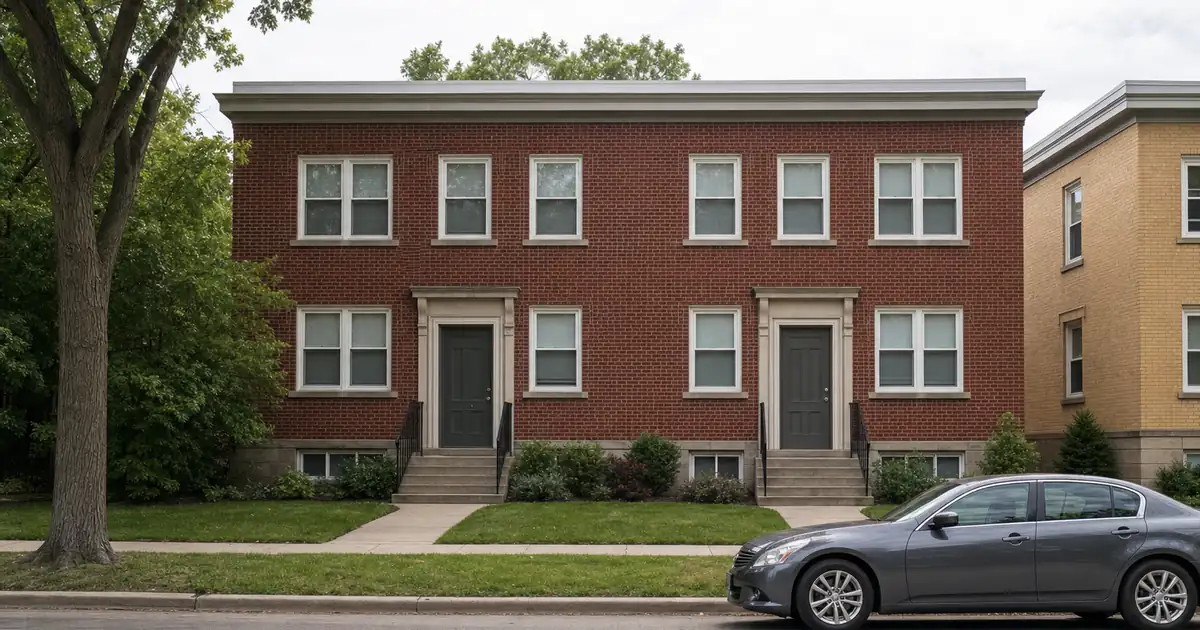
The Quick Read: How you refinance a multifamily rental depends mostly on one thing: unit count. A 2-4 unit property still qualifies through residential-style rental-income underwriting. It can move through a DSCR loan. A 5+ unit building is different. It shifts into commercial or HUD-insured territory, with its own rules for leverage and coverage. Most 1-4 unit investors get reviewed on the property’s rent, not their personal income. Cash-out refinances get capped lower than rate-and-term refinances. And coverage gets measured against the full monthly payment, not net cash flow.
DSCR Calculator
Run the numbers in your market
Rate source: Freddie Mac 30-yr average via FRED® — Federal Reserve Bank of St. Louis · effective Jul 30, 2026
Prefilled with starting assumptions — enter your own rent or nightly figures, taxes, insurance, and HOA for a more accurate picture.
Program parameters update from Lendmire’s centralized guideline source. Taxes and insurance are editable estimates.
As of Jul 30, 2026 · General Freddie Mac market benchmark, not a Lendmire loan offer. Rent, nightly rate, occupancy, taxes, and insurance are editable estimates. Short-term rental figures are estimates only and vary significantly by season, property type, management approach, and local short-term-rental rules — confirm local regulations before relying on them. Qualifying income for short-term rentals varies by program — some use appraisal market rent, others use documented STR history or projections — and is confirmed in underwriting. Not a Loan Estimate, approval, or commitment to lend. Program availability and eligibility are subject to lender guidelines, credit approval, property review, and underwriting.
Key takeaways:
- The 2-4 unit vs. 5+ unit line decides which lending world your refinance falls into — residential/non-QM or commercial/HUD-insured.
- DSCR refinances on 1-4 unit multifamily properties typically qualify when rent covers the payment. They don’t require traditional personal-income paperwork.
- Cash-out refinances generally cap lower than rate-and-term deals. Lenders also expect some seasoning before releasing proceeds.
- Clearing a 1.00 coverage ratio is a lending threshold on select programs. It’s not proof of positive cash flow — repairs, vacancy, and management sit outside that number.
- Owner-occupancy status and unit count can flip a refinance from business-purpose to consumer-purpose credit. That changes which rules apply.
What Counts as “Multifamily” for a Refinance?
The unit-count threshold decides everything that follows. Fannie Mae’s rental-income framework only covers two-to-four-unit properties. It uses the Small Residential Income Property Appraisal Report, Form 1025. A single unit uses a completely different rent schedule. Once a property hits five or more units, it leaves that residential-adjacent world behind. It becomes eligible for HUD’s dedicated multifamily insurance programs instead. HUD’s Section 207/223(f) program insures acquisition and refinance loans on market-rate and affordable apartment communities, with long, fully amortizing terms.
Most investors reading this fall into the 1-4 unit lane. DSCR loans arranged through select lenders in Lendmire’s wholesale network are sized mainly for small to mid-size rental properties — duplexes, triplexes, fourplexes, and small multifamily buildings. Standard loan amounts run up to roughly $3,000,000. Above roughly $2,500,000, the network generally sticks to 30-year fixed structures instead of shorter or adjustable terms. Larger, institutional-scale apartment buildings typically move toward agency, bank, life-company, or HUD-insured financing instead. That’s a different underwriting world, with its own leverage math.
Key Terms Defined
DSCR (debt-service coverage ratio): the property’s monthly rent divided by its full monthly payment — principal, interest, taxes, insurance, and any HOA dues (PITIA). Lenders use this to qualify the loan against the property’s income, not the borrower’s.
PITIA: the full monthly housing bill lenders measure rent against. Not just principal and interest.
Rate-and-term refinance: you replace your current loan with a new one to change the payment structure or term. No cash comes out.
Cash-out refinance: you replace your current loan with a bigger one and pocket the difference in equity as cash. Leverage runs lower than on a rate-and-term deal.
Seasoning: the minimum time you must own a property, or the minimum time an existing loan must be in place, before a lender will consider a refinance. On non-QM cash-out files, that’s often around six months.
Business-purpose loan: a loan used to buy, improve, or refinance a non-owner-occupied rental property. Lenders underwrite it differently than a personal, owner-occupied mortgage.
How Underwriting Actually Treats the File
Every multifamily refinance moves through roughly the same sequence. It doesn’t matter whether it lands on the residential/DSCR side or the commercial side.
1. Property-type classification. The lender first checks whether the property has 2-4 units or 5+ units. A 2-4 unit property uses the same rent-schedule approach Fannie Mae built for small residential income properties. A 5+ unit property shifts the file toward net-operating-income underwriting instead.
2. Rent determination. For 1-4 unit rentals, the lender pulls the rent figure from a signed lease, a current rent roll, or the appraiser’s market-rent opinion. That means Form 1007 for a one-unit property, or Form 1025 for two-to-four units. That figure becomes the top number in the coverage ratio.
3. DSCR calculation. The lender divides that rent by the full projected monthly payment. Coverage requirements vary by lender and program. A 1.00x floor — rent covering the payment dollar-for-dollar — shows up on select programs within the network, but it’s not a universal standard. Stronger coverage generally opens up better leverage and pricing.
4. Credit and reserve review. Some parts of the network allow a 620 credit floor. But most programs look for something closer to 660. The strongest leverage tiers open up around 700 and above. Reserve requirements vary by lender, leverage, and loan size. Six months of PITIA is common. Some lenders waive it on conservative rate-and-term files under $1,500,000. On larger balances, reserves often step up toward nine months.
5. Business-purpose classification. DSCR loans are built for non-owner-occupied investment property. Because they’re business-purpose investor loans, lenders review them differently than a standard owner-occupied mortgage. Qualification runs mainly on the property’s rental income, not your personal-income paperwork.
6. Appraisal and closing. The old debt gets paid off. Any cash-out proceeds get disbursed. Title can usually stay in an LLC or similar entity structure, subject to program guidelines, without changing how the loan gets classified.
Rate-and-Term vs. Cash-Out: Different Tests, Different Leverage
| Factor | Rate-and-Term Refinance | Cash-Out Refinance |
|---|---|---|
| Typical LTV ceiling | Often 75%-80% depending on program | Generally capped around 75% |
| Seasoning expectation | Often more flexible | About 6 months common on most files |
| Purpose | Adjust term, structure, or payment | Pull equity for reinvestment or reserves |
| Coverage sensitivity | Lower payment often helps DSCR | New, larger balance can pressure DSCR |
A rate-and-term refinance is just a structural fix. You might shorten or extend the amortization, move off an interest-only period, or reset the loan without changing the balance much. A cash-out refinance is a bigger decision. You’re trading equity for cash. That trade comes with lower leverage and a seasoning requirement — usually around six months on non-QM multifamily files.
Investors weighing which path fits their goal can review Lendmire’s broader breakdown of investment property refinance options. The mechanics of qualifying on rental income instead of personal income are covered in more depth in Lendmire’s complete DSCR loans guide.
Structures and Variations Across the Network
Not every multifamily DSCR refinance looks the same. Here are a few structural variations that show up regularly across the files Lendmire’s network places:
- High-leverage purchase-adjacent structures: select programs reach 85% LTV on purchase transactions with roughly a 700+ credit score. Refinance leverage, especially cash-out, sits meaningfully lower than that ceiling.
- Extended and interest-only terms: the 30-year fixed loan is the backbone of the market. But 40-year extended amortization and interest-only periods are available through select lenders, along with adjustable-rate structures for investors who want that trade-off.
- Short-term rental income blending: for a multifamily property with one or more units run as short-term rentals, purchase leverage typically runs up to 75% LTV, refinance around 70%, and cash-out around 70%. Lenders generally want a 640+ credit score, roughly 12 months of hosting history, and a 1.00 coverage floor on the programs that use one. Short-term rental rules can vary by city, county, HOA, and property type. Confirm local rules before counting on projected rental income.
- Sub-1.00 coverage structures: coverage below 1.00 is available through select lenders in the network on certain files. But leverage and terms adjust to compensate, and it isn’t a like-for-like swap for standard lender review. A no-ratio option is available for DSCR below 1.00 with stronger credit or higher down payment; qualification on that path rests on credit and equity rather than a rent-coverage calculation.
- Ineligible property types: manufactured homes (single- and double-wide), log homes, and barndominiums fall outside these DSCR programs no matter the unit count or intended use. That’s a hard eligibility line, not a pricing penalty.
Where the General Rule Breaks
The clean 1-4 unit / 5+ unit split has real exceptions. Missing them costs investors time and, sometimes, the wrong loan program entirely.
Owner-occupancy flips the classification. If you expect to occupy the property for more than 14 days during the coming year, lenders treat the loan as consumer credit — unless the property has more than two housing units, according to Doss Law’s business-purpose exemption analysis. The unit-count test itself splits by purpose, too. Credit to acquire a rental property counts as business-purpose if it has more than two units. Credit to improve or maintain one counts as business-purpose if it has more than four units. A duplex you partially occupy can land in a different lending category than an identical duplex that’s fully tenant-occupied.
Cash-out isn’t universal on the government-insured side. On 5+ unit properties financed through HUD, the two refinance options work opposite ways. The straight payoff option under Section 223(a)(7) bars equity take-outs by statute. HUD’s 223(f) program, though, is built to allow cash-out within its leverage limits. If you’re targeting equity extraction on a larger apartment building, confirm which HUD path actually supports that goal — don’t assume either one does.
Agency seasoning rules are stricter than they look. As a point of contrast, Fannie Mae’s cash-out framework requires at least one borrower on title for six months before disbursement. It adds a separate rule, too: the existing first mortgage must be at least 12 months old before you can pay off its balance with cash-out proceeds. That dual test is built to be conservative. Non-QM seasoning windows tend to be more flexible and vary by lender. That’s one reason DSCR products end up being the practical path for investors who’ve only owned a property for a few months.
Portfolio scale pushes investors out of the conventional lane entirely. Fannie Mae and Freddie Mac generally won’t back loans to investors who already own ten financed properties. DSCR loans carry no such limitation. An investor refinancing a fourplex while still acquiring rentals will eventually hit that agency ceiling, no matter how strong their credit is.
Rent trends cap proceeds, not just eligibility. DSCR is rent-dependent by design. So softening rents or rising vacancy can limit refinance proceeds to what’s actually being collected, not an optimistic market-rent projection. That’s worth factoring into your timing on any cash-out decision.
What the Investor Decision Looks Like in Practice
Run the numbers on a small multifamily refinance, and the decision usually comes down to two separate tests, not one. Say a fourplex refinances at 75% LTV with in-place rents comfortably clearing something in the low-to-mid 1.2x coverage range. That property has room on both sides of the ledger — equity and cash flow both check out. Now picture a similar fourplex where rents were set years ago and now barely clear 1.00x on a rate-and-term basis. That’s a different story. The equity math may work, but the coverage math is tight. That usually means less room for cash-out and more sensitivity to any increase in the loan balance.
DSCR files on small multifamily properties tend to come in cleaner on rate-and-term refinances than on cash-out. Why? Pulling equity increases the payment right as the coverage ratio gets tested. This pattern shows up consistently across the network, no matter the market. A larger down payment — or in this case, more retained equity — lowers the payment and can lift the DSCR. But it never overrides a leverage cap, a credit floor, or a reserve requirement. The strongest files clear both tests: enough equity to satisfy LTV, and enough rent to satisfy coverage.
It’s also worth separating DSCR from cash flow. Clearing 1.00x means rent covers the payment. It does not mean the property makes positive cash flow after repairs, vacancy, management, utilities, and capital expenses — none of which factor into the ratio itself.
Lendmire (NMLS# 2371349) arranges DSCR investor loans through select lenders across a 41-market footprint, including Washington, D.C. Lendmire works with multifamily investors weighing exactly this kind of trade-off — whether a rate-and-term adjustment or a cash-out pull makes more sense given current rents and existing leverage. Investors comparing options against a standard purchase-money loan can also review the distinction laid out in Lendmire’s guide on DSCR vs. conventional financing. Those still deciding whether refinancing makes sense at all can start with Lendmire’s guide on whether to refinance an investment property.
Tax treatment can depend on how you use refinance funds and how you hold the property. Keep clear records and speak with a qualified tax professional before relying on any deduction.
Nothing here is a commitment to lend, and loan approval is never guaranteed. Every scenario described here is subject to lender approval and to borrower, property, and program guidelines, which can change. This content is general information only and isn’t financial, legal, or tax advice — investors should confirm current terms directly with Lendmire or a qualified professional before making a refinance decision.
Frequently Asked Questions
How to refinance an investment property?
Start by confirming the property’s unit count and current rent roll. Then get the file priced against DSCR (rent-to-payment coverage) instead of personal income. From there, an appraisal, credit review, and reserve check determine the leverage and terms available before closing replaces the existing loan.
Does a multifamily refinance work differently than a single-family rental refinance?
Yes, once the property crosses five units. A 2-4 unit refinance still runs through residential-style rental-income underwriting and can qualify through a DSCR loan. A 5+ unit property typically shifts toward commercial or HUD-insured financing with its own leverage and coverage standards.
Can I do a cash-out refinance on a 5+ unit apartment building through a DSCR lender?
DSCR programs through Lendmire’s network are generally sized for 1-4 unit and smaller multifamily assets, not large 5+ unit apartment communities. Those larger properties more typically route through agency, bank, or HUD-insured refinancing instead. Investors with larger multifamily holdings should confirm which financing lane actually fits the property before assuming a DSCR structure applies.
About Lendmire
As a non-QM mortgage broker (NMLS# 2371349), Lendmire facilitates DSCR investor loans across 41 markets, including Washington, D.C. DSCR eligibility is generally reviewed around property-level rental income instead of personal income documentation, subject to lender guidelines. Lendmire serves LLC-structured portfolios and self-employed borrowers who don’t fit conventional boxes. It’s a two-time Scotsman Guide Top Mortgage Workplace (2025, 2026).
Get Started
Ready to find the right loan for you?
In about 30 seconds you can review financing options available for your investment property. No commitment required.
Informational only. Not a Loan Estimate, approval, or commitment to lend. Program availability and eligibility are subject to lender guidelines, credit approval, property review, and underwriting.
References
1. Fannie Mae Selling Guide — Rental Income (B3-3.8-01)
2. HUD.gov — Descriptions of HUD Multifamily Programs
3. Doss Law, PC — Business Purpose Exemption Simplified
4. Scotsman Guide — Invest in Your Future
This article is part of Lendmire’s DSCR loan program — full qualification details, guidelines, and scenarios live on the program page.
Related reading: Apartment Investment Property Refinance Loan Finance · Multi Family Cash Out Refinance · Multifamily Debt Refinance
Brandon Miller
Founder & CEO, Mortgage Loan Originator, Lendmire LLC
- Mortgage Loan Originator · NMLS# 1129696 · Verify on NMLS Consumer Access
- North Carolina Real Estate Broker · License# 343312 · Verify on NCREC
- North Carolina Insurance Producer · License# 19053198 · Property, Casualty, Life, Health · Verify on NAIC SBS
- Lendmire LLC · Firm NMLS# 2371349 · Verify firm licensure
Required disclosures. Lendmire (NMLS# 2371349) operates as a licensed mortgage broker, not a direct lender or depository. The discussion in this article is general in nature and should not be relied upon as financial, legal, or tax advice — every investment scenario is unique and should be reviewed by a qualified professional. Any loan inquiry is subject to lender underwriting, and this article is not a commitment to lend or a guarantee of approval. Mortgage rates, loan terms, and program guidelines vary by borrower, property, and state, and may change without notice. Equal Housing Opportunity. Verify licensure at NMLS Consumer Access.