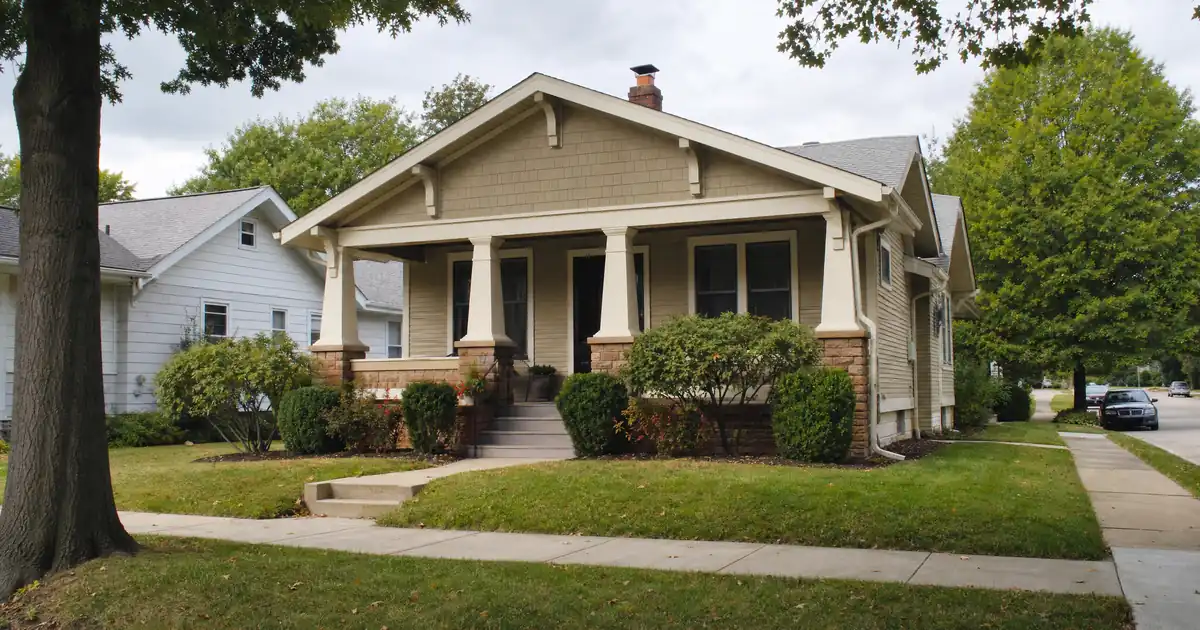
The Quick Read: Refinancing a primary residence into an investment property isn’t one simple loan product. It’s a reclassification. Three things have to line up: the lender’s occupancy rule, the insurer’s policy terms, and the tax treatment going forward. Once the owner actually moves out, the refinance typically shifts. It moves from a personal-income mortgage to a business-purpose loan. That loan gets qualified on the property’s rent, not the borrower’s paycheck. This works for a lot of relocating owners. But the leverage, the paperwork, and the coverage math all change the moment the home stops being “home.”
DSCR Calculator
Run the numbers in your market
Rate source: Freddie Mac 30-yr average via FRED® — Federal Reserve Bank of St. Louis · effective Jul 30, 2026
Prefilled with local estimates — enter your own rent or nightly figures, taxes, insurance, and HOA for a more accurate picture.
Program parameters update from Lendmire’s centralized guideline source. Taxes and insurance are editable estimates.
As of Jul 30, 2026 · General Freddie Mac market benchmark, not a Lendmire loan offer. Rent, nightly rate, occupancy, taxes, and insurance are editable estimates. Short-term rental figures are estimates only and vary significantly by season, property type, management approach, and local short-term-rental rules — confirm local regulations before relying on them. Qualifying income for short-term rentals varies by program — some use appraisal market rent, others use documented STR history or projections — and is confirmed in underwriting. Not a Loan Estimate, approval, or commitment to lend. Program availability and eligibility are subject to lender guidelines, credit approval, property review, and underwriting.
Key Takeaways
- The loan’s classification follows real occupancy, not paperwork. A lender treats the property as non-owner-occupied once the borrower has genuinely moved out. This is generally documented with proof of a new primary residence.
- Most DSCR-style investment refinances qualify on one thing: does the property’s rent cover its own payment (the DSCR ratio)? Personal debt-to-income doesn’t factor in.
- Purchase-style leverage on these deals typically runs 75%-80% loan-to-value. A handful of programs reach 85% for stronger credit files. Cash-out refinances top out lower, generally around 75% LTV.
- A vacant property at closing isn’t automatically disqualifying. But it usually costs leverage — lenders commonly reduce allowable LTV when no lease is in place yet.
- Homeowners insurance doesn’t follow the property into rental use. A landlord or dwelling policy has to replace it before or at closing.
What This Move Actually Involves
Turning a primary residence into a financed rental sounds like one transaction. It’s really three separate systems that all have to agree at the same time: the lender’s occupancy classification, the insurer’s coverage terms, and the eventual tax treatment of the property. Miss one, and the other two don’t matter.
Investors think about the lending piece first, and that makes sense — it decides what loan product is even available. DSCR loans are built for non-owner-occupied investment properties. They’re business-purpose investor loans, so they get reviewed differently than a standard owner-occupied mortgage. That difference is what makes this whole strategy possible. A lender doesn’t run the borrower’s W-2s and personal income through a debt-to-income calculation here. Instead, the file gets built around one question: does the home’s rent cover its own payment?
That’s a big shift for someone who already carries a mortgage payment on a new primary residence. Personal debt-to-income math doesn’t leave room for two full mortgage payments forever. DSCR lender review sidesteps that ceiling. It qualifies the departing home on its own rental income instead.
Key Terms Defined
DSCR (Debt Service Coverage Ratio) — Take the property’s monthly rent and divide it by its full monthly payment (principal, interest, taxes, insurance, and any HOA dues). A ratio at or above 1.00 means rent covers that payment. It says nothing about repairs, vacancy, or management costs — those sit outside the calculation.
PITIA — The full monthly housing obligation used in the DSCR math. It stands for principal, interest, taxes, insurance, and association dues, if any.
Business-purpose loan — A loan made for investment or rental use, not personal, family, or household use. This classification is what lets the property’s income drive qualification instead of the borrower’s.
Seasoning — The minimum time a lender wants to see a property owned (or a loan held) before it will consider a new refinance. This matters most for cash-out deals.
Rent schedule (Form 1007) — The standard appraisal exhibit lenders use to document a single-family property’s market rent. It replaces a lease or a borrower’s own estimate.
When Is a Homeowner Actually Allowed to Do This?
The short version: once the owner has genuinely stopped living there. Occupancy classification for these loans hinges on one number — does the owner plan to spend more than 14 days a year in the home? Beyond that, most lenders and the loan documents themselves treat it as owner-occupied, not investment. That distinction comes from the Consumer Financial Protection Bureau’s commentary on occupancy rules.
That threshold matters more than intent alone. Say a borrower claims “I’m renting it out.” But they keep a bedroom there, get mail there, or spend a month a year at the property. That doesn’t clear the bar. Picture a lake house rented most of the year but used for a few weeks each summer. It still stays owner-occupied under this rule. It’s not the kind of file that qualifies as a straight business-purpose refinance.
For most conversion scenarios in the DSCR market, the practical path looks like this. The owner is buying or has bought a new primary residence. They’re vacating the old one. And they can document the new home with a lease or a new mortgage. That documentation — proof of the new primary residence — is usually what lets the departing property’s rental income carry the DSCR file cleanly.
The Mechanics, Step by Step
1. Occupancy actually changes. The borrower moves out. This has to be real, not a formality. Classification follows use, not the loan paperwork.
2. The departure gets documented. Most programs want proof of where the borrower is going. That means a lease on the new residence, a new mortgage, or something similar. Lenders also want confirmation that the old home is vacated or already tenant-occupied.
3. An appraiser establishes market rent. Instead of pay stubs, the file relies on a rent schedule. That’s the 1007 form for a single unit, or the equivalent form for multiple units. It pulls comparable rents rather than relying on a borrower’s guess.
4. The DSCR gets calculated. Take rent and divide it by the full monthly payment. If a lease is already in place, most files use whichever number is lower: the appraised market rent or the actual lease amount. Not whichever is higher.
5. Vacancy gets priced in, not ignored. A property without a signed lease at closing usually isn’t disqualified outright. But leverage typically comes down. A common approach across the network trims allowable LTV on a rate-and-term refinance if the unit is unleased. The cut is steeper on a cash-out.
6. A business-purpose affidavit gets signed. This is the paper trail confirming the property is being financed for investment use, not personal occupancy.
7. Insurance gets swapped before or at closing. A standard owner-occupied homeowners policy typically doesn’t respond to a rental claim once the home changes use. The Insurance Information Institute notes that a regularly rented property generally needs a landlord or dwelling policy instead. Pricing on a rental policy commonly runs higher than a standard owner-occupied quote.
Rate-and-Term, Cash-Out, or DSCR Purchase-Style — Which Lane Applies?
The right lane depends on what the owner needs the refinance to do. Do they just want to lower the payment and re-title the loan as investment? Or do they want to pull equity out at the same time? Cash-out gets treated more conservatively across the board.
| Factor | Rate-and-Term Refinance | Cash-Out Refinance |
|---|---|---|
| Purpose | Reclassify the loan; no funds pulled | Pull equity while converting to investment |
| Typical LTV ceiling | Follows purchase-style ranges, generally 75%-80% | Generally caps around 75% |
| Seasoning expectation | Usually not a factor for a straight reclassification | Roughly 6 months of ownership is a common expectation before lenders will consider pulling equity |
| Review basis | Property rent vs. payment (DSCR) | Property rent vs. payment (DSCR) |
| Vacant property impact | LTV commonly reduced if unleased | Larger LTV reduction commonly applied if unleased |
DSCR minimums on these files typically start around 1.00. That’s a select-program floor, not a universal standard. Properties with stronger coverage generally open up better leverage and pricing. Coverage below 1.00 is available through select lenders in the network, though leverage and terms adjust when that’s the path. Credit requirements commonly run from a 620 floor in parts of the network up through 660 on most standard programs. Scores of 700-plus unlock the strongest leverage tiers, including the higher-leverage purchase-style structures near 85% LTV. Loan sizes on these programs typically start small, routed through select lenders in the network, and run up to roughly $3,000,000 on standard programs. Loans above $2,500,000 generally land on 30-year fixed structures rather than shorter or adjustable terms. A handful of states carry overlays worth checking before assuming national ranges apply everywhere — Connecticut, Florida, Illinois, and New Jersey commonly cap purchase leverage near 75% LTV and loan size near $2,000,000.
What Can Go Wrong
The failure points on this strategy usually aren’t the DSCR math itself. They’re the pieces around it that get assumed rather than checked.
The old loan’s terms aren’t automatically compatible. Say a borrower simply moves out and starts collecting rent without addressing the existing mortgage’s occupancy terms. They’re carrying real risk on that original loan — separate from whatever new financing gets arranged.
Vacant properties get penalized, not waved through. Skipping the lease-in-place step usually doesn’t kill the file. But it usually costs leverage. It’s worth pricing that reduction into the plan, rather than assuming full LTV applies no matter the tenant status.
Short-term rental conversions run on a completely different rent-verification method. Say the plan is Airbnb rather than a signed 12-month lease. The standard rent schedule doesn’t apply the same way. Appraisers aren’t allowed to take a nightly rate, multiply it by 30, and call that market rent. STR-specific underwriting instead leans on trailing platform income and hosting history. Programs in this lane commonly want a stronger credit profile — often 700-plus — along with roughly 12 months of hosting history and their own coverage floor. Purchase leverage generally runs lower than a standard long-term-rental file. Short-term rental rules can also vary by city, county, HOA, and property type. Confirm local rules before relying on projected nightly income — that’s separate from the loan itself.
Certain property types don’t fit these programs at all. Manufactured homes (single- and double-wide), log homes, and barndominiums generally fall outside DSCR programs. Confirm this before assuming a converted second home or unusual structure could qualify.
Partial conversions don’t qualify as DSCR files. Picture a borrower still living in one unit of a 2-4 unit property, with tenants in the others. That’s not a business-purpose loan yet. That file typically stays on owner-occupied financing until the owner is fully out.
Insurance and tax status shift the moment occupancy changes, separate from anything the loan does. In many jurisdictions, a rental doesn’t carry a homestead exemption the way an owner-occupied home does. Rental-specific insurance is a different underwriting category than an owner-occupied policy. Tax treatment can depend on how the funds are used and how the property is held. This is not legal or tax advice. Investors should keep clear records and talk with a qualified tax professional before relying on any deduction or assumption about how the conversion will be treated.
Across files that come through Lendmire’s network in this exact scenario — a departing primary residence being refinanced into a rental — one theme keeps repeating. It’s usually not the DSCR math that trips up an otherwise clean file. It’s the insurance swap and the lease timing. Both of those pieces sit outside the lender’s control. They have to be lined up on the borrower’s own schedule before closing.
Who This Strategy Fits — and Who Should Think Twice
This works cleanly for an owner who has already relocated (or is about to), can document a new primary residence, and wants to keep the departing home as a rental rather than sell it. Often that’s to hold onto an existing favorable loan, or simply because the numbers pencil better as a keeper than a sale. It also fits an investor already building a small portfolio. They don’t want the departing home’s payment sitting on personal debt-to-income while qualifying for the next purchase. A DSCR loan is a business-purpose loan — it isn’t measured against the borrower’s personal income the way a conventional refinance is.
It fits less well for someone who plans to keep using the home occasionally — more than roughly two weeks a year. That use pattern keeps the property classified as owner-occupied, no matter the rental intent. It’s also a weaker fit for an owner who hasn’t budgeted for the insurance and property-tax shift that comes with rental status. Same goes for someone counting on a lease that isn’t signed yet, if they need full leverage to make the equity math work. And for a homeowner still living in part of a 2-4 unit building, this whole lane simply doesn’t apply yet. That’s an owner-occupied file until the move-out is complete.
For an investor comparing this path against a straight cash-out on an existing rental, the complete DSCR loans guide walks through how the property-income qualification model works across purchase and refinance scenarios. Some investors would rather pull equity for a down payment on the next deal than simply reclassify the loan — for them, cash-out refinance to buy an investment property may be more directly relevant. The broader mechanics of pulling money out of an existing rental are covered in cash-out refinance on an investment property. For a fuller walkthrough of refinance strategy across a growing portfolio, Lendmire’s investment property refinance playbook covers adjacent scenarios this article doesn’t.
Frequently Asked Questions
Can you refinance an investment property?
Yes — investment properties refinance regularly. This includes rate-and-term transactions and cash-out deals, typically through DSCR-style qualification once the owner is no longer living there. Leverage on a refinance generally runs lower than on a purchase, commonly capping around 75% LTV. Cash-out transactions usually carry a seasoning expectation of roughly six months of ownership before a lender will consider pulling equity.
Can you refinance an investment property loan?
Yes. An existing investment-property loan can typically be refinanced into a new one — whether to adjust leverage, pull cash out, or move to a different loan structure. The new loan still gets qualified on the property’s rental income relative to its payment, rather than on personal income documentation. This is subject to the same DSCR and credit guidelines that apply to any investment refinance.
Can I refinance an investment property to pay off a primary residence?
In some cases, yes. A cash-out refinance on a rental can generate proceeds an owner chooses to apply toward a separate primary-residence balance, subject to lender guidelines and available equity. That’s a use-of-funds decision the borrower makes after closing. The loan itself still gets qualified and underwritten as an investment-property refinance, generally capped near 75% LTV. This isn’t tax advice — how any resulting proceeds or payoff are treated is a matter for a qualified tax professional.
Can I refinance an investment property to a primary residence?
Only if the owner is actually moving in and the property becomes their real primary residence. Occupancy classification follows genuine use, not the loan paperwork. If that shift happens, the file typically moves off business-purpose DSCR financing entirely and into owner-occupied mortgage products. Those run on different qualification rules than the ones described here.
What if the departing home doesn’t have a tenant lined up yet at closing?
It’s usually still workable, but expect reduced leverage rather than a flat denial. Vacant or unleased properties commonly see the allowable LTV trimmed on a rate-and-term refinance, and trimmed further on a cash-out. That continues until a signed lease and appraised market rent are in place to support full coverage math.
About Lendmire
Lendmire (NMLS# 2371349) is a DSCR-focused mortgage broker. It arranges financing through select lenders across 40 markets, including Washington, D.C. Sometimes the numbers on a departing primary residence are close but not obviously clean — a borderline lease, a vacancy question, a coverage ratio that’s tight. In those cases, a broker conversation before the appraisal gets ordered tends to save more time than one after a file stalls. Investors can reach Lendmire at 828-256-2183 or request a quote to see how leverage, credit tier, and rental coverage line up on a specific property.
This article is for general informational purposes only. It is not legal, financial, or tax advice. Occupancy classification, insurance requirements, and tax treatment can vary by lender, insurer, state, and individual circumstances. Readers should consult a qualified attorney or CPA about their own situation before acting on any of it. Nothing here should be relied on as legal or tax advice, and nothing here is a commitment to lend. All loan scenarios described are subject to lender approval and to borrower, property, and program guidelines. Loan approval is never guaranteed.
Get Started
Ready to find the right loan for you?
In about 30 seconds you can review financing options available for your home or investment property. No commitment required.
Informational only. Not a Loan Estimate, approval, or commitment to lend. Program availability and eligibility are subject to lender guidelines, credit approval, property review, and underwriting.
References
1. Consumer Financial Protection Bureau — Regulation Z Official Commentary, 12 CFR 1026.3
2. Insurance Information Institute — Coverage for Renting Out Your Home
Brandon Miller
Founder & CEO, Mortgage Loan Originator, Lendmire LLC
- Mortgage Loan Originator · NMLS# 1129696 · Verify on NMLS Consumer Access
- North Carolina Real Estate Broker · License# 343312 · Verify on NCREC
- North Carolina Insurance Producer · License# 19053198 · Property, Casualty, Life, Health · Verify on NAIC SBS
- Lendmire LLC · Firm NMLS# 2371349 · Verify firm licensure
Disclosures. The information presented in this article is general market commentary, not financial, legal, or tax advice. Lendmire is a mortgage brokerage (NMLS# 2371349) — not a direct lender or depository institution — and loan placement is subject to lender underwriting. Nothing in this content represents a commitment to lend. Loan terms, pricing, and program availability vary based on borrower qualifications, property characteristics, and state of subject property, and are subject to change at any time. Lendmire complies with Equal Housing Opportunity requirements. Consumer access: nmlsconsumeraccess.org.