
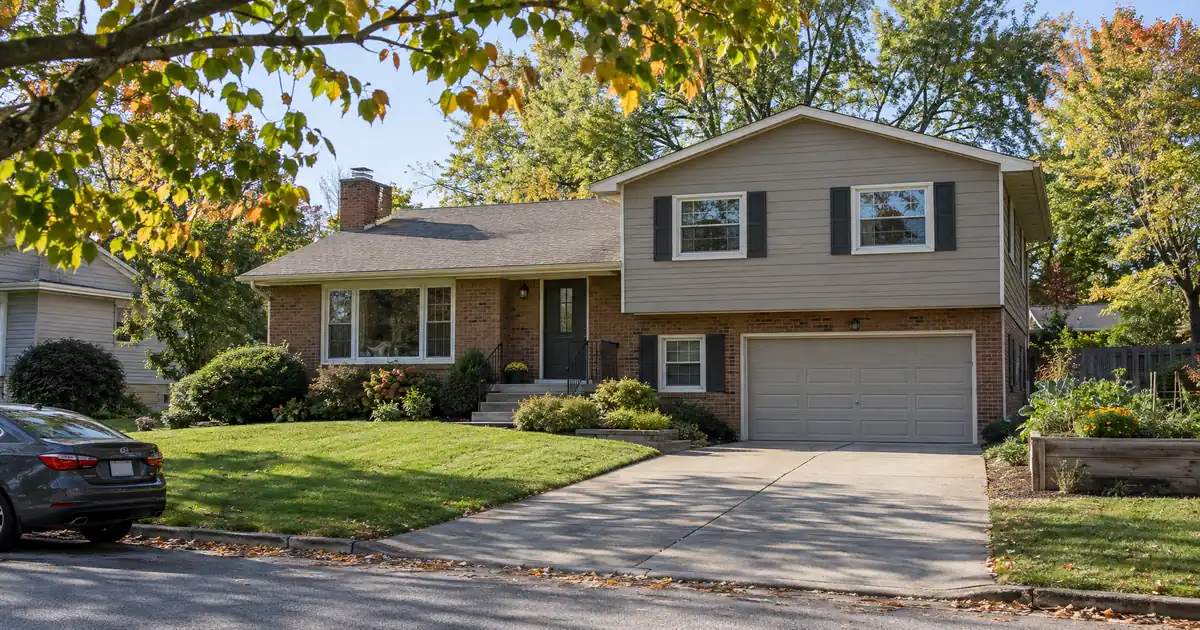
The Quick Read: Finished, leased rehabs can be refinanced together on one pooled note, but only when every house is stabilized, seasoned, and appraised, and when the pool’s combined rent covers the combined debt service. An interest-only period lowers the payment used in that coverage test, yet it leaves the credit, leverage, and reserve rules where they were. It also puts every house on one shared date when the payment steps up. Subject to lender guidelines, the main points are:
- The 30-year portfolio DSCR loan takes 2 to 20 properties under one note, typically up to 80% of value on a purchase or rate-and-term refinance of investment property.
- Coverage on that structure is measured on the pool, so stronger rentals can offset weaker ones.
- Every house still needs a lease or an appraiser-supported market rent, and each gets its own appraisal.
- Interest-only helps the ratio, but it adds no principal paydown and sets one recast date for the whole pool.
What does it mean to refinance rehabs together?
It means one lender pays off the short-term rehab debt on several houses and replaces it with permanent rental financing in a single transaction. The phrase hides two different structures, and mixing them up causes most of the confusion on these files.
The first structure is several individual DSCR loans that close in parallel. Each house has its own note, lien, coverage test, and exit. This is ordinary practice and needs no special product.
The second structure is one note secured by liens on every house. Investors call it a blanket loan, a portfolio DSCR loan, or a cross-collateralized loan. Here all three names mean the same thing. Nav explains that a blanket mortgage is a single loan secured by multiple properties, which is why release clauses matter so much.
Banks also use the word portfolio for a loan they keep on their own books. That is a different sense of the word. It says who holds the loan, not how many liens secure it.
BRRRR itself is a market convention, not a lending product. AdviceOnly’s glossary notes that no issuing body governs it, and that the refinance step is an ordinary cash-out refinance. It also says the loop breaks in two places: when the appraisal fails to support the new loan, and when seasoning rules block the refinance.
Across the wholesale network, two pooled structures show up on these files.
The 30-year portfolio DSCR loan covers 2 to 20 properties under one note. Loan sizes typically run from $300,000 to $5,000,000, with larger balances reviewed case by case. It offers fixed and adjustable options, a 30-year term, and an optional interest-only period. Eligible property types are single-family, 2-4 unit, condo, and townhome.
The rental portfolio term loan fits five or more rental properties or units. Loan sizes typically run from $500,000 to $50,000,000. Leverage is up to 75% of value on investment property. Terms are fixed at 3, 5, 7, or 10 years with a balloon at maturity. Prepayment is yield maintenance, which makes early exits costly. Reserves are held for taxes, insurance, and capital expenditures. It is the only one of the two that accepts small multifamily of five or more units.
For the full picture of how these loans work, see Lendmire’s complete DSCR loans guide.
Key Terms Defined
Blanket loan: One note secured by liens on two or more properties, also called a portfolio DSCR loan or cross-collateralized loan.
Pooled coverage: The combined rent used for lender review of every house divided by the combined debt service of the pool.
Seasoning: The ownership period a lender requires before it sizes a loan on appraised value instead of cost.
Cost basis: The purchase price plus documented improvements, which caps loan size inside the seasoning window.
Release clause: The loan-document term that lets one property leave the pool after conditions are met.
Interest-only period: A stretch of the term where the payment covers interest, taxes, insurance, and dues but no principal.
Recast date: The day the interest-only period ends and the payment steps up on every property in the pool.
Are your rehabs ready to pool?
Pooling only works when every house is ready at the same moment. The pool closes on the schedule of its slowest property, so readiness gating is the first job, not the last.
| Test | What the lender looks for | Common failure |
|---|---|---|
| Rehab status | Work complete, property rentable | Punch-list items left open |
| Rent evidence | Signed lease or appraiser-supported market rent | Lease missing or deposit unproven |
| Seasoning | Time since title recording | Clock counted from rehab finish |
| Insurance | Complete binder per property | Quote missing or lapsed |
| Title and entity | Vesting matches entity documents | Houses held in different entities |
| Property type | Single-family, 2-4 unit, condo, townhome | Ineligible type in the batch |
Seasoning is lender policy, not law. It runs from the date title was recorded, not from the date the rehab ended. Before the clock clears, the loan is generally sized on cost basis. After it clears, the new appraised value governs. About six months is the common expectation across the network, though exact treatment varies by lender and file.
Pooling does not waive the lease requirement. A vacant house with no supportable market rent weakens the whole pool, because the lender cannot count rent that has no evidence behind it.
Manufactured and mobile homes are not reviewable on these programs. Owner-occupied property, co-ops, mixed-use property, and commercial property are also ineligible inside the pool.
How is the pool’s coverage calculated?
The pool’s ratio is the combined rent used for lender review divided by the combined monthly debt service on the whole note. On the 30-year portfolio DSCR loan, the coverage floor is typically 1.00 measured on the pool, subject to lender guidelines.
That floor is where the program starts, not a promise of approval. Stronger pooled ratios generally open better pricing and leverage.
For each house, the lender credits the rent it can support. Many lenders use the lower of the signed lease and the appraiser’s market-rent opinion. A 2-4 unit house is appraised on an income report with unit-level rents, and a single-family house on a rent schedule. Fannie Mae’s forms list shows the titles of Form 1007, the Single-Family Comparable Rent Schedule, and Form 1025, the Small Residential Income Property Appraisal Report. Fannie Mae’s Selling Guide shows the 1007 requirement for one-unit investment properties. DSCR loans are not agency products. These forms matter only because they show how appraisers document rent.
Run the numbers on a hypothetical five-house pool. Four houses each clear roughly 1.2x on their own. The fifth sits near 0.9x because its market rent came in light. Combined, the pool might land around 1.15x. That fifth house can sit in the pool, but underwriting tests the pooled coverage, the leverage, and the terms. If the pooled number slips under the floor, the file stalls no matter how strong the other four are.
Separate loans work differently. A weak property hurts only itself, and each strong property closes on its own merits.
One caution matters here. Clearing the ratio is not the same as positive cash flow. The test compares rent to the monthly carry only. Repairs, vacancy, management, utilities, and capital expenses sit outside it. A pool that covers at 1.2x can still leave thin cash after those costs.
How does interest-only change the numbers?
Interest-only lowers the payment in the denominator, which raises the ratio on paper. On the 30-year portfolio DSCR loan, an interest-only period is available. Programs differ on the qualifying payment: some test coverage on interest, taxes, insurance, and dues, and others test on the fully amortized payment. Confirm the basis before you build a file around it.
Consider a hypothetical pool that tests near 1.05x on a fully amortizing basis. On an interest-only basis, it might read closer to 1.2x. That cushion is real, but it is temporary.
Interest-only does not touch the other requirements. Credit minimums, leverage caps, and reserve rules stay where they were. It also adds no principal paydown, so the balance at the end of the period equals the balance at the start.
Because every house sits on one note, every house recasts on the same date. A longer interest-only window leaves a shorter repayment tail and a larger step-up. Stress test the pool at the recast, not only at closing. If the pool would sit near or under 1.00x on the amortizing payment, plan the exit before the window ends. Lendmire’s piece How to Fix a Resetting Interest-Only Loan With a Cash-Out Refinance covers that exit path.
| Stage | Payment basis | Pooled coverage (hypothetical) |
|---|---|---|
| During interest-only | Interest, taxes, insurance, dues | Higher, near 1.2x |
| After recast | Full amortizing payment | Lower, near 1.05x |
The rental portfolio term loan works differently. It has fixed terms with a balloon at maturity, so the planning date there is the maturity, not a payment step-up.
Pooled note or separate notes?
Choose the structure by how uniform the batch is and how likely you are to sell. A uniform, seasoned group fits a pooled note. A batch that stabilizes at different times, or one where a sale is likely, generally fits separate loans better.
| Factor | One pooled note | Separate notes |
|---|---|---|
| Coverage test | Pooled, so strong offsets weak | Each house on its own |
| Closings | One transaction | One per house |
| Default exposure | Cross-default language is common | Contained to one house |
| Exit on one house | Runs through release terms | Independent payoff |
| Reserves | Often sized on the pool | Sized per loan |
| Readiness | Slowest house sets the date | Houses close as they season |
Cross-default language commonly makes a default on one property a default on all. Nav also points out that without a release clause, selling one property tied to the loan gets much harder. A release is not automatic. It follows the loan documents.
A pooled note may reduce the total cash held back, but some lenders size reserves on the larger of the pool or a per-property multiple. Reserves commonly run around six months of the monthly carry, and loans above $1,500,000 typically step up to about nine months. Structure alone does not fix a thin cash position.
This piece focuses on pooled coverage and interest-only.
What if one rehab is not ready or is weak?
Pull it out of the pool, hold it back, or run a hybrid. Which one fits depends on why it is weak.
Not seasoned yet. If one house is inside the seasoning window, the pool waits for it or the house leaves. Keeping it in means its loan amount is capped by the cost-basis rule while the others are sized on value.
Unleased or light on rent. A house with no lease needs an appraiser-supported market rent. If neither exists, it cannot contribute credible rent to the pool.
Low appraisal. Each house gets its own appraisal, and the lender’s value controls, not your after-repair estimate. Pooling does not average away a low value. Cash-out proceeds shrink on that house, and the shortfall may fall on the payoff.
Hybrid. Refinance the seasoned, leased houses on a pooled note. Refinance the late house later on its own note. This keeps cross-collateral exposure smaller and gives the late house its own exit.
If the batch has a likely seller, a house you plan to flip or trade, keep it out of the pool at the start.
How should you size the cash-out and the payoff?
Start with what the pool must repay: the short-term loans on every house, closing costs, and reserves. Whatever remains is your cash back. The ceiling is the lower of two tests.
On the 30-year portfolio DSCR loan, leverage is typically up to 80% of value on a purchase or rate-and-term refinance of investment property. A cash-out never runs above 75% of the pooled value. On the rental portfolio term loan, leverage is up to 75% of value.
Inside the first six months of ownership, the loan is also capped at 90% of total cost (purchase price plus documented improvements), 100% of total cost from six to twelve months, and the leverage ceiling still applies, so the loan is the lower of the two. After twelve months, the appraised value alone is the basis. A rate-and-term refinance is not subject to the cost-basis cap. How a lender classifies the payoff of the short-term loans determines which path applies, so confirm that early.
Two further points shape cash back. Reserves come out of your cash, and the appraisal on each house moves the pooled value. A single low appraisal can pull the whole pool’s proceeds down.
Credit also matters. The portfolio programs typically want a 640 floor, with some structures asking for 680 or 720. Recourse loans carry a personal guarantee. A special-purpose entity, typically an LLC, is required on some structures, subject to program terms. Non-recourse structures exist on the rental portfolio term loan, with carve-outs such as fraud and bankruptcy.
What happens when you sell one house later?
Selling one house out of a pooled note is not a simple payoff. Partial releases, substitutions, and sales follow the loan documents and the lender’s release terms. The release price runs above the property’s allocated balance, and the remaining pool must still cover its debt service.
Prepayment terms also matter. The rental portfolio term loan carries yield maintenance, which makes an early release or payoff costly. Decide before closing which houses you might sell, and read the release language before you sign.
Another route is to refinance out of the pool into individual loans later. That path depends on seasoning, new appraisals, and coverage on each house at that point. Lendmire’s wholesale network can compare both routes on a given file.
What does the file packet look like?
Here is the usual order of work on a batch refinance.
1. Confirm readiness. Check rehab status, lease or market rent, seasoning date, and insurance on every house.
2. Choose the structure. Pick one pooled note, separate notes, or a hybrid, based on uniformity and exit plans.
3. Collect entity and title documents. Vesting should match the entity papers on every house.
4. Gather payoff letters. Request a payoff statement from each short-term lender.
5. Order lender-controlled appraisals. Each house needs a value opinion and a rent opinion.
6. Assemble leases and deposit proof. Include proof of the first month’s rent and the security deposit.
7. Document reserves. Show liquid funds sized to the structure’s requirement.
8. Reconcile the settlement. Match payoffs, costs, and reserves against proceeds before closing.
| Document | What it proves |
|---|---|
| Lease and deposit proof | Rent exists and was collected |
| Payoff letters | What the pool must repay |
| Insurance binders | Each house is covered |
| Entity papers | Who holds title and signs |
| Reserve statements | Cash to cover the carry |
| Appraisal | Value and market rent per house |
Misaligned seasoning and missing lease proof are the usual stall points. A hard-money note that matures before seasoning clears is another. It forces carry costs or a payoff-only exit, so check maturity dates first.
Where does the general rule break?
Seasoning waivers. Some lenders may shorten the wait when the rehab is complete and the value is well supported. Others hold the full wait. The appraisal still happens either way.
Qualifying payment basis. Interest-only qualification differs by lender. Some size reserves on the fully amortized payment even when coverage runs on interest-only.
Concentration. One note means one lender and one set of release terms across every house. Strong pooled coverage hides a risk where one problem property affects the others.
Small multifamily. Five or more units is eligible only inside the rental portfolio term loan. It is not eligible on the 30-year portfolio structure or on a loan against a single property.
Mixed holdings. Houses across several markets can sit under one loan on the rental portfolio term loan. The 30-year structure carries its own property limits, so check the structure first.
No-ratio. A no-ratio option exists on single-property DSCR loans through select wholesale programs, generally for borrowers who already own a primary residence. It is not the portfolio structure.
Frequently Asked Questions
Can I refinance several BRRRR rehabs at once?
Yes, when each house is rehab-complete, leased or supported by market rent, and seasoned. The 30-year portfolio DSCR loan takes 2 to 20 properties under one note, subject to lender guidelines. Houses that are not ready are better handled on their own notes.
Does interest-only work on a pooled loan?
Yes, an interest-only period is available on the 30-year portfolio DSCR loan. It lowers the payment used in the coverage test, but credit, leverage, and reserve rules do not change. Every house recasts on the same date, so stress test the payment after the period ends.
What if one house fails the test?
A rental below 1.00x coverage can sit in the pool, but underwriting tests the pooled coverage, the leverage, and the terms. If the pooled number clears the floor, the file can still work. If not, remove that house or refinance it separately.
Can I sell one house later?
Often yes, but not as a simple payoff. Sales and substitutions follow the release terms in the loan documents, and the remaining pool must still cover its debt service. Read those terms before closing.
Does clearing 1.00x mean positive cash flow?
No.
Next Steps
If you are buying or refinancing a rental property and want to see how the numbers work, Lendmire can help you compare DSCR loan options based on the property income, credit profile, leverage, and investor goals. Lendmire is a broker arranging DSCR financing through select lenders in its wholesale network, across 41 markets including Washington, D.C. Program terms vary by lender, and nothing here is a commitment to lend.
About Lendmire
Lendmire is a non-QM mortgage brokerage (NMLS# 2371349) arranging DSCR investor loans in 41 markets, including Washington, D.C., through wholesale and investor-lending channels. DSCR loans are evaluated by the lender on rental income rather than personal income, subject to lender guidelines — a fit for LLC-owned portfolios, self-employed investors, and operators scaling beyond conventional loan caps. Recognized as a Scotsman Guide Top Mortgage Workplace in 2025 and 2026.
Get Started
Ready to find the right loan for you?
In about 30 seconds you can review financing options available for your investment property. No commitment required.
Informational only. Not a Loan Estimate, approval, or commitment to lend. Program availability and eligibility are subject to lender guidelines, credit approval, property review, and underwriting.
References
1. Nav: Cross Collateralization
2. AdviceOnly: BRRRR Method Glossary
3. Fannie Mae Selling & Servicing Guide Forms
4. Fannie Mae Selling Guide B4-1.2-01
This article is part of Lendmire’s DSCR loan program — full qualification details, guidelines, and scenarios live on the program page.
Related reading: Can BRRRR Rehabs Go in a DSCR Portfolio Loan Before Leasing? · Whole-Portfolio DSCR Loan vs Pooling Only the Rentals That Need It · Can an Investor With 10+ Doors in LLCs Get a DSCR Portfolio Loan?
Brandon Miller
Founder & CEO, Mortgage Loan Originator, Lendmire LLC
- Mortgage Loan Originator · NMLS# 1129696 · Verify on NMLS Consumer Access
- North Carolina Real Estate Broker · License# 343312 · Verify on NCREC
- North Carolina Insurance Producer · License# 19053198 · Property, Casualty, Life, Health · Verify on NAIC SBS
- Lendmire LLC · Firm NMLS# 2371349 · Verify firm licensure
Important disclosures. Lendmire (NMLS# 2371349) is a licensed mortgage brokerage. Lendmire is not a direct lender, depository institution, or financial advisor. All loan inquiries are subject to lender underwriting; this article does not constitute a commitment to lend. Rates, terms, and program guidelines are subject to change without notice and vary by borrower profile, property type, and state. Information in this article is general in nature and is not financial, legal, or tax advice. Equal Housing Opportunity. NMLS Consumer Access: nmlsconsumeraccess.org.