
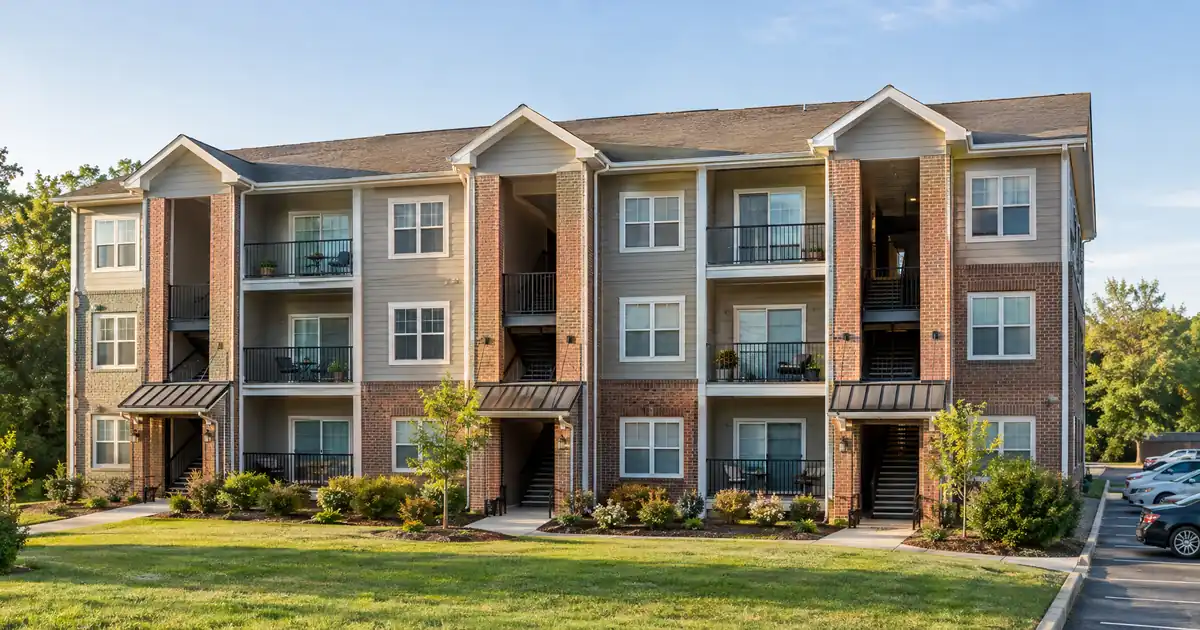
The Quick Read: Yes. On a DSCR cash-out refinance of a duplex, triplex, or fourplex, documented rent is the income the loan is judged on. Lenders usually count the lower of your lease rent and the appraiser’s market rent, then compare it to the new payment. DSCR stands for debt service coverage ratio, and it measures whether rent covers the payment.
- Rent from every unit is added together, but each unit’s rent must be supported by a lease and the appraisal.
- The new, larger cash-out payment is the denominator, not your old payment.
- Coverage is one test. Leverage, credit, reserves, and seasoning are tested separately.
- On a standard rental, cash-out typically tops out around 75% LTV, subject to lender guidelines.
- Clearing the ratio does not mean the building cash flows.
What Does “Count” Actually Mean Here?
Counting rent means the lender puts a specific monthly figure into the top of the coverage ratio. It does not mean the rent you collect or hope to collect. It means the rent a file can prove.
DSCR Cash-Out Calculator
Run the cash-out numbers in your market
Rate source: Freddie Mac 30-yr average via FRED® — Federal Reserve Bank of St. Louis · effective Oct 15, 2026
Prefilled with starting assumptions — enter your property’s value, balance, taxes, and insurance for a more accurate picture.
Program parameters update from Lendmire’s centralized guideline source. Taxes and insurance are editable estimates.
As of Oct 15, 2026 · General Freddie Mac market benchmark, not a Lendmire loan offer. Property value, balance, taxes, and insurance are editable estimates. Maximum loan-to-value varies by lender, program, property type, and seasoning. Not a Loan Estimate, approval, or commitment to lend. Program availability and eligibility are subject to lender guidelines, credit approval, property review, and underwriting.
That figure comes from two places. One is your leases and rent roll. The other is the appraiser’s opinion of market rent for each unit. Many programs take the lower of the two. A few lean on actual rent. Programs differ, so ask before the appraisal is ordered.
The ratio itself is simple. Counted monthly rent, divided by the new monthly PITIA. PITIA is principal, interest, taxes, insurance, and any HOA dues. That is all that goes in the bottom half. No repair allowance, no vacancy haircut, no management fee.
A DSCR loan qualifies primarily on property-level rental income covering the payment, subject to lender guidelines. Your W-2s and traditional personal-income documentation is not the test. Your credit score still is.
Which Situation Are You In?
Not every multi-unit building runs through the same underwriting. Unit count and occupancy change the formula.
| Situation | How rent is treated | What gets tested |
|---|---|---|
| Investor, 2-4 units, you don’t live there | Unit rents summed, tested against PITIA | Coverage, LTV, credit, reserves |
| Owner-occupied 2-4 units | Personal-income underwriting, not DSCR | Your debt-to-income |
| Five or more units | Commercial method, based on net operating income | Operating statements, income appraisal |
This article covers the first row. DSCR loans are built for non-owner-occupied investment property. If you live in one unit, you are in a different lane with different rules.
Five or more units is its own animal. Commercial multifamily lenders look at net operating income after expenses, not rent against the payment. The documents are different too: an operating statement, trailing rent history, and an income-based appraisal. Don’t assume the 2-4 unit process transfers.
How the Process Works, Step by Step
1. The appraisal produces two numbers. One is the as-is value, which sets your LTV. LTV is loan-to-value, the loan amount as a percentage of the property’s appraised value. The other is the market-rent opinion for each unit.
For two- to four-unit properties, appraisers typically use the small residential income property form, Form 1025 in Fannie Mae’s Selling Guide. The form calls for rental comparables and a comparison of actual versus estimated rents. DSCR loans are not agency loans. The form is just the standard appraisal tool.
For more on how the appraiser picks comps, see Lendmire’s piece Investor Cash-Out Refinance Appraisal Comps for a 2-4 Unit Rental.
2. You supply the paper. Expect a unit-by-unit rent roll and copies of every lease. A rent roll is a list of each unit, its tenant, its rent, and its lease dates. Lenders may also ask for bank deposits showing the rent arrives. DSCR does not mean no paperwork. It means the paperwork is about the building.
3. The lender picks the rent figure. Lease rent, market rent, or the lower of the two.
4. The ratio runs. Total counted rent over the new PITIA.
5. The other gates open. LTV, credit score, reserves, and seasoning get tested next to coverage. A great ratio does not override any of them.
How the Lower-Of Rule Plays Out on One Fourplex
Run the numbers on a modeled fourplex. These are assumptions, not market data.
Say the four leases, added up, cover the new payment about 1.10x. The appraiser’s rent schedule supports higher market rents, which would put coverage near 1.25x. Under a lower-of approach, the file runs at 1.10x. The extra market rent earns nothing.
Flip it. Say the leases are above what the appraiser’s comps support. The file still runs at the appraiser’s figure, because that is the lower one.
Two lessons follow. An above-market lease does not lift your ratio unless the comps independently back it up. And a below-market lease usually controls, which shrinks coverage.
That second one is fixable. If a tenant is willing, renewing at market before the appraisal can lift the counted rent. If the tenant isn’t willing, the lease number stands.
Does Rent Limit the Cash You Can Pull Out?
Often, yes. Two limits sit on every cash-out file, and the lower one binds.
The first is equity. On a standard investment rental, cash-out refinance typically tops out around 75% LTV across most of the lenders in the wholesale network Lendmire works with. On short-term-rental collateral, the cash-out ceiling is typically 70%. Lenders also commonly want about six months of ownership, measured from title recording.
The second is rent. A bigger loan means a bigger payment. A bigger payment means a lower ratio. At some point the counted rent can’t carry the payment at the coverage level a program wants, and that sets your ceiling before equity does.
So a building with lots of equity but soft counted rent can hit the rent limit first. That surprises people. Equity available depends on rent used for lender review, PITIA, reserves, and the LTV ceiling. It is never a guaranteed cash figure.
Taking less cash is a legitimate move. A smaller loan means a smaller payment, which lifts the ratio.
What If a Unit Is Vacant or the Tenant Isn’t Paying?
Treatment varies, and this is where files get stuck.
- Vacant unit in an otherwise occupied building. Some programs count it at appraised market rent. Some count it at zero. Some require the unit to be rent-ready first. Ask early.
- Non-paying tenant. Depending on the lender, the rent may count, count at zero, or be treated as vacancy. Expect to document a payment ledger and any notices.
- Month-to-month tenants. Usually supported by the rent roll and bank deposits, though a written lease is stronger.
- Recent rent increases after a renovation. The new rent counts only when the lease and the appraiser’s comps support it. A verbal increase doesn’t.
- Short-term rental units. Income is generally hosting history or a market-data projection rather than a lease. For short-term rentals, expect a 640+ score and about 12 months of hosting history, with a 1.00 coverage floor. Short-term rental rules can vary by city, county, HOA, and property type, so investors should confirm local rules before relying on projected rental income.
Lendmire’s article Can Rent-by-the-Room Income Count on a Rental Cash-Out Refinance? covers the room-by-room version of this question.
One practical pattern holds across the wholesale network. Files with a clean rent roll, leases that match the appraisal, and no open delinquencies move through lender review with the fewest questions. Files where the lease, the deposits, and the appraisal tell three different stories are the ones that stall. Fix the mismatch before submitting.
What Coverage Number Do You Need?
For many select programs, 1.00 is where coverage starts. That means counted rent equals the full PITIA. It is a floor for specific programs, not a universal rule. Stronger ratios open better pricing and leverage.
A separate path takes coverage below 1.00. It is available through select lenders in the network, with leverage and terms adjusted. Expect lower LTV and different pricing than a file clearing 1.00.
Some select lenders also offer no-ratio structures. These are available only through select lenders, generally for borrowers who already own a primary residence.
Credit matters too. A 620 floor exists in parts of the network. Most programs want around 660. A 700+ score unlocks the strongest leverage tiers. Reserves, meaning liquid cash left after the loan, commonly run around six months of PITIA. They can step up to about nine months on loans above $1,500,000, and standard programs go up to $3,000,000. These vary by lender, leverage, and transaction type.
Terms are flexible. The spine is the 30-year fixed. Extended terms and interest-only periods are available through select lenders in the network, and ARM structures exist for investors who want them. For the full picture, see Lendmire’s complete DSCR loans guide.
If the Rent Doesn’t Clear, What Are Your Options?
Say a fourplex comes in at 0.95x. Not dead. Here is the decision path.
1. Take less cash. A smaller loan lowers the payment and raises the ratio.
2. Raise counted rent. Renew below-market leases at market, fill vacant units, and cure delinquencies with documentation.
3. Restructure the loan. An interest-only period or extended term, through select lenders in the network, lowers the payment.
4. Use a sub-1.00 path. Select lenders in the network will review coverage below 1.00, with leverage and terms adjusted.
5. Wait. Some fixes, like lease renewals, need time to show up on paper.
Whether any option works depends on lender guidelines, credit approval, and property review. None is a promise.
Why Business-Purpose Loans Are Reviewed Differently
DSCR loans are designed for non-owner-occupied investment properties. Because they are business-purpose investor loans, they are reviewed differently from a standard owner-occupied mortgage. The Federal Register preamble to the federal ability-to-repay rule says investment-purpose loans are considered business-purpose loans.
The test turns on the purpose of the loan, not just the label on the property. Compliance Alliance notes that the regulation looks at what the loan is for. If you plan to spend cash-out proceeds on personal or consumer purposes, talk it through up front. Tax treatment can depend on how the funds are used and how the property is held; investors should keep clear records and speak with a qualified tax professional before relying on any deduction.
Costs the Ratio Never Sees
Here’s the catch. DSCR compares rent to PITIA only. Repairs, vacancy, management, utilities, and capital expenses sit outside the calculation.
So a 1.30x ratio is not positive cash flow. A fourplex can clear coverage and still lose money in a year with a roof replacement and two turnovers. Treat the ratio as the lender’s test. Build your own budget for everything else.
There is a useful side effect. Each loan is tested on its own property, so there is no portfolio count ceiling the way conventional financing has.
Key Terms Defined
DSCR (debt service coverage ratio): Counted monthly rent divided by the new monthly PITIA.
PITIA: Principal, interest, taxes, insurance, and any HOA dues. It is the full monthly obligation on the loan.
LTV (loan-to-value): The loan amount as a percentage of the appraised value.
Seasoning: The ownership period a lender wants before it will do a cash-out refinance. About six months is common.
Rent roll: A unit-by-unit list of tenants, rents, and lease dates.
Market rent: The appraiser’s opinion of what each unit should rent for, based on comparable rentals.
Frequently Asked Questions
Does the rent from every unit count?
Usually yes, when each unit’s rent is supported by a lease and the appraisal. The lender adds up the unit rents and tests the total against PITIA. Vacant or non-paying units are treated differently by different programs, so ask before the appraisal is ordered.
Will a higher lease rent raise my DSCR?
Not under a lower-of rule. If your lease sits above the appraiser’s market rent, the lower figure is what counts. A lease above market only helps when the appraiser’s comps independently support it.
Do I need traditional personal-income documentation?
A DSCR loan is reviewed primarily on property-level rental income covering the payment, subject to lender guidelines. You will still show credit, reserves, leases, and an appraisal. Personal income is not the main test.
Does a good DSCR ratio override LTV and credit?
No. Coverage, LTV, credit score, reserves, and seasoning are separate gates. A strong ratio does not lift a leverage cap or waive a credit floor. The strongest files have enough equity and enough rental coverage.
What if my building has five or more units?
It generally moves to commercial multifamily underwriting, which looks at net operating income after expenses. The documents differ, including operating statements and trailing rent history. That is a different product from the 2-4 unit process described here.
Ready to Run Your Building’s Numbers?
If you are buying or refinancing a rental property and want to see how the numbers work, Lendmire can help you compare DSCR loan options based on the property income, credit profile, leverage, and investor goals. Lendmire is a broker arranging financing through select lenders in its wholesale network, across 41 markets including Washington, D.C. This is not a commitment to lend. Every file is reviewed individually.
Before you order the appraisal, get your rent roll straight, because the number the lender counts is the number your loan size follows.
A deeper walk-through of investment-property equity extraction lives in Lendmire’s guide to cash-out refinance on an investment property.
About Lendmire
Lendmire is a non-QM mortgage brokerage (NMLS# 2371349) arranging DSCR investor loans in 41 markets, including Washington, D.C., through wholesale and investor-lending channels. DSCR loans are evaluated by the lender on rental income rather than personal income, subject to lender guidelines — a fit for LLC-owned portfolios, self-employed investors, and operators scaling beyond conventional loan caps. Recognized as a Scotsman Guide Top Mortgage Workplace in 2025 and 2026.
Get Started
Ready to find the right loan for you?
In about 30 seconds you can review financing options available for your investment property. No commitment required.
Informational only. Not a Loan Estimate, approval, or commitment to lend. Program availability and eligibility are subject to lender guidelines, credit approval, property review, and underwriting.
References
1. Form 1025 in Fannie Mae’s Selling Guide
2. Federal Register: Ability-to-Repay and Qualified Mortgage Standards Under the Truth in Lending Act
3. Compliance Alliance: Regulation Z and Investment Properties
This article is part of Lendmire’s investment property cash-out refinance program — full qualification details, guidelines, and scenarios live on the program page.
Related reading: Cash-on-Cash vs DSCR for a High-Escrow County Rental · DSCR Income Rules for a Corporate Rental Near a Plant · DSCR Cash-Out Documentation After an Insurance Claim on a Rental
Brandon Miller
Founder & CEO, Mortgage Loan Originator, Lendmire LLC
- Mortgage Loan Originator · NMLS# 1129696 · Verify on NMLS Consumer Access
- North Carolina Real Estate Broker · License# 343312 · Verify on NCREC
- North Carolina Insurance Producer · License# 19053198 · Property, Casualty, Life, Health · Verify on NAIC SBS
- Lendmire LLC · Firm NMLS# 2371349 · Verify firm licensure
Legal disclosures. Lendmire (NMLS# 2371349) is a state-licensed mortgage brokerage that arranges financing through wholesale lender relationships. Lendmire is not a direct lender, depository institution, or registered financial advisor. The discussion above is general informational content about real estate financing — it is not financial, legal, or tax advice, and readers should consult licensed professionals for guidance on their individual circumstances. Loan inquiries are subject to lender underwriting; this article does not represent a commitment to lend. Loan terms, rates, and qualification standards vary by borrower, property, and state, and are subject to change at any time. Equal Housing Opportunity. NMLS Consumer Access: nmlsconsumeraccess.org.