
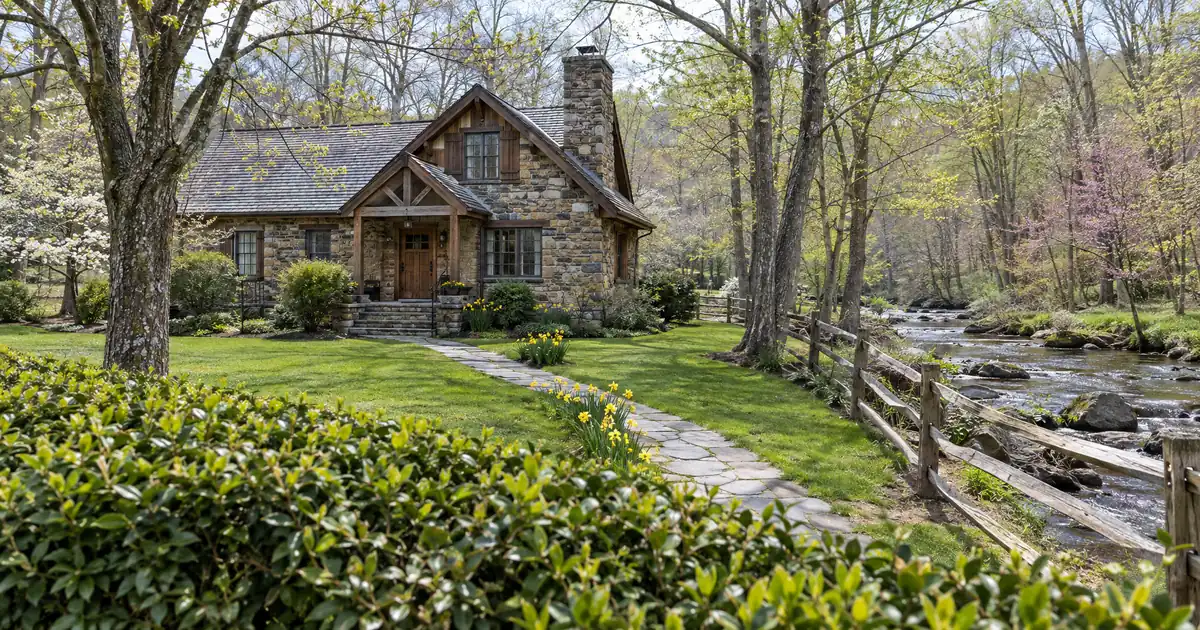
The Quick Read: Usually yes, because a DSCR loan is reviewed primarily on property-level rental income covering the payment, subject to lender guidelines, so a retiree’s lack of a paycheck is not the barrier. The file still has to clear several gates, and the cabin itself is often the harder one to pass.
- Pensions, Social Security, and retirement withdrawals are not part of the coverage math.
- Credit, reserves, and source of funds still get reviewed.
- Short-term rental purchases typically reach 75% LTV; refinances and cash-outs around 70%, for short-term-rental collateral.
- Log homes, manufactured homes, and barndominiums are not offered.
- Clearing 1.00x does not mean the cabin makes money.
Retirees ask this question more than almost any other borrower group, and the fear behind it is reasonable. Conventional underwriting leans on debt-to-income, and a retiree living off savings can look thin on paper. DSCR flips the lens to the property. Whether the lens works for a mountain cabin depends on four things: the building, the legal right to rent it nightly, the documented income, and the cash behind the file.
Short-Term Rental Calculator
Run the STR numbers in your market
Rate source: Freddie Mac 30-yr average via FRED® — Federal Reserve Bank of St. Louis · effective Oct 15, 2026
Prefilled with starting assumptions — enter your nightly rate, occupancy, taxes, and insurance for a more accurate picture.
Short-term rental income is documented with a 12-month history or a market data report. Program parameters update from Lendmire’s centralized guideline source.
As of Oct 15, 2026 · General Freddie Mac market benchmark, not a Lendmire loan offer. Nightly rate, occupancy, taxes, and insurance are editable estimates. Qualifying income for short-term rentals varies by program — some use appraisal market rent, others use documented STR history or projections — and is confirmed in underwriting. Not a Loan Estimate, approval, or commitment to lend. Program availability and eligibility are subject to lender guidelines, credit approval, property review, and underwriting.
Why Doesn’t Retirement Status Block the Loan?
Retirement status neither blocks nor helps. DSCR loans are designed for non-owner-occupied investment properties, and because they are business-purpose investor loans, they are reviewed differently from a standard owner-occupied mortgage. The lender asks whether the cabin’s rent covers its own full payment (principal, interest, taxes, insurance, and any association dues).
Across the wholesale network Lendmire works with, retirement income simply isn’t an input. A pension check or Social Security benefit does not raise the ratio, and its absence does not lower it. What a retiree’s portfolio does provide is proof of reserves and funds for the down payment. That is a real advantage, but it is a different job than income.
Most programs want a score around 660, a 620 floor exists in parts of the network, and 700+ unlocks the strongest leverage tiers. For short-term rentals specifically, expect a 640+ score and about 12 months of hosting history, subject to lender guidelines. Lendmire’s complete DSCR loans guide walks through the broader requirements.
One flip point matters. A retiree with plenty of assets but little rental income, or one who plans to live in the cabin, is looking at a different product. Asset-based qualification, where assets are converted to qualifying income, is its own lane. It is not DSCR.
Is Your Cabin Actually Financeable?
The construction type decides eligibility before the income does. A conventionally built cabin in an established vacation market is a workable candidate. Log homes, manufactured homes (single- and double-wide), and barndominiums are not offered through the network’s DSCR programs.
That catches buyers off guard. Many mountain “cabins” are log-built, and a charming log structure can be a dead end for this loan type. Confirm construction before falling in love with the listing.
| Property factor | Where it stands | What drives the outcome |
|---|---|---|
| Conventionally built cabin | Eligible, subject to review | Appraisal, condition, access |
| Log home | Not offered | Construction type |
| Manufactured home | Not offered | Construction type |
| Barndominium | Not offered | Construction type |
| Resort or HOA building | Depends on documents | What the HOA permits |
Septic capacity, a well, and winter road access also matter. They affect the appraisal and the insurance quote, and they affect whether guests can reach the place at all. Most carry less weight in the ratio than in the real-world operating picture.
Can You Legally Rent It Nightly?
Short-term rental rules can vary by city, county, HOA, and property type, so investors should confirm local rules before relying on projected rental income. In practice, this is the first thing to check. A cabin that can’t be rented legally has no qualifying income, no matter how strong the dashboard looks.
HOA and resort communities add another layer. A lender will not close on a use the association documents prohibit, and minimum-stay clauses can block nightly bookings outright. Get the permit evidence and the HOA documents in hand before the appraisal is ordered.
How Do Lenders Count Seasonal Cabin Income?
Lenders count a haircut version of documented income, not gross platform revenue. Different programs measure it differently, which is why the same cabin can show two different ratios under two programs.
The income evidence typically comes from one of these:
- An appraiser’s short-term-rental income analysis
- A trailing 12-month property manager statement
- 12 months of bank deposits that reconcile to platform payouts
- A market projection from a data service, usually for purchases
The long-term-rent survey on the appraisal (Form 1007) is the fallback. It often sits well below real nightly-rental potential, so a cabin that clears 1.00x on Airbnb income can fall short if a program defaults to that figure.
Industry commentary puts the expense adjustment lenders apply to gross short-term income at roughly 20% to 25%, though it is not uniform across lenders. As an illustration, a cabin showing a 2.00x ratio on gross income would land near 1.60x after a 20% adjustment, because the adjustment touches only the income side. The payment side stays whole. A high mountain insurance quote lowers the coverage number directly.
Seasonality is the other trap. Mountain cabins can earn most of their income in a few peak months, and a snapshot taken at peak season gets discounted. The full 12-month picture is what carries a file.
What if There’s No Hosting History?
A purchase can often proceed on a projection, while refinances lean on actual history. The program parameters expect about 12 months of host experience on short-term rental files, so a first-time host buying a first cabin should talk through options before assuming the projection path applies. Reviews vary by lender, and qualification is subject to lender guidelines, credit approval, and property review.
For a retiree who already owns a cabin free and clear, a cash-out refinance is a different transaction. Short-term-rental collateral tops out around 70% LTV on a cash-out, with about 6 months of seasoning as the common expectation. That equity could fund a second property or other goals, but pulling it out means carrying new debt on a seasonal income stream. Run the stress test first. Each figure is subject to lender guidelines and a complete review of property type, leverage, and credit.
Clearing the Ratio vs. Living on the Cash Flow
DSCR compares rent to the full payment only. Repairs, vacancy, cleaning, utilities, management, and capital expenses all sit outside the calculation. A file can clear 1.00x and still lose money in a slow winter.
This is where the retiree’s situation differs from a working investor’s. A working investor can cover an empty February from a paycheck. A retiree is drawing on savings. That’s why reserves carry so much weight, both for the lender and for the borrower’s own safety. Reserves commonly run around 6 months of PITIA, though they vary by lender, leverage, loan size, and transaction type. Conservative files at modest leverage under $1,500,000 can see them waived, and larger loans typically step up to about 9 months. Treat the lender’s minimum as a floor, not a plan.
A sensible stress test asks three questions. What happens if bookings fall by a third? What if insurance renews materially higher? Could the cabin sit empty through a slow season without forcing a sale? If the honest answer to any of those is uncomfortable, the structure needs more equity or a different property.
This is a genuine judgment call. A larger down payment lowers the payment and can lift the coverage ratio. It never erases the leverage caps, credit floors, reserve rules, or property eligibility. The strongest files clear both tests: enough equity and enough rental coverage.
Coverage Floors and Sub-1.00 Options
For short-term rentals, the coverage floor is 1.00 on both purchases and refinances, and stronger ratios open better terms and leverage. Separately, programs below 1.00 are available through select lenders in the network, with leverage and terms adjusted. Reaching for that path because the numbers don’t work in the cabin market you’re looking at is a signal to revisit the property, not the loan type.
Purchase leverage on short-term rentals goes up to 75% on the strongest files. Standard programs run up to $3,000,000, and smaller balances route through select lenders. Term structures center on the 30-year fixed, with extended terms and interest-only periods available through select lenders.
DSCR vs. conventional financing
There are two common ways to finance an investment property, and they qualify you differently — here’s how investors weigh them.
Why investors choose it
- Qualifies on the property’s rental income — no personal tax returns, W-2s, or pay stubs needed to document income.
- No personal debt-to-income ceiling to clear, so existing mortgages and obligations don’t cap your borrowing the same way.
- Can be closed in an LLC, keeping the property inside a business entity.
- Built for scaling — not held to the limit on number of financed properties that conventional financing applies.
- Underwriting centers on the deal: generally qualifies when the rent covers the payment, a 1.00x coverage ratio being a common baseline (confirmed in underwriting).
- Designed specifically for investment property, including long-term and, where the program allows, short-term rentals.
Where it’s strong
- Often the lowest ongoing financing cost for a buyer who fully qualifies on personal income — a fit for a first property or a cost-first purchase.
Trade-offs for investors
- Requires full personal income documentation and must fit within a debt-to-income limit — salary, existing debts, and other mortgages all count.
- Typically held in your personal name rather than a business entity.
- Caps how many financed properties you can carry, which can become a ceiling as a portfolio grows.
- Evaluates you as a borrower as much as the property, which usually means more paperwork.
How investors usually choose: a first or single property often optimizes for the lowest financing cost; portfolio builders often optimize for leverage, vesting in an LLC, and scaling past conventional caps. The right answer depends on your goals, the property, and current guidelines — both paths run through select lenders in Lendmire’s wholesale network, with eligibility and terms confirmed in underwriting.
DSCR, Second-Home Loans, Asset-Based Qualification, or Cash
| Option | Best for | Main tradeoff |
|---|---|---|
| DSCR loan | Cabin run as a rental business | No personal use assumed |
| Second-home loan | Mostly personal use | Short-term rental use is lender-specific |
| Asset-based qualification | Little rental income, large assets | Different product, different documents |
| Paying cash | Maximum simplicity | Ties up liquidity |
The personal-use question deserves honesty. A DSCR loan assumes no personal occupancy, and the borrower signs a business-purpose and non-occupancy certification. A retiree who wants the cabin for family weeks every summer is usually in the second-home lane instead. Using a second-home loan on a cabin that is mainly a rental creates its own problems.
The tax side is separate. IRS Publication 527 treats a dwelling as used as a home when personal use exceeds the greater of 14 days or 10% of the days rented at a fair price, and family stays count as personal use. Tax treatment varies; consult a qualified professional.
Titling, Documents, and What to Bring
Many retirees hold property in a trust or LLC, and the title decision should come before the loan application, not after. Closing in an LLC is available, subject to program terms. Lending to an entity falls outside the federal consumer-credit framework, but a consumer-purpose loan to a trust can still be treated differently, so Regulation Z’s business-purpose exemption is worth reviewing with an attorney. The creditor decides in each case whether the loan is primarily for an exempt purpose.
| Document | What it proves |
|---|---|
| Bank or brokerage statements | Down payment and reserves |
| Credit report | Credit profile |
| Appraisal and title | Value and clean ownership |
| Entity or vesting documents | Who is borrowing |
| Income evidence | Qualifying rental income |
| Local permit or HOA documents | Legal right to rent nightly |
Notice what is missing: traditional personal-income documentation, pay stubs, and employer verification. The file is still documented, just around the property.
Prepayment penalties are common on DSCR products and can matter if a retiree later sells or refinances. Ask about them before choosing a structure.
Key Terms Defined
DSCR: The property’s monthly rent divided by its full monthly obligation, used to judge whether rent covers the payment.
PITIA: Principal, interest, taxes, insurance, and association dues, which together make up the full payment.
Reserves: Liquid funds held after closing, typically measured in months of PITIA.
Seasoning: The period a borrower has owned a property before a cash-out refinance.
Form 1007: The appraiser’s long-term rent survey, often lower than real nightly-rental potential.
When This Isn’t a Good Idea
Skip the loan if the cabin can’t be rented legally, if the only strong months are three summer weeks, or if a single bad winter would force a sale. Skip it, too, if the cabin is really a family retreat with an occasional rental. A retiree with deep reserves and a legal, well-documented, conventionally built cabin is a very different case. Same loan, very different risk.
Frequently Asked Questions
Can I qualify with only Social Security?
Yes, because the file qualifies primarily on property-level rental income covering the payment, subject to lender guidelines. Social Security isn’t counted as income, but credit, reserves, and source of funds are still reviewed.
Does my age matter?
Age is not a qualifying factor in the coverage math. What matters is the cabin’s rental coverage, your credit profile, your reserves, and whether the property is eligible.
Can I buy through an LLC?
Often yes, subject to program terms. The entity paperwork is part of the file, and it’s worth settling title and estate questions with an attorney before applying.
What if my winters are slow?
Lenders look at a full 12 months, not peak season alone, so slow months pull the average down. If the annual figure still clears the coverage floor after the lender’s adjustment, the file can work, but your own reserves have to carry the quiet stretch.
Can I pull cash out of a paid-off cabin?
Yes, on short-term-rental collateral typically up to 70% LTV, with about 6 months of seasoning common and subject to lender guidelines. Think carefully about the new debt on a seasonal income stream before doing it.
If you are buying or refinancing a rental property and want to see how the numbers work, Lendmire can help you compare DSCR loan options based on the property income, credit profile, leverage, and investor goals. Lendmire is a broker arranging financing through select lenders in its wholesale network across 41 markets, including Washington, D.C. Programs change, every file is underwritten individually, and nothing here is a commitment to lend.
About Lendmire
Lendmire is a non-QM mortgage brokerage (NMLS# 2371349) arranging DSCR investor loans in 41 markets, including Washington, D.C., through wholesale and investor-lending channels. DSCR loans are evaluated by the lender on rental income rather than personal income, subject to lender guidelines — a fit for LLC-owned portfolios, self-employed investors, and operators scaling beyond conventional loan caps. Recognized as a Scotsman Guide Top Mortgage Workplace in 2025 and 2026.
Get Started
Ready to find the right loan for you?
In about 30 seconds you can review financing options available for your investment property. No commitment required.
Informational only. Not a Loan Estimate, approval, or commitment to lend. Program availability and eligibility are subject to lender guidelines, credit approval, property review, and underwriting.
References
This article is part of Lendmire’s short-term rental loan program — full qualification details, guidelines, and scenarios live on the program page.
Related reading: Short Sale vs Lost Rental on a DSCR Loan Past Ten Properties · Can Lake House Short-Term Rentals Share One Portfolio DSCR Loan? · Can You Refinance a Rental Awarded in Divorce With a DSCR Loan?
Brandon Miller
Founder & CEO, Mortgage Loan Originator, Lendmire LLC
- Mortgage Loan Originator · NMLS# 1129696 · Verify on NMLS Consumer Access
- North Carolina Real Estate Broker · License# 343312 · Verify on NCREC
- North Carolina Insurance Producer · License# 19053198 · Property, Casualty, Life, Health · Verify on NAIC SBS
- Lendmire LLC · Firm NMLS# 2371349 · Verify firm licensure
Disclosures. The information presented in this article is general market commentary, not financial, legal, or tax advice. Lendmire is a mortgage brokerage (NMLS# 2371349) — not a direct lender or depository institution — and loan placement is subject to lender underwriting. Nothing in this content represents a commitment to lend. Loan terms, pricing, and program availability vary based on borrower qualifications, property characteristics, and state of subject property, and are subject to change at any time. Lendmire complies with Equal Housing Opportunity requirements. Consumer access: nmlsconsumeraccess.org.