
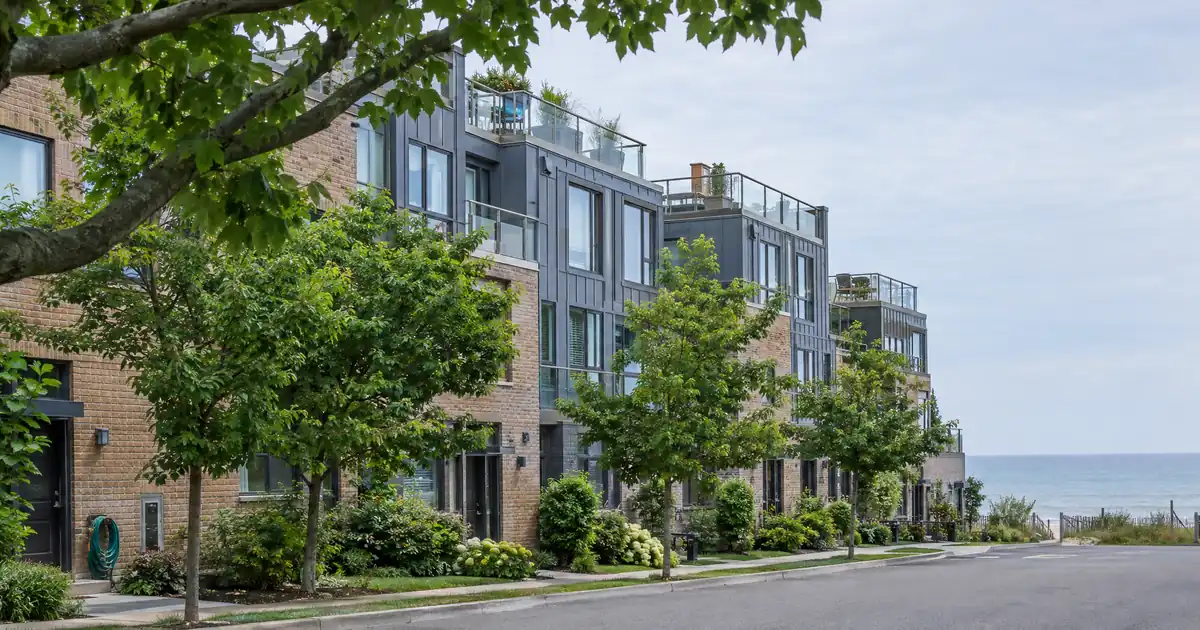
The Quick Read: Usually yes, if the condo, the building and the rental plan all fit the program. Retirement is not the test, because a DSCR loan is reviewed primarily on property-level rental income covering the payment, subject to lender guidelines, and not on a paycheck.
- Age and retirement status are not stated qualifying factors. Credit, reserves and the property are.
- Select lenders in the network typically offer short-term-rental purchase leverage up to 75% LTV, with a 640 minimum score and about 12 months of hosting history.
- The HOA declaration and the building’s project review can block the deal before the ratio matters.
- Planned personal use of the condo is the biggest retiree-specific trap.
- A retiree’s portfolio supports reserves and source of funds. It does not count as income.
Most retirees assume the missing paycheck is the problem. On these files it rarely is. The problems are the building’s rental rules, how the rent gets documented, and how the retiree plans to use the unit.
Short-Term Rental Calculator
Run the STR numbers in your market
Rate source: Freddie Mac 30-yr average via FRED® — Federal Reserve Bank of St. Louis · effective Oct 15, 2026
Prefilled with starting assumptions — enter your nightly rate, occupancy, taxes, and insurance for a more accurate picture.
Short-term rental income is documented with a 12-month history or a market data report. Program parameters update from Lendmire’s centralized guideline source.
As of Oct 15, 2026 · General Freddie Mac market benchmark, not a Lendmire loan offer. Nightly rate, occupancy, taxes, and insurance are editable estimates. Qualifying income for short-term rentals varies by program — some use appraisal market rent, others use documented STR history or projections — and is confirmed in underwriting. Not a Loan Estimate, approval, or commitment to lend. Program availability and eligibility are subject to lender guidelines, credit approval, property review, and underwriting.
Why Doesn’t Retirement Status Matter for a DSCR Loan?
Retirement does not matter because the loan is not underwritten on earned income. Lenders compare the property’s documented rent to its full monthly housing obligation. Credit and reserves fill the role that an employment check plays on a conventional file.
Conventional underwriting reads a retiree who is drawing down accounts as a thin file, because taxable income looks small next to the assets. A DSCR file skips that debt-to-income test. Across the wholesale network, the questions are about the borrower’s score, the cash on hand and the property.
Here is what the borrower side looks like, from the parameters most programs use:
- Credit: short-term-rental files typically want a 640 minimum. Stronger scores help pricing and leverage.
- Experience: about 12 months of landlord or host experience is usually expected on STR files.
- Loan size: standard programs run up to $3,000,000. Smaller balances route through select lenders.
- Reserves: these vary by lender, leverage and loan size. Around 6 months of PITIA is common, and larger loans typically step up.
Details are subject to lender guidelines and change, and every file is underwritten individually. Lendmire’s complete DSCR loans guide covers the baseline program mechanics.
What Does a Retiree’s Portfolio Actually Do on the File?
A portfolio shows reserves, down payment and source of funds. It never counts as income in the ratio. This is where retirees most often misread the product.
A retiree with a large brokerage account or IRA can show the lender real liquidity. That liquidity covers the down payment and the reserve requirement. The lender will also want to see where the money came from. Typical sources are IRA or brokerage liquidations, proceeds from selling a prior home, or savings. Large deposits get sourced. If the loan closes in an LLC, entity documents join the file, subject to lender program eligibility. Terms depend on the lender’s guidelines, the property type, the leverage, and a full review of the credit profile.
A bigger down payment lowers the payment and can lift the coverage ratio. It does not erase leverage caps, credit floors, reserve rules or property eligibility. The strongest files clear both tests: enough equity and enough rental coverage.
Can the Retiree Use the Condo Personally?
Not much. DSCR loans are designed for non-owner-occupied investment properties. A retiree who plans to winter in the unit may fall outside the program, and that is the most common retiree-specific failure.
Because these are business-purpose investor loans, they are reviewed differently from a standard owner-occupied mortgage. The line that matters is personal use. Under the CFPB’s official interpretation of Regulation Z, a property the owner expects to occupy for more than 14 days in the coming year cannot be treated as non-owner-occupied. The same page uses a beach-house example: an owner who uses the house for a month and rents it the rest of the year has an owner-occupied property.
| Plan for the condo | Fit for DSCR |
|---|---|
| Pure rental, owner stays away | Fits the program |
| A few short owner stays, well under the line | Needs a clear occupancy certification |
| Winters or months of personal use | Different loan lane |
If the plan is a second home, the borrower is looking at a residence-type loan, not an investor loan. Misdeclaring use is a file problem, not a technicality. Decide the use plan before the contract, not after.
Will the Building Allow Short-Term Rentals?
Often not, and this gate comes before every other test. A city permit says nothing about what the condo declaration allows. The HOA rules sit independently of local law.
AirROI’s glossary on HOA restrictions lists the common types: outright bans on rentals under 30 days, minimum stays of 30, 60, 90 or 180-plus days, annual rental caps, board approval of each rental, and owner-occupancy waiting periods. It also notes that STR revenue shown in comps is inaccessible if the declaration prohibits stays under 30 days, and that boards can sometimes tighten rules by resolution. FirstService Residential writes that many associations ban short rentals to limit transient-occupancy disruption.
Short-term rental rules can vary by city, county, HOA, and property type, so investors should confirm local rules before relying on projected rental income.
Request these documents before going under contract:
1. The recorded declaration and current rules, read for rental minimums and caps.
2. The condo questionnaire, which covers rental caps, STR prohibitions, minimum lease terms and sub-leasing limits.
3. The current budget and the reserve study, if one exists.
4. Master-policy insurance declarations.
5. Notices of litigation and special assessments.
If the building bans STRs, a 30-day-plus rental model may still be allowed. Revenue is lower, and the loan then underwrites on lease or 1007 rent.
Warrantable, Non-Warrantable and Condotel: What Do the Labels Mean?
Non-warrantable is a secondary-market label, not a defect. Some buildings with that label can still work for DSCR, and some features block the loan outright. The reason behind the label decides the answer.
| Building type | What it means | DSCR outlook |
|---|---|---|
| Warrantable | Fits standard project review | Cleanest path |
| Non-warrantable | Fails a standard test, such as investor concentration | Case by case, with the reason mattering |
| Condotel or rental pool | Income splits with an operator | Different math, often a different program |
Harder blockers practitioners see include mandatory rental pools, deed or resale restrictions, structural litigation, high dues delinquency and developer control. Beach buildings add two stress points: coastal named-storm and wind coverage, and structural-reserve and special-assessment issues. Both can change the monthly obligation or the cash needed at purchase.
How Is Short-Term Rental Income Established?
The file leans on one of three kinds of evidence, and which one applies depends on whether the retiree is buying or refinancing. Documented history carries more weight than a projection.
- Operating history: 12 months of platform or management-company records, or 12 months of bank deposits.
- Appraiser’s STR analysis: completed on or alongside the 1007 rent schedule. A condo is a 1-unit property, so the 1007 applies, not the 1025.
- Market projection: on purchases, an AirDNA-type report. AirDNA is a data vendor, and its tool produces projected income figures. Lenders commonly adjust projections down, and actual history usually is not.
A long-term-rent 1007 is a fallback that generally produces lower income than STR data. It can drop a beach deal below the coverage floor. Seasonality is the beach trap: lenders distrust a short peak-season snapshot, and Overline IQ’s STR financing guide says 12-month data is preferred. A retiree who bought with no history should expect the purchase file to lean on the appraiser’s analysis or a projection, and a refinance to need real operating history.
DSCR vs. conventional financing
There are two common ways to finance an investment property, and they qualify you differently — here’s how investors weigh them.
Why investors choose it
- Qualifies on the property’s rental income — no personal tax returns, W-2s, or pay stubs needed to document income.
- No personal debt-to-income ceiling to clear, so existing mortgages and obligations don’t cap your borrowing the same way.
- Can be closed in an LLC, keeping the property inside a business entity.
- Built for scaling — not held to the limit on number of financed properties that conventional financing applies.
- Underwriting centers on the deal: generally qualifies when the rent covers the payment, a 1.00x coverage ratio being a common baseline (confirmed in underwriting).
- Designed specifically for investment property, including long-term and, where the program allows, short-term rentals.
Where it’s strong
- Often the lowest ongoing financing cost for a buyer who fully qualifies on personal income — a fit for a first property or a cost-first purchase.
Trade-offs for investors
- Requires full personal income documentation and must fit within a debt-to-income limit — salary, existing debts, and other mortgages all count.
- Typically held in your personal name rather than a business entity.
- Caps how many financed properties you can carry, which can become a ceiling as a portfolio grows.
- Evaluates you as a borrower as much as the property, which usually means more paperwork.
How investors usually choose: a first or single property often optimizes for the lowest financing cost; portfolio builders often optimize for leverage, vesting in an LLC, and scaling past conventional caps. The right answer depends on your goals, the property, and current guidelines — both paths run through select lenders in Lendmire’s wholesale network, with eligibility and terms confirmed in underwriting.
How Does the Coverage Ratio Work on a Beach Condo?
Coverage is gross monthly rent divided by PITIA: principal, interest, taxes, insurance and association dues. On STR purchases, select programs start at a 1.00 coverage floor, and STR refinances also start at 1.00. Stronger ratios open better pricing and leverage. Some select lenders in the network will review coverage below 1.00, with leverage and terms adjusted.
HOA dues sit in the denominator every month. Condo special assessments and master-policy insurance pass-throughs can shift the ratio or the cash needed at purchase. A beach condo’s expense stack is heavier than a single-family house’s, so the ratio compresses more.
Run the numbers this way. Take an STR purchase at 75% LTV, the top of the STR purchase range. Model the rent at the documented figure after the lender’s STR treatment, not at the platform’s peak-season headline. If that rent covers the full PITIA with dues, coverage lands above 1.00. If dues and insurance push the obligation up, the same rent lands near or under 1.00, and the options are more down payment, a lower-leverage structure, or a select-lender sub-1.00 path with adjusted terms. Qualification stays subject to lender guidelines, credit approval and property review.
Clearing 1.00 is not positive cash flow. Vacancy, furnishing, management, utilities and capex sit outside the calculation but hit real cash flow.
Is There a Tax Catch for Retirees?
Tax is a separate question from financing, and the lender does not underwrite the tax return. Whether short-term-rental losses offset other income turns on average guest stay and material participation, and a retiree’s other income may be small, which can limit the benefit. IRS Publication 925 covers the passive-activity rules. Tax treatment varies; consult a qualified professional.
Who Should Not Use This Loan?
- Anyone who plans significant personal use of the condo.
- Buyers in a building whose declaration bans short stays and who need STR revenue to clear the ratio.
- Retirees who want a residence-type loan, which is a different lane.
- Buyers of condotels or rental-pool units who expect a standard ratio.
- Anyone needing leverage above the STR ranges, which typically top out at 75% on purchases and 70% on STR refinances and cash-outs.
Why Do These Files Stall?
Most stalls are preventable.
- Use misdeclared or unclear. Fix it by settling the occupancy plan before the application.
- Rental ban buried in the declaration. Read the documents before contract.
- Appraisal defaults to long-term rent. Bring documented history or a market report.
- Incomplete questionnaire. Get it back from the association early.
- Source of funds not documented. Trace every large deposit to an IRA, brokerage or sale proceeds.
- Insurance excludes STR use. Get binders in before the file is submitted.
Frequently Asked Questions
Does being retired hurt my chances of a DSCR loan?
No. Age is not a stated qualifying factor. The file turns on credit, reserves, documented rent and the property. Short-term-rental files typically want a 640 minimum score, subject to lender guidelines.
Does my IRA or brokerage account count as income?
No. It supports the down payment, reserves and source of funds. The ratio is built only from the property’s rent and its monthly obligation.
Can I stay in the condo a few weeks a year?
Only a small amount, and the lender’s occupancy certification controls. Past 14 days of expected use, the property stops looking like a non-owner-occupied rental under the federal test. Heavy personal use points to a residence loan instead.
What leverage can I expect on a beach condo STR?
Purchases typically reach up to 75% LTV on the strongest files. Refinances and cash-outs on short-term-rental collateral run up to 70%. These are select-network ranges, not guarantees.
What if the HOA bans short-term rentals?
Then STR income cannot support the file. A 30-day-plus rental may still be allowed, and the loan then underwrites on lease or 1007 rent, which is lower. Check the declaration first.
Does the 1007 or an AirDNA report set the rent?
Either can, depending on the file. Purchases often lean on the appraiser’s STR analysis or a projection. Refinances usually need operating history.
If you are buying or refinancing a rental property and want to see how the numbers work, Lendmire can help you compare DSCR loan options based on the property income, credit profile, leverage, and investor goals. For a closer look at the income-method question, see Lendmire’s piece Short-Term Rental DSCR vs Bank Statement Loan for a Retiree’s Beach House, and for adding a beach condo to an existing portfolio, see its piece How to Add a Short-Term Rental Beach Condo to a DSCR Loan on Houses.
About Lendmire
A DSCR-focused mortgage broker, Lendmire (NMLS# 2371349) places investor financing across 41 markets — 40 states plus Washington, D.C. — with DSCR eligibility generally reviewed by the lender on property cash flow instead of tax returns, subject to lender guidelines. Scotsman Guide named Lendmire a Top Mortgage Workplace in 2025 and 2026.
Get Started
Ready to find the right loan for you?
In about 30 seconds you can review financing options available for your investment property. No commitment required.
Informational only. Not a Loan Estimate, approval, or commitment to lend. Program availability and eligibility are subject to lender guidelines, credit approval, property review, and underwriting.
References
1. CFPB Reg Z Official Interpretation §1026.3
2. AirROI glossary: HOA restrictions
3. FirstService Residential: HOA rental restrictions
4. AirDNA blog
5. Overline IQ: STR financing guide
This article is part of Lendmire’s short-term rental loan program — full qualification details, guidelines, and scenarios live on the program page.
Related reading: Short Sale vs Lost Rental for a DSCR Loan Waiting Period · How to Underwrite a Condo on a DSCR Loan With the Dues and Budget · How to Underwrite a Condo Package on a DSCR Loan Across LLCs
Brandon Miller
Founder & CEO, Mortgage Loan Originator, Lendmire LLC
- Mortgage Loan Originator · NMLS# 1129696 · Verify on NMLS Consumer Access
- North Carolina Real Estate Broker · License# 343312 · Verify on NCREC
- North Carolina Insurance Producer · License# 19053198 · Property, Casualty, Life, Health · Verify on NAIC SBS
- Lendmire LLC · Firm NMLS# 2371349 · Verify firm licensure
Disclosure information. Lendmire is a state-licensed mortgage brokerage under NMLS# 2371349. Lendmire is not a depository institution, direct lender, or financial advisor — all loans referenced are placed through wholesale lender partners and are subject to each lender's underwriting standards. This article is provided for general informational purposes and is not a commitment to lend, nor does it constitute financial, legal, or tax advice. Loan programs, terms, rates, and qualification standards change without notice and depend on borrower profile, property type, and the state in which the subject property is located. Equal Housing Opportunity provider. NMLS Consumer Access: nmlsconsumeraccess.org.