
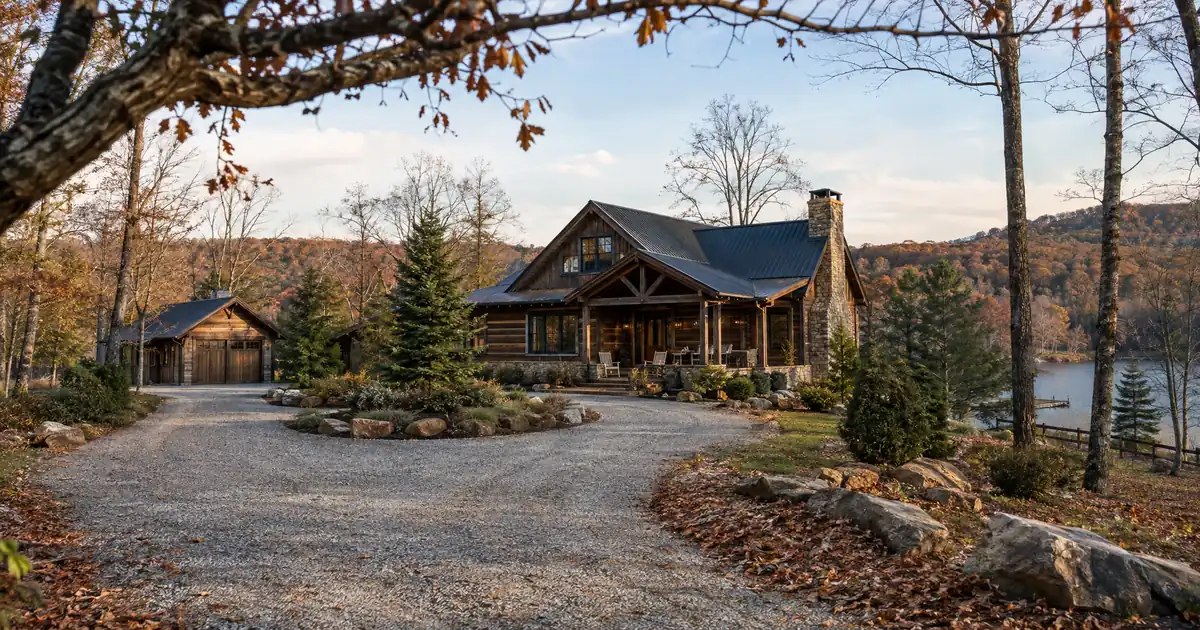
The Quick Read: Assemble one organized file that lets the appraiser prove two things on a large rural loan: what the cabin is worth and what it can rent for, even when the best comparable sales sit miles away and differ in age, access, and land. Send it with the appraisal order, not after the first revision request. Two appraisals are required above $2,000,000, so the file has to hold up twice.
- The appraisal does two jobs: it sets value, and it supports the rent that drives the coverage ratio.
- Rural comparables are often distant or older. A package that explains them early prevents revision requests.
- Short-term rental cabins need documented income, which is twelve months of operating history on a refinance or the appraisal’s short-term-rental rent analysis on a purchase, plus proof the property may legally operate that way.
- Above $3,000,000 the portfolio program excludes rural property, so check acreage and location before you order anything.
- Every figure here is typical for select wholesale programs and subject to underwriting.
Why the Appraisal Decides Everything on a Large Cabin File
On a big rural cabin loan, the appraisal usually matters more than your credit or your income. A DSCR loan (debt service coverage ratio loan) qualifies primarily on property-level rental income covering the payment, subject to lender guidelines. So the appraisal sits on both sides of the math.
DSCR Calculator
Run the numbers in your market
Rate source: Freddie Mac 30-yr average via FRED® — Federal Reserve Bank of St. Louis · effective Oct 15, 2026
Prefilled with starting assumptions — enter your own rent or nightly figures, taxes, insurance, and HOA for a more accurate picture.
Program parameters update from Lendmire’s centralized guideline source. Taxes and insurance are editable estimates.
As of Oct 15, 2026 · General Freddie Mac market benchmark, not a Lendmire loan offer. Rent, nightly rate, occupancy, taxes, and insurance are editable estimates. Short-term rental figures are estimates only and vary significantly by season, property type, management approach, and local short-term-rental rules — confirm local regulations before relying on them. Qualifying income for short-term rentals varies by program — some use appraisal market rent, others use documented STR history or projections — and is confirmed in underwriting. Not a Loan Estimate, approval, or commitment to lend. Program availability and eligibility are subject to lender guidelines, credit approval, property review, and underwriting.
It sets the value that the loan-to-value percentage (LTV) is applied to. It also sets or supports the rent. Divide monthly rent by the full monthly obligation (principal, interest, taxes, insurance, and any HOA dues, together called PITIA) and you get the coverage ratio.
A low value cuts the loan amount at a fixed LTV. A low rent conclusion cuts coverage. A rural cabin with thin comparables is exposed on both.
DSCR loans are designed for non-owner-occupied investment properties. Because they are business-purpose investor loans, they are reviewed differently from a standard owner-occupied mortgage. That is why the property file carries so much weight.
The brokerage sees this pattern across large-balance files. Rural cabin deals tend to stall on missing facts about the site, not on credit. The package exists to remove those gaps. For the full picture of how these loans work, see the complete DSCR loans guide.
Key Terms Defined
Comparable (comp): A recent sale of a similar property that the appraiser uses to support a value.
Rent schedule (Form 1007): The standard appraisal form that estimates monthly market rent for a one-unit rental, based on comparable leases.
Excess land: Acreage beyond what is typical for a home in that local market, which the appraiser may value separately from the cabin.
Short-term rental (STR): A nightly or weekly rental, as opposed to a standard monthly lease.
Reconciliation: The step where an appraiser weighs several value indications and settles on one conclusion.
Cost approach: A valuation method that prices the land separately, then adds the depreciated cost of the buildings.
Check Fit Before You Order Anything
Start with three checks, because a perfect package cannot fix a cabin the program will not take. Run them before you make an offer or order a report.
Size and location. Rural cabins fit the portfolio program in a specific envelope. On most files rural property on five acres or less reaches 75% leverage on a purchase of an investment property. A rural parcel up to twenty acres is reviewed with loan amounts to $3,000,000, subject to underwriting. Above $3,000,000, the program excludes rural property and caps acreage at ten acres.
That last limit is the big one. A true rural cabin on a super jumbo balance above $3,000,000 is generally outside this program. Between $2,000,000 and $3,000,000, it can work, and the second appraisal applies.
Construction type. Log, stick-built, manufactured, and barndominium-style cabins are not treated the same way by every lender. Ask Lendmire about the construction type before the order goes out.
Rental strategy. A long-term rental and a short-term rental follow different paths, covered below.
What Leverage Looks Like as Loans Get Larger
Leverage steps down with loan size. These are ceilings on a purchase of an investment property at 1.00 coverage or better, through select wholesale programs, subject to underwriting.
| Loan size | Purchase LTV ceiling | Typical credit floor |
|---|---|---|
| $150K to $1M | 80% | 660 |
| $1M to $3M | 75% | 700 to 720 |
| $3M to $4M | 65% | 700 |
| $4M to $6M | 60%, on review | 700 |
Above $4,000,000, every request is reviewed case by case before submission, and only purchase or rate-and-term loans apply. Coverage of 1.00 earns full leverage. Select lenders in the network also review coverage below 1.00, but LTV and terms adjust, subject to underwriting.
Reserves typically run six months of PITIA on the subject property, and twelve for first-time investors. Interest-only periods of 120 months are available up to 75% LTV. The reserves and interest-only terms come from the same underwriting review as everything else.
The Package, Item by Item
Build this file before the appraiser arrives. Each item answers a question the appraiser would otherwise have to guess at.
| Item | What it proves | Who supplies it |
|---|---|---|
| Deed, survey, plot map | Boundaries and acreage | Borrower or title |
| Site map with outbuildings | What sits where on the land | Borrower |
| Well log, pump age, water test | Working water supply | Borrower or seller |
| Septic inspection or permit | Working waste system | Borrower or seller |
| Permits for additions and decks | Improvements are legal | Borrower or county |
| Upgrade receipts with dates | Roof, HVAC, pump are current | Borrower |
| Road access evidence | Year-round legal access | Borrower or road district |
| Heating and winterization notes | Four-season versus three-season use | Borrower |
| Suggested comps with reasons | Starting point for the appraiser | Borrower |
| Cover memo | Ties it all together | Borrower or broker |
A few of these deserve more detail.
Access. If the cabin sits on a private road, include the maintenance agreement or road-district documents. Add notes on parking and turnaround space. Appraisal practitioners stress year-round access because it affects how buyers and lenders see the property.
Winterization. A cabin that is only livable three seasons is a different product from one with full insulation and reliable heat. Appraisers weigh that distinction, and it often matters more than square footage. Document the heating system, insulation, and any freeze protection for plumbing.
Suggested comps. Give the appraiser your best sales with a sentence on why each is similar. Present them as input, never as instructions. Appraisers value the property independently, and the lender does not accept a direction on the conclusion.
The cover memo. One page is enough. State the property address, the acreage, the construction type, the year-round access situation, and an index of what follows. Appraisers read a clear index with relief.
Handling Thin Comps
Rural markets simply do not generate many sales. Freddie Mac’s guide acknowledges that rural appraisal reports may rely on older comps, distant comps, or comps that are not ideally similar. A distant comp is not a bad appraisal by itself. It becomes a problem when the report does not explain why it was chosen.
Mortgage insurer Enact’s rural appraisal training describes an urban projection problem, where urban norms get forced onto rural markets. It says this leads to unnecessary conditions, delays, and lost loans. The same material lists the usual rural hurdles: little inventory, few comps, large adjustments, and a need for competing listings and supplemental sales data.
Your package should pre-answer these. Think of it as a ladder, from best evidence to last resort.
| Step | Evidence | What to document |
|---|---|---|
| 1 | Same market area, similar cabin | Drive time to the same amenity |
| 2 | Older sale in the same area | Why the market has not moved |
| 3 | Distant sale, similar appeal | Why buyers treat both areas alike |
| 4 | Competing listings | Active cabins buyers can choose |
| 5 | Land sales plus cost approach | Land value and depreciated buildings |
Land sales matter more than people expect. If the cabin has few true comps or heavy outbuildings, the appraiser may lean on the cost approach. That means valuing the land from land sales and then adding depreciated improvements. Giving the appraiser support for the land side saves a round of questions.
Adjustments tend to get large on rural files. Cabins differ in age, access, seasonality, and land. Large adjustments are normal there, and they only become a risk when nothing in the file explains them.
Acreage and Excess Land
Whether acreage is excess depends on what is typical locally. A cabin on forty acres in a market of one-acre lots looks very different from the same parcel where five-acre homesites are normal. The appraiser decides what the contributing site is and may separate the rest.
Price-per-acre math often fails here. Multiplying a purchase price by acreage tells you nothing about what the appraiser will credit. Wells, septic systems, and outbuildings are judged on utility, condition, and what the market shows they contribute.
Think of the dollars this way, in percentages only. Say the appraiser credits only part of the contract price to the contributing site and cabin. A value that comes in 10% below the contract price means the loan, at a fixed LTV, comes in 10% lower too. Documenting the usable site, with a survey and a short note on how the land is used, helps that conclusion land closer to your number.
Freddie Mac’s FAQ also notes that land-only appraisals sit outside the new form redesign, so a cabin with a large land component may need separate land-sale support from the appraiser.
Short-Term Rental Cabins: Where the Rent Form Breaks
Many cabins are built for nightly guests. The standard rent schedule form was not designed for that. McKissock, an appraiser-education publisher, says the form covers monthly rent, not nightly rate or business income. It also says the form leaves out vacancy and operating expenses, and that how to count the income is ultimately the lender’s call.
So the nightly rate multiplied by thirty does not give you the rent figure. The appraisal reports a monthly-lease conclusion. The lender decides separately how to count short-term income.
Here is how the program works across Lendmire’s wholesale network. Short-term rental files require coverage of 1.00 or higher and loan amounts to $2,000,000, through select programs, subject to underwriting. Income is typically twelve months of operating history on a refinance, or the appraisal’s short-term-rent analysis on a purchase, counted at 80% of gross. The program is for experienced investors, meaning twelve months owning income property in the last thirty-six. It is not available on the no-ratio path.
For the package, assemble these:
- Twelve months of platform statements, deposits, and manager statements.
- Gross revenue and fees shown clearly, with the cabin named on every document.
- One reconciled annual figure that averages seasonal peaks and valleys.
- Proof of municipal permission for that specific property.
Short-term rental rules can vary by city, county, HOA, and property type, so investors should confirm local rules before relying on projected rental income. Permission is documented property by property, and nobody should assume it from the location.
DSCR vs. conventional financing
There are two common ways to finance an investment property, and they qualify you differently — here’s how investors weigh them.
Why investors choose it
- Qualifies on the property’s rental income — no personal tax returns, W-2s, or pay stubs needed to document income.
- No personal debt-to-income ceiling to clear, so existing mortgages and obligations don’t cap your borrowing the same way.
- Can be closed in an LLC, keeping the property inside a business entity.
- Built for scaling — not held to the limit on number of financed properties that conventional financing applies.
- Underwriting centers on the deal: generally qualifies when the rent covers the payment, a 1.00x coverage ratio being a common baseline (confirmed in underwriting).
- Designed specifically for investment property, including long-term and, where the program allows, short-term rentals.
Where it’s strong
- Often the lowest ongoing financing cost for a buyer who fully qualifies on personal income — a fit for a first property or a cost-first purchase.
Trade-offs for investors
- Requires full personal income documentation and must fit within a debt-to-income limit — salary, existing debts, and other mortgages all count.
- Typically held in your personal name rather than a business entity.
- Caps how many financed properties you can carry, which can become a ceiling as a portfolio grows.
- Evaluates you as a borrower as much as the property, which usually means more paperwork.
How investors usually choose: a first or single property often optimizes for the lowest financing cost; portfolio builders often optimize for leverage, vesting in an LLC, and scaling past conventional caps. The right answer depends on your goals, the property, and current guidelines — both paths run through select lenders in Lendmire’s wholesale network, with eligibility and terms confirmed in underwriting.
Two Appraisals on One Cabin
Above $2,000,000, the program requires two appraisals. That is a lender overlay, not a law, and most programs the brokerage places files with apply it at roughly that size.
Two reports on a thin-comp cabin can diverge. Appraisers can pick different comps, treat the land differently, or weigh winterization differently. Comparable-sales analysis is often hard on unusually large or heavily amenitized properties, which makes a gap more likely.
Plan for the lower number. Underwriting typically works from the more conservative conclusion, and the file should survive it. Three habits help:
1. Send the identical package to both appraisers, so they work from the same facts.
2. Keep your suggested comps consistent and your cover memo factual.
3. Ask the broker how the lender handles a gap before you order, not after.
If you want more on that question, Lendmire’s piece Does a Trust-Held Super Jumbo Bank Statement Loan Get a Second Appraisal? covers the second-report logic in a different loan type.
The Sequence: Offer to Post-Report
Order of operations matters more than speed on these files.
Before the offer. Confirm acreage, construction type, road access, and any short-term rental permission. Ask for the well, septic, and permit records while you still have negotiating room.
At the order. Send the package with the request. Ask whether the lender’s appraisal panel includes someone who knows the area, and ask which report format the panel returns.
At inspection. Make the cabin accessible, systems working, and the site walkable. Keep the heating on if the visit falls in the cold season. Have the access documents on hand.
After the report. Read the rent and value conclusions against your package. If one comes in low, respond with facts, not opinion.
If the Value or Rent Comes In Low
Use a short, factual response. Appraisers and underwriters respond to evidence, not arguments.
1. Identify the specific item in question, such as a missing comp, an acreage adjustment, or a rent conclusion.
2. Add a short cover note with supporting listings or sales and a sentence on why each applies.
3. Request reconsideration through the lender’s process. Do not contact the appraiser to push a number.
4. If the number holds, look at the structure instead: lower leverage, a smaller loan, or a different income basis.
A signed lease helps in some programs, but the lender typically relies on the market-rent conclusion. Do not assume a lease overrides the appraisal.
The Form Changes Coming for Agency Reports
You may hear that appraisal forms are changing. That is true, but it governs agency delivery. Fannie Mae and Freddie Mac’s FAQ says the redesigned report format becomes mandatory for new agency appraisal reports after an announced date, and that the agencies retired the older operating income statement form.
DSCR loans are not agency products. Only the form names carry over as common vocabulary. For a non-QM file, ask which report format the lender’s appraisal panel will return, and build the package so it works under either.
Common Failure Points
- Ordering before checking acreage and construction type against the program.
- Missing well or septic records.
- Private road with no maintenance agreement.
- No explanation for distant comps.
- Short-term income with no cabin name on the statements.
- Assuming a nightly rate times thirty equals the rent.
- Sending two appraisers different information.
One myth worth clearing up: skipping personal income documents does not mean weak borrowers. Scotsman Guide reports an average non-QM borrower credit score of 776, against 781 for conventional borrowers. The package is about the property, and the borrower is usually strong.
Tax treatment can depend on how the funds are used and how the property is held; investors should keep clear records and speak with a qualified tax professional before relying on any deduction.
Frequently Asked Questions
Can a rural cabin qualify for a super jumbo DSCR loan?
It can, within limits. Rural cabins on five acres or less reach 75% leverage on an investment-property purchase, and larger parcels up to twenty acres are reviewed with loan amounts to $3,000,000. Above $3,000,000 the portfolio program excludes rural property. All of it is subject to underwriting. Each figure is subject to lender guidelines and a complete review of property type, leverage, and credit.
Why do rural appraisals use distant comparables?
Rural markets have few sales, so the appraiser often has to search wider. Freddie Mac’s guide acknowledges older and distant comps in rural reports. The key is a written explanation of why each comp was chosen, which the package should pre-answer.
Does the appraiser value my short-term rental income?
Not directly. The rent schedule form covers monthly market rent and leaves out vacancy and business expenses. The lender decides how to count short-term income, typically from twelve months of operating history on a refinance at 80% of gross.
What happens if the two appraisals disagree?
Underwriting typically leans toward the more conservative conclusion. A lower value reduces the loan at a fixed LTV, and a lower rent conclusion reduces coverage. Send both appraisers the identical package to narrow the gap.
Do I need an LLC to buy the cabin?
No. Entity vesting is welcome, subject to program terms, but it is not required. Layered entities are not accepted, so keep the ownership structure to a single entity if you use one.
Next Step
If you are buying or refinancing a high-balance rental property and want to see how the numbers work, Lendmire can help you compare super jumbo DSCR loan options based on the property income, the loan balance, credit profile, leverage, and investor goals. Business-purpose financing is arranged across 41 markets, including Washington, D.C. Call 828-256-2183, or read how a super jumbo cash-out refinance moves from appraisal to proceeds if equity is your goal. Nothing here is a commitment to lend, and every file is underwritten individually.
For current guidelines and terms, see Lendmire’s super jumbo DSCR loan programs page.
Self-employed borrowers can compare both super jumbo programs on Lendmire’s self-employed mortgages page.
About Lendmire
Lendmire is a non-QM mortgage brokerage (NMLS# 2371349) arranging DSCR investor loans in 41 markets, including Washington, D.C. DSCR eligibility is generally reviewed around property-level rental income rather than personal income, subject to lender and program guidelines, a fit for self-employed investors and LLC-owned portfolios. Lendmire was recognized as a Scotsman Guide Top Mortgage Workplace in 2025 and 2026.
Get Started
Ready to find the right loan for you?
In about 30 seconds you can review financing options available for your investment property. No commitment required.
Informational only. Not a Loan Estimate, approval, or commitment to lend. Program availability and eligibility are subject to lender guidelines, credit approval, property review, and underwriting.
References
1. Freddie Mac Single-Family Guide, Section 5605.6
2. Enact: Appraising Rural Properties Training
4. McKissock: Form 1007 and Short-Term Rental Appraisals
5. Scotsman Guide: A Decade Later, Non-QM Loans Prove a Stable Option
This article is part of Lendmire’s super jumbo DSCR loan program — full qualification details, guidelines, and scenarios live on the program page.
Related reading: Can You Cash Out a Condotel With a Super Jumbo DSCR Loan? · How Much a Super Jumbo DSCR Cash-Out Releases on Acreage · How to Cash Out a Super Jumbo DSCR Loan on Acreage Property
Brandon Miller
Founder & CEO, Mortgage Loan Originator, Lendmire LLC
- Mortgage Loan Originator · NMLS# 1129696 · Verify on NMLS Consumer Access
- North Carolina Real Estate Broker · License# 343312 · Verify on NCREC
- North Carolina Insurance Producer · License# 19053198 · Property, Casualty, Life, Health · Verify on NAIC SBS
- Lendmire LLC · Firm NMLS# 2371349 · Verify firm licensure
Disclosure information. Lendmire is a state-licensed mortgage brokerage under NMLS# 2371349. Lendmire is not a depository institution, direct lender, or financial advisor — all loans referenced are placed through wholesale lender partners and are subject to each lender's underwriting standards. This article is provided for general informational purposes and is not a commitment to lend, nor does it constitute financial, legal, or tax advice. Loan programs, terms, rates, and qualification standards change without notice and depend on borrower profile, property type, and the state in which the subject property is located. Equal Housing Opportunity provider. NMLS Consumer Access: nmlsconsumeraccess.org.