
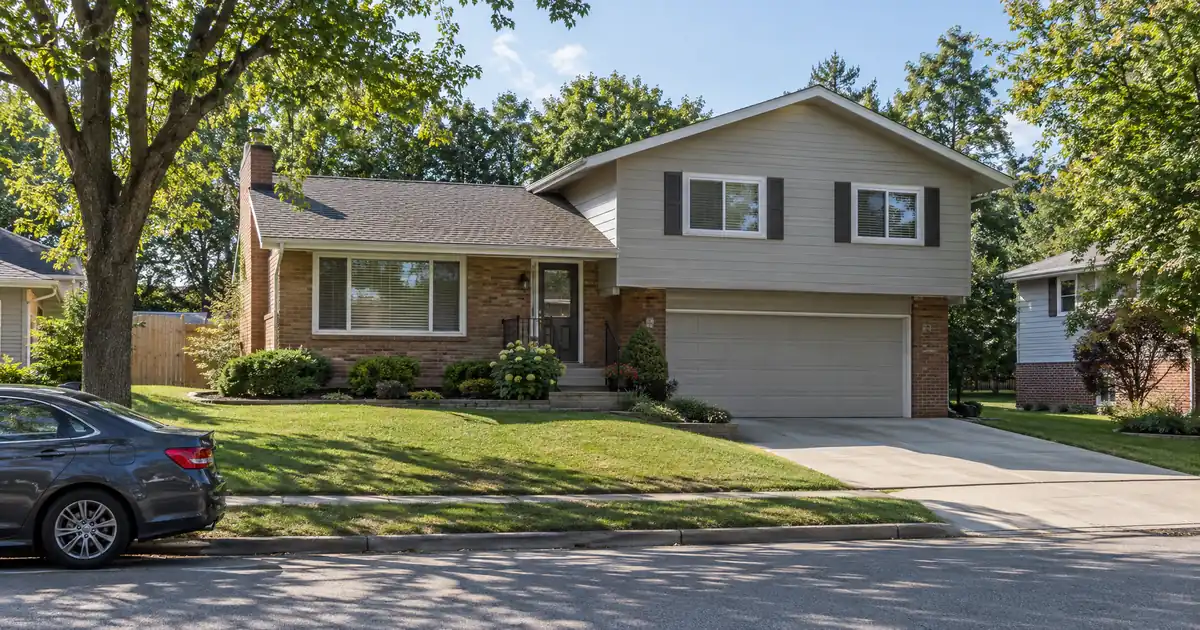
An S-corp or LLC owner can cash-out refinance a home in different ways, depending on who holds title. When the entity owns a rental, the entity borrows and the owner signs a personal guaranty. When the rental sits in the owner’s personal name, title is vested in the entity at closing. When the owner lives in the home, DSCR is the wrong tool.
The Quick Read: A rental held by an S-corp or LLC can usually be cash-out refinanced with the entity as the borrower and an individual as guarantor, with qualification resting primarily on property-level rental income covering the payment, subject to lender guidelines. Title, entity paperwork, and seasoning decide most outcomes.
DSCR Cash-Out Calculator
Run the cash-out numbers in your market
Rate source: Freddie Mac 30-yr average via FRED® — Federal Reserve Bank of St. Louis · effective Oct 8, 2026
Prefilled with starting assumptions — enter your property’s value, balance, taxes, and insurance for a more accurate picture.
Program parameters update from Lendmire’s centralized guideline source. Taxes and insurance are editable estimates.
As of Oct 8, 2026 · General Freddie Mac market benchmark, not a Lendmire loan offer. Property value, balance, taxes, and insurance are editable estimates. Maximum loan-to-value varies by lender, program, property type, and seasoning. Not a Loan Estimate, approval, or commitment to lend. Program availability and eligibility are subject to lender guidelines, credit approval, property review, and underwriting.
- Cash-out on an investment property tops out around 75% LTV across the network, subject to lender guidelines.
- About 6 months of ownership, measured from title recording, is the common seasoning expectation.
- Coverage of 1.00 is where select programs start. Stronger ratios open better terms.
- The entity signs the note. The owner still guarantees it personally.
- An owner’s own primary residence generally does not fit DSCR.
Which Situation Are You In?
“S-corp or LLC owner” covers three different files, and mixing them up is the most common way these files go sideways. Sort yours first.
| Situation | Fits DSCR? | Main watch-out |
|---|---|---|
| Entity owns a rental | Yes, core case | Name match on every document |
| Rental in your personal name | Yes, vest in entity at closing | Old lender’s due-on-sale clause |
| Your own home held by your entity | Generally no | Different loan type needed |
The first row is where this article spends most of its time. The second is a title-sequencing problem. The third is a product mismatch: DSCR loans are designed for non-owner-occupied investment properties. Because they are business-purpose investor loans, they are reviewed differently from a standard owner-occupied mortgage. A personal residence in an entity usually needs an owner-occupied program, and that is outside what this piece covers.
How Underwriting Treats an Entity Borrower
Underwriting on a DSCR cash-out is property-level. The lender divides rent used for lender review by the full monthly obligation: principal, interest, taxes, insurance, and association dues. That ratio is the coverage number. The lender does not run a personal debt-to-income review, which is why self-employed S-corp owners with reduced taxable income often land here. The loan is reviewed primarily on property-level rental income covering the payment, subject to lender guidelines.
What the lender still reviews:
1. Guarantor credit. A 620 floor exists in parts of the network. Most programs want around 660, and 700+ unlocks the strongest leverage tiers.
2. Rent figure. The appraiser’s rent schedule (Form 1007 for single-family, Form 1025 for 2-4 units) sits next to the lease. Lenders differ on which one they use.
3. Reserves. Commonly around 6 months of PITIA, stepping up to about 9 months on loans above $1,500,000. Conservative rate-term files at modest leverage can see reserves waived. It varies by lender, leverage, and transaction type.
4. Seasoning. About 6 months from title recording on a cash-out. Files that assume the seasoning away get kicked back.
5. Property type. Manufactured homes, log homes, and barndominiums are not offered in the network’s DSCR programs.
Loan sizes run up to $3,000,000 on standard programs, with smaller balances routed through select lenders. The complete DSCR loans guide walks through the full qualification model.
The Entity Paperwork That Stalls Files
Entity documents are the quiet friction point. The LLC or S-corp name must match exactly across the deed, note, title policy, insurance binder, appraisal, and lease. One “LLC” versus “L.L.C.” mismatch can force cleanup, and the fix usually means corrected insurance or a new title commitment.
The typical entity package:
- Articles of organization or incorporation
- Operating agreement, or stock ledger and S-election paperwork for an S-corp
- Certificate of good standing from the state
- EIN letter
- Evidence of who owns what percentage, since the lender needs to identify the guarantor
- For partner buyouts, documents showing the departing member’s exit
Multi-member and layered entities add steps. Trust-owned LLCs are program-dependent. A buyout that was never papered will stall the refinance, because the lender cannot tell who has authority to sign.
Entity eligibility varies by lender, and LLC borrowing is subject to lender program eligibility. The guaranty is standard. The entity does not make the loan non-recourse, and the LLC mainly separates property-level claims from the owner’s other assets.
Does the Equity or the Rent Set the Loan Size?
Whichever test is smaller wins. Equity does not equal borrowing power.
Consider a rental appraised at $500,000 with a modest existing balance. At a 75% LTV ceiling, the equity test allows a large loan. But if rent used for lender review only supports coverage near 0.95x at that loan size, the file either shrinks the loan until coverage reaches the lender’s floor, or moves to a select-lender path below 1.00 with leverage and terms adjusted. Net cash to the owner is the new loan minus the payoff minus closing costs and any reserves the lender requires. The calculator on this site gives an illustrative estimate of how those pieces interact. These specifics are subject to lender guidelines and a full review of property, leverage, and credit.
One more caution. Clearing 1.00 is not the same as positive cash flow. The ratio compares rent to PITIA only. Repairs, vacancy, management, utilities, and capex sit outside it.
Keeping Title in the Entity vs. Moving It
The title fork is where the legal risk lives. For an S-corp, one reason to keep the property in the entity is tax-driven. When an S-corp distributes appreciated property to a shareholder, it must recognize gain as if it sold the property at fair market value, and that gain passes through to the shareholders, per the IRS S-corporation property distribution practice unit. Deeding a rental out of your S-corp to refinance personally can create a taxable event with no cash received. Borrowing as the entity avoids the problem.
For a rental sitting in your personal name with a mortgage, the cleaner sequence is to vest in the LLC at the refinance closing, with the old loan paid off at the same closing, rather than deeding it into the LLC first. A pre-closing transfer risks the existing lender’s due-on-sale clause. The federal statute that preempts state limits on those clauses lists exceptions, and none of them cover LLCs, corporations, or partnerships. The exceptions apply only to residential property with fewer than five units, per FedLaws’ summary of the Garn-St Germain Act. The Sixth Circuit’s opinion in Estate of Cornell v. Bayview explains that due-on-sale clauses are presumptively valid. Many lenders never act on a performing loan, but that is their business choice, not your legal protection.
Skip the land-trust middle step. The statute’s trust exception requires the borrower to remain a beneficiary and keep occupancy rights, which does not describe a rental.
Title work follows the same logic. The lender insures its new lien through a title search, commitment, and lender’s policy, with the entity named as vested owner. Clearing title before closing is the step that keeps the payoff and recording clean.
Where the General Rule Breaks
Your own home in your entity. A DSCR loan is the wrong vehicle. Owner-occupied credit is treated under different rules than rental credit, and holding a residence in an LLC can also cost homestead protections and complicate mortgage access, as Opendoor’s LLC explainer notes. Look at owner-occupied programs instead.
Recent cash purchase. Seasoning applies. Inside the window, some lenders size the loan on cost basis rather than appraised value.
Coverage below 1.00. Select lenders in the network offer programs below 1.00 coverage, with leverage and terms adjusted. No-ratio structures exist only through select lenders, generally for borrowers who already own a primary residence.
Short-term rental collateral. Cash-out is capped at 70% LTV on short-term rentals, versus the 75% ceiling on standard rentals. Expect a 640+ score, about 12 months of hosting history, and a 1.00 coverage floor on refinances. Short-term rental rules vary by city, county, HOA, and property type, so investors should confirm local rules before relying on projected rental income. Terms depend on the lender’s guidelines, the property type, the leverage, and a full review of the credit profile.
Five or more units. These fall outside the due-on-sale exceptions entirely, so retitling is riskier still.
Using the Cash and Keeping Records Clean
Cash-out proceeds from an entity loan land in the entity’s account. How you move them to your own pocket, as a distribution or a shareholder loan, is a separate decision. For an S-corp, the IRS says a shareholder gets debt basis only to the extent he or she has personally lent money to the S-corp, and a loan guarantee is not enough, per the IRS guidance on S-corporation stock and debt basis. Your personal guaranty of the entity’s loan does not by itself raise your basis. Keep personal and business accounts separate and document every transfer.
Tax treatment varies; consult a qualified professional before relying on any deduction or characterization of proceeds.
Cash-Out vs. HELOC vs. a Rate-Term Refinance
| Option | Entity stays on title? | Cash back? |
|---|---|---|
| DSCR cash-out | Yes | Yes, to about 75% LTV |
| Rate-and-term refinance | Yes | No, up to 85% LTV |
| Investment HELOC | Usually no | Line to $500,000 total |
An investment HELOC generally must be vested in an individual or revocable trust, so an LLC-owned rental would have to be re-vested. That gives up the entity. For owners who want to compare income-documentation routes, Lendmire’s piece Bank Statement Cash-Out Documentation for an S-Corp or LLC Owner covers the alternative.
Key Terms Defined
Seasoning: The ownership period, measured from title recording, before a lender will offer cash-out on current value.
Personal guaranty: A signed promise by an individual to repay the entity’s loan if the entity does not.
Due-on-sale clause: A mortgage term letting the lender demand payoff when title transfers.
Vesting: The name in which title is held, which the lender requires to match the borrower on the note.
Coverage ratio: Rent used for lender review divided by PITIA.
Common Mistakes
- Retitling into the LLC before the old loan is paid off.
- Assuming the LLC makes the loan non-recourse.
- Skipping the good-standing certificate until the file is already in review.
- Distributing property out of an S-corp to refinance personally.
- Reading 1.00 coverage as positive cash flow.
- Applying DSCR to a personal residence.
Programs change, every file is underwritten individually, and nothing here is a commitment to lend. This article is not legal or tax advice. Consult a qualified attorney or CPA about your own situation, especially on due-on-sale exposure and how loan proceeds are characterized for your entity.
If you are buying or refinancing a rental property and want to see how the numbers work, Lendmire can help you compare DSCR loan options based on the property income, credit profile, leverage, and investor goals. Reach the team at 828-256-2183 or request a quote through the quote form.
Frequently Asked Questions
Can an LLC itself take a cash-out refinance on a rental?
Yes, through DSCR programs. The LLC signs the note and mortgage, and an individual signs a separate personal guaranty. Expect cash-out up to about 75% LTV on a standard rental, about 6 months of seasoning, and coverage of at least 1.00 on select programs, all subject to lender guidelines.
Do I need traditional personal-income documentation as an S-corp owner?
DSCR files qualify on property-level rental income rather than traditional personal-income documentation, subject to lender guidelines. The guarantor’s credit, reserves, and property type still matter, so skipping personal-income review does not mean skipping review.
Should I deed the rental out of my entity first?
Generally no. For an S-corp, distributing appreciated property can trigger gain at fair market value. For a personal-name property with a mortgage, a transfer before payoff risks the due-on-sale clause. Vesting at closing is the common pattern.
Can I use DSCR to cash out my own primary residence?
No. DSCR is built for non-owner-occupied investment property. An owner-occupied home needs a different program.
How much cash will I actually get?
It depends on the smaller of two tests: the 75% LTV ceiling on appraised value and the loan size the rent can support. Payoff, closing costs, and reserves come out first, so equity is not a guaranteed cash figure. The exact numbers vary by lender and program and follow a full review of property, leverage, and credit.
Investors weighing their equity options can start with Lendmire’s guide to cash-out refinance on an investment property.
About Lendmire
Lendmire is a non-QM mortgage brokerage (NMLS# 2371349) arranging DSCR investor loans in 41 markets, including Washington, D.C., through wholesale and investor-lending channels. DSCR loans are evaluated by the lender on rental income rather than personal income, subject to lender guidelines, a fit for LLC-owned portfolios, self-employed investors, and operators scaling beyond conventional loan caps. Recognized as a Scotsman Guide Top Mortgage Workplace in 2025 and 2026.
Get Started
Ready to find the right loan for you?
In about 30 seconds you can review financing options available for your investment property. No commitment required.
Informational only. Not a Loan Estimate, approval, or commitment to lend. Program availability and eligibility are subject to lender guidelines, credit approval, property review, and underwriting.
References
1. FedLaws, Garn-St Germain Act summary
2. Sixth Circuit opinion, Estate of Cornell v. Bayview
3. Opendoor, Can an LLC buy a house
4. IRS, S corporation stock and debt basis
This article is part of Lendmire’s investment property cash-out refinance program — full qualification details, guidelines, and scenarios live on the program page.
Related reading: Florida Rental HELOC Doc Stamps and Intangible Fees at Closing · Should a Landlord With a Low First Lien Use a Home HELOC? · DSCR Cash-Out vs Bridge Loan When a Money Partner Wants Out
Brandon Miller
Founder & CEO, Mortgage Loan Originator, Lendmire LLC
- Mortgage Loan Originator · NMLS# 1129696 · Verify on NMLS Consumer Access
- North Carolina Real Estate Broker · License# 343312 · Verify on NCREC
- North Carolina Insurance Producer · License# 19053198 · Property, Casualty, Life, Health · Verify on NAIC SBS
- Lendmire LLC · Firm NMLS# 2371349 · Verify firm licensure
Compliance and disclosures. Lendmire (NMLS# 2371349) is a licensed mortgage broker and is not a direct lender, depository institution, financial advisor, or tax professional. Content in this article is general market analysis and educational information — not financial, legal, or tax advice for any specific situation. Lendmire does not guarantee loan approval; every transaction is subject to underwriting by the funding lender. Mortgage pricing and loan program guidelines are subject to change at any time without notice and vary by borrower characteristics, property type, and state regulations. Lendmire complies with Equal Housing Opportunity. Licensure verification: NMLS Consumer Access.