
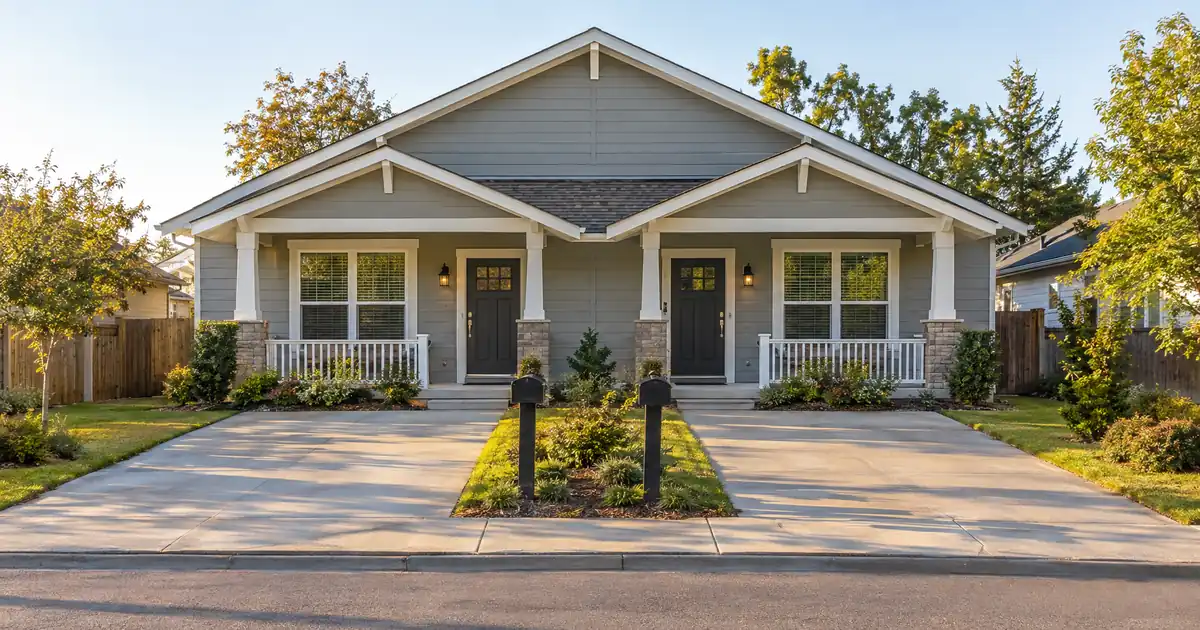
The Quick Read: A sale ends the project and pays off the hard money lender from proceeds. A DSCR refinance keeps the duplex and swaps the short-term bridge for long-term rental financing. The right exit depends on whether the property clears four tests: appraised value, rent coverage, seasoning, and the hard money maturity date.
- Sell if the numbers fail any one test, or if you want your capital back to redeploy.
- Refinance if rent supports a larger payment and you want to hold.
- A DSCR loan is reviewed primarily on property-level rental income covering the payment, subject to lender guidelines.
- Network DSCR cash-out tops out around 75% LTV on a standard rental; rate-and-term can run higher.
The honest answer: selling is for the investor who wants out and cash in hand. Refinancing is for the investor who wants the duplex to keep paying. Neither is better in the abstract. Each fits a different goal and fails for a different reason.
DSCR Cash-Out Calculator
Run the cash-out numbers in your market
Rate source: Freddie Mac 30-yr average via FRED® — Federal Reserve Bank of St. Louis · effective Oct 15, 2026
Prefilled with starting assumptions — enter your property’s value, balance, taxes, and insurance for a more accurate picture.
Program parameters update from Lendmire’s centralized guideline source. Taxes and insurance are editable estimates.
As of Oct 15, 2026 · General Freddie Mac market benchmark, not a Lendmire loan offer. Property value, balance, taxes, and insurance are editable estimates. Maximum loan-to-value varies by lender, program, property type, and seasoning. Not a Loan Estimate, approval, or commitment to lend. Program availability and eligibility are subject to lender guidelines, credit approval, property review, and underwriting.
Side-by-Side
The DSCR column reflects program ranges from select lenders in Lendmire’s wholesale network, which places both exits. Figures vary by lender, property, and borrower. The sale column describes general industry norms.
| Factor | Sell the Duplex | DSCR Refinance |
|---|---|---|
| What gets reviewed | Buyer’s offer, appraisal, inspection | Rent coverage, appraisal, credit |
| Review basis | Buyer’s financing, not yours | Property rent vs. PITIA |
| Documentation | Title, payoff, sale contract | Leases, entity papers, insurance, payoff |
| Property types | Any marketable duplex | Non-owner-occupied rentals; no manufactured or log homes |
| Entity vesting | Seller of record signs | LLC or trust, subject to program terms |
| Reserves | None for you | Commonly about 6 months PITIA; varies |
| Capital outcome | Full proceeds, less costs and tax | Partial equity, up to 75% LTV on cash-out |
| Ongoing income | None | Rent continues |
| Main risk | Market softness, tax hit | Low appraisal, thin coverage |
| Timeline | Depends on buyer pool | Depends on seasoning and appraisal |
What Each Exit Actually Is
The two exits are different kinds of events. A sale is a disposition. A refinance is a financing event. Both pay off the hard money lender through title, but only one leaves you owning a rental.
On the sale side, tax is the first question. IRS Topic 409 says a capital asset held more than one year produces a long-term gain, and one year or less is short-term. A true flip is often sold inside that window. Whether the gain is treated as ordinary business income can also turn on intent and dealer status, which is a facts-and-circumstances question. Talk to a qualified tax professional. Tax treatment varies; consult one before relying on any assumption.
The refinance side has no equivalent rulebook. DSCR is a non-QM investor product, so each lender sets its own terms. Across the wholesale network, the pattern is consistent: the loan is sized off a new appraisal, not your after-repair estimate.
The Four Tests That Decide It
Run these before the hard money maturity gets close.
1. Appraised value. The new appraisal sizes the loan. If value falls short of payoff plus the leverage cap, you bring cash or take a smaller loan.
2. Rent coverage. DSCR is monthly rent divided by the full payment: principal, interest, taxes, insurance, and any association dues. Select programs start at 1.00. A duplex can value well and still fail here, because the new payment is larger than the old interest-only hard money cost.
3. Seasoning. Most cash-out files want about 6 months of ownership, measured from title recording. That is lender policy, not law.
4. Maturity. Hard money terms typically run 6 to 18 months and vary by lender. The bridge has to outlast rehab, lease-up, seasoning, appraisal, and underwriting. A refinance started too late is a refinance that fails.
Duplex-Specific Mechanics
Duplexes behave differently from single-family flips.
Appraisal form matters. Fannie Mae’s Selling Guide points to Form 1007 for one-unit investment properties. Two-to-four-unit properties use Form 1025, where the appraiser reconciles a market rent for each unit. DSCR is not an agency product, but the unit-by-unit rent logic carries over in practice.
That creates a specific friction point. If one unit is vacant or on a short-term lease, the rent figure drops and coverage drops with it. Lenders generally credit the lower of in-place rent and appraiser-opined market rent. A duplex with one unit signed and one empty often fails a test that a fully leased one clears.
On the sale side, the buyer pool splits. Owner-occupant buyers may value the duplex differently from investor buyers, and each group finances differently. That can change how long the property sits and what it nets.
Occupancy also matters for the refinance itself. DSCR loans are designed for non-owner-occupied investment properties. Because they are business-purpose investor loans, they are reviewed differently from a standard owner-occupied mortgage. An owner-occupied duplex sits outside the product.
When Selling a Duplex Flip Is the Better Fit
Sell when the property fails a test you cannot fix before maturity.
- Rent doesn’t carry the payment. If coverage lands under 1.00, a path below that exists through select lenders in the network, with leverage and terms adjusted. That is a trade, not a rescue. If you don’t want to take that trade, sell.
- The appraisal comes in short. You can bring cash, take a smaller loan, or wait and reappraise. If none of those works, a sale pays the bridge off cleanly.
- You want capital back. A refinance returns only part of your equity. A sale returns all of it, less costs and tax. Investors who roll proceeds into the next project often prefer that.
- The maturity date is too close. Seasoning, appraisal, and underwriting all take time. If the bridge ends before they can finish, sale is the safer exit.
- You don’t want to be a landlord. A rental needs management, repairs, and vacancy tolerance. Clearing 1.00 is not positive cash flow, because repairs, vacancy, utilities, and capex sit outside the calculation.
One investor-education commentator frames it simply: if the hold fails any test, sell. That is one view, but it matches how files behave.
When a DSCR Refinance Is the Better Fit
Refinance when the duplex works as a rental and you want to keep it.
- Rent supports the new payment. Both units leased, rent documented, coverage clearing the program floor with room. Stronger ratios open better leverage.
- You want to keep the equity growing. Holding avoids selling costs and keeps the asset appreciating. The refinance replaces short-term debt with long-term debt.
- You can meet the credit and reserve tests. A 620 floor exists in parts of the network, most programs want around 660, and 700+ unlocks the strongest leverage. Reserves commonly run about 6 months of PITIA, stepping up near 9 months above $1,500,000. All of it varies by lender.
- Seasoning has elapsed. About 6 months from title recording is the common expectation for cash-out.
- You’re building a portfolio. The hard money exit refinance program exists for exactly this path, where a stabilized property moves from the bridge into long-term financing.
Hold-then-sell is also possible. An investor who refinances and holds past a year may have a long-term holding period if the facts support investment intent. A later sale then runs into a different issue: many DSCR loans carry prepayment penalties, and terms vary by lender and state. Ask before you sign, not after.
Where Files Break
Most failed exits trace to a short list.
- Stale or missing leases. Lease evidence has to match the rent you’re claiming for each unit.
- Entity paperwork. Vesting in an LLC or trust is commonly allowed, subject to lender program eligibility. Operating agreements and good-standing certificates need to be current before the file goes in.
- Payoff statement gaps. The hard money payoff has to reconcile to the settlement statement. Per diem interest and fees that aren’t itemized create delays.
- Appraisal assumptions. Investors price the refinance off their after-repair estimate. The lender prices it off the appraisal. When those two numbers disagree, the appraisal wins.
- Reserves documentation. Proof of liquid reserves is a separate item from proof of rent. Files stall when only one is ready.
A larger down payment or more equity lowers the payment and can lift coverage. It doesn’t erase the leverage cap, credit floor, reserve rules, or property eligibility. The strongest files clear both tests: enough equity and enough rent.
A Break-Even Way to Think About It
No dollar figures are needed to frame this. Compare three things.
1. Net sale proceeds. Sale price, less agent fees, closing costs, concessions, bridge payoff, carry while on market, and tax.
2. Net refinance proceeds. Cash back from the new loan, less payoff and closing costs, plus the rent the duplex keeps producing.
3. Your goal. Cash now, or ownership and income over time.
If the refinance returns little cash and coverage is thin, the sale usually wins on simplicity. If the refinance clears payoff, coverage is comfortable, and you want to hold, the refinance wins on long-term equity. A mixed result, such as passing on value but failing on rent, usually points to a payoff-only refinance, an extension, or a sale.
The Verdict
Sell if you need the capital, if rent can’t carry the payment, or if the clock is too short. Refinance if the duplex clears value, coverage, seasoning, and reserves, and you actually want to be a landlord. The wrong choice is the one made by default, after the maturity date has already narrowed your options. For the full picture of how these programs work, see Lendmire’s complete DSCR loans guide.
If you are buying or refinancing a rental property and want to see how the numbers work, Lendmire can help you compare DSCR loan options based on the property income, credit profile, leverage, and investor goals.
Key Terms Defined
Hard money bridge: A short-term, interest-only loan used to buy and rehab a property before a permanent exit.
DSCR: The ratio of a property’s monthly rent to its full monthly payment of principal, interest, taxes, insurance, and dues.
Seasoning: The ownership period a lender requires before it will allow a cash-out refinance.
Cash-out refinance: A refinance that returns cash at closing, capped around 75% LTV on a standard rental in the network. Each figure is subject to lender guidelines and a complete review of property type, leverage, and credit.
Rate-and-term refinance: A refinance that pays off the old loan with no cash back at closing.
Frequently Asked Questions
Can I refinance a hard money loan into a DSCR loan on a duplex?
Yes, when the property clears value, coverage, seasoning, and credit tests. The DSCR loan is sized off a new appraisal and the rent for each unit, subject to lender guidelines. It is the common exit for a stabilized rental.
Is a flip sold within a year taxed differently?
Often, yes. IRS Topic 409 treats property held one year or less as short-term. Dealer status can also affect treatment. Tax treatment varies; consult a qualified tax professional before relying on any deduction.
What if the appraisal comes in below what I owe?
You can bring cash to closing, take a smaller loan, wait and reappraise, or sell. Which one fits depends on how far the gap runs and how much time remains on the bridge.
Does a vacant unit hurt a DSCR refinance?
It can, because lenders generally credit the lower of in-place lease rent and appraiser market rent, so a vacant unit may reduce the coverage number. Lease-up before applying keeps the file cleaner.
Can I sell soon after a DSCR refinance?
You can, but prepayment penalties are common on DSCR loans and vary by lender and state. Confirm the structure before closing if a sale is a possibility.
About Lendmire
Lendmire is a DSCR-focused mortgage brokerage, NMLS# 2371349, placing investor loans across 41 markets, including Washington, D.C. DSCR eligibility is generally reviewed by the lender around a property’s rental income rather than personal income documentation, which fits LLC-held rentals, self-employed investors, and portfolios scaling past conventional financed-property limits. Scotsman Guide named Lendmire a Top Mortgage Workplace in both 2025 and 2026.
Get Started
Ready to find the right loan for you?
In about 30 seconds you can review financing options available for your investment property. No commitment required.
Informational only. Not a Loan Estimate, approval, or commitment to lend. Program availability and eligibility are subject to lender guidelines, credit approval, property review, and underwriting.
References
1. IRS Topic 409, Capital gains and losses
This article is part of Lendmire’s hard money loan program — full qualification details, guidelines, and scenarios live on the program page.
Related reading: How to Decide Between a Cash-Out Refinance and Selling a Rental · Selling a Rental vs. a DSCR Cash-Out Refinance for the Next Purchase · Should You Close a DSCR Refinance or Wait for a Second Appraisal?
Brandon Miller
Founder & CEO, Mortgage Loan Originator, Lendmire LLC
- Mortgage Loan Originator · NMLS# 1129696 · Verify on NMLS Consumer Access
- North Carolina Real Estate Broker · License# 343312 · Verify on NCREC
- North Carolina Insurance Producer · License# 19053198 · Property, Casualty, Life, Health · Verify on NAIC SBS
- Lendmire LLC · Firm NMLS# 2371349 · Verify firm licensure
Legal disclosures. Lendmire (NMLS# 2371349) is a state-licensed mortgage brokerage that arranges financing through wholesale lender relationships. Lendmire is not a direct lender, depository institution, or registered financial advisor. The discussion above is general informational content about real estate financing — it is not financial, legal, or tax advice, and readers should consult licensed professionals for guidance on their individual circumstances. Loan inquiries are subject to lender underwriting; this article does not represent a commitment to lend. Loan terms, rates, and qualification standards vary by borrower, property, and state, and are subject to change at any time. Equal Housing Opportunity. NMLS Consumer Access: nmlsconsumeraccess.org.