
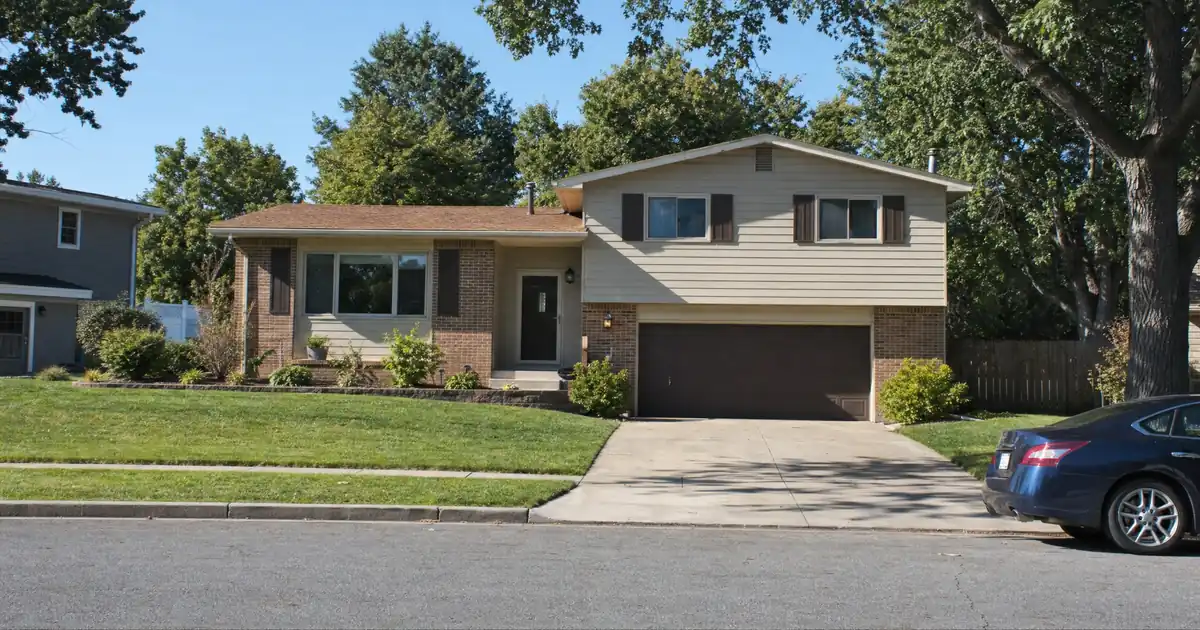
The Quick Read: These are DSCR loans. Lenders underwrite them against the property’s projected or documented Airbnb/Vrbo income. They don’t look at the borrower’s personal income. Purchase leverage on the strongest files runs up to 75% LTV. Refinance and cash-out top out lower. Lenders in the network generally want a credit score of at least 640. They also want roughly 12 months of hosting or landlord history before they’ll lean on trailing income. Illinois adds a wrinkle most states don’t have: there’s no statewide STR license. But Chicago has a dense, tightly enforced city ordinance that can override a loan file’s income assumption entirely.
Most investors researching this topic already own a conventional mortgage somewhere. They just discovered a clause buried in the note that bans home-sharing or short-term subletting. That discovery usually sends them looking for a purpose-built loan instead. Standard mortgages are built around owner-occupancy or long-term-lease assumptions. Think a 12-month lease, a stable tenant, and predictable monthly rent. Nightly bookings, seasonal occupancy swings, and platform-fee structures don’t fit that model. Most conventional and agency-backed products either exclude STR use outright or have no way to credit the income at all. DSCR loans exist to fill that gap. They’re non-QM investor products. They qualify a purchase or refinance based on the property’s cash flow, not the borrower’s usual personal-income paperwork.
Short-Term Rental Calculator
Run the STR numbers in Illinois
Rate source: Freddie Mac 30-yr average via FRED® — Federal Reserve Bank of St. Louis · effective Aug 20, 2026
Prefilled with starting assumptions — enter your nightly rate, occupancy, taxes, and insurance for a more accurate picture.
Short-term rental income is documented with a 12-month history or a market data report. Program parameters update from Lendmire’s centralized guideline source.
As of Aug 20, 2026 · General Freddie Mac market benchmark, not a Lendmire loan offer. Nightly rate, occupancy, taxes, and insurance are editable estimates. Qualifying income for short-term rentals varies by program — some use appraisal market rent, others use documented STR history or projections — and is confirmed in underwriting. Not a Loan Estimate, approval, or commitment to lend. Program availability and eligibility are subject to lender guidelines, credit approval, property review, and underwriting.
Key Terms Defined
DSCR (Debt Service Coverage Ratio): This is the ratio of a property’s monthly qualifying rental income to its monthly PITIA (principal, interest, taxes, insurance, and any HOA dues). A 1.00 ratio means the rent covers the payment exactly. Above 1.00 means there’s cushion.
AirDNA projection: This is a third-party market-data report. It estimates a specific property’s likely gross annual short-term rental revenue, based on comparable listings in the same submarket. Lenders use it as an income source when there’s no operating history yet.
Seasoning: This is the minimum length of time a property must have generated documented rental income. It can also mean the minimum time since a prior transaction. Either way, it’s the wait before a lender will credit that income or allow a cash-out refinance.
Shared Housing Registration: This is Chicago’s city-level license, run by the Department of Business Affairs and Consumer Protection. A unit needs this license before it can legally operate as a short-term rental inside city limits.
Haircut/expense factor: This is a downward adjustment lenders apply to gross projected STR revenue before calculating DSCR. Nightly-rental income carries more volatility than a signed 12-month lease, so lenders trim the number first.
How Underwriting Actually Treats STR Income, Step by Step
The process works the same way whether the property is a Chicago two-flat or a lake house up north. Only the income source and the local rules change.
1. The lender picks an income source. There are three paths in practice. One: an AirDNA-style market projection, used when the property has no rental history. Two: 12 months of documented platform statements from Airbnb or Vrbo, for an existing operator. Three: an appraiser-prepared STR income opinion. When a file has more than one source, underwriting picks the most conservative number — not the highest.
2. A haircut gets applied. Gross projected nightly revenue rarely gets credited at full value. Programs commonly discount that top-line number before running the ratio. Why? STR income swings more with seasons and occupancy than a signed lease does. An investor who pulls a raw AirDNA screenshot and does their own quick math will almost always land higher than what the lender actually credits.
3. The DSCR gets calculated. Take the adjusted monthly rental income and divide it by monthly PITIA. On purchases, most programs in the network want that ratio at or above 1.00 as a baseline. Refinances generally use the same 1.00 floor, though it’s a separate calculation tied to a different income source and a different LTV ceiling. Clearing 1.00 doesn’t mean the property is actually cash-flow positive. Repairs, vacancy gaps between bookings, cleaning and management fees, and utilities all sit outside the DSCR formula.
4. Leverage and reserves scale to the file’s risk. Purchase leverage on the strongest STR files in the network reaches up to 75% LTV. Refinance and cash-out generally cap lower, around 70%. Reserve requirements move with loan size and leverage. On standard files, that commonly lands near six months of PITIA. Larger balances or thinner coverage often push that up toward nine months. None of these numbers are set in stone — every file gets underwritten on its own facts.
A quick note on paperwork: for long-term rentals, appraisers lean on Fannie Mae’s Form 1007 rent schedule, or Form 1025 for 2-4 unit buildings. Those forms assume a signed comparable lease. That doesn’t map cleanly onto nightly bookings. It’s part of why the STR lending market shifted toward AirDNA-style data and platform-statement history, instead of forcing a long-term-rental form onto a hotel-style income stream.
Where the General Rule Breaks: Illinois-Specific Edge Cases
Illinois doesn’t run one set of STR rules. It runs a patchwork, and that patchwork changes financing risk in ways a loan file alone won’t catch.
There’s no statewide STR license. Illinois has never passed a general short-term-rental licensing law. The closest thing on the books is the narrow Bed and Breakfast Act (50 ILCS 820), and that governs traditional B&Bs, not Airbnb-style rentals broadly. Regulation instead sits almost entirely with home-rule municipalities. That means the compliance picture changes a lot depending on where in the state a property sits. It’s worth checking before assuming “Illinois rules” apply the same way everywhere.
Chicago is the outlier, and it’s a strict one. Every shared-housing unit needs an approved Registration Number before it can legally operate, per the City of Chicago’s shared housing program. The city’s 2026 registration guide puts the fee at $250 a year, with violations running $2,500 to $10,000 per offense. Chicago also caps how dense STR use can get inside multi-unit buildings. The max is one-quarter of total units or six units, whichever is smaller, according to the city’s licensing page. The city also keeps a restricted-buildings list, where owners or associations have formally banned short-term rentals. A property on that list, or over the density cap, can’t legally generate the income a DSCR file assumed — no matter how clean the AirDNA report looked.
HOA and condo bylaws are a separate trap, and they’re independent of any city ordinance. A building’s governing documents can ban short-term rentals outright, even where the city allows them. Per Illinois condo law commentary, those bylaws typically require compliance with local and state rules on top of the association’s own restrictions. A lender’s appraisal or income projection does not check bylaw language. That due-diligence step sits entirely on the investor and the closing attorney, not on the loan file.
Portfolio size changes the compliance burden too. Per Awning’s research on Illinois STR laws, hosts renting two or more units in a building with four or more units generally need a license from the Illinois Department of Public Health. That trigger mainly hits condo and apartment-building investors scaling past a single door, not a single-property owner-host. It’s a real operating-risk difference between a first STR purchase and a multi-door portfolio play, even when the loan structure looks identical on paper.
Taxes stack in a way that affects real cash flow, even though the DSCR formula itself runs on gross income before any of it is subtracted. Combined city, county, and state taxes on Chicago short-term rentals run around 27.75%, per BNBCalc’s Chicago STR guide. And starting January 6, 2026, statewide marketplaces like Airbnb and Vrbo have to collect and remit Illinois lodging taxes directly, according to Avalara’s coverage of the hotel occupation tax expansion. An investor’s actual after-tax cash flow will look thinner than the gross number that qualified the loan. Budget for that separately from the DSCR math.
DSCR loans are business-purpose investor loans, and lenders review them differently from a standard owner-occupied mortgage. They’re non-QM products built around the property’s cash flow, not a personal ability-to-repay paperwork stack. That’s exactly why they can accept AirDNA projections and platform-statement income that a conventional loan generally won’t credit.
Structures and Variations Across the Network
Not every STR file looks the same. The leverage-versus-documentation trade-off is where most of the real decision-making happens.
A property with no operating history — say, new construction, or a long-term rental being converted to STR use — has to lean on a market-data projection or an appraiser’s STR income opinion. There’s no platform statement to point to yet. That’s the file with the thinnest paperwork, and it typically comes with tighter leverage and heavier reserve expectations than a refinance backed by 12 months of actual Airbnb deposits.
Coverage below 1.00 isn’t a dead end. Sub-1.00 DSCR structures are available through select lenders in the network, with leverage and terms adjusted to offset the weaker ratio. A property that doesn’t quite clear 1.00 on projected income isn’t automatically unfinanceable — it just moves into a different pricing and leverage tier. No-ratio programs exist too, but only through select lenders, and generally for borrowers who already own a primary residence. There’s no numeric DSCR floor attached to that structure at all, because the ratio isn’t part of the qualification in the first place.
Property type matters more on STR files than on standard long-term-rental DSCR loans. Some program series in the network exclude 2-4 unit buildings and condos from STR treatment, even when those same properties would sail through under a long-term-rental program. That’s a lender-by-lender overlay, not a market-wide rule — which is exactly why matching the right file to the right program matters. Certain property types are excluded across the board, no matter what income documentation looks like: manufactured homes, both single- and double-wide, along with log homes and barndominiums, aren’t offered under these DSCR programs at all.
Term structure has some flexibility too. The 30-year fixed is the backbone product across the network. Interest-only periods and extended 40-year amortization are available through select lenders, for investors managing cash flow around seasonal booking patterns. Loan sizes generally run up to $3,000,000 on standard programs. Anything above $2,500,000 is typically structured as 30-year fixed rather than an ARM. Illinois carries a state overlay worth knowing about upfront: purchases in the state generally cap near 75% LTV, and overlay-state deal sizes tend to top out around $2,000,000. That’s consistent with, not additional to, the STR-specific leverage caps described above.
Investors weighing a cash-out refinance to pull equity for a second STR purchase should expect roughly six months of seasoning as the common baseline in the network. Cash-out leverage on STR properties generally caps lower than the purchase ceiling — a much different math problem than a rate-term refinance on the same property.
Files that follow the Illinois STR market closely tend to fall into a pattern. Properties with clean, unrestricted governing documents and a full 12 months of platform income clear underwriting with fewer conditions than new-construction or newly-converted units leaning entirely on a market projection. The gap between those two file types isn’t about credit score or down payment. It’s about how much of the income story the lender has to take on faith, versus verify against actual deposits.
What Investors Actually Get Wrong
A common mistake is treating gross projected revenue as the number that drives lender review. It rarely is. An expense factor gets applied first, and when a file has multiple income sources, the lender defaults to whichever is lowest. That haircut happens before DSCR gets calculated. An investor running their own math off a raw AirDNA screenshot, without accounting for that haircut, will consistently overestimate what leverage and DSCR the file actually supports.
The second mistake is assuming Illinois has one rulebook. It doesn’t. Chicago’s registration, density cap, and restricted-buildings list are a Chicago thing, not a statewide standard. An investor buying downstate or in a leisure market, who assumes Chicago’s rules (or their absence) apply everywhere, will misjudge both the licensing timeline and the true financing risk.
The third mistake is assuming any DSCR lender underwrites STR income. Not every program in a given lender’s lineup does. STR is a specific carve-out with its own credit score floor, seasoning expectation, and leverage cap — it’s not a default feature of every DSCR product on the shelf. That’s exactly the kind of routing question a broker working across multiple lenders’ guidelines is built to answer.
A larger down payment helps, but it doesn’t fix everything. Putting more equity into a deal lowers the monthly obligation and can lift the DSCR ratio. But it doesn’t waive a credit floor, override a property-type exclusion, or replace missing reserves. The strongest files clear two separate tests at once: enough equity to satisfy the leverage cap, and enough rental coverage to satisfy the DSCR floor. A file that’s overfunded on equity but thin on documented income still runs into friction. Exact terms depend on the lender’s guidelines, property type, leverage, and a full review of the borrower’s file.
Investors weighing this against comparable coverage elsewhere might look at how the mechanics play out in Texas or West Virginia. The underwriting logic is nearly identical nationally. What changes from state to state is the regulatory layer sitting on top of it — and that’s exactly where Illinois gets complicated. For a broader walkthrough of STR financing mechanics generally, Lendmire’s complete DSCR loans guide covers ground this article doesn’t duplicate.
The Practical Decision
An investor buying a first STR in Illinois with no operating history is choosing a file built on projection, not history. Expect tighter leverage and heavier reserve documentation than a comparable refinance on an already-operating property. An investor scaling past a single unit inside a multi-unit building needs to check the Illinois Department of Public Health licensing trigger before assuming the loan structure is the only compliance hurdle. And an investor converting an existing long-term rental to STR use in Chicago needs the registration number and a clean HOA/condo bylaw check completed — or at minimum underway — before the property’s projected income can be trusted with any confidence, loan file or not.
None of these paths guarantee approval. Every file gets underwritten individually against borrower, property, and program guidelines. Qualification runs primarily on the property’s rental income covering the payment, subject to lender review of credit, reserves, and the property itself. Lendmire (NMLS# 2371349) arranges DSCR financing, including STR-specific programs, through select lenders across a wholesale network spanning 41 markets, including Washington, D.C. That means matching a given file to whichever program in that network actually underwrites the income story the investor has to tell. Investors can call 828-256-2183 or request a pricing quote to see how a specific Illinois property’s projected or documented income lines up against current program guidelines. Anyone weighing a refinance to pull cash out of an existing STR for a second purchase should first understand how DSCR refinance programs treat short-term rentals before running the numbers.
Nothing here is a commitment to lend, and loan approval is never guaranteed. Every scenario described here is subject to lender approval and to borrower, property, and program guidelines, which can change. This article is general information only, not financial, legal, or tax advice. Tax treatment can depend on how funds are used and how a property is held, so investors should keep clear records and speak with a qualified tax professional before relying on any deduction.
Frequently Asked Questions
Does a DSCR loan require 12 months of Airbnb history before it will count the income?
Not necessarily. A property with no operating history can still qualify using an AirDNA-style market projection or an appraiser-prepared STR income opinion, instead of documented platform statements. That said, programs in the network generally do want around 12 months of landlord or hosting experience from the borrower. That’s a different requirement than 12 months of income on that specific property. An existing operator with a full year of Airbnb or Vrbo deposits usually has an easier file, since documented history is treated more favorably than a projection.
Can I finance a short-term rental in Chicago if the building already has a shared housing registration?
An existing registration doesn’t automatically transfer to a new owner. Lenders also don’t verify registration status as part of the DSCR calculation — that’s a separate compliance step outside the loan file. Buyers should confirm registration eligibility and check whether the building sits on Chicago’s restricted-buildings list before closing. A banned or capped-out building can’t legally generate the STR income the loan was qualified on.
How do you qualify for a DSCR loan in Illinois?
Qualification centers on the property’s rental income covering the monthly PITIA payment, rather than the borrower’s personal income paperwork. Lenders in the network typically want a credit score around 640 for STR-specific files, roughly 12 months of hosting or landlord experience, and either documented platform income or a market-data projection to establish the qualifying rent. Illinois adds its own overlay on top of the general DSCR criteria, including a state-level LTV and loan-size cap, plus a registration and density check for Chicago properties that sits outside the loan file itself.
What credit score do I actually need for an Illinois STR DSCR loan?
Most programs in the network want a credit score around 640 for STR-specific files. That’s higher than the floor sometimes seen on standard long-term-rental DSCR loans. A handful of programs will consider scores lower than that, but leverage and pricing tighten as the score drops. STR is generally treated as a higher-documentation, tighter-credit product across the board.
Does the DSCR ratio account for Illinois lodging taxes and Chicago’s combined tax burden?
No. DSCR is calculated on gross qualifying rental income against monthly PITIA, before any lodging tax, occupation tax, or platform fee gets subtracted. Chicago’s combined city, county, and state tax burden on short-term rentals runs near 27.75%, and statewide lodging tax collection through marketplaces like Airbnb and Vrbo took effect January 6, 2026. None of that shows up in the DSCR math, so investors should budget for it separately when estimating true cash flow.
What happens if my condo association bans short-term rentals after I’ve already closed on a DSCR loan?
The loan itself doesn’t require STR use to continue. A DSCR loan is qualified at closing based on projected or documented income, but nothing in the loan structure forces the borrower to keep operating as an STR. If an HOA or condo association bans short-term rentals after closing, the practical impact falls on the investor’s operating income, not on loan compliance directly. It could, though, affect refinance qualification later if the property no longer generates STR-level income.
Investors focused on short-term rentals can review DSCR loans for Airbnb and short-term rentals.
About Lendmire
Lendmire is a DSCR-focused mortgage brokerage, NMLS# 2371349, placing investor loans across 41 markets, including Washington, D.C. DSCR eligibility is generally reviewed by the lender on a property’s rental income rather than personal income documentation. That fits LLC-held rentals, self-employed investors, and portfolios scaling past conventional financed-property limits. Scotsman Guide named Lendmire a Top Mortgage Workplace in both 2025 and 2026.
Get Started
Ready to find the right loan for you?
In about 30 seconds you can review financing options available for your investment property. No commitment required.
Informational only. Not a Loan Estimate, approval, or commitment to lend. Program availability and eligibility are subject to lender guidelines, credit approval, property review, and underwriting.
References
1. City of Chicago – Shared Housing Registrations
2. Fannie Mae – Form 1007 Single-Family Comparable Rent Schedule
3. Illinois Condo and HOA Law Blog – Short-Term Rentals in Illinois
4. Awning – Illinois Short-Term Rental Laws
5. BNBCalc – Chicago Short-Term Rental Regulation Guide
6. Avalara MyLodgeTax – Illinois Hotel Occupation Tax Expansion
This article is part of Lendmire’s short-term rental loan program — full qualification details, guidelines, and scenarios live on the program page.
Related reading: Super Jumbo DSCR Loans In Illinois: Complete Guide · Loans For Short Term Rentals · Converting A Second Home To A Short Term Rental
Guides: Short-Term Rental Loans in Illinois
Brandon Miller
Founder & CEO, Mortgage Loan Originator, Lendmire LLC
- Mortgage Loan Originator · NMLS# 1129696 · Verify on NMLS Consumer Access
- North Carolina Real Estate Broker · License# 343312 · Verify on NCREC
- North Carolina Insurance Producer · License# 19053198 · Property, Casualty, Life, Health · Verify on NAIC SBS
- Lendmire LLC · Firm NMLS# 2371349 · Verify firm licensure
Required disclosures. Lendmire (NMLS# 2371349) operates as a licensed mortgage broker, not a direct lender or depository. The discussion in this article is general in nature and should not be relied upon as financial, legal, or tax advice — every investment scenario is unique and should be reviewed by a qualified professional. Any loan inquiry is subject to lender underwriting, and this article is not a commitment to lend or a guarantee of approval. Mortgage rates, loan terms, and program guidelines vary by borrower, property, and state, and may change without notice. Equal Housing Opportunity. Verify licensure at NMLS Consumer Access.