
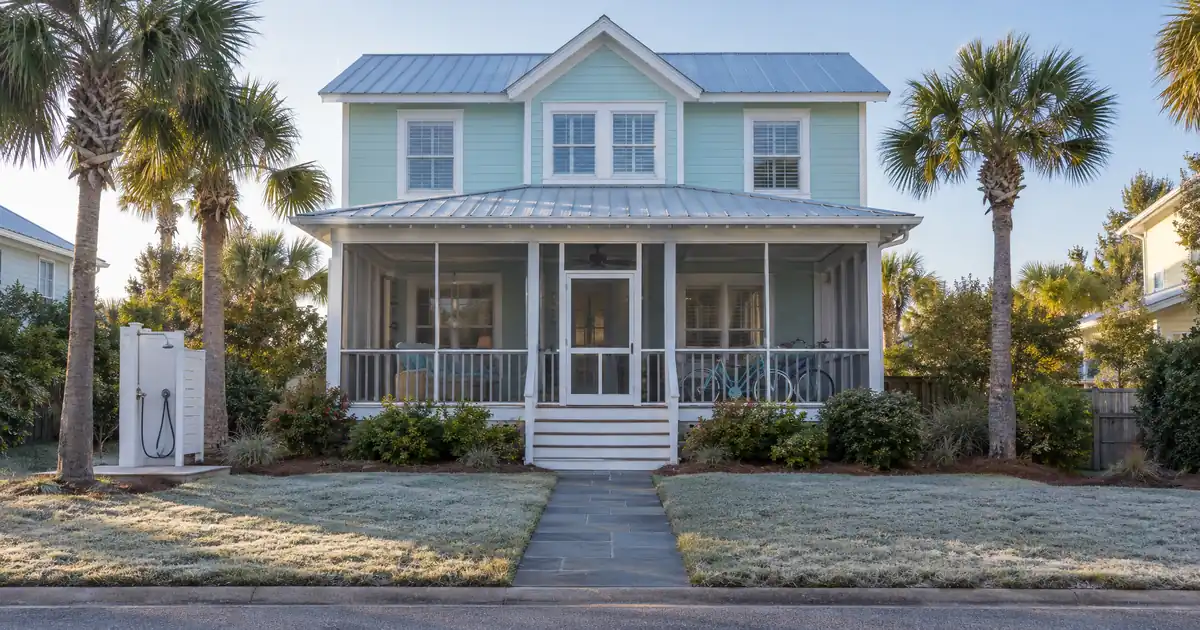
The Quick Read: Buy the property for what it is worth without the permit, and treat the permit as upside you still have to earn. Confirm in writing whether you can get your own permit, write the contract so you can walk away if you cannot, and underwrite the loan on long-term rent until short-term income is proven under your ownership.
- Permits are local, so no national rule says whether one transfers. Many do not.
- The seller’s booking history proves what the seller was allowed to do, not what you may do.
- Check zoning and permit status before you make the offer, not after inspection.
- Write an eligibility contingency with a full earnest-money refund if the permit fails.
- Short-term rental rules can vary by city, county, HOA, and property type, so confirm local rules before relying on projected rental income.
A listing that says “permitted short-term rental” sounds like a finished product. Often it is half of one. The house is real and the booking calendar is real. The legal right to run that calendar may belong to the seller and end at closing.
This explainer walks through the deal in order: why permits stay behind, how a DSCR lender treats the income, the contract and loan structures that handle the gap, and the edge cases where the usual rule breaks. A DSCR loan, short for debt service coverage ratio loan, qualifies primarily on property-level rental income covering the payment, subject to lender guidelines. Lendmire’s complete DSCR loans guide covers the basics if the term is new to you.
Why Doesn’t the Permit Come With the Property?
Permits come from local ordinances, so the answer changes by city, town, county, and sometimes HOA. One local practitioner notes that Georgia has no statewide short-term rental licensing or preemption law and leaves regulation to local governments. Georgia is typical, not unusual.
Think of the permit as a license issued to a person or entity for an address, not a feature of the house like a roof. Most places fall into one of four models, as one STR analyst lays out in a breakdown of transfer regimes:
| Model | What it means for you |
|---|---|
| Runs with the land | Transfers at closing |
| Transfer with application | You apply and pay a fee |
| Transfer to qualifying buyer | You must meet current, maybe stricter, standards |
| Extinguished at sale | Property returns to a cap pool or waitlist |
The hardest version is Nashville. Metro’s own FAQ states the permit is non-transferable under the municipal code and cannot be assigned to another person, entity, or address. Its permit-types page adds that new non-owner-occupied permits are not allowed in several residential zones, and existing holders there may renew but cannot transfer on a sale. The seller’s permit dies at closing, and you may not be able to get a new one.
That is the whole problem in one example. Everything below is how you handle it.
Key Terms Defined
Permit (or license): the local government’s authorization to operate a short-term rental at a specific address.
Grandfathered (nonconforming) status: permission to keep operating under old rules that no longer allow new operators. It often ends at sale.
DSCR: the ratio of monthly rent to the full monthly housing payment, meaning principal, interest, taxes, insurance, and any HOA dues.
LTV: loan-to-value, the loan balance as a percentage of the property’s value.
Seasoning (hosting history): the record of operating the property as a rental. Short-term rental programs usually want about 12 months of it.
Eligibility contingency: a contract clause that lets you cancel and recover your deposit if a named condition, such as permit issuance, fails.
What Actually Transfers at Closing?
Your deed transfers. The furniture, systems, and vendor relationships can. The permit depends on the jurisdiction. The seller’s listing account, reviews, and booking ranking do not belong to you in any meaningful way, so plan to rebuild them.
Other places show the pattern:
- Sedona, AZ: the city code says no permit is transferable by location or by person, and a change in ownership of the entity that owns the property requires a new permit, per one local agent quoting the code.
- Hilton Head Island, SC: applications must be filed in a person’s name, not a corporate entity, according to a local practitioner.
- Truckee, CA: the cap is full and the registration does not transfer at sale, per a Truckee agent.
These are agent blogs quoting local codes, so read the municipality’s own code before relying on any of them.
Which Situation Are You In?
Sort the property into one of four buckets before you spend money on inspections. Each bucket calls for a different move.
Reapply and likely approved. The jurisdiction treats the permit as a routine registration. You apply as the new owner. Build in processing time and carry the property on long-term-rent coverage meanwhile.
Capped or waitlisted. The seller cannot deliver a permit because none are available. Price the property as a long-term rental or owner-occupied home. Anything you pay above that is a bet on a waitlist.
Primary-residence only. In places like Sonora, CA, permits go only to the operator’s primary residence, so an out-of-area investor has no path inside city limits. Charleston’s peninsula is another example: only an accessory unit can operate as the short-term rental, which rules out many single houses.
Discretionary approval. Flathead County, Montana requires an administrative conditional use permit for short-term rental use in most zoned areas. That is a review process, not a registration. Approval is not automatic.
Zoning district, owner-occupancy rules, caps, distance buffers, and HOA or deed restrictions decide which bucket you land in. HOAs are a separate gate. A permit does not override a recorded restriction.
How Do You Verify Before You Offer?
Verify before the offer. A Nashville practitioner puts the order plainly: check zoning and permit status before the offer, not after inspection. In Nashville, the buyer pool also narrows to investors who can obtain a new permit after closing, which affects your exit too.
Ask these questions, in writing, of the licensing office:
1. Is the permit tied to the person, the address, or the entity?
2. Does it expire on sale?
3. Is the property grandfathered, and does that survive a change of ownership?
4. Can a new permit be issued to me, as this type of buyer, at this address?
5. Is there a cap, waitlist, holding period, or distance buffer?
Then ask the seller for the permit paperwork, any open violations, and the HOA’s current rental rules. A due-diligence guide for STR acquisitions notes the licensing office will answer in writing if asked directly.
Read listing language skeptically. “Turnkey” and “active permit” are marketing. Translate each into one of the questions above.
How Do You Write the Contract Around the Gap?
Make permit issuance a condition of the purchase. The same due-diligence guide suggests an STR eligibility contingency requiring written confirmation of zoning compliance, no HOA prohibition, and permit transferability or issuance, with a full earnest-money refund if any item fails.
If the permit cannot transfer, that guide lists ways to restructure the deal, including:
- A contingency with a defined cure period.
- A seller-cooperation clause for the permit application.
- A price adjustment for the operating gap during reapplication.
Practical points the contract should cover:
- Timing. Set the contingency deadline long enough for the authority to respond. If it will not give pre-closing assurances, extend diligence or lower the price.
- Pending applications. If the seller has one in progress, require them to cooperate and disclose status.
- Listings. Require the seller to take down all listings at sale. Sedona’s code requires this.
- Capped markets. A seller cannot deliver a permit that does not exist. Price and terms should reflect that.
How Does a DSCR Lender Treat the Income?
Lenders underwrite income you can lawfully earn, not income someone else earned. Across the wholesale network Lendmire works with, short-term rental purchase files typically expect about 12 months of hosting history. You will not have that under your own operation on day one.
When history is missing, files generally lean on one of two things. The first is a market-based projection, such as a rental analytics report or an appraiser’s short-term rental analysis, usually reduced by a haircut. The second is the long-term market rent from the appraisal’s rent schedule. Appraisers use Form 1007 for one-unit properties and Form 1025 for two-to-four units, named here only so you recognize them.
The seller’s trailing bookings do not fix this. They show the seller’s performance under the seller’s authority. As the Truckee practitioner puts it, the income number reflects what the seller was legally allowed to do, not what you may do at closing.
Whether the use is legal is a property-eligibility question for the lender. A property that cannot legally operate as a short-term rental may be underwritten on long-term rent, if long-term rental is allowed at all.
Here are the typical program ranges across select lenders in the network. Programs change, and every file is underwritten individually:
| Item | Typical short-term rental range |
|---|---|
| Purchase LTV | Up to 75% on the strongest files |
| Cash-out or refinance LTV | Up to 70% |
| Minimum credit score | 640 |
| Coverage floor | 1.00 on purchases and on refinances |
| Loan size | Up to $3,000,000 on standard programs |
Short-term rental programs differ from standard long-term rental programs. On a standard long-term rental purchase, most files land at 75%-80% LTV, and some high-leverage programs reach 85% with a score around 700 or higher. On a standard long-term rental cash-out, the ceiling is around 75% LTV, while short-term rental collateral tops out at 70%.
Coverage of 1.00 is where select programs start, not a universal standard. A separate select-lender path takes coverage below 1.00, with leverage and terms adjusted. Reserves vary by lender, leverage, loan size, and transaction type, commonly around 6 months of PITIA (principal, interest, taxes, insurance, and HOA dues).
One caution. Clearing 1.00 is not the same as positive cash flow. Repairs, vacancy, management, utilities, and capital expenses sit outside the calculation.
What Is the Smart Way to Underwrite the Fallback?
Underwrite the base case first, then treat short-term income as upside. A red flag in the due-diligence guide is a DSCR below 1.0 under base-case assumptions.
Picture a buyer eyeing a house listed as a permitted short-term rental in a capped market. Run the deal three ways, using modeled assumptions rather than sourced market figures:
1. Permit issued. Short-term projection after a haircut clears the lender’s coverage floor with room to spare.
2. Permit delayed. Rent from a long-term lease or mid-term tenant covers the full payment at roughly 1.0x to 1.1x. Tight, but workable.
3. Permit never issued. Only long-term rent counts. If coverage lands below 1.00, the file may need a lower LTV or a select-lender path with adjusted terms, subject to lender guidelines and credit approval.
If scenario three does not work, the price is wrong. A grandfathered permit that terminates at closing is worth what the property would trade for as a long-term rental or owner-occupied home, as the Nashville practitioner says. Pay for the house, and let the permit be a bonus.
Plan reserves for the gap. A buyer who learns of non-transferability after closing in a capped market faces months of zero legal short-term revenue. Some places also run on fixed cycles. Hilton Head permits follow an annual May-to-April cycle, so timing your application matters.
The deals that stall are rarely the ones with weak numbers. They are the ones where the permit question was left to the end, after the appraisal and the loan application were already moving. Ask the permit question first and the rest of the file gets simpler.
Where Does the General Rule Break?
Buying the LLC instead of the property. Some Nashville investors buy the entity that holds the property so the permit holder never changes. Other sources say any ownership change, including a move to an LLC or trust, voids the permit. North Elba, NY counts LLC membership transfers as changes in ownership, and Sedona does the same for the owning company. Because the approaches differ, treat this as a question for legal counsel before closing. An entity purchase can also complicate a lender’s title, vesting, and entity requirements, which depend on the eligibility rules of the specific loan program.
Grandfathered status. It often dies at sale. In Kennesaw, GA, nonconforming status is lost if the property is sold, if it is 50% damaged, or if operation stops for 12 consecutive months.
Truly transferable permits. Some US jurisdictions treat the permit as a routine annual registration you simply apply for. Do not assume the worst everywhere. Assume nothing anywhere.
Waiting periods. Charleston has a one-year holding period on certain units. Nashville reportedly imposes a one-year wait after operating without a permit.
Deed restrictions. Sedona homeowners can record a voluntary deed restriction that removes a property from the short-term rental pool.
Ineligible property types. Manufactured homes, log homes, and barndominiums are not offered through the network’s DSCR programs, permit or not.
What If the Permit Is Unobtainable?
You have four paths. Walk away if the price assumes the permit. Renegotiate to a long-term-rental price. Switch the strategy to a mid-term or long-term rental if local rules allow it. Or stay on the waitlist while the property carries itself on long-term coverage.
For the loan-side checklist, see Lendmire’s piece Short-Term Rental DSCR Loan Requirements When Permit Limits Apply.
Tax treatment varies; consult a qualified professional.
Common Mistakes and Red Flags
- Trusting “permitted” in the listing as a permit you receive.
- Treating the seller’s trailing income as your proof of income.
- Assuming an LLC purchase sidesteps the rule.
- Assuming the seller’s renewal means you can renew.
- Skipping the HOA check.
- Leaving the permit question until after inspection.
- Pricing the house at the short-term-rental value before the permit is in hand.
Many of the city-specific sources above are agent marketing content. Confirm any rule with the municipality’s own code.
If you are buying or refinancing a rental property and want to see how the numbers work, Lendmire can help you compare DSCR loan options based on the property income, credit profile, leverage, and investor goals. Lendmire is a broker arranging financing through select lenders in its wholesale network across 41 markets, including Washington, D.C.
Frequently Asked Questions
Can I buy a short-term rental if the permit won’t transfer?
Yes, if you can get your own permit or the property works under a fallback use. Verify permit eligibility in writing, add a contingency with a full earnest-money refund, and size the loan on long-term rent. Financing is subject to lender guidelines and credit approval.
Will a DSCR lender count the seller’s booking income?
Usually not on its own. Booking history reflects the seller’s authority to operate. Files typically use a market-based projection with a haircut or the long-term market rent, depending on the program.
Does buying through an LLC keep the permit alive?
Sometimes, but often not. Some ordinances treat entity changes and LLC interest transfers as ownership changes, and some places bar entity-held permits entirely. Get legal advice before relying on this.
How much can I borrow on a short-term rental purchase?
On the strongest files, up to 75% LTV on a purchase of short-term rental collateral, with a 640 minimum credit score and a 1.00 coverage floor. Cash-out and refinance top out around 70% on short-term rental collateral. Terms depend on the lender, property, and borrower.
What if the permit never arrives?
Underwrite and price for that outcome from the start. The property should still work on long-term rent, or you should renegotiate or walk away.
Investors focused on short-term rentals can review DSCR loans for Airbnb and short-term rentals.
About Lendmire
Lendmire (NMLS# 2371349) is a mortgage brokerage focused on DSCR investor financing, helping arrange programs through wholesale and investor-lending channels in 41 markets, including Washington, D.C. DSCR loans are evaluated by the lender on property cash flow rather than personal income, subject to lender guidelines, supporting LLC closings and accommodating investors with four or more financed properties. Scotsman Guide Top Mortgage Workplace in both 2025 and 2026.
Get Started
Ready to find the right loan for you?
In about 30 seconds you can review financing options available for your investment property. No commitment required.
Informational only. Not a Loan Estimate, approval, or commitment to lend. Program availability and eligibility are subject to lender guidelines, credit approval, property review, and underwriting.
References
1. Georgia has no statewide short-term rental licensing or preemption law
2. InvestmentGradeSTR – Do STR permits transfer?
3. Metro Nashville Codes – STR FAQ
4. Katrin Themlitz – West Sedona
8. Robertson Allen – Charleston
9. Costigan Group – Nashville STR investment guide
10. Realtevo – STR portfolio due diligence guide
11. Costigan Group – Nashville STR permit transfer
12. HostExtraordinaires – Nashville rules
This article is part of Lendmire’s short-term rental loan program — full qualification details, guidelines, and scenarios live on the program page.
Related reading: Short-Term Rental Loan on a Cabin vs. a Condo · How a Rural Appraisal Affects a Short-Term Rental Loan · How Converting a Long-Term Rental to an Airbnb Affects Your Loan
Brandon Miller
Founder & CEO, Mortgage Loan Originator, Lendmire LLC
- Mortgage Loan Originator · NMLS# 1129696 · Verify on NMLS Consumer Access
- North Carolina Real Estate Broker · License# 343312 · Verify on NCREC
- North Carolina Insurance Producer · License# 19053198 · Property, Casualty, Life, Health · Verify on NAIC SBS
- Lendmire LLC · Firm NMLS# 2371349 · Verify firm licensure
Disclosures. The information presented in this article is general market commentary, not financial, legal, or tax advice. Lendmire is a mortgage brokerage (NMLS# 2371349) — not a direct lender or depository institution — and loan placement is subject to lender underwriting. Nothing in this content represents a commitment to lend. Loan terms, pricing, and program availability vary based on borrower qualifications, property characteristics, and state of subject property, and are subject to change at any time. Lendmire complies with Equal Housing Opportunity requirements. Consumer access: nmlsconsumeraccess.org.